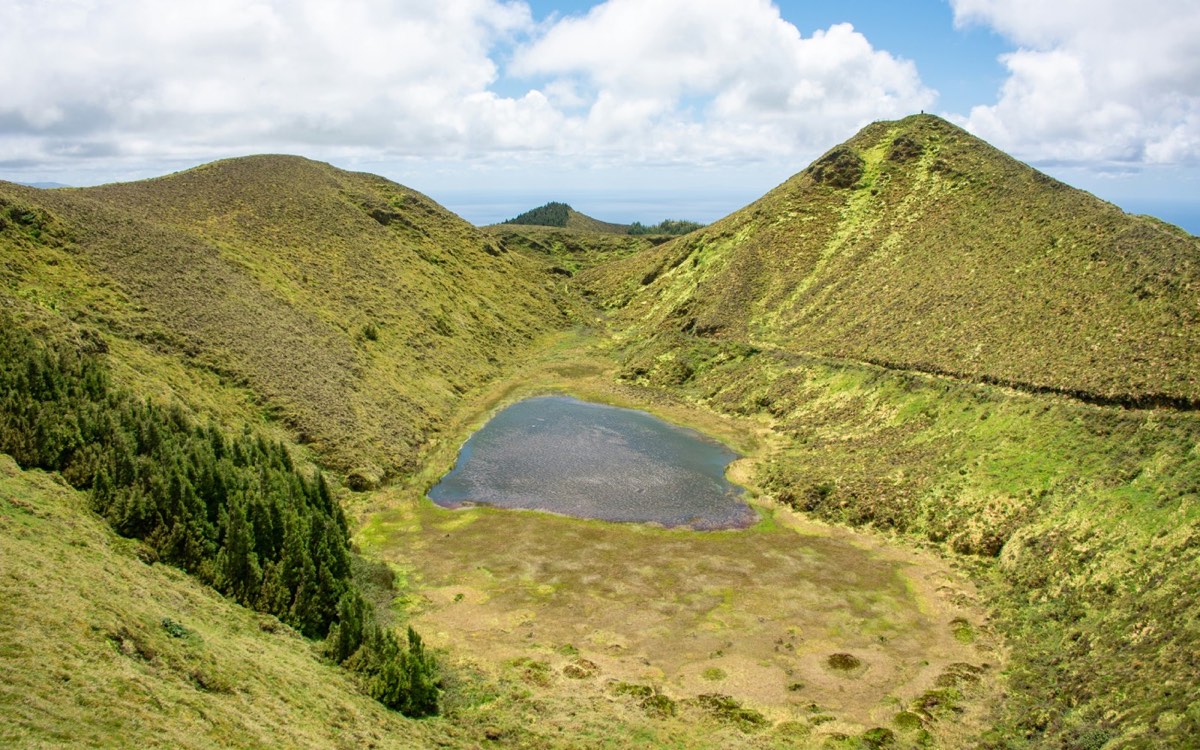
São Miguel and Terceira are the two most visited Azores islands, and they suit different priorities almost perfectly. São Miguel is the volcanic showpiece: Sete Cidades crater lakes, Furnas geothermal valley, and the Azores’ most accessible whale watching make it the natural first choice for first-time visitors. Terceira is the historic island: Angra do Heroísmo is a UNESCO World Heritage city with 16th-century fortifications, baroque churches, and almost no tourist crowds at the main sites. Both are 40 minutes apart by air and easy to combine on a longer Azores trip.
Quick Verdict
| Category | São Miguel | Terceira |
|---|---|---|
| Accessibility from Lisbon | Winner (more flights) | Good (direct flights) |
| Volcanic scenery | Winner (Sete Cidades, Furnas) | Moderate (Algar do Carvão) |
| Whale watching | Winner | Available, less prominent |
| History and architecture | Good (Ponta Delgada) | Winner (UNESCO Angra) |
| Crowds | Higher | Winner (fewer visitors) |
| Food scene | Winner | Strong (alcatra, wine) |
| Hiking | Winner | Good (Monte Brasil) |
| Unique activities | Geothermal cozido, tea plantation | Lava tube, natural pools, bull runs |
| Accommodation range | Winner | Smaller but good quality |
| Best for | First visit, volcanic landscapes | Second island, history, architecture |
Choose São Miguel for volcanic scenery, whale watching, and the geothermal Furnas valley on a first Azores trip. Choose Terceira for the UNESCO city of Angra, fewer crowds, and a more authentic sense of Azorean history.
Getting There
São Miguel: Ponta Delgada Airport (PDL) is the Azores’ main international hub. SATA and TAP fly from Lisbon in approximately 2 hours. Ryanair operates seasonal direct routes from London Gatwick and Manchester. Transatlantic services run from Boston and Toronto via SATA in summer. São Miguel is by far the easiest Azores island to reach from most European departure points.
Terceira: Lajes Airport (TER) receives direct flights from Lisbon (approximately 2 hours) and Porto (approximately 2 hours) on SATA. Inter-island connections from São Miguel take 30–45 minutes. Terceira previously had a significant US Air Force base at Lajes, meaning the airport is large for the island’s size; American connections via SATA also run seasonally.
Between the islands: The inter-island SATA flight between Ponta Delgada and Lajes runs multiple times daily and takes 30–45 minutes. There is no ferry between the two islands — they are in different island groups and the crossing would be impractical. Flight fares run approximately €50–80 each way. Car hire is available at both airports; a car is the best way to see either island fully.
São Miguel
São Miguel is 746km², the largest Azores island, with 138,000 residents and a well-developed tourism infrastructure. The island’s two signature geological features are its main draw:
Sete Cidades in the west — a 4km-wide caldera containing twin crater lakes, one green and one blue. The best view is from Vista do Rei, a viewpoint on the caldera rim 16km from Ponta Delgada. The caldera circuit hike (8km, 3 hours) gives sustained views over both lakes. Kayaking on the lakes from the village inside the caldera costs approximately €30 for 2 hours.
Furnas in the east — a volcanic valley where the floor steams with boiling mud pools (Caldeiras das Furnas, free to visit), and where cozido das Furnas — a heavy stew of pork, sausage, chicken, and vegetables cooked underground for 6 hours in geothermal heat — is served at lunch at restaurants around the valley. This dish exists nowhere else. Arrive at Tony’s or Restaurante Terra Nostra by 12:30; the pots come out at 1pm.
São Miguel also has the Azores’ most developed whale watching operations. Multiple operators run tours from Ponta Delgada and Vila Franca do Campo (€60–80, 3–4 hours, April–October for peak season).
Accommodation on São Miguel: Mid-range hotels in Ponta Delgada from approximately €90–150/night. Rural quintas near Furnas and the north coast offer character options from €80–120.
Search hotels in São Miguel on Booking.com
Terceira
Terceira is 400km² with 56,000 residents, and its capital, Angra do Heroísmo, is one of the most significant historical cities in the Portuguese-speaking world. Angra was founded in the 15th century and grew wealthy as the mandatory Atlantic resupply port on routes between Europe, Brazil, and the African colonies. The UNESCO designation (1983) covers the entire city centre: the grid of streets, the twin forts on the headland, the Sé Cathedral (16th-century, the oldest in the Azores), and the baroque churches lining the main square are all in excellent preservation.
Beyond the city, Terceira has two geological attractions that São Miguel lacks:
Algar do Carvão — one of the most accessible and visually impressive lava tubes in the world. A 90m-deep cave formed by draining lava, with a lava lake at the bottom that reflects the ceiling. Entry €5–6. The descent requires negotiating steep stairs; the cave is cool year-round.
Biscoitos — a north-coast village with natural seawater pools carved into flat basalt lava, excellent for swimming in calm conditions. The surrounding area produces island wine from volcanic vineyards in the same style as Pico.
Terceira also has the Sanjoaninas Festival in late June (18–29 June in most years): street decorations, music, and touradas à corda — traditional bull events where the bull is controlled on a long rope by handlers rather than injured, a practice controversial but better-regulated than mainland Spanish equivalents.
Accommodation on Terceira: Angra do Heroísmo has guesthouses, small hotels, and a few boutique properties in historic buildings. Prices typically run €75–130/night for a mid-range double room.
Search hotels in Terceira on Booking.com
Volcanic Scenery
São Miguel is the clear winner here. Sete Cidades is the Azores’ most photographed location — the twin colour-contrast lakes inside a 4km caldera are extraordinary. Furnas is equally compelling for a different reason: geothermal activity on a human scale, where you can walk across a steaming valley floor and eat food cooked by the earth. Lagoa do Fogo (a third crater lake in the centre of the island) adds a wilder, more remote volcanic experience.
Terceira has the Algar do Carvão lava tube — a remarkable underground experience that São Miguel lacks — but its above-ground geology is less spectacular than São Miguel’s calderas. The island is more pastoral than volcanic in character.
Winner: São Miguel, comprehensively.
History and Culture
Terceira wins clearly. Angra do Heroísmo is unlike anywhere else in the Azores — a functioning small city whose historic centre has barely changed in 400 years. Walking the grid of flagstone streets, visiting the Cathedral, climbing to the São João Baptista fortress (still a military facility, walkable exterior) on Monte Brasil, and exploring the baroque city gates gives a sense of the Atlantic world at its height of Portuguese maritime power that no other Azores island can match.
São Miguel has Ponta Delgada’s Portas da Cidade (the 18th-century city gates), a good archaeological museum, and a working city with real cafés and restaurants. But it cannot match Angra’s coherence as a historical experience.
Winner: Terceira, clearly.
Food and Drink
São Miguel has the stronger restaurant scene by volume — Ponta Delgada offers the best choice in the Azores outside Terceira’s old city. The geothermal cozido at Furnas is a unique experience. The island also has the Gorreana Tea Plantation (free to visit, the oldest in Europe) and the best range of seafood restaurants.
Terceira has its own specialities: alcatra, a stew of beef in a clay pot with wine and spices, is the island’s signature dish (approximately €16–20 at traditional restaurants in Angra). The Biscoitos wine from the north coast is a distinctive local product. The compact old city of Angra has a good density of restaurants for a small city.
Winner: Roughly equal for quality; São Miguel for variety; Terceira for the unique alcatra experience.
When to Visit
São Miguel: June–September for the clearest crater views and best whale watching conditions. The island is a year-round destination — even January is mild in Ponta Delgada (around 15–17°C), and the Furnas valley operates year-round.
Terceira: May–October is best. The Sanjoaninas Festival in late June is the island’s biggest event and draws visitors from across the Azores and Portuguese diaspora. The Algar do Carvão is open seasonally — confirm hours in advance for winter visits. Monte Brasil headland and Angra city are pleasant year-round.
For detailed planning, see our Azores island-hopping itinerary and the Azores region guide. Our São Miguel things to do and Terceira things to do guides cover each island in depth.
For guided experiences on São Miguel, browse tours in São Miguel. For Terceira, tours in Terceira covers the Algar do Carvão cave, island circuits, and Angra walking tours.
For accommodation, see our São Miguel hotels guide and Terceira hotels guide.
Final Verdict
Visit São Miguel if: you are visiting the Azores for the first time and want maximum volcanic scenery, whale watching, and logistical ease. No other island in the archipelago delivers as much in as compact a space.
Visit Terceira if: you have already done São Miguel, or you prioritise history and architecture over volcanic landscapes, or you simply want fewer tourists at the main sites. Angra do Heroísmo alone makes the trip worthwhile.
For the classic Azores two-island trip, São Miguel plus Terceira covers both extremes — the geological and the historical — in under an hour by air between them.
More Portugal Comparisons
- Madeira vs Azores — how Portugal’s two Atlantic island groups compare
- São Miguel vs Faial — São Miguel versus the Triangle’s hub island
- São Jorge vs Pico — two more Azores central group islands
- Pico vs Flores — the summit island versus the waterfall island
Plan Your Trip
🏨 Search hotels in São Miguel 🏨 Search hotels in Terceira 🎯 Tours in São Miguel 🎯 Tours in Terceira ✈️ Book your flights to Portugal 🛡️ Get travel insurance 📱 Stay connected with an eSIM 🚗 Rent a car