The Azores rewards longer stays - the islands are far from each other, the weather is variable, and the best experiences (a full caldera hike, a sunrise whale encounter, a walk through fajã fields) take time to unfold. Ten days covering São Miguel, Faial, Pico, and Terceira hits the archipelago’s four most distinctive islands without the rushed feeling of a shorter trip. For an overview of all nine islands and the region as a whole, see our Azores complete guide.
Fly into Ponta Delgada on São Miguel. Fly home from Lajes on Terceira.
Days 1–4 - São Miguel
São Miguel (the “Green Island”) is the largest and most visited of the nine Azorean islands. Its landscapes span volcanic calderas, crater lakes, geothermal zones, cedar forests, and tea plantations - the only commercial tea plantations in Europe. Four days here is comfortable; three is the minimum.
Day 1 - Arrive, Ponta Delgada Orientation
Land at Ponta Delgada (PDL). Pick up a hire car - essential for São Miguel (roads are well-maintained but public transport is sparse), and worth booking before you fly as airport fleets are small. See our Azores car rental guide for company comparisons, seasonal pricing, and island-by-island notes. Check in to accommodation in or near the city.
Afternoon: Ponta Delgada’s old town is small but worth 2 hours - the Portas da Cidade (triple arch gateway), the São Sebastião church and its ornate interior, the covered market (Mercado da Graça) with local produce. Walk the waterfront promenade south.
Evening: The best restaurants in Ponta Delgada are on and around Rua Hintze Ribeiro. Alcides (Rua Hintze Ribeiro 64) is the long-established local choice for bifanas (pork sandwiches) and Azorean steaks.
Day 2 - Sete Cidades
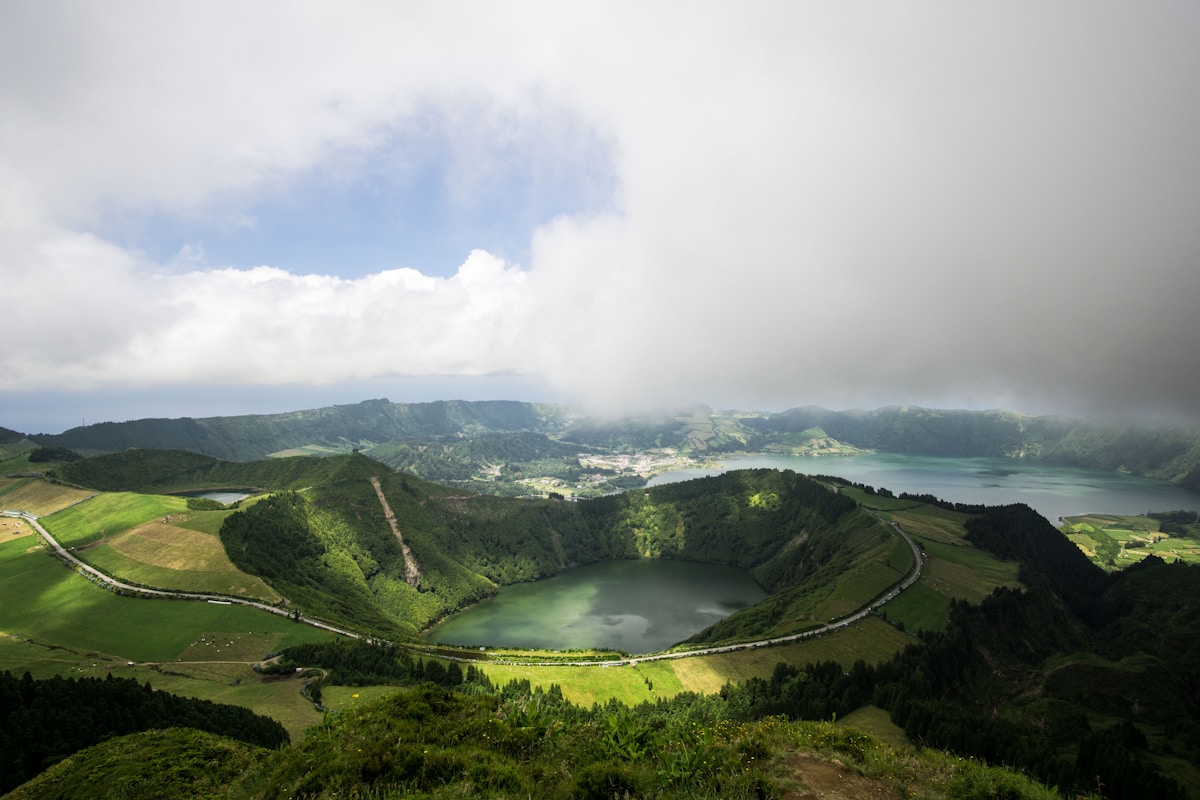
Drive west (45 minutes) to the Sete Cidades caldera - two lakes (one green, one blue) in a volcanic depression 5 km wide. The Vista do Rei viewpoint gives the full panorama from the caldera rim; this is where the standard photograph is taken.
If you would rather not drive the rim roads yourself, São Miguel day tours cover Sete Cidades and Lagoa do Fogo with local drivers. Descend into the caldera and walk the 12-km circuit around the two lakes (allow 3–4 hours). The path alternates between the lakeside and the forested caldera walls, with little elevation change on the valley floor. The village of Sete Cidades at the far end of the blue lake has one café.
Afternoon: Drive north along the caldera rim to Mosteiros on the Atlantic coast - a village with black basalt rocks in the sea and a salt water pool. Good for an hour and a swim if the sea is calm.
Evening: Return to Ponta Delgada. Dinner at Canto da Doca (fish; €20–30) or Tony’s Bar for local grilled meat.
Day 3 - Furnas
Drive east (50 minutes) to Furnas, the island’s geothermal valley. The town sits in a depression where the ground steams visibly and the local lake has active volcanic vents at the water’s edge.
Caldeiras das Furnas: Walk the circuit around the main hot spring area (free, open all day) - mud pools, sulphur vents, fumaroles, and the pots of cozido das Furnas buried in the volcanic earth and cooking underground.
Cozido das Furnas: The slow-cooked stew of beef, pork, sausages, and vegetables is buried 8–9 hours in volcanic heat before serving. Book lunch at Restaurant Tony’s or Caldeiras & Vulcões the night before (€18–22). Genuinely unlike food cooked any other way.
Terra Nostra Park (€8): A botanical garden with a thermal pool the colour of iron-stained water (brown-orange; warm at around 35°C). The garden itself is extraordinary - 200 years of plantings from across the world, with tree ferns from the Azorean laurisilva forest as centrepiece. Bring a swimsuit.
Evening: Stop at Lagoa das Furnas (the volcanic lake) at dusk - steam rises from the shoreline vents.
Day 4 - Lagoa do Fogo and Nordeste
Drive the central spine road east to the Lagoa do Fogo - a crater lake in a nature reserve with no facilities and no development. The descent to the lake edge is steep (allow 45 minutes each way) but the lake is quieter and more dramatic than Sete Cidades. No café, no signage - bring water.
Continue east to Nordeste - the least-visited part of São Miguel, a landscape of small farms, hydrangea-banked lanes, and clifftop viewpoints. The miradouro at Ponta da Madrugada gives the island’s best eastern coastal view. Lunch at any of the simple village cafés in Nordeste or Faial da Terra.
Afternoon: Return west via the northern coast road, stopping at the Gorreana Tea Plantation (free entry) - the only commercial tea farm in Europe, with original Victorian machinery still in use. Free tastings of green and black tea; the shop sells at source prices.
Evening: Fly to Faial at 18:00 or 19:00 on SATA (45 minutes). Or take the next morning’s first flight if you prefer a slower pace.
Days 5–7 - Faial and Pico
The central Azorean group - Faial, Pico, and São Jorge - is the archipelago’s most spectacular cluster. Faial and Pico face each other across a 7-km channel. The ferry between them (Horta to Madalena) takes 40 minutes and runs multiple times daily year-round (€6).
Base yourself in Horta on Faial - the best infrastructure, the most interesting town, and easy access to Pico by ferry.
Day 5 - Faial - Horta and Capelinhos
Morning: Walk Horta’s waterfront - the marina wall is painted by sailors making transatlantic crossings, a tradition going back decades. Peter Café Sport (open since 1918 at the marina) is the traditional stop for a gin and tonic and a look at the extraordinary accumulation of maritime ephemera inside.
Afternoon: Drive 30 km west to Capelinhos - the site where the volcano erupted from the sea in 1957–58, adding 2.4 km of land to the island’s western tip. The abandoned lighthouse, half-buried in lava, and the otherworldly grey landscape around it are the most striking man-made-meets-geological site in the Azores. The underground museum (€6) tells the eruption story with good archival footage.
Evening: Return to Horta. Dinner at Café Sport restaurant (fresh fish, €25–35) or O Canto restaurant on the seafront.
Day 6 - Pico and Whale Watching
Take the first morning ferry to Madalena on Pico (40 minutes, €6).
Whale watching: Book a whale watching tour from Madalena or Lajes do Pico (€60–75 per person, 3–4 hours). Tours use radio contact with land-based vigias on the cliffs above to locate whales before the boats go out - this dramatically improves sighting rates. Sperm whales are the most commonly seen; blue, fin, and common dolphins are frequent companions. Our Azores whale watching guide covers operators, best season, and species in detail.
Afternoon: Walk through the UNESCO wine landscape - the black basalt wall system that covers Pico’s Atlantic-facing coast, where Verdelho vines grow in hundreds of tiny walled parcels. The Museu do Vinho in São Roque do Pico (€5) explains the landscape’s history with good displays.
Stop for a wine tasting at Cooperativa Vitivinícola da Ilha do Pico in Madalena - Pico wines are crisp, mineral, and distinctive.
Evening: Ferry back to Horta. Dinner in Horta.
Day 7 - Pico Mountain or São Jorge
Option A - Climb Pico Mountain (experienced hikers, weather permitting): Book the mandatory climbing permit in advance at montanhaspico.azores.gov.pt (€15 per person). Drive to Casa da Montanha at 1,200m (accessible by car). The summit is at 2,351m - the highest point in Portugal - and the route crosses exposed volcanic lava fields. Return trip takes 7–8 hours. Weather must be clear and settled.
Option B - Day trip to São Jorge: Summer ferry from Horta to Velas on São Jorge (1.5 hours, €12). The island is a long ridge with dramatic fajãs (coastal platforms below cliff edges) accessible by steep footpaths. The Fajã dos Cubres lagoon and the Fajã da Caldeira de Santo Cristo (best on the north coast) are the most visited. Return ferry to Horta in the afternoon.
Evening: Last night in Horta. Fly to Terceira next morning.
Days 8–10 - Terceira
Fly from Faial (HOR) to Terceira/Lajes (TER) with SATA (30 minutes, book separately). Hire a car at Lajes airport.
Day 8 - Angra do Heroísmo
Angra do Heroísmo is a UNESCO World Heritage city - a 16th-century grid-plan city that served as the administrative heart of Portugal’s Atlantic empire. The historic centre is well preserved and walkable in a morning.
Key sites: The Sé cathedral (free), the Forte de São João Baptista (exterior walkable, interior entry €2), the Monte Brasil headland above the city for panoramic views.
Algar do Carvão (€8): A lava tube 20 minutes east of Angra. A staircase descends 45m into the earth, opening into a chamber with a subterranean lake. The formations are geological - stalactites of silica, volcanic rock walls - and the experience of standing 45m below the surface in near-silence is striking. Tours run on the hour; check the schedule at terceiraisland.com.
Evening: Dinner in Angra - Beira Mar restaurant near the port for good seafood.
Day 9 - Tourada à Corda and Serreta
Morning: If visiting between June and October, check whether a tourada à corda (the distinctive Azorean bullfighting) is running in any village that day. Unlike mainland bullfighting, bulls here are controlled by ropes held by eight pastores who run with the animal through the street. The bulls are not harmed. Schedules are posted at the tourist office in Angra.
Praia da Vitória: 15 km north of Angra, a larger, more resort-oriented town with a long sandy beach - the best swimming beach on Terceira.
Serra de Santa Bárbara: The highest point on Terceira (1,021m), accessible by road to a point and then on foot. The caldera rim gives views in both directions across the island.
Evening: Back to Angra for dinner. The centre has several good restaurants; O Pescador (fish-focused) and Beira Mar are the most reliable.
Day 10 - Biscoitos and Departure
Morning: Drive north to Biscoitos - a village known for its natural volcanic rock pools (lava formations that trap clear seawater) and as the home of Terceira’s own wine production. The pools at Biscoitos are the best natural swimming spots on the island. Cold (17–19°C in summer) but clear.
Lunch: Return to Angra for alcatra - Terceira’s signature dish, beef marinated in wine, garlic, and spices, slow-cooked in a clay pot. Served at most traditional restaurants; €12–16.
Afternoon: Fly home from Lajes airport (TER). Ryanair, TAP, and SATA operate European routes from Terceira.
Practical Planning
When to go: June to September for best inter-island ferry connections, warmest temperatures (22–25°C), and calmest conditions for whale watching and mountain climbing. October is excellent - quieter, prices drop, sperm whales still present.
Budget per person (10 days, mid-range):
- Flights (European city → PDL, TER → home): €200–400
- Inter-island flights (3): €200–350
- Ferries: €30
- Hire car (10 days across 3 islands): €350–500
- Accommodation (10 nights): €600–900
- Food and activities: €400–600
- Total: approximately €1,800–2,750 per person
What to pack: Waterproof layer (always), walking boots for caldera trails, swimsuit for thermal pools and fajãs, motion sickness medication if prone (ferry crossings can be rough).
Book Your Trip
- Flights - Find the best fares to the Azores
- Travel Insurance - Portugal insurance guide (EHIC rules, Schengen cover, surf riders) · get covered with EKTA
- eSIM - Stay connected from landing
- Airport Transfers - Pre-book your transfer from Ponta Delgada Airport
- Car Rental - Compare Azores car hire prices
- Tours & Activities - Browse Azores tours on GetYourGuide Search hotels in Azores on Booking.com to compare rates and availability.