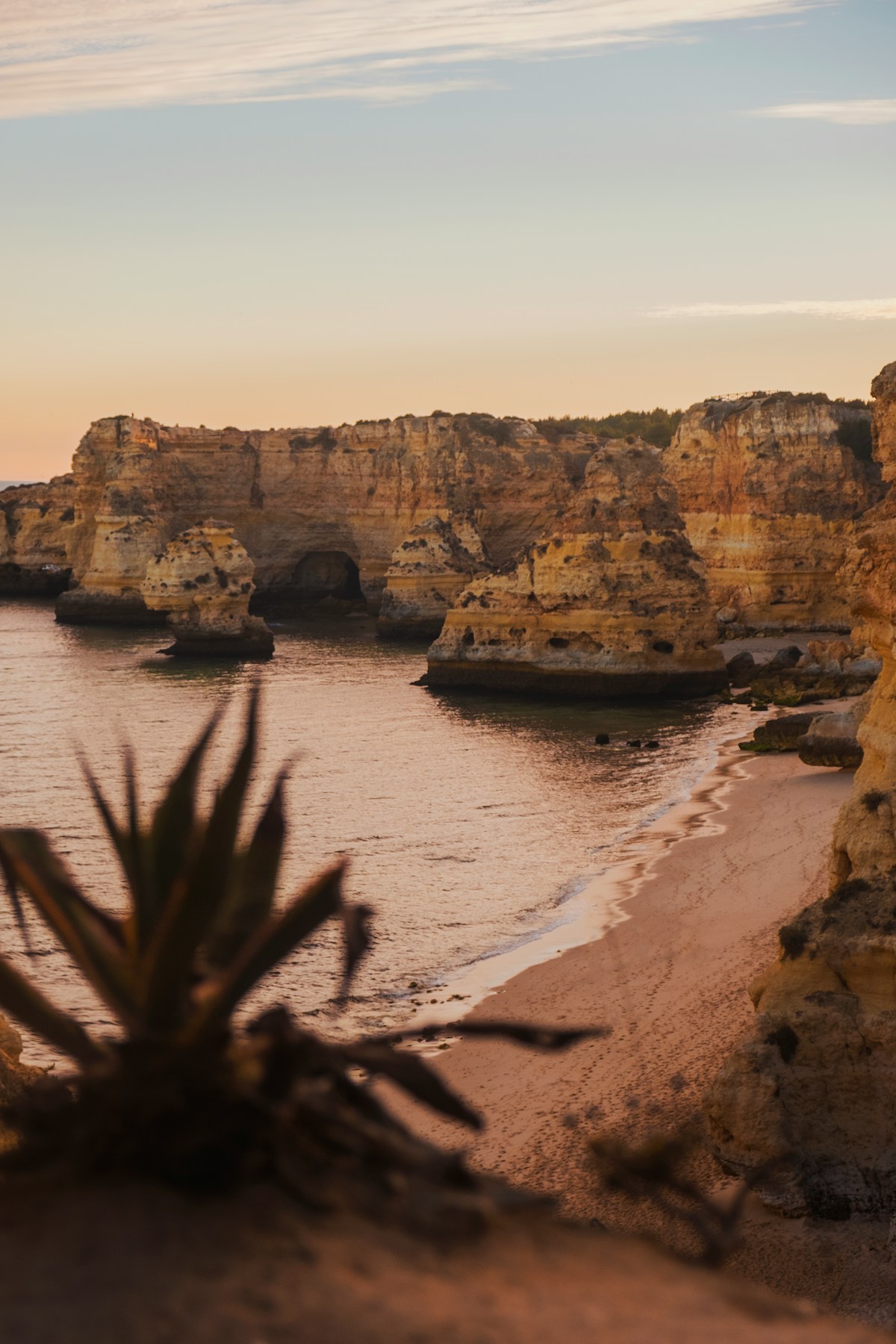
Portugal’s two most-visited holiday regions could hardly be more different. The Algarve is a sun-and-sand destination with 300 days of sunshine, long golden beaches, and resort infrastructure built over decades of tourism. Madeira is a volcanic island 1,000 km southwest in the Atlantic - mountainous, lush, and famous for levada walks, exotic flowers, and dramatic scenery. Here is how to choose between them.
Quick Verdict
| Category | Algarve | Madeira |
|---|---|---|
| Beaches | Winner | - |
| Hiking | - | Winner |
| Year-round weather | - | Winner |
| Summer sun | Winner | - |
| Family holidays | Winner | - |
| Luxury resorts | Winner | - |
| Nature and flora | - | Winner |
| Nightlife | More options | Limited |
Choose Algarve if beaches, sunshine, water sports, and resort comfort are your priority. Choose Madeira if you want year-round mild weather, serious hiking, dramatic landscapes, and something more off the beaten resort track.
Weather
Algarve: Portugal’s sunniest corner averages 300 days of sunshine per year. Summers (June–September) are hot and dry - Faro and Lagos regularly hit 30–35°C in July and August. The Atlantic keeps coastal temperatures slightly more manageable than inland. Winters are mild (15–18°C) but the resort towns largely shut down outside July–September.
Madeira: Known as the “Island of Eternal Spring” - and largely deserves the name. Year-round temperatures in Funchal range from 16°C in winter to 26°C in summer. Rain is more frequent than the Algarve (particularly on the north coast and at altitude), but Funchal on the south coast receives around 540mm annually - less than London. The mountains can cloud over quickly but the coast often stays clear. If you want warmth in January or February, Madeira beats the Algarve comfortably.
Winner: Algarve for summer sun; Madeira for year-round reliability and mild winters.
Beaches
The Algarve’s beaches are among Europe’s finest. The western section around Lagos has the most dramatic scenery: Praia Dona Ana, Praia do Camilo, and the sea caves and rock stacks at Ponta da Piedade (accessible by boat tours, from €15–20). Meia Praia east of Lagos is 4 km of sheltered sand ideal for families. Salema and Burgau are quieter options for those avoiding crowds.
East of Faro, the barrier island beaches of the Ria Formosa Natural Park (Ilha de Faro, Ilha Deserta) are accessible by ferry and offer some of the least crowded sand in the Algarve. The Algarve road trip takes in the best of the western and eastern Algarve coastlines.
Madeira’s main island has almost no sand beaches. The most swimmable spots are the volcanic rock platforms and natural lava pools - Doca do Cavacas near Funchal and Porto Moniz in the northwest are the best-known. Calheta has a small beach with imported Moroccan sand. Porto Santo island, a 45-minute ferry from Madeira (€55 return), has a spectacular 9 km beach - arguably one of Portugal’s finest - but getting there adds a day to any itinerary.
Winner: Algarve, comprehensively.
Hiking and Outdoor Activities
Madeira’s levada walking network is the island’s defining feature. The ancient irrigation channels (levadas) were cut through the mountains to bring water from the wet north to the dry south. Today, over 2,000 km of paths follow them through laurisilva forest, along cliff edges, and through tunnels. Key walks:
- PR1 Levada do Caldeirão Verde: 13 km round trip from Queimadas; passes through tunnels and finishes at a 100-metre waterfall; moderate difficulty
- PR6 Ponta de São Lourenço: 8 km round trip along a narrow volcanic peninsula; exposed ridge walking with sea views; moderate-hard
- PR9 Levada do Rei: 14 km; through ancient jungle to a dramatic gorge; easy gradient
Guided hiking day tours run from approximately €35–60 per person from Funchal.
The Algarve has enjoyable but gentler walking. The Costa Vicentina section of the Rota Vicentina coastal path in the far west is outstanding - cliff-top walking through Atlantic scrubland with dramatic ocean views. The Via Algarviana runs 300 km across the region from Alcoutim to Sagres. Neither compares to Madeira’s mountains in terms of drama or technical variety.
Winner: Madeira for serious walkers.
Cost
Both destinations are mid-range by European standards, but the cost structure differs.
Algarve: Package holidays and self-catering apartments are widely available, often making the Algarve cheaper per night than Madeira when booked as a bundle. A decent apartment in Lagos or Albufeira costs €80–140/night in shoulder season, rising to €180–300 in peak July–August. Restaurant mains in the western Algarve run €14–22 in tourist areas; local tasca lunches cost €8–12. A boat trip to the Benagil Cave from Portimão costs €20–35.
Madeira: Funchal mid-range hotels average €100–160/night year-round (Madeira has no real off-season). The Belmond Reid’s Palace (five-star, from €450/night) is Madeira’s most famous luxury address. The CS Madeira Acqua Studios (boutique, from €120/night) and Quinta Jardins do Lago (from €180/night) offer quality at a more reasonable price point. Restaurant mains in Funchal run €14–22 for a main; espetada (beef skewers, a Madeira signature) costs approximately €16–22.
See our Portugal travel costs guide for a full breakdown.
Winner: Roughly equal, though Algarve offers more options at the budget end via package deals.
Accommodation
The Algarve has Portugal’s densest concentration of golf resorts and five-star hotels. The Pine Cliffs Resort near Albufeira (from €300/night) and Conrad Algarve near Almancil (from €350/night) are the headline luxury options. The Cascade Wellness Resort in Lagos (from €250/night) is excellent for spa-focused holidays. Family-friendly self-catering resorts in Vilamoura, Portimão, and Quarteira offer large pools and kids’ clubs from €100–180/night.
Madeira’s best hotel is the Belmond Reid’s Palace - a colonial-era cliffside property with a long history of celebrity guests. The Savoy Palace (five-star, from €220/night) and Quinta da Casa Branca (boutique, from €200/night) are both excellent. Outside Funchal, the César Augusto Hotel in Porto Moniz (from €90/night) gives access to the northwest’s lava pools.
Search hotels in Algarve Portugal on Booking.com to compare rates and availability.
Getting There
The Algarve’s Faro Airport receives direct flights from across the UK and Europe year-round; budget carriers including Ryanair and easyJet offer routes from under €50 one way booked in advance.
Madeira’s Funchal Airport is well connected to UK, German, and Scandinavian airports - TAP Portugal, easyJet, Jet2, and TUI all fly there. Flights typically run €80–200 return from the UK depending on season and booking time. The landing at Funchal is one of the more dramatic in Europe - runway extensions built over the sea.
When to Visit
Algarve: Best from mid-May through June and September through early October. July and August are peak season - crowded, expensive, and very hot inland. The western Algarve (Lagos, Sagres) benefits from Atlantic breezes even in summer.
Madeira: Year-round destination. Spring (March–May) brings the famous flower festival; summer is warm and busy; autumn is pleasant and quieter; winter is the most popular season for European visitors escaping cold weather - particularly around the New Year, when Madeira’s fireworks display is one of the world’s most spectacular (Guinness World Record holder). Madeira in a week covers the best route for a first visit.
Whichever you choose, tours across Portugal make it easy to book guided day trips, walking tours, and activity packages in advance.
car hire in Portugal gives you the freedom to combine both destinations in a single trip - booking ahead of arrival is reliably cheaper.
Final Verdict
If you want the classic sun-sea-sand beach holiday, the Algarve wins every time. If you want something richer in natural landscapes, hiking, and year-round mild weather - particularly for a winter or spring escape - Madeira is outstanding and genuinely hard to match in Europe for its combination of scenery, flowers, and food.
They are not really competing for the same traveller: the Algarve is Europe’s best beach destination in its category; Madeira is one of Europe’s best active, nature-led island destinations. Choose based on what you actually want to do.
More Portugal Comparisons
- Madeira vs Azores — full island comparison for both Atlantic archipelagos
- Lisbon vs Algarve — city culture against the classic beach holiday
- Porto vs Algarve — Portugal’s second city against its biggest beach region
- Is the Algarve Worth It? — the honest verdict on what the Algarve delivers
Plan Your Trip
🏨 Search hotels in Madeira 🏨 Search hotels in the Algarve 🎯 Tours in Madeira 🎯 Tours in the Algarve ✈️ Book your flights to Portugal 🛡️ Get travel insurance 📱 Stay connected with an eSIM 🚗 Rent a car