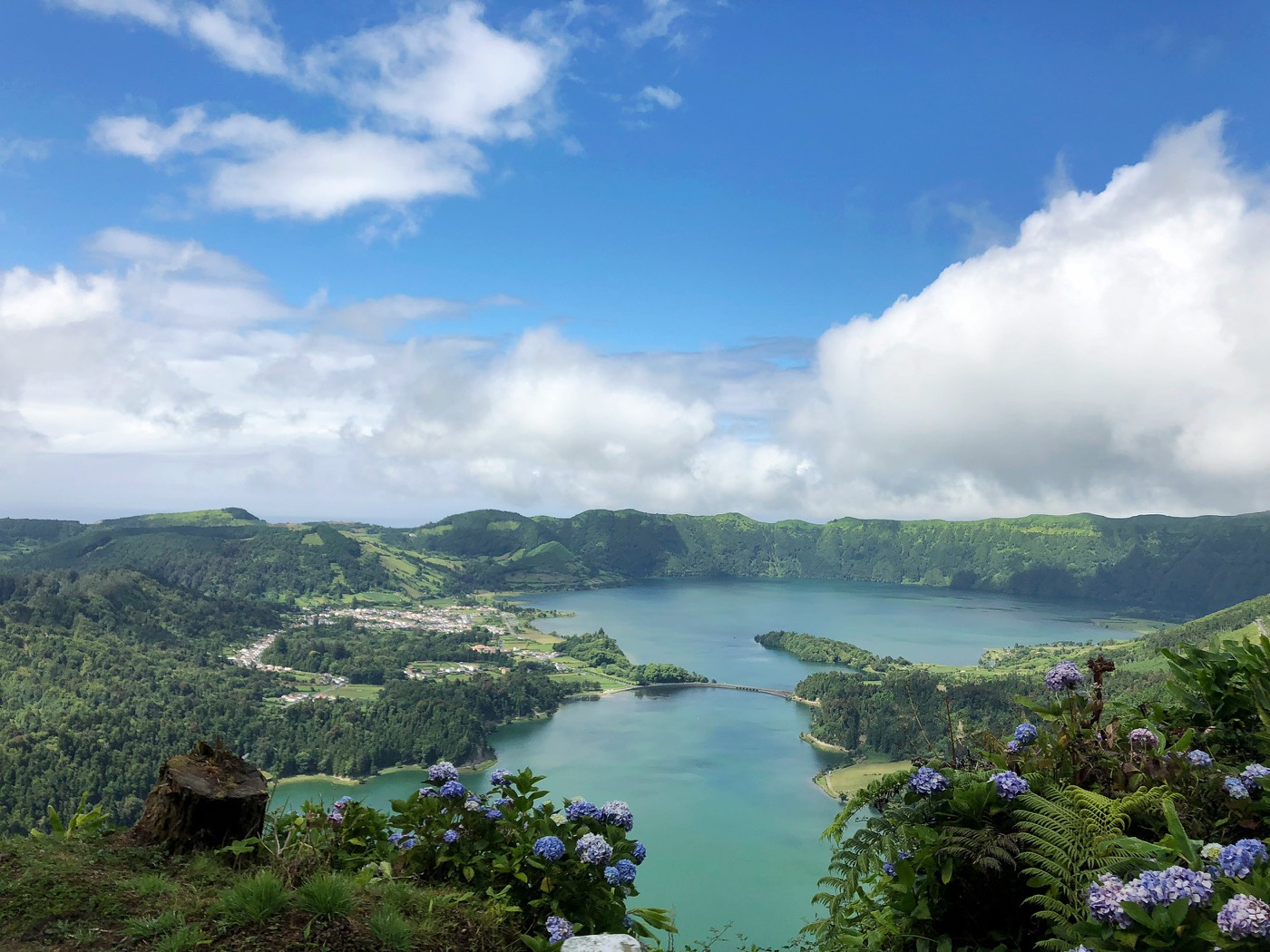
São Miguel and Faial are the two most visited Azores islands outside Terceira, and they attract different travellers for different reasons. São Miguel is the archipelago’s gateway: the largest island, the most accessible, and the most scenically dramatic, with twin crater lakes, geothermal valleys, and the infrastructure to handle first-time visitors comfortably. Faial is a smaller, quieter island whose fame rests on its extraordinary marina — a legendary waypoint for Atlantic sailors — and its position as the hub for exploring the central Azores Triangle with Pico and São Jorge.
Quick Verdict
| Category | São Miguel | Faial |
|---|---|---|
| Accessibility | Winner | Requires connection |
| Volcanic scenery | Winner | Good (Caldeira, Capelinhos) |
| Crater lakes | Winner (Sete Cidades) | — |
| Geothermal activity | Winner (Furnas) | — |
| Whale watching (base) | Good | Winner (via Pico ferry) |
| Sailing culture | — | Winner |
| Triangle island access | Limited | Winner |
| Accommodation range | Winner | Smaller range |
| Food scene | Winner | Local, good quality |
| Best for | First visit, solo itinerary | Experienced Azores travellers |
Choose São Miguel for a single-island first visit, Sete Cidades, Furnas geothermal valley, and reliable whale watching. Choose Faial if you want the central Azores Triangle — Horta Marina, the Pico ferry, and more authentic island life with fewer visitors.
Getting There
São Miguel: Ponta Delgada Airport (PDL) is the Azores’ main hub. SATA and TAP fly direct from Lisbon in approximately 2 hours. Ryanair operates seasonal routes from London Gatwick and Manchester. Transatlantic connections via SATA from Boston and Toronto operate summer–autumn. Inter-island connections fan out from Ponta Delgada to all other Azores islands.
Faial: Horta Airport (HOR) is on the north coast of the island. SATA flies direct from Lisbon (approximately 2 hours) and from São Miguel in around 30 minutes — the inter-island connection costs approximately €50–80 and runs several times daily. There is no ferry between São Miguel and Faial; flying is the only option. Car hire is available at both airports.
Between the islands: The most natural move is to fly into Ponta Delgada, spend time on São Miguel, then take the SATA hop to Faial. From Horta, the Triangle is easy: the Pico ferry runs approximately every 90 minutes (30 minutes, €6), and São Jorge ferry takes 75 minutes.
São Miguel
São Miguel is 746km² — the largest Azores island — with 138,000 residents and the capital Ponta Delgada on the south coast. The island’s defining feature is its volcanic activity. The interior contains two major calderas: the Sete Cidades in the west (the twin crater lakes, one green, one blue, separated by a narrow bridge visible from the rim viewpoint Vista do Rei) and the Furnas caldera in the east, where the valley floor steams with boiling mud pools and a unique underground-cooked stew — cozido das Furnas — is served at lunch.
The island also has the Azores’ most developed whale watching infrastructure. Operators including Futurismo and Moby Dick Tours run 3–4-hour tours from Ponta Delgada from approximately €60–80. Sperm whales are resident year-round; blue and humpback whales migrate through between April and October.
Top experiences on São Miguel:
- Vista do Rei viewpoint above Sete Cidades caldera (free, drive to rim)
- Caldeiras das Furnas mud pools + cozido lunch at Tony’s (arrive by 12:30)
- Whale watching tour from Ponta Delgada (€60–80, 3–4 hours)
- Gorreana Tea Plantation, north coast (free to visit)
- Poça da Dona Beija thermal pools, Furnas (€8, open until midnight)
- Lagoa do Fogo crater lake, central island (5km return hike)
Accommodation on São Miguel: Mid-range hotels in Ponta Delgada run from approximately €90–150 per night. The city also has a range of rental apartments and a few rural quinta properties around Furnas and the north coast.
Search hotels in São Miguel on Booking.com
Faial
Faial is 173km² with a population of around 15,000, centred on the harbour town of Horta. The island has been a significant Atlantic waypoint for over a century — the transatlantic telegraph cable passed through here from 1893 — and Horta Marina has become one of the most famous ocean sailing stopovers in the world. Over 8,000 painted murals cover every surface of the quay walls, left by crews of transatlantic yachts who follow the tradition that any vessel departing without a mural will suffer bad luck at sea. Peter’s Café Sport, the sailors’ bar since 1918, is a genuinely singular place.
Beyond the marina, Faial has two strong geological attractions. The Caldeira — an 8km-diameter caldera 400m deep — offers a 7km rim circuit through cryptomeria forest with views into the green interior; start by 9am before cloud closes in. Capelinhos, on the western tip of the island, is a moonscape created by a 1957–58 eruption that added new land to the island and displaced most of the western population; the visitor centre (€6) and accessible lava fields are extraordinary.
Faial’s position in the Triangle makes it the natural base for the central Azores. The Pico ferry from Horta to Madalena runs multiple times daily (30 minutes, approximately €6), allowing a day trip to climb Portugal’s highest mountain or go whale watching with Pico’s specialist operators. São Jorge is 75 minutes by ferry from Horta.
Top experiences on Faial:
- Horta Marina murals and Peter’s Café Sport (free to walk, drink for the atmosphere)
- Caldeira rim walk, 7km, 2–3 hours (start early — cloud closes in by noon)
- Capelinhos volcano and visitor centre (€6)
- Day trip to Pico: ferry + whale watching or volcano hike
- Whale watching from Horta (€60–75, operators include Espaço Talassa if staying Pico-side)
Accommodation on Faial: Horta has a compact range of guesthouses, small hotels, and a few rural properties. Prices are typically €80–130 per night for a mid-range room. The choice is narrower than São Miguel.
Search hotels in Faial on Booking.com
Whale Watching
São Miguel: Three main operators — Futurismo, Moby Dick Tours, SATA Whale Watch — run tours from Vila Franca do Campo and Ponta Delgada from April through October. Tours run 3–4 hours and cost €60–80. The island uses shore-based vigias (traditional lookout towers) to spot whales before boats depart. Sperm whales are resident year-round; blue whales peak in spring (March–May).
Faial / Pico: The Pico island operators — Espaço Talassa and Pico Sport in Lajes do Pico — are widely considered the best in the Azores. The deep Atlantic trough passes close to Pico’s southern coast, and transit time to the whales is shorter. The Pico–Faial ferry makes it easy to base yourself on Faial and whale-watch from Pico. Tours are similarly priced: €60–80. If whale watching is a priority, Faial is the better base.
Winner: Faial (as a gateway to Pico’s operators); São Miguel for convenience if you are staying only on the larger island.
Hiking
São Miguel: The Sete Cidades caldera rim circuit (8km) is the standout hike — views over both crater lakes throughout. Lagoa do Fogo in the centre of the island (5km return from the EN3 road) descends to a clear, swimmable crater lake. The Furnas valley walk around the boiling caldeiras is flat and accessible.
Faial: The Caldeira rim circuit (7km, 2–3 hours) is Faial’s best hike — through reforested cryptomeria with views into the caldera floor. The Capelinhos coastal walk across the ash cones is shorter but geologically remarkable.
Winner: São Miguel for variety; Faial for the Caldeira’s solitude.
Food and Drink
São Miguel: Ponta Delgada has the strongest restaurant scene in the Azores outside Terceira — a range of fish restaurants, cafés, and modern Portuguese cooking. The cozido das Furnas (underground geothermal stew, approximately €18–22 at restaurants near Caldeira Velha and Tony’s in Furnas) is the signature dish you can only eat on São Miguel.
Faial: Horta is a working port town with honest fish restaurants and good value. Peter’s Café Sport is the standout for atmosphere (try the Faial gin). Azorean beef from the island’s dairy-farming tradition is excellent. Fewer restaurants than São Miguel but quality is consistently good.
Winner: São Miguel for variety; Faial for atmosphere.
When to Visit
São Miguel: Year-round destination. June–September is warmest (18–24°C) and driest. Whale watching is possible year-round but peaks April–October. The Sete Cidades and Lagoa do Fogo are most accessible on clear summer days; even in winter, the geothermal valley at Furnas and the city of Ponta Delgada offer plenty.
Faial: May–October is best. The Caldeira hike is frequently cloud-covered outside summer; start early even in July–August. Whale watching from Pico peaks April–October. The marina is active with transatlantic sailors from May onward as the Atlantic crossing season begins.
See our Azores island-hopping itinerary for how to combine São Miguel and Faial with Pico and São Jorge on a longer trip, and the Azores region guide for all nine islands.
For guided tours on São Miguel, browse tours in São Miguel — Sete Cidades caldera walks, Furnas valley jeep tours, and whale watching are the most popular. For Faial, tours in Faial covers whale watching, caldeira hikes, and Capelinhos visits.
For accommodation on both islands, see our São Miguel hotels guide and Faial hotels guide.
Final Verdict
Visit São Miguel if: this is your first Azores trip and you want the most concentrated volcanic scenery, the most accessible whale watching, and the easiest logistics. Sete Cidades and Furnas alone justify the trip.
Visit Faial if: you have already seen São Miguel and want something smaller, quieter, and more Atlantic in character — or if you want to use Horta as the base for a Triangle adventure to Pico and São Jorge.
Both islands reward a visit. São Miguel sets the Azores standard; Faial represents the Azores at its most authentic.
More Portugal Comparisons
- Madeira vs Azores — how Portugal’s two Atlantic island groups compare
- São Jorge vs Faial — Faial compared to its Triangle neighbour São Jorge
- São Miguel vs Terceira — São Miguel against the Azores’ historic capital
- Pico vs Flores — two of the Azores’ most dramatic islands
Plan Your Trip
🏨 Search hotels in São Miguel 🏨 Search hotels in Faial 🎯 Tours in São Miguel 🎯 Tours in Faial ✈️ Book your flights to Portugal 🛡️ Get travel insurance 📱 Stay connected with an eSIM 🚗 Rent a car