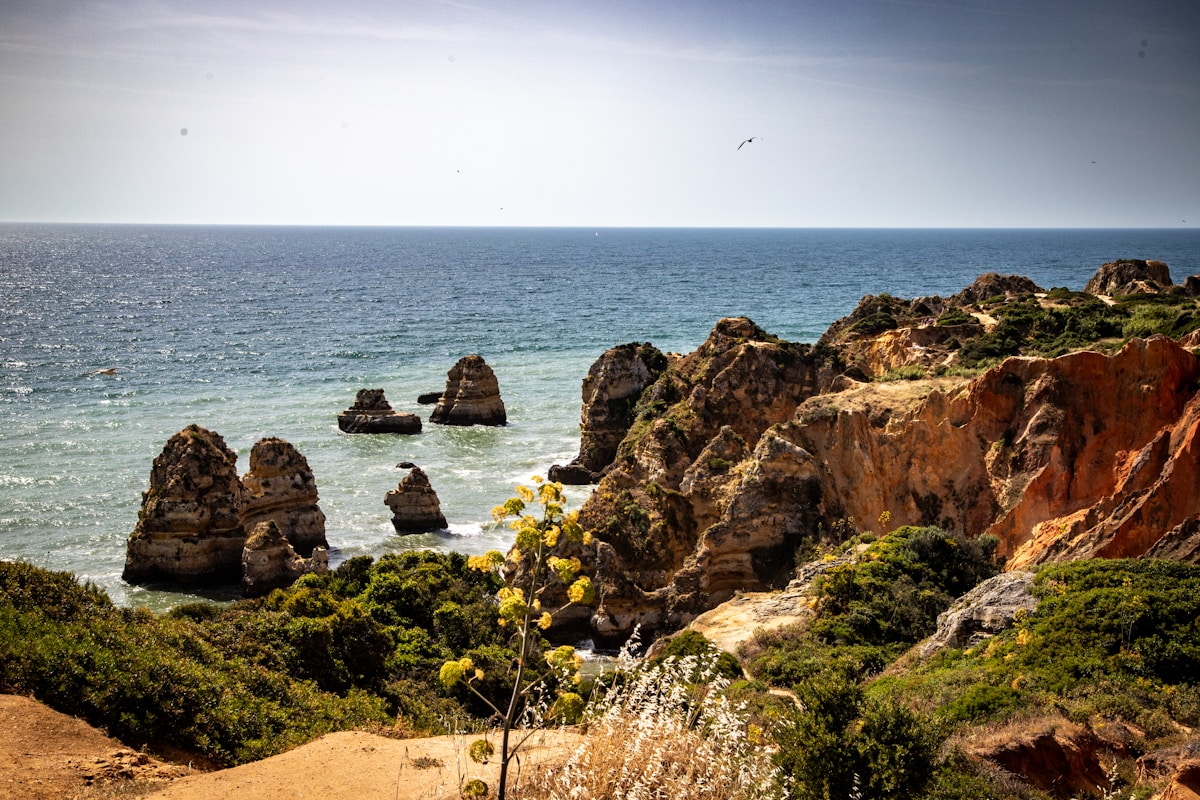
Praia da Marinha is genuinely beautiful. It is also full. By mid-morning in July the clifftop car park is closed, the staircase has a queue, and the sand below is covered end to end. Benagil is worse: the famous cave is accessible only by water, which means a boat tour or kayak, and then a crowd inside the cave you queued 45 minutes to reach.
The Algarve has 150 kilometres of coastline. The same limestone formations that make Marinha famous extend along the entire central and western coast, and many beaches along that stretch see a fraction of the tourist traffic. The six below are the ones worth knowing about.
Quick Comparison
| Beach | Crowd Level | Facilities | Best For | Nearest Town |
|---|---|---|---|---|
| Praia do Barranco do Martinho | Very low | None | Solitude, cliff scenery | Lagos |
| Praia do Barranquinho | Low | None | Snorkelling, rock pools | Lagoa |
| Praia das Furnas | Low to medium | None | Sea caves, low-tide exploration | Luz |
| Praia do Carvalho | Medium | Beach bar (summer) | Swimming, cave tunnel | Lagoa |
| Praia da Murta | Low | None | Clifftop walk, isolation | Albufeira |
| Praia de Odeceixe | Medium | Cafe, lifeguard | Surf, river swimming | Aljezur |
Praia do Barranco do Martinho, Lagos
West of Lagos and south of the village of Barao de Sao Joao, this narrow cove is one of the least-visited beaches on the western Algarve coast. The access track runs off a minor road near Ponta da Piedade and drops through low scrubland to a small informal parking area. From there, a rough path descends a barranco (a deep gully cut into the limestone) to the beach below.
The beach is narrow, backed by crumbling amber cliffs, and almost never has more than a handful of people on it. There are no facilities of any kind. The water is clear and noticeably calmer than the exposed west-facing beaches further north, but check conditions before entering: the barranco access means leaving quickly is not straightforward.
GPS tip: Search “Praia Barranco Martinho Lagos” in Google Maps rather than a satnav; many devices will not find this without coordinates. The approach road from the N120 is unmarked.
Best season: May to October. Avoid after heavy rain when the path becomes unstable. Crowd level is consistently very low even in August.
Praia do Barranquinho, Lagoa
Around 5km east of Carvoeiro along the EN124, an unsigned lane drops toward the coast. Praia do Barranquinho sits inside a natural cove flanked by the same amber limestone stacks that photograph so well at Marinha, but without the crowds. The beach is roughly 80 metres of coarse sand, accessible via a short footpath from a small informal car park.
There are no facilities: no cafe, no sunlounger hire, no lifeguard post. That is what keeps it quiet. The rock pools at the western end are among the better snorkelling spots on the central Algarve coast. At low tide a sea arch is accessible on foot. The lane is unmarked on many satnavs, so download the coordinates before leaving.
Best season: June to September. Snorkelling is best within two hours of low tide.
Swimming conditions: sheltered from Atlantic swell, water is typically calm and clear. Safe for confident swimmers at most states of the tide; rock entry points rather than sand at the margins.
Praia das Furnas, near Luz
East of the village of Luz and roughly 3km west of Lagos, Praia das Furnas is a small rocky cove tucked below the clifftop path that connects Luz to Ponta da Piedade. The name comes from the sea caves (furnas) cut into the limestone face at the eastern end, some of which are large enough to walk into at low tide.
The access path starts from the clifftop east of Luz village, near a small car park close to the EN125 junction, and takes around 15 minutes on foot. The beach is shingle and coarse sand. At high tide the swimming area shrinks, but the caves and clear water make it worth timing your visit to the two hours around low tide.
There are no facilities. The proximity to Lagos and Luz means it does see some visitors in peak season, but nowhere near the numbers at the main circuit beaches.
GPS tip: The path entrance is on the east side of Luz, signed from the clifftop car park off Rua da Igreja. If you can see the lighthouse at Ponta da Piedade from the clifftop, you are roughly 10 minutes from the beach access.
Best season: May to October. Morning visits are reliably quieter than afternoons.
Swimming conditions: sheltered, clear water good for snorkelling; sea caves add an exploratory dimension at low tide. Not suitable for swimming in rough Atlantic swell.
Praia do Carvalho, Lagoa
Praia do Carvalho is accessed through a hand-cut tunnel in the cliff face: a 60-metre passage hacked through the limestone by fishermen generations ago. The tunnel alone deters enough visitors to keep the beach quiet on days when Marinha is standing-room only.
The beach is approximately 150 metres of sand backed by vertical orange cliffs. At low tide the sea is calm enough for swimming even on days when swell is running to the west. A small beach bar operates in summer, making this the most visitor-friendly option on this list without crossing into genuinely crowded territory. Parking is on the clifftop; follow signs off the EN124 between Lagoa and Carvoeiro.
Best season: June to September. The beach bar typically opens from late June.
Swimming conditions: calm at low tide, the enclosed geometry of the cove keeps the water clear and relatively sheltered. Facilities present (summer only) make it a better choice for families than the other options on this list.
Praia da Murta, Albufeira
East of Albufeira’s main tourist strip, past the marina and hotel towers, the coastline becomes noticeably quieter. Praia da Murta sits in a sheltered cove about 4km east of Olhos de Agua. The beach is small, the cliffs are high on both sides, and there is no commercial infrastructure of any kind.
Getting there requires a 20-minute clifftop walk from the nearest parking area near Praia de Sao Rafael. The path is signed but unpaved and becomes slippery after rain. The payoff is a beach that even in high summer rarely sees more than a hundred people, which is a remarkable figure for the central Algarve in July.
Best season: June to September. Weekdays are significantly quieter than weekends. The clifftop walk is exposed in summer heat; go in the morning.
Swimming conditions: sheltered cove, calm water, no lifeguard. Rock entry at the edges; sand entry in the centre at low to mid tide.
Praia de Odeceixe, Western Algarve
The westernmost beach on this list sits at the point where the Seixe river meets the Atlantic, forming a double beach: one sheltered and river-lapped, one exposed to Atlantic swell, separated by a sandbar that shifts with the tide.
Odeceixe is 50km from Lagos and 35km north of Sagres along the Costa Vicentina, inside the Southwest Alentejo and Vicentina Coast Natural Park. The natural park designation caps development: no new beach facilities have been approved in decades, and the village above the beach is genuinely unchanged. The water is cold by southern Algarve standards; the west coast runs several degrees cooler than the sheltered southern bays. The waves are real. A small cafe operates in summer and there is a lifeguard post in July and August.
GPS tip: The beach car park is signed from the N120 near Odeceixe village; follow signs for Praia de Odeceixe. The last kilometre is a narrow road with limited passing space.
Best season: May to June and September, when swell is manageable and the road is quieter. July and August see more surfers and families but it remains far less crowded than the central Algarve coast.
Swimming conditions: variable. The river-side pool is sheltered and calm, suitable for all abilities. The ocean side has real Atlantic swell and should be treated with respect, particularly outside the lifeguard hours.
When to Go
All six beaches are at their most accessible on weekdays in June or September. July and August remain the busiest months across the Algarve, and even these alternatives see more visitors than in shoulder season. Going mid-week rather than at the weekend makes a meaningful difference at all of them.
Low tide is consistently better for exploration. The limestone geology means that at high tide many of these beaches shrink dramatically, and the rock pools and sea caves that make them interesting disappear under water. The Portuguese Hydrographic Institute website provides free tide tables for all points along the Algarve coast; check these before planning your route.
A practical note on parking: the informal car parks at Barranquinho and Barranco do Martinho hold a small number of vehicles (typically 10 to 20). If you arrive and the car park is full, come back two hours later rather than blocking the access track.
Plan Your Trip
🏨 Search hotels in Algarve Portugal on Booking.com
A car is essential for most of these beaches — our Algarve road trip itinerary routes a week-long circuit that passes all six, with suggested overnight bases in Lagos and Tavira. For a broader introduction to the region and whether it suits your travel style, see is the Algarve worth it.
Plan Your Trip
- Flights - Find the best fares to Portugal
- Travel Insurance - Get covered before you go
- eSIM - Stay connected from landing
- Car Rental - Compare prices across providers
See also: Algarve region guide · Algarve road trip itinerary · Is the Algarve worth it?