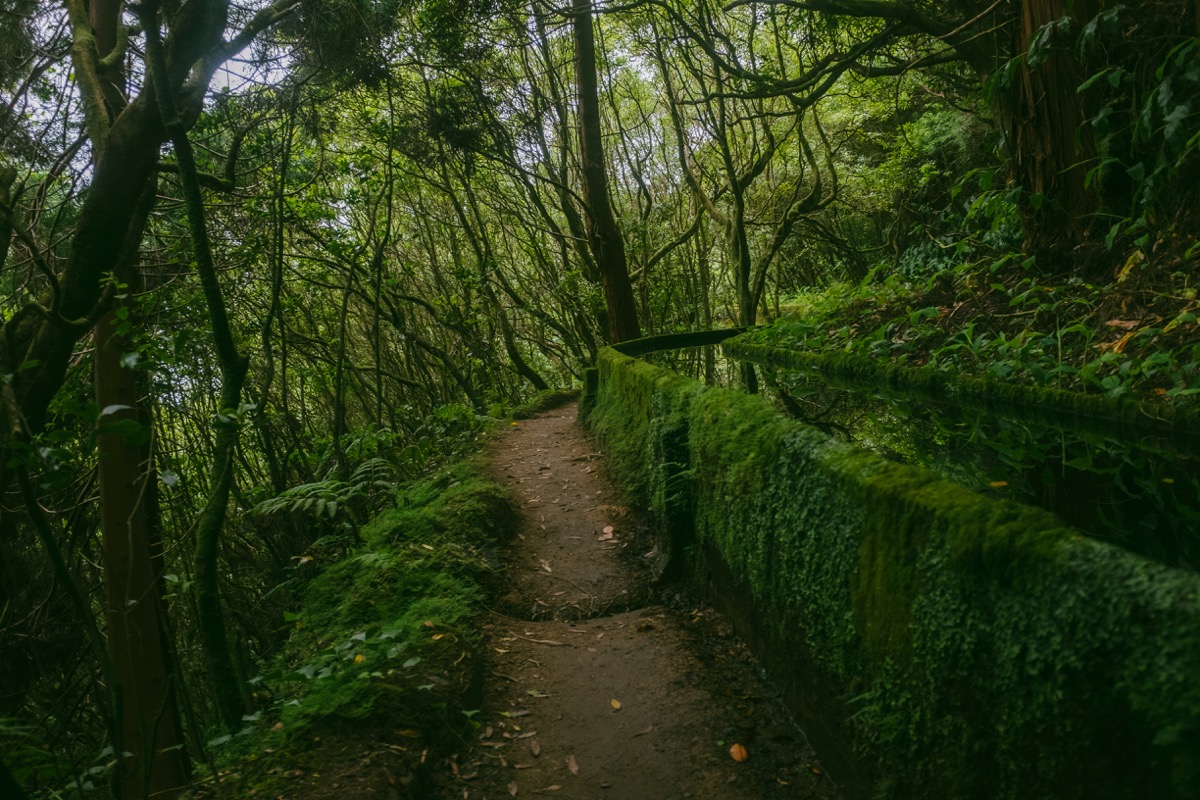
São Jorge and Faial sit 75 minutes apart by ferry and represent two very different approaches to the Azores Triangle. Faial is the hub: its capital Horta is the most complete small town in the central group, its marina is one of the legendary Atlantic sailing stops, and its position at the centre of the Triangle makes it the natural base for hopping to Pico and São Jorge. São Jorge is the hiker’s island: narrow, ridge-shaped, dramatically cliffed, and home to the fajãs — ancient lava-flow platforms at sea level, reached by steep coastal trails and almost entirely overlooked by mainstream tourism. These two islands complement each other more than they compete, but if you are only choosing one, the decision turns on what kind of trip you want.
Quick Verdict
| Category | São Jorge | Faial |
|---|---|---|
| Fajã hiking | Winner (unique coastal trail experience) | — |
| Marina and sailing culture | — | Winner (Horta, Peter’s Café Sport) |
| Triangle hub access | One ferry hop | Winner (Pico 30 min, São Jorge 75 min) |
| Capelinhos volcano | — | Winner |
| Caldeira walk | — | Winner (7km rim circuit) |
| Whale watching (base) | Basic | Good (Pico 30 min away) |
| Cheese | Winner (DOP Queijo São Jorge) | — |
| Restaurant scene | Basic | Winner |
| Crowds | Very low | Low |
| Accommodation range | Limited | Better |
| Best for | Trail hikers, solitude seekers | Triangle base, sailing fans, non-hikers |
Choose São Jorge if hiking the fajãs is your priority and you want the quietest, most authentically rural island in the central group. Choose Faial if you want a comfortable base with good restaurants, the famous marina atmosphere, easy Pico access, and Capelinhos — the most striking volcanic landscape in the Triangle.
Getting There
Faial: Horta Airport (HOR) is on the north coast of the island, 5km from the city centre. SATA flies from Lisbon in approximately 2 hours, and from Ponta Delgada (São Miguel) in around 30 minutes; there are 3–5 connections daily in summer. No budget airlines currently serve Faial. Car hire is available at the airport; the island is small enough (173km²) that you can cover it in 2–3 days. The city of Horta is walkable; a car is needed for the Caldeira trailhead and Capelinhos.
São Jorge: Velas Airport (SJZ) has SATA service from Ponta Delgada and occasionally from Lisbon, but frequency is lower than Faial. The most common approach is by Atlanticoline ferry from Horta — 75 minutes, approximately €9, typically 1–2 departures daily in summer. Alternatively, from Madalena (Pico): 45 minutes, approximately €7. The ferry arrives at Velas, the main town. Hire a car at the ferry terminal or in Velas; São Jorge’s fajã trailheads are spread across the island and there is no usable public transport.
Between the islands: The Horta–Velas ferry is the direct route (75 minutes, ~€9). Check Atlanticoline schedules; services are weather-dependent and winter frequency drops to 3–4 per week. The indirect route via Pico adds about 45 minutes of ferry time but passes through Madalena if you want to include Pico in the itinerary.
Faial Island
Faial is 173km² with around 15,000 residents. Horta, the capital, sits in a natural harbour on the southeast coast and has been a significant Atlantic waypoint since the 19th century. The transatlantic telegraph cable passed through here from 1893; American flying boats refuelled at Horta until the 1950s; and Horta Marina has been one of the world’s major ocean sailing stopovers since the era of modern offshore racing. More than 8,000 painted crew murals cover the quay walls, left by crews of transatlantic yachts following the tradition that a boat without a mural will suffer bad luck at sea. Walking the marina walls — reading the vessel names, home ports, and crossing dates — takes an hour and is one of the most atmospheric things in the Azores.
Peter’s Café Sport on the waterfront has operated as the sailors’ bar since 1918. It is genuinely irreplaceable: a dark-wood bar with ships’ pennants from the ceiling, crew photos covering every surface, and a clientele of offshore sailors at anchor in the marina alongside tour groups who came for the atmosphere. Try the Faial gin or a glass of Pico Verdelho. Open daily; busy from midday through late evening in summer.
Capelinhos
The western tip of Faial was dramatically extended between September 1957 and October 1958, when a submarine eruption broke the surface and added approximately 2.4km² of new land to the island’s western edge. The eruption devastated the village of Capelo and displaced most of the western population; the buried lighthouse still stands half-submerged in black ash and lava. Today, Capelinhos is an extraordinary moonscape: dark ash fields, collapsed lava tubes, the ruined lighthouse, and the Atlantic beyond. The visitor centre (€6, housed underground in the original lighthouse keepers’ building) tells the story with original footage and emigration records — many former residents ended up in New England. Allow 2 hours including the visitor centre and a walk through the ash fields. The overall site is flat and accessible.
Caldeira
The Caldeira is an 8km-diameter caldera, 400m deep, with vertical inner walls and a floor of laurisilva cloud forest. The 7km rim circuit runs through cryptomeria forest at approximately 1,000m elevation and takes 2–3 hours at an easy pace. Start by 8–9am before the cloud moves in (which it does, reliably, by midday). The viewpoints across the caldera are extraordinary on a clear morning; in mist, the walk through the forest is still atmospheric but views disappear entirely. No technical ability required; one or two sections are exposed on the rim edge but the path is clear.
Top experiences on Faial:
- Horta Marina murals (free, self-guided, allow 1 hour)
- Peter’s Café Sport — gin or Verdelho (budget €10–15 for drinks)
- Capelinhos volcano and visitor centre (€6, allow 2 hours)
- Caldeira rim walk, 7km, 2–3 hours (start early)
- Day trip to Pico: 30-minute ferry + whale watching or volcano summit
Accommodation on Faial: Hotels and guesthouses in Horta from approximately €80–130/night. The choice is narrower than São Miguel but covers the range from simple pensões to mid-range business hotels. Book ahead in July–August when the marina fills with transatlantic sailors.
Search hotels in Faial on Booking.com
São Jorge Island
São Jorge is 246km², narrow, and shaped like a long ridge with sea cliffs dropping on both the north and south coasts. The island’s interior reaches 1,053m at Pico da Esperança and stays green year-round from Atlantic rainfall. Its defining geological feature — the fajãs — exist because ancient lava flows from the island’s flanks reached the sea and cooled into flat platforms at the base of the cliffs. Forty-plus fajãs exist on São Jorge; a handful are accessible by trail, and three are still inhabited, reachable only on foot or by sea.
The Fajã Trails
Fajã dos Cubres and Fajã da Caldeira de Santo Cristo — these two north-coast platforms are connected by a coastal walk and form the island’s signature half-day or full-day hike. The descent from the EN2 road above Norte Grande takes 30–40 minutes on steep, uneven lava paths to reach Fajã dos Cubres, a flat platform with a sheltered saltwater lagoon. Continue east for another 2km of flat coastal walking to reach Santo Cristo — the larger, inhabited fajã with about 10 permanent residents and the only place in Portugal where natural saltwater clam cultivation takes place. The restaurant at Santo Cristo (when open) serves clam rice (arroz de berbigão) for approximately €14–18; calling ahead is advisable as hours are irregular. The full round trip, including the walk between fajãs, covers approximately 10–12km and takes 4–5 hours. The return climb from Fajã dos Cubres back to the road is steep and tiring; allow more time than you think you will need.
Fajã do Ouvidor — south coast, accessed from Urzelina village. Shorter descent (1.5km, 30 minutes) to a smaller platform with sea stacks and dark basalt rock formations at the waterline. Less visited than the north coast fajãs; better for solitude. The black pebble beach is swimmable in calm summer conditions.
Fajã de São João — remote north coast platform accessible from the ridge road near Pico da Esperança. A 45-minute descent leads to one of the island’s most isolated inhabited fajãs: stone houses, lemon groves, a natural swimming channel. Almost no day visitors. Carry all food and water.
Queijo São Jorge
The island’s DOP-protected cheese — a firm, aged cow’s-milk cheese with a nutty, slightly spicy character — is produced exclusively on São Jorge and has been for over 500 years. The Uniqueijo factory in Velas runs tours (€5) of the production process. Aged versions (over 3 months) are firmer and sharper than the cured version (30–60 days); the extra-aged (cura extra, 6+ months) is the most intense. Buy from the factory shop — you will pay a fraction of Lisbon or Ponta Delgada prices, and the quality of the freshest stock is noticeably better.
Accommodation on São Jorge: Guesthouses in Velas and Norte Grande from approximately €65–95/night. Rural Turismo Rural properties around the island from €70–120. Fewer options than Faial; book early in high season.
Search hotels in São Jorge on Booking.com
Head-to-Head Comparison
For hikers: São Jorge is the winner, unambiguously. The fajã trails have almost no equivalent in the Azores for raw geological drama at walking pace. Faial’s Caldeira rim circuit is excellent but shorter and less demanding. If hiking is your primary purpose, São Jorge rewards more time than a single day.
As a base for the Triangle: Faial wins easily. Horta’s daily ferry to Madalena (Pico, 30 minutes) makes day trips to the volcano or whale watching operators straightforward. São Jorge has a direct ferry to Pico (45 minutes) but fewer daily crossings, and reaching Faial from São Jorge adds another 75 minutes each way.
For non-hikers: Faial offers more. Capelinhos, Peter’s Café Sport, the marina walk, and the range of restaurants in Horta make it a satisfying destination even without hiking. São Jorge has little infrastructure for travellers who don’t walk.
For food and drink: Faial has the better overall restaurant scene in Horta; São Jorge wins on the specific DOP cheese experience. Pico’s UNESCO vineyards (30 minutes from Faial on the ferry) are the Triangle’s best food-and-drink attraction — that fact alone makes Faial the better base for drinking.
For solitude: São Jorge. The island receives a fraction of Faial’s visitors, the fajã trails are often empty, and village life in the interior is entirely untouched by tourism.
When to Visit
Faial: May–October. The Caldeira hike is manageable but frequently cloudy outside summer; aim for June–September for the best morning clarity. Whale watching from Pico (via ferry) peaks April–October; blue whales are most likely April–May. The marina is busiest June–September when transatlantic crossings are complete. Peter’s Café Sport runs year-round, but the atmosphere is best in summer with the marina full.
São Jorge: June–September. The fajã trails are technically walkable year-round in dry weather, but rain makes the lava surfaces dangerously slippery and cloud can persist for days in winter, reducing the north coast views to nothing. July and August are the driest months and the most reliable for the Santo Cristo restaurant. The cheese factory runs tours year-round.
See our Azores island-hopping itinerary for a complete Triangle routing, and the Azores region guide for all nine islands.
For guided experiences on Faial, browse tours in Faial — Capelinhos visits, Caldeira walks, and whale watching day trips to Pico are the most booked. For São Jorge, tours in São Jorge covers guided fajã hikes and jeep island tours.
For accommodation, see our Faial hotels guide and São Jorge hotels guide.
Final Verdict
Visit São Jorge if: you want the Azores at its most undisturbed — fajã hiking through volcanic coastal landscapes that see almost no tourists, Queijo São Jorge at source, and a narrow ridge island where the terrain itself is the attraction. Accept limited restaurants and fewer ferry crossings; the reward is the most singular walking experience in the Triangle.
Visit Faial if: you want a comfortable base with character — Horta Marina, Capelinhos’ extraordinary volcano landscape, easy Pico access for whale watching or the summit, and the best restaurants in the central group. Faial is the Triangle’s hub for good reason; it offers more logistical flexibility and more to do for travellers of all types.
São Jorge is the quieter option that rewards the traveller who goes looking; Faial is the hub that makes the Triangle work as a destination.
More Portugal Comparisons
- Madeira vs Azores — how Portugal’s two Atlantic island groups compare
- Pico vs Flores — Azores island comparison: active volcano versus waterfall island
- São Jorge vs Pico — São Jorge compared to Pico’s summit and whale watching
- São Miguel vs Faial — the gateway island versus the Triangle hub
Plan Your Trip
🏨 Search hotels in São Jorge 🏨 Search hotels in Faial 🎯 Tours in São Jorge 🎯 Tours in Faial ✈️ Book your flights to Portugal 🛡️ Get travel insurance 📱 Stay connected with an eSIM 🚗 Rent a car