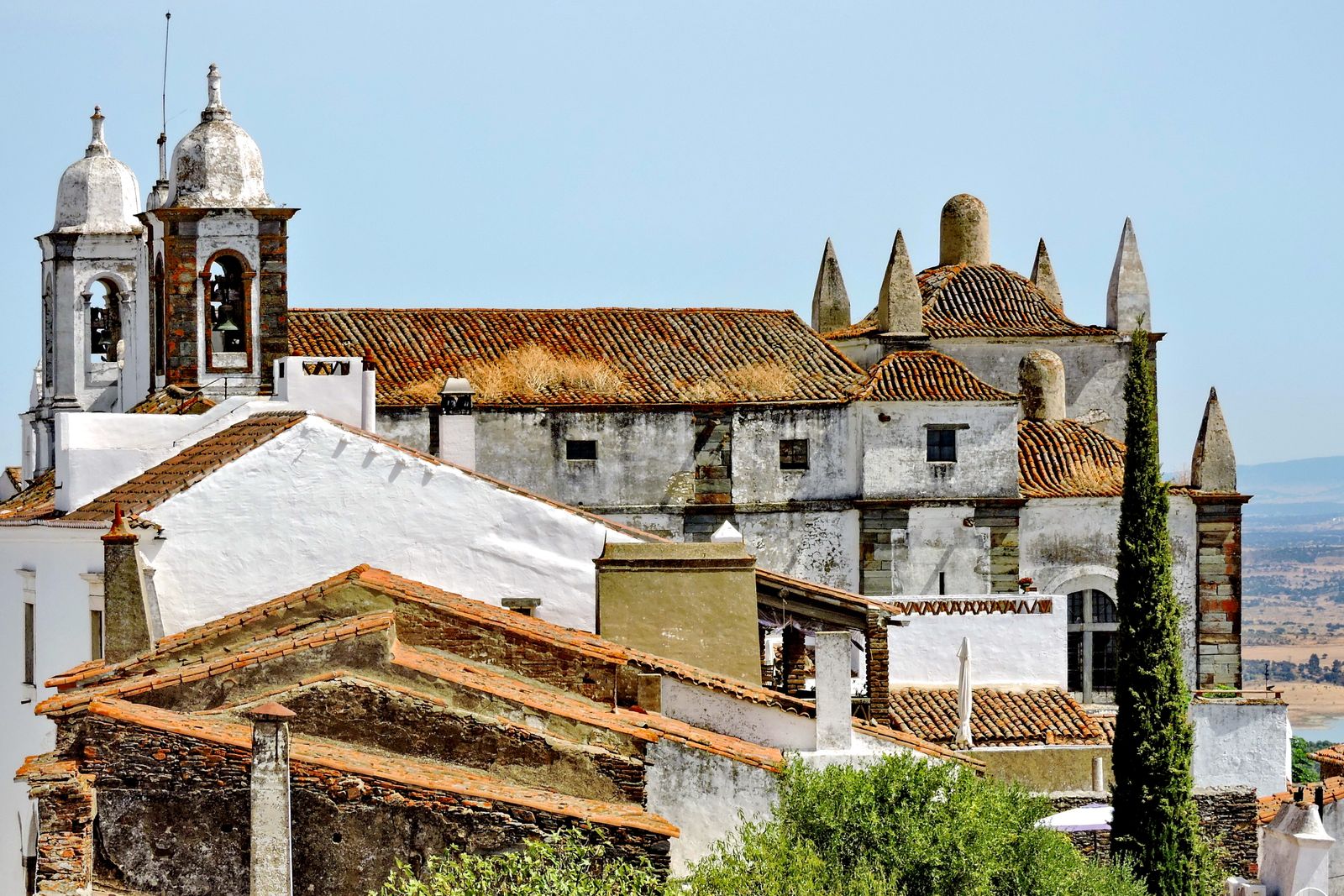
Portugal’s two most famous inland and coastal regions could hardly be more different. The Algarve is a sun-and-beach machine - the most visited tourist region in Portugal, with 300 days of sun per year, dramatic limestone cliff architecture, and resort infrastructure developed over 60 years. Alentejo is Portugal’s heartland: vast plains of golden wheat and cork oak, ancient hill villages that seem unchanged for centuries, and some of the country’s finest wine and olive oil produced in near-silence. Choosing between them means deciding what kind of Portugal you want.
Quick Verdict
| Category | Algarve | Alentejo |
|---|---|---|
| Beaches | World-class, golden limestone cliffs | Wild and undeveloped (western coast) |
| Wine | Some good vinho verde, but not the focus | One of Portugal’s finest wine regions |
| Food | Fresh seafood, cataplana stews | Black pork (porco preto), cured meats, migas |
| Landscape | Coastal cliffs, sea stacks, turquoise water | Cork oak plains, olive groves, wildflower meadows |
| Architecture | Whitewashed resort towns, medieval village (Silves) | Fortified hilltop villages (Monsaraz, Marvão, Évora) |
| Crowds | High season: very busy | Low–moderate year-round |
| Cost | Mid-range to expensive (resort pricing) | Generally lower, especially rural accommodation |
| Best for | Beach holidays, water sports, sun | Wine, rural quiet, authentic Portuguese culture |
Costs
The Algarve has a wide range. Central Algarve resort towns (Albufeira, Vilamoura) are the most expensive, with hotels running €120–280/night in July–August. The quieter western Algarve - Lagos, Sagres, Aljezur - is more affordable at €90–180 for a guesthouse or small hotel. Carvoeiro and Ferragudo in the central Algarve have beautiful beaches with mid-range options at €100–170. Dining is seasonal: fresh sardine lunch at a harbourside restaurant in Olhão runs €12–16/person; a full dinner at a Lagos seafood restaurant runs €35–55/person with wine.
Search hotels in the Algarve on Booking.com
Alentejo is noticeably less expensive and the accommodation is often more interesting. Évora - the UNESCO-listed Roman city that is the region’s capital - has quintas (country estates) and boutique hotels from €80–160/night; the Convento do Espinheiro, a 15th-century convent converted to a hotel, runs €180–280. In the smaller hill villages like Monsaraz, Marvão, or Serpa, guesthouses and rural tourism accommodation (turismo rural) costs €65–120. Wine is the great value: a bottle of a reputable Alentejo red (Herdade do Esporão, Herdade dos Grous, Quinta do Mouro) from the local shop costs €8–18; the same wine at a Lisbon restaurant is €25–45.
Search hotels in Alentejo on Booking.com
Beaches and Coastline
The Algarve has some of the finest beaches in Europe. The central Algarve’s trademark landscape is golden limestone cliff formations: Praia da Marinha near Carvoeiro (consistently ranked among Europe’s best beaches), Ponta da Piedade near Lagos with its sea stacks and grottos, Praia de Benagil with its famous sea cave accessible by kayak or boat tour. The sea is clean, warm in summer (22–24°C July–August), and the weather is near-reliable from June to October. The eastern Algarve (Tavira, Cacela Velha, Ilha de Tavira) is calmer, with barrier island beaches and shallow lagoon waters - better for families or those wanting less crowds.
Alentejo has its own coastline - the Costa Vicentina, running from Sines south to Sagres on the border with the Algarve - that is deliberately protected from large-scale development within the Southwest Alentejo and Costa Vicentina Natural Park. The beaches here are among the wildest in southern Europe: Praia de Odeceixe (a river meets the sea), Praia do Amado (consistent Atlantic swell, popular with surfers), Praia da Zambujeira do Mar (dramatic cliffs, one of Portugal’s best rock festivals, Sudowestfest, nearby). The water is cooler than the Algarve (18–20°C) and the infrastructure is minimal - which is precisely why people come.
Wine and Food
Alentejo is one of Portugal’s premier wine regions. The DOC Alentejo covers roughly 250,000 hectares across eight sub-regions. The dominant red varieties are Aragonez (Tempranillo), Trincadeira, and Alicante Bouschet; whites focus on Antão Vaz and Arinto. Herdade do Esporão, outside Reguengos de Monsaraz, is one of Portugal’s best-known wineries and offers excellent estate visits and tastings (€12–20/person). The Alentejo wine route (Rota dos Vinhos do Alentejo) connects dozens of quintas across the region; most require booking ahead for tastings.
The food culture is equally strong. Alentejo black Iberian pork (porco preto, raised on acorns under the cork oaks) is among the finest pork in the world - eaten as presunto (dry-cured ham), lombo (loin), or in stews with clams (carne de porco à Alentejana, a dish that also appears in the Algarve). Migas are a bread-based side dish that appears in dozens of variations. Açorda (bread soup with garlic, olive oil, and poached egg) is Alentejo peasant cooking at its best.
The Algarve focuses on seafood: cataplana (a copper clam-shaped pot used for seafood and pork stews), char-grilled fresh fish (dourada, robalo), and percebes (barnacles, an acquired taste with serious local devotion). The January–February season for razor clams on the Alentejo/Algarve border coast is a local pilgrimage for food lovers.
History and Architecture
The Alentejo has Portugal’s most impressive collection of medieval hilltop villages. Évora is the unmissable one: a UNESCO World Heritage city with a Roman temple (well-preserved 1st-century columns in the city centre), a 12th-century cathedral, the famous and slightly macabre Chapel of Bones (bones of 5,000 monks embedded in the walls, €5), and a charming old town of whitewashed houses with yellow borders. A full day in Évora is not enough; two nights is better.
Monsaraz - a small fortified village above the Alqueva reservoir - is one of the most dramatic settings in Portugal: a walled village with 15th-century battlements, views across the largest artificial lake in Western Europe, and almost no tourist infrastructure beyond a few excellent restaurants and guesthouses. Marvão in the north of Alentejo sits on a granite ridge at 865 metres with views into Spain. These villages were fortified for a reason - the entire Alentejo plain was disputed medieval frontier territory between Portugal and Castile.
The Algarve’s historic highlights are more scattered but include: Silves, the former Moorish capital with a well-preserved red sandstone castle (€2.80 adults); Tavira, with 30+ churches and a Roman bridge over the Gilão river - the most historically intact town in the Algarve; and Faro, the regional capital with a walled old town and the extraordinary Chapel of Bones in the Carmo Church.
The Verdict
Choose the Algarve if beaches, sunshine, and a well-organised holiday infrastructure are your priority - it delivers with remarkable consistency. The coastline between Sagres and Faro is genuinely one of the finest in Europe, and the summer weather is reliable.
Choose Alentejo if you want wine, food, history, and a slower pace in a landscape that feels like Portugal before mass tourism. It is particularly rewarding for spring visits, wine enthusiasts, and anyone who finds beach resort culture exhausting.
For a proper Portugal trip, combine them. Fly into Lisbon, spend 2 nights in Évora and 1 night in Monsaraz (Alentejo), then drive south to the Algarve for 4–5 nights. See the Alentejo road trip guide and Algarve road trip guide to plan each section. The Douro Valley vs Alentejo comparison helps if you are choosing between Portugal’s two major inland wine regions.
Plan Your Trip
✈️ Book flights to Portugal 🛡️ Get travel insurance 📱 Portugal eSIM 🗺️ Browse Algarve tours