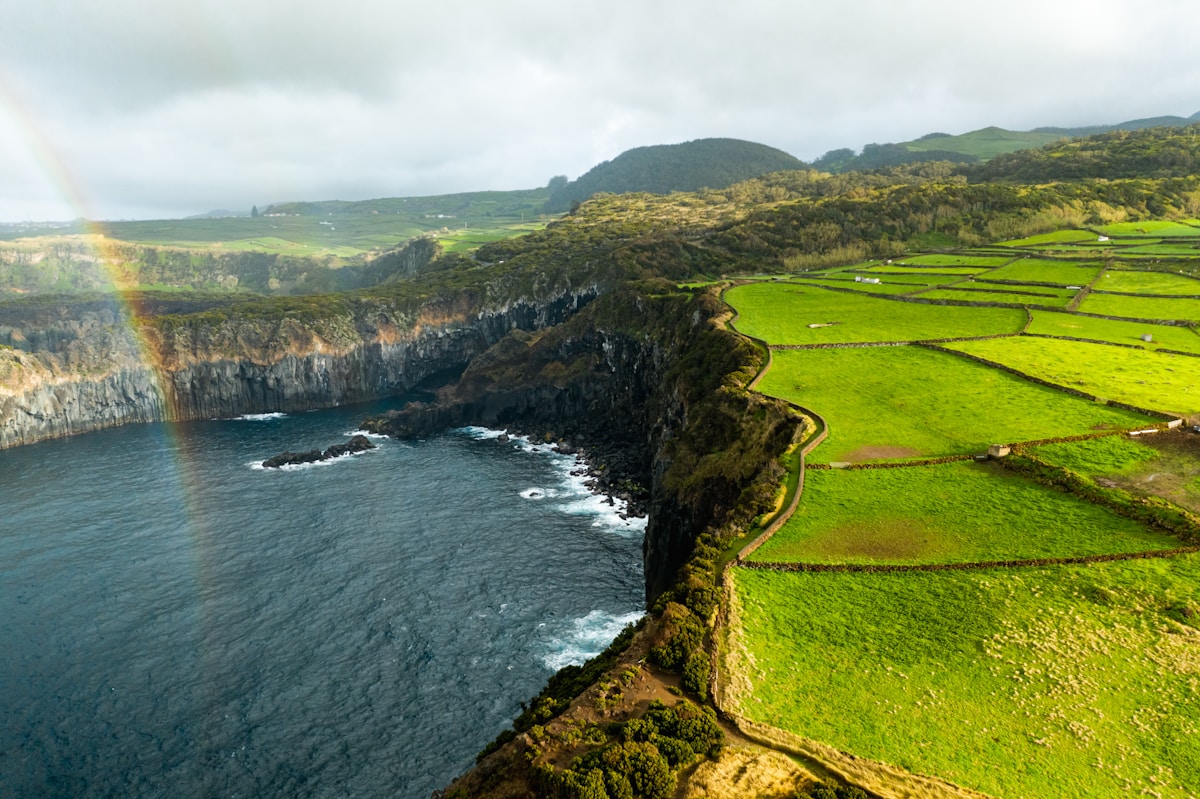
The Azores archipelago has nine inhabited islands spread across 600km of the central North Atlantic. They share a volcanic origin and a broadly similar landscape of green hills, crater lakes, and hydrangea-lined roads - but each island has a distinct character, a different set of drawcards, and a different practical profile in terms of access, accommodation, and what fills a week.
This guide is a direct comparison across the main categories that drive island choice: hiking, beaches, whale watching, diving, food, culture, budget, and solitude. Use the island profiles below and the summary table to match your priorities to the right island - or combination of islands.
Island Overview
São Miguel - The largest island and the archipelago’s hub. Sete Cidades twin crater lakes, Furnas geothermal valley and hot spring cuisine, whale watching operations from Pico de Papagaio. Most accommodation, most flights, most tourists. Best for: first visits, families, travellers who want variety without island-hopping.
Terceira - The second-largest island and historically the most important, with the UNESCO-listed capital Angra do Heroísmo. Good hiking, strong food culture (alcatra beef stew, local cheesemaking), lively festivals (June Sanjoaninas). Gateway to the outer islands. Best for: history, culture, and travellers who want an authentic Portuguese town experience alongside Azorean landscape.
Faial - Central group hub, built around Horta Marina - the mid-Atlantic sailing crossroads. Caldeira caldera walk, Capelinhos volcanic moonscape, world-class whale watching. Best for: sailors, whale watching, combining with Pico and São Jorge on a Triangle trip.
Pico - The mountain island. Pico Mountain (2,351m, Portugal’s highest peak) dominates everything. The UNESCO-protected vineyard landscape on the north coast produces excellent wines. Outstanding whale watching heritage (the island had the last active whaling station in Europe, operating until 1984). Best for: serious hikers, wine enthusiasts, whale watching.
São Jorge - The dramatic ridge island, known for coastal fajãs (flat lava plains at the base of sea cliffs), the PR1-3 hiking trails, and São Jorge cheese (PDO). Least mainstream of the Triangle islands. Best for: hikers, travellers who want spectacular landscape without crowds.
Flores - The westernmost island and the most isolated, with waterfalls, crater lakes, and hydrangea-covered cliffs. Accessible only by inter-island flight or a long ferry. Best for: waterfall lovers, anyone wanting total remoteness, birdwatchers (important seabird colonies).
Graciosa - A UNESCO Biosphere Reserve, flat and gentle compared to the rest of the archipelago. Furna do Enxofre volcanic cave, Carapacho thermal baths, preserved historic town. Best for: travellers wanting genuine solitude, thermal bathing, geological curiosity.
Santa Maria - The southernmost and oldest island, with the only golden sandy beaches in the Azores. Warmer and drier than the other islands. Maré de Agosto music festival. Ambrósio Bank diving. Best for: beach holidays, diving, festival-goers.
Corvo - The smallest island (17km²), a single village, a single caldera. Reached by a 20-minute inter-island flight from Flores. For extreme remote travel only - there are no hotels in the conventional sense and limited tourism infrastructure. Best for: bucket-list completists and birdwatchers (Corvo is one of Europe’s top vagrant-birding locations).
Island Comparison by Category
Hiking
| Island | Best Trail | Difficulty | Standout Feature |
|---|---|---|---|
| Pico | Pico Mountain summit | Hard | Portugal’s highest peak, 2,351m |
| São Jorge | PR3 to Fajã da Caldeira | Moderate–Hard | Coastal fajã descent through cliffs |
| Flores | Rocha dos Bordões to Poço Ribeira do Ferreiro | Moderate | Waterfalls + hydrangea cliffs |
| Faial | Caldeira rim walk | Moderate | 8km caldera circuit, cloud-forest |
| São Miguel | Sete Cidades caldera rim | Easy–Moderate | Twin-colour crater lakes |
| Terceira | Serra do Cume | Easy | 360° panorama over island |
| Graciosa | Caldeira da Graciosa rim | Easy | Includes Furna do Enxofre cave |
| Santa Maria | Pico Alto to east coast | Moderate | Ochre cliffs + ocean views |
Best for hikers: Pico and São Jorge, with Flores as a close third. Pico Mountain is in a different category from everything else - a serious 5–8 hour return climb to 2,351m, requiring good weather and fitness. São Jorge’s PR3 trail is the best coastal walk in the archipelago.
Beaches
Santa Maria is the clear winner and the only island with genuine golden-sand beaches. Praia Formosa is the best swimming beach in the Azores.
The other islands have volcanic rock pools, black sand bays, or tidal lava shelf areas. Terceira’s Praia do Porto Martins has the best dark-sand beach outside Santa Maria. São Miguel’s Porto Formoso has a sea pool complex. Faial’s Praia do Almoxarife is a shingle beach with good facilities.
Best for beach holidays: Santa Maria, exclusively.
Whale Watching
All main islands offer whale watching between April and October, when sperm whales are reliably present. However, three islands consistently provide the best access:
Pico - The former whaling island has the deepest connection to the cetacean history. The modern whale watching industry evolved directly from the old lookout points (vigias) that whalers used. Operators in Lajes do Pico have the most experience and the best boats.
Faial - Horta’s marina location makes it easy to access cetacean-rich offshore waters. Multiple operators. Combined boat trips covering the Faial-Pico channel are productive for sperm, fin, and blue whales (blue whales pass through April–June).
São Miguel - The most accessible island has the most whale watching operators and the easiest logistics. Futurismo and Aquaazul are established operators with good records. The northeast of the island (Vila Franca do Campo) is the main departure point.
Best for whale watching: Pico for authenticity and operator expertise; São Miguel for ease of booking and combining with other activities.
Diving
| Island | Best Site | Why |
|---|---|---|
| Santa Maria | Ambrósio Bank | Hammerheads, mantas, pelagics |
| Faial | Princess Alice Bank | Deep blue shark diving |
| São Miguel | Formigas islets | Manta ray aggregations |
| Pico | Baixa da Silveira | Reef + sperm whale proximity |
Santa Maria and Faial stand out for offshore seamount diving with large pelagics. São Miguel’s Formigas islets (accessed by day boat from Vila Franca) are a world-class manta aggregation site in summer. Princess Alice Bank off Faial is a technical dive in strong conditions - mainly for experienced divers.
Best for diving: Santa Maria (Ambrósio Bank) and Faial (Princess Alice Bank) for advanced divers; São Miguel for accessible reef diving and manta encounters.
Food and Drink
| Island | Speciality |
|---|---|
| São Miguel | Cozido das Furnas (slow-cooked stew from geothermal heat), lapas (limpets) |
| Pico | Pico wine (DOP verdelho), smoked sausages, Adegas Cooperativa visits |
| Terceira | Alcatra (beef stew in clay pot), Queijo Terceirense (fresh cheese) |
| São Jorge | Queijo São Jorge DOP (aged cow’s milk cheese) |
| Faial | Peter Café Sport gin, fresh fish, seafood rice |
| Santa Maria | Local white wine, grilled tuna |
| Graciosa | Graciosa wine (white and rosé), local aguardente |
Best for food: São Miguel has the most restaurants and the most varied Azorean cuisine, including the unique Furnas geothermal stew. São Jorge is the cheese destination. Pico and Terceira are the wine and meat islands.
Culture and History
Terceira is the cultural anchor of the Azores. Angra do Heroísmo was the archipelago’s capital for centuries and a key Atlantic staging port between Europe and the Americas. The UNESCO historic centre is the best-preserved colonial town in the Azores, with the Castelo de São João Baptista (one of the largest forts in the Portuguese Atlantic empire), the 16th-century Cathedral of the Holy Saviour, and the distinctive painted church facades.
São Miguel has the Museu Carlos Machado in Ponta Delgada and the 16th-century city gates, but the cultural depth is lighter than Terceira.
Santa Maria has the oldest fortification in the Azores (in Vila do Porto) and is an important early settlement site - the island was the first landing point for Columbus’s return voyage in 1493.
Best for culture: Terceira, by a significant margin.
Budget
All nine islands are broadly similar in terms of base costs - accommodation and food are cheaper than mainland Portugal, though the most remote islands (Flores, Corvo) have fewer budget options. The main cost variables:
- Flights: Getting to the outer islands (Flores, Corvo, Graciosa) adds an inter-island connection, which costs €30–80 per flight and extends journey time.
- Accommodation: São Miguel has the widest range, including budget hostels from €25/night. Graciosa, Flores, and Corvo have fewer options and less price competition.
- Activities: Whale watching (€55–80/person), Pico Mountain guided treks (€50–80), and diving (€55–70 for two tanks) are the main costs on any island.
Best for budget: São Miguel has the most competition and the lowest floor for accommodation. Terceira is also good value, with a range of central guesthouses from around €60/night.
Solitude
Least visited: Corvo, Graciosa, Flores. Corvo has no real tourist infrastructure. Graciosa is functional but quiet outside July–August. Flores is the most spectacular of the three and has enough guesthouses for a comfortable stay.
Busiest: São Miguel in July–August can feel crowded at the main viewpoints (Sete Cidades, Furnas). Terceira during the Sanjoaninas festival (late June) is lively. The Triangle islands (Faial, Pico, São Jorge) are busy in peak season but never overwhelmed.
Best for solitude: Graciosa or Flores, with Corvo if you’re serious about it.
Island Chooser Summary
| Priority | Best Island(s) |
|---|---|
| First visit to Azores | São Miguel |
| Hiking | Pico + São Jorge |
| Beach holiday | Santa Maria |
| Whale watching | Pico or Faial |
| Diving | Santa Maria or Faial |
| Culture and history | Terceira |
| Food and drink | São Miguel + Pico (wine) + São Jorge (cheese) |
| Budget | São Miguel or Terceira |
| Solitude | Graciosa or Flores |
| Waterfalls | Flores |
| Thermal bathing | São Miguel (Furnas) or Graciosa (Carapacho) |
Multi-Island Combinations
Best 7-day trip: São Miguel (4 nights) + Faial (3 nights). Fly into Ponta Delgada, cover the main São Miguel highlights, then fly 30 minutes to Horta and add Pico as a day trip.
Best 10-day trip: The Triangle - fly into Faial, ferry to São Jorge (2 nights), ferry to Pico (2 nights), return to Faial for departure. Fly into São Miguel as a first or final leg.
Best 14-day trip: São Miguel (3 nights) + Terceira (2 nights) + Faial (2 nights) + São Jorge (2 nights) + Pico (2 nights). One island per two nights, using inter-island flights and ferries.
For remote completists: Base on Flores (3 nights, day trip to Corvo by air), then Graciosa (2 nights), then Terceira as exit.
Practical Notes
Atlanticoline runs the inter-island ferry network. The central group (Faial, Pico, São Jorge, Graciosa, Terceira) is connected by ferry year-round, with increased frequency May–September. The eastern islands (São Miguel, Santa Maria) and western islands (Flores, Corvo) are connected to the central group by SATA inter-island flights rather than ferry.
All islands have car hire available, but demand in July–August outstrips supply on smaller islands - book in advance. The Azores region guide has full logistics detail for island-hopping itineraries. For a suggested multi-island schedule, the Azores island-hopping itinerary covers a 10-day circuit. Browse tours in the Azores for guided day trips, whale watching, and diving packages bookable from the main islands.
Individual island guides: São Miguel · Terceira · Faial · Pico · São Jorge · Flores · Graciosa · Santa Maria
Plan Your Trip
🏨 Search hotels in Azores on Booking.com
✈️ Book your flights to Portugal 🛡️ Get travel insurance 📱 Stay connected with an eSIM 🚗 Rent a car