Santa Maria Island Guide - Azores Beaches, Diving
Santa Maria island guide - golden Praia Formosa beach, Maré de Agosto festival, Ambrósio bank diving, and the warmest island in the Azores.
Guides for Santa Maria
Santa Maria is the oldest and southernmost island in the Azores, and the most geologically distinct. While the rest of the archipelago is young volcanic rock covered in cryptomeria forest and lava, Santa Maria’s geology is older and more varied - the island has limestone outcrops, ochre-coloured cliffs, and the only genuine golden-sand beaches in the Azores. It is smaller than São Miguel (97km²), with a population of around 5,500, and receives less tourism than the central group. The airport (SMA) has direct connections from Lisbon, making it accessible without a stopover. We cover this in more detail in Santa Maria Airport Transfers.
Getting There
SATA flies direct from Lisbon (approximately 2 hours) and from São Miguel (30 minutes). The inter-island ferry from São Miguel (Ponta Delgada) runs seasonally - journey time is around 3.5 hours. Vila do Porto is the main town and the location of all car hire agencies. The island is small enough to cross in 20–25 minutes - car hire is the best way to reach the more remote beaches and viewpoints.
Praia Formosa
Santa Maria’s most distinctive feature is Praia Formosa, a long arc of golden sand on the south coast near Almagreira. It is about 400m long, sheltered by low dunes, and faces south across open Atlantic. In summer, the water temperature is warm enough for comfortable swimming - around 23–24°C in July and August. A small cluster of seasonal beach bars operates from June through September.
The sand here is genuinely golden, a result of the island’s older, non-volcanic geology. No other main Azores island has a beach like this - Praia do Porto Martins on Terceira and the black lava pools on Faial are the alternatives, but neither is comparable for swimming. Santa Maria’s other beaches include Praia de São Lourenço on the east coast and Praia de Maia further north - both smaller, with calmer water.
Maré de Agosto Festival
Every August, Santa Maria hosts the Maré de Agosto festival - the largest music event in the Azores. The festival typically runs over 4–5 days in the second week of August, using Praia Formosa as the main outdoor stage. Lineups have historically featured Portuguese pop and rock acts alongside Brazilian artists, with the 2024 edition drawing headliners from both countries. We cover this in more detail in Best Hotels in Santa Maria Azores.
Entry to the festival is free for the main beach concerts. Ticketed arena events within the festival programme cost approximately €15–25 per evening. Accommodation in Vila do Porto and across the island sells out 3–4 months in advance for festival week - book early or consider day-tripping from São Miguel if you leave it late.
Outside the festival, Vila do Porto is the island’s small capital: whitewashed houses with black basalt borders, a 15th-century castle (the oldest fortification in the Azores), and a handful of restaurants and cafés along the main square.
Diving at Ambrósio Bank
The offshore seamount known as Banco d’Ambrósio (Ambrósio Bank) is one of the best dive sites in the Azores, located about 35km south of Santa Maria. The seamount rises from deep water to around 30m depth, creating conditions for large pelagic species - manta rays, hammerhead sharks, and schools of amberjack are regularly encountered between June and October.
Day boat diving from Santa Maria to Ambrósio requires settled sea conditions and advance booking. Operators include Santa Maria Diving, based in Anjos on the north coast, which runs trips to Ambrósio and to the closer inshore sites around the island’s volcanic arches and walls. Dive prices are approximately €55–70 for a two-tank trip, not including equipment hire. The seamount is a technical dive - most operators require Open Water certification and some experience with drift conditions.
Closer to the coast, the island’s arches and underwater walls at sites such as Baixa da Pedra provide accessible recreational diving for those without deep-water experience.
The Island’s Geology and Landscape
Santa Maria is the oldest island in the Azores by several million years, and the only one where fossils have been found - evidence that the island once sat at a lower latitude before tectonic movement. The interior is largely covered in agricultural terraces and vineyards: wine production (particularly dry whites) is active on the island. We cover this in more detail in Food in Santa Maria.
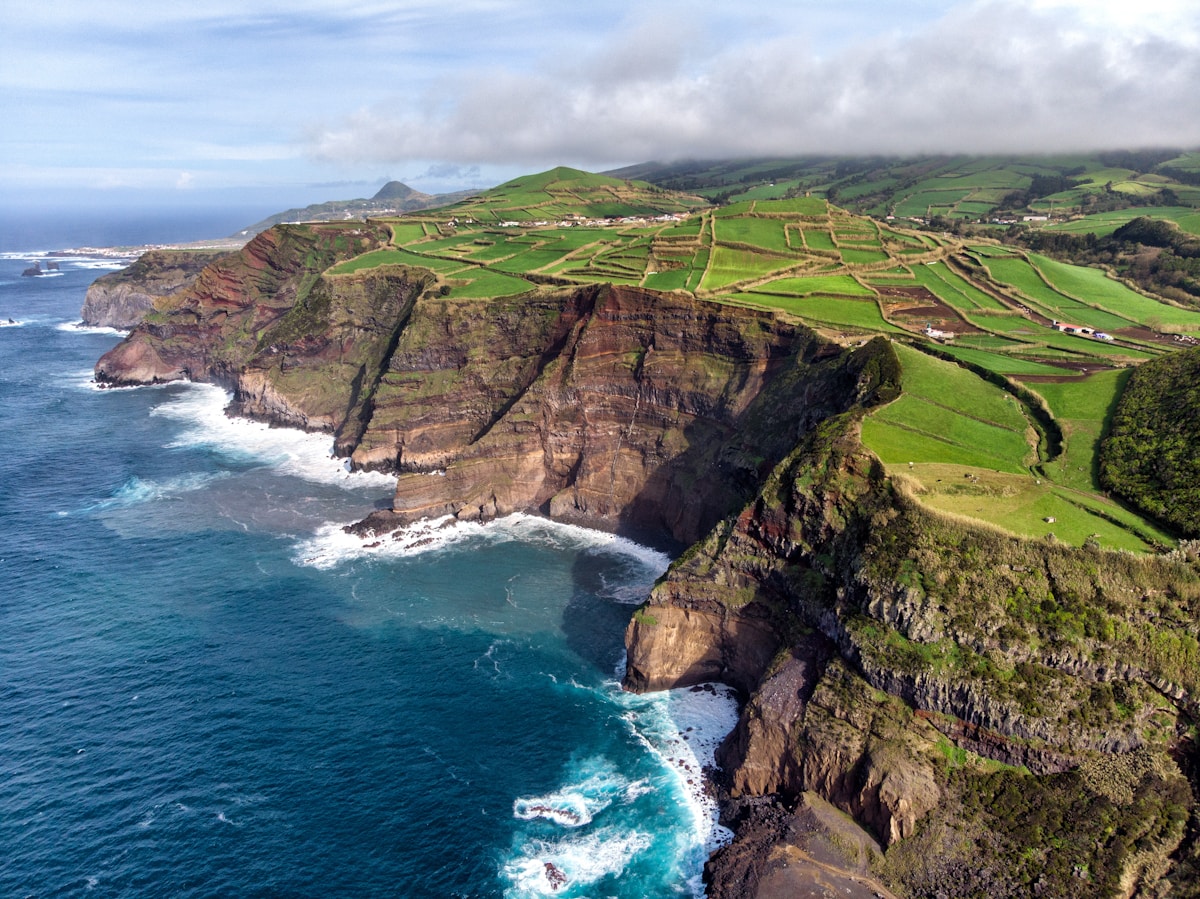
The western end around Ponta do Castelo has dramatic ochre and red cliff faces dropping to the sea - one of the most photographed viewpoints in the Azores. The Barreiro Viewpoint above the south coast provides a panorama over Praia Formosa and along the island’s southern shoreline.
The village of São Pedro, inland in the centre of the island, is one of the better-preserved agricultural settlements in the Azores - whitewashed windmills, cobbled lanes, and working farms.
Where to Stay in Santa Maria
Vila do Porto, the island’s small capital, is the main accommodation base and where most guesthouses and hotels are located. A handful of rural properties sit in the agricultural interior and closer to Praia Formosa. During Maré de Agosto festival week in August, every property fills weeks in advance - book early for that period.
Budget (from approximately €50-70/night)
Quinta da Meia Eira is a rural farmhouse guesthouse near the village of São Pedro in the island’s interior. Five rooms with good breakfasts and a quiet agricultural setting. Well placed for exploring the island’s wine terraces and cliff viewpoints, though you will need a car for the beach. From approximately €60/night as of 2026.
Casa Jardim Santa Maria is a four-room guesthouse in Vila do Porto, run by a local family. Practical and well located for the town’s restaurants, the 15th-century castle, and arranging diving day trips to Ambrósio Bank. A straightforward base at good value. From approximately €65/night as of 2026.
Mid-range (from approximately €90-110/night)
Hotel Colombo is the main hotel in Vila do Porto, centrally located with a pool. The most reliable option for booking activities, ferry tickets, and diving arrangements. Comfortable, with consistent service, and the restaurant serves local fish and Azorean specialities. From approximately €105/night as of 2026.
Hotel Praia de Lobos is positioned near the south coast, within reasonable reach of Praia Formosa. Functional and comfortable, with a pool and a quieter setting than the town-centre options. Good for travellers whose main reason for visiting Santa Maria is the beach. From approximately €95/night as of 2026.
Luxury (from approximately €130/night)
Vila Baleira Resort Santa Maria is the best-positioned property for Praia Formosa, set above the beach with its own restaurant and pool. Doubles run approximately €140/night in July and August and are significantly cheaper outside peak season. It is the closest thing to a resort-scale property on the island.
Santa Maria’s top-end accommodation is modest compared to São Miguel or Faial. The heritage properties in Vila do Porto and the farmhouses of the interior are the island’s character options; there are no five-star hotels.
Search hotels in Santa Maria on Booking.com
Official sources we check: Visit Azores and Visit Portugal.
Planning Your Visit
Santa Maria is the right choice in the Azores if you want beaches and reliable summer warmth. It is also genuinely less visited than São Miguel, Faial, or Pico - outside festival week, the island is quiet. Three nights is the right minimum: one day for the beaches and south coast, one for the interior and geology, one for diving or a boat trip.
June through September is the main season. August is the busiest month (festival effect) and the warmest. June and September offer good weather with far fewer people. Winter is mild but wetter, and some beach bars close entirely.
For activities beyond the beaches and diving - including boat trips along the southern cliffs - see our things to do on Santa Maria guide.
The which Azores island guide compares all nine islands across beaches, diving, hiking, and other categories. For context on the wider archipelago, the Azores region guide covers island-hopping logistics. Browse tours in Santa Maria for diving day trips, Ambrósio Bank expeditions, and coastal boat tours.
Frequently Asked Questions
- Does Santa Maria have good beaches?
- Yes - Santa Maria is unusual in the Azores for having golden sandy beaches, particularly Praia Formosa on the south coast. Most other Azores islands have dark volcanic rock beaches or lava pools rather than sand. This makes Santa Maria the best beach destination in the archipelago.
- When is the Maré de Agosto festival?
- Maré de Agosto takes place in the second week of August each year, centred on Vila do Porto. It is the largest music festival in the Azores, attracting artists from Portugal and Brazil. The beach at Praia Formosa becomes the main event venue. Hotel capacity fills completely during festival week - book 3–4 months ahead.
- How warm is Santa Maria compared to other Azores islands?
- Santa Maria has the warmest and driest climate in the Azores. Sea temperatures reach 24°C in August and rarely drop below 18°C in winter. The island receives less rainfall than São Miguel or Faial and has more guaranteed sunshine, particularly between June and September.
Book an experience
Top experiences in Santa Maria
Explore the best tours and activities in Santa Maria, with instant confirmation and free cancellation on most bookings.
Where to stay in Santa Maria: Find hotels in Santa Maria →