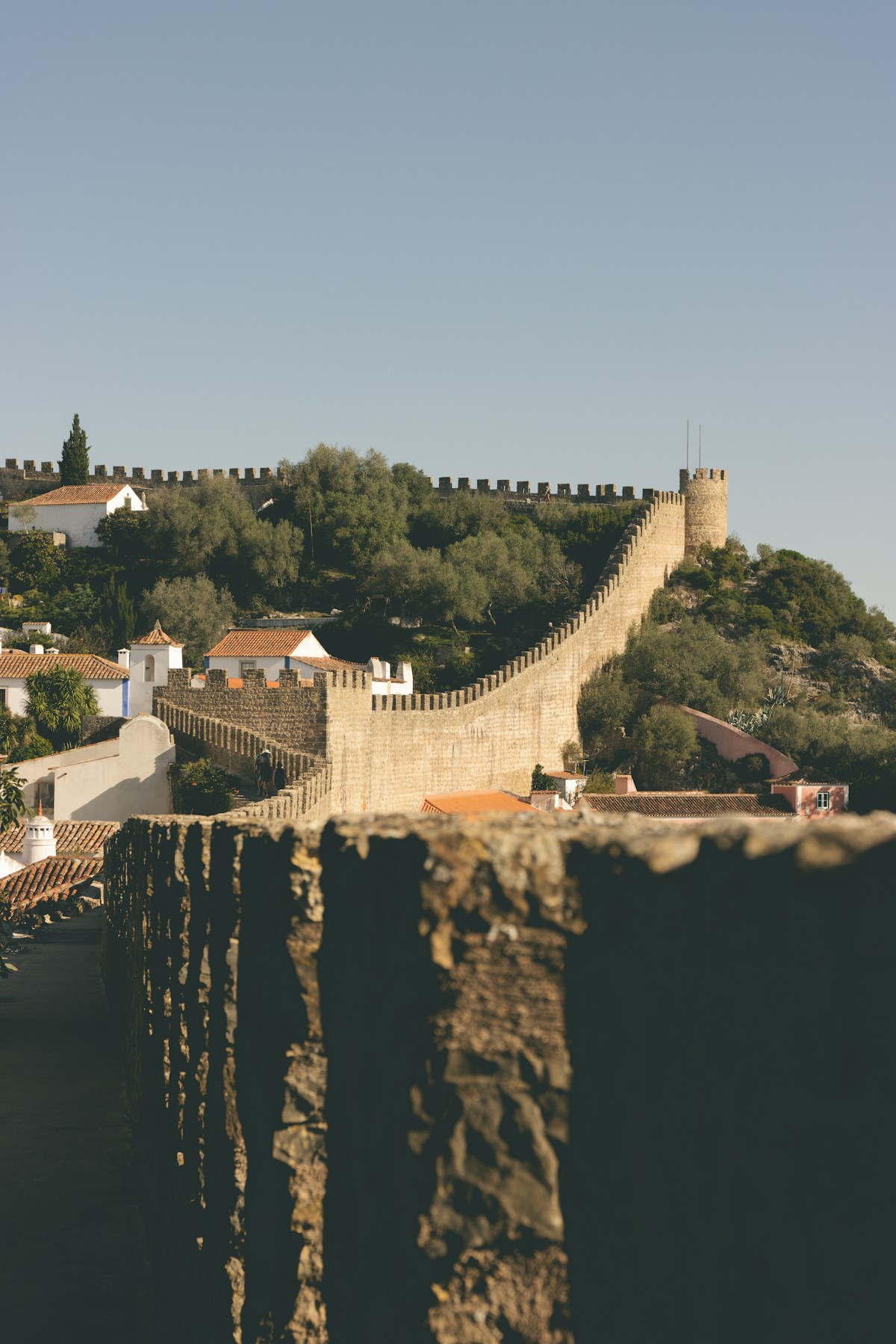
Óbidos is a genuinely beautiful medieval village — whitewashed walls, a well-preserved castle, and narrow cobbled lanes that photograph beautifully. It is also one of the most visited day-trip destinations in Portugal, which means that on a Saturday morning in summer, those lanes are genuinely difficult to walk through. The cherry liqueur stalls outnumber the permanent residents.
The good news: Portugal has dozens of fortified medieval villages in better shape than Óbidos and with fewer visitors per square metre. Several are within day-trip reach of Lisbon or Porto. Here are the ones worth the detour.
Monsanto — Idanha-a-Nova District
Best for: the most dramatic setting in Portugal, a true working village
Monsanto regularly tops polls of Portugal’s most beautiful villages for good reason — the village is literally built into a granite hillside, with house walls incorporating boulders the size of cars. Unlike Óbidos, people still live here year-round. You will see cats asleep on doorsteps, neighbours talking across the lane, laundry drying between centuries-old stone walls.
The castle at the summit is a short climb and offers views across the Alentejo plain towards Spain. Entry is free. There are two or three cafés in the village; Adega Típica O Cruzeiro serves regional Beira Baixa food including migas (bread-based dishes) for around €10–14 per main.
Getting there: Monsanto is in the Beira Baixa region, around 290 km from Lisbon — it works best as a destination in itself or combined with Castelo Branco rather than as a pure day trip from the capital. From Castelo Branco (served by train from Lisbon Oriente, approx. 2.5 hrs, from €15), Monsanto is a 45-minute drive east. There is no reliable bus service to the village; a car is essentially required.
When to go: Spring and autumn. Summer is hot and dusty, and the village gets more visitors in July–August. September is ideal — warm, quiet, and the light is extraordinary.
Castelo de Vide — Portalegre District
Best for: a living medieval Jewish quarter, great food, accessible from Lisbon
Castelo de Vide is one of the most undervisited large villages in Portugal given how rewarding it is. The mediaeval Judaria (Jewish quarter) is among the best-preserved in the Iberian peninsula — a dense grid of steep lanes with a 14th-century synagogue (free entry) that is still intact. Outside the Judaria, the main square has several excellent restaurants and a famous fonte (natural spring) where locals still fill bottles.
The village has a range of accommodation from simple guest houses (from around €55/night) to a four-star hotel in a converted manor. As a destination, it merits an overnight stay rather than a rushed day trip.
Getting there: From Lisbon Santa Apolónia, take the Intercidades train to Portalegre (approx. 2.5 hrs, from €14). From Portalegre, it’s a 20-minute taxi ride to Castelo de Vide (around €18–22). Alternatively, drive from Lisbon in approximately 2 hrs 30 min via the A6 motorway.
Don’t miss: The castle walls at sunset, the Jewish quarter fountains, and Restaurante Casa do Parque on the main square — grilled lamb and pork from around €13, one of the best value regional meals in the Alentejo.
Marvão — Portalegre District
Best for: the best castle views in Portugal, combining with Castelo de Vide
Marvão sits at 865 metres on a granite spur directly above the Spanish border. The castle walls follow the natural rock edge of the escarpment, and on clear days the view extends to Serra de Gredos in Spain. It is the most dramatic fortified village in Portugal, and far fewer people visit it than Óbidos despite being equally accessible with a car.
The village population is small (under 200 people live within the walls) and it shows — the streets are quiet, the shops are few, and the restaurants honest. Sever do Vouga, near the castle gate, does regional pork dishes for around €12. The castle itself charges entry at approximately €3 per person (as of 2026).
Getting there: Marvão is 10 km from Castelo de Vide — best visited as a pair. From Castelo de Vide by car, it’s a 15-minute drive up a steep winding road. The nearest train station is Marvão-Beirã (on the Lisbon–Badajoz line), 9 km away, with infrequent service. A car is the practical option.
Tip: Marvão and Castelo de Vide together make an excellent two-night base for exploring the northern Alentejo, with day trips to Portalegre, Crato, and Alter do Chão possible from the same location.
Óbidos Alternatives Closer to Lisbon
If you specifically want a day trip from Lisbon that echoes Óbidos without the coaches, two villages are worth knowing:
Alenquer
About 40 km north of Lisbon, Alenquer is a working town with a ruined Franciscan convent above its roofline and a wine-producing region (DOC Alenquer) that is attracting serious attention. The upper village has castle walls and a small historical centre that most tourists drive past without stopping. No gift shops, no queues. The wine cellar at Quinta do Espírito Santo welcomes visitors by appointment (tastings from €12). Train from Lisbon Rossio to Azambuja (35 min, around €4) plus a short taxi completes the journey.
Óbidos Outside Peak Hours
If you are determined to visit Óbidos itself, go weekday early — aim to arrive by 09:00 before the day-trip coaches from Lisbon. The village before 10:00 in the morning is a different experience from noon on a Saturday. Stay for lunch and leave by 14:00, when it is at its worst. The castle walls (free to walk) are best in morning light.
Aldeias Históricas de Portugal Network
Portugal designates 27 villages as Aldeias Históricas (Historic Villages), clustered primarily in the interior Beira Baixa and Alentejo regions. The network includes Monsanto, Marialva, Belmonte, Linhares da Beira, Piódão, and others. Piódão is particularly striking — a schist village in the mountains above Coimbra — but requires a car and about 2.5 hrs from Lisbon. The official network website (aldeias-historicas.pt) lists all 27 with basic visitor information.
Most of these villages see a fraction of Óbidos visitor numbers and charge nothing or very little for access. The catch is that public transport is sparse or nonexistent for most of them — a car expands your options considerably.
Practical Summary
| Village | Distance from Lisbon | Transport | Best Season |
|---|---|---|---|
| Monsanto | 290 km | Car required | Spring / Autumn |
| Castelo de Vide | 230 km | Train + taxi | Year-round |
| Marvão | 235 km | Car strongly recommended | Spring / Autumn |
| Alenquer | 40 km | Train + taxi | Year-round |
None of these villages have the infrastructure of Óbidos — fewer restaurants, no guaranteed parking signage, and quieter visitor facilities. That is precisely the point. You will leave them feeling like you visited somewhere real rather than a well-maintained theme park version of medieval Portugal.
For timing strategies at other Lisbon day-trip highlights, see our guides to Sintra without queues and Lisbon without crowds. Or venture further south to Évora without crowds for a different pace in the Alentejo.
Plan Your Trip
🏨 Search hotels in Óbidos on Booking.com
These medieval villages work well as day trips from Lisbon or as overnight stops on a wider Portugal road trip — our Portugal road trip itinerary routes through several of them between the coast and the interior. For more on the Alentejo’s walled towns, the Alentejo region guide gives broader context on what to visit and where to base yourself.
Plan Your Trip
- Flights - Find the best fares to Portugal
- Travel Insurance - Get covered before you go
- eSIM - Stay connected from landing
- Car Rental - Compare prices across providers
See also: Óbidos city guide · Sintra city guide · Getting around Portugal · 1-week Portugal itinerary