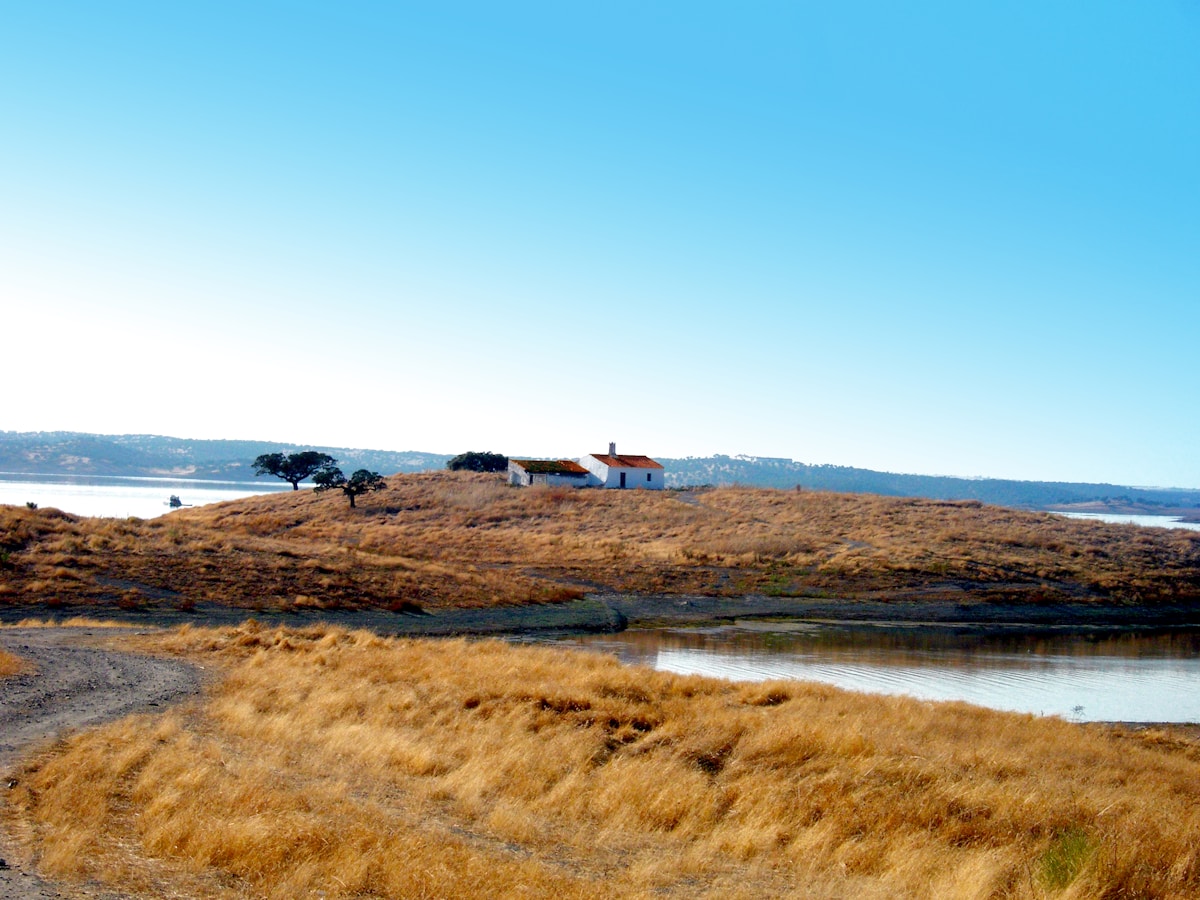
The Alentejo covers roughly a third of Portugal’s land area but holds less than 5% of the population. It is a region of vast, undulating plains planted with cork oaks and olive trees, punctuated by whitewashed villages with blue-bordered doorways and hilltop castles that date to the Moorish period. It moves slowly, and that is entirely the point.
Évora - The Essential Starting Point
Évora is the Alentejo’s capital and its one essential city. Its full guide covers the Roman temple, Chapel of Bones, the Cromlech of Almendres megalith site, and the Alentejo wine estates around the city. A UNESCO World Heritage Site, it contains a Roman temple (1st or 2nd century, disputed), a medieval cathedral with Romanesque portal, and - most unusually - the Chapel of Bones, where the walls and ceiling are decorated with the skulls and femurs of approximately 5,000 monks. Day tours to Évora from Lisbon cover the main monuments and typically include a stop at a wine estate. The inscription above the door reads, in Portuguese: “We bones that are here, await yours.” It is stark and extraordinary and worth the €4 entry.
The historic centre is compact - everything above is within 10 minutes’ walk. Lunch in Évora should involve migas (fried bread with pork fat and garlic), black pork, or açorda (bread-thickened soup). Tasquinha do Oliveira on Rua Cândido dos Reis serves some of the best traditional Alentejo cooking in the region.
The Wine Villages - Reguengos de Monsaraz to Vidigueira
The triangle between Évora, Beja, and the Spanish border produces the wines that have made Alentejo internationally known. Herdade do Esporão, near Reguengos de Monsaraz, runs a well-organised winery tour (€15 per person) and a restaurant on the estate that is worth a long lunch. Monsaraz itself - a medieval walled village above the Alqueva reservoir - is 45 minutes from Évora and genuinely beautiful, though it can get crowded on summer weekends.
The Alqueva reservoir is the largest artificial lake in Western Europe. Dark sky tourism is growing here - the area has an official Starlight Tourism Destination certification, and nights away from the villages give remarkable views.
Cork and Olive Country - The Landscape
Portugal produces half the world’s cork. The cork oak (sobreiro) is harvested every nine years - the stripped bark is left on the tree and regrows slowly. Driving the N2 between Évora and Beja in late spring or summer, you will see trees with fresh red trunks where the bark has recently been stripped, a colour that fades to grey as the new layer forms. A hire car from Lisbon is the most flexible way to explore the Alentejo - public buses serve Évora but the villages, quintas, and coast require your own transport.
The Alentejo Coast - Comporta and Porto Covo
The western fringe of the Alentejo meets the Atlantic in one of Portugal’s least developed coastlines. Comporta has become fashionable with Lisbon’s design and fashion crowd - stripped-back rice paddies, wide empty beaches, and restaurants serving grilled fish and rice dishes. Prices have risen accordingly; a restaurant lunch for two runs €45–60.
Porto Covo and Vila Nova de Milfontes are quieter and more affordable, with fishing boats still working the harbour at Porto Covo and excellent seafood available for €30–40 per head. Vila Nova de Milfontes is at the northern end of the Costa Vicentina - see our separate guide for the full Wild Coast.
Medieval Villages Worth Detours
Marvão - a fortified village perched on a granite crag near the Spanish border at 865m. The walls are intact and the views extend 40 km on a clear day. The drive up is dramatic and the village has fewer than 150 permanent residents.
Castelo de Vide - 10 km from Marvão at lower altitude, with a well-preserved Jewish quarter (Judiaria) and an active thermal spa. The town’s castle dates to the 13th century.
Serpa - in the deep south near Beja, known for its extraordinary cheese (queijo de Serpa - a rich, runny sheep’s milk cheese that is one of Portugal’s finest) and a ruined Roman aqueduct that bisects the town. Beja itself is a worthwhile half-day stop with its Moorish castle tower and the Convento da Conceição museum.
What to Eat
- Açorda alentejana - bread soup with egg, garlic, and coriander, often with bacalhau or clams
- Carne de porco à alentejana - pork cubes with clams, coriander, and fried potatoes
- Migas - fried breadcrumb dishes, rich and filling
- Queijo de Serpa - sheep’s milk cheese, runny and pungent, eaten with local bread
- Borrego - lamb, typically slow-roasted with garlic and herbs
- Wines - Alentejo reds (particularly Aragonez blends) pair well with almost everything above
When to Go
Spring (March to May) is ideal - wildflowers cover the plains, temperatures are 18–23°C, and the landscape is green before the summer drought. Autumn (September to November) is the second best window, with grape harvest activity and lower tourist numbers. Summer (June to August) is very hot (often 35–40°C in Beja and the eastern plains) and agricultural tourism activity peaks. Winter is quiet and mild in the south, cold on the higher ground near Marvão. For a full seasonal breakdown, see our best time to visit Portugal guide.
Planning Your Alentejo Trip
The Alentejo combines naturally with nearby destinations. Évora is a 1.5-hour bus or 1h15 drive from Lisbon - see the 1-week Portugal itinerary and 2-weeks Portugal itinerary for suggested routing. The western Alentejo coast connects to the Costa Vicentina surf coast and, further south, to the Algarve region. For food context, our Portuguese food guide covers all the Alentejo dishes mentioned above in more detail, including the role of bacalhau in Alentejo cooking.
Search hotels in Alentejo Portugal on Booking.com to compare rates and availability.