Óbidos Travel Guide - Medieval Walls, Ginjinha & the Castle
Óbidos guide - walk the intact 2km medieval walls, drink ginjinha from chocolate cups, visit the castle pousada, and the Christmas market in December.
Guides for Óbidos
Óbidos is a small walled town of around 3,000 people, 80km north of Lisbon in the Oeste region. The entire medieval town sits within an intact circuit of 12th–14th century walls, which is the primary reason to visit - it’s one of the few places in Portugal where the medieval town plan is completely preserved within its original fortifications.
It’s a short place for most visitors: you walk the walls, drink ginjinha, walk the main street, visit the castle (now a pousada), and leave. That’s typically 2–4 hours depending on how much you slow down. It’s regularly described as one of the prettiest towns in Portugal, which is accurate but means it’s also one of the most tourist-concentrated during summer and on weekends.
Getting There
No direct train service to Óbidos. Options:
- Bus: Rede Expressos or Barraqueiro Oeste from Lisbon’s Campo Grande or Sete Rios. Journey time approximately 1h15–1h30. The bus stop is at the bottom of the hill below the Porta da Vila (the main gate). From Caldas da Rainha (8km north) there is a more frequent local bus connection.
- Car: A8 northbound from Lisbon, 80km, approximately 55 minutes. Parking is available outside the walls near the main gate. Driving inside the walls is not possible for non-residents.
- Combination: Óbidos pairs easily with Nazaré (30km north, 25 minutes by car) or Alcobaça (30km north, Alcobaça Monastery UNESCO site) for a day trip taking in multiple sites. Day tours from Lisbon covering Óbidos, Nazaré, and Alcobaça in one day are available if you’d rather not hire a car.
The Walls
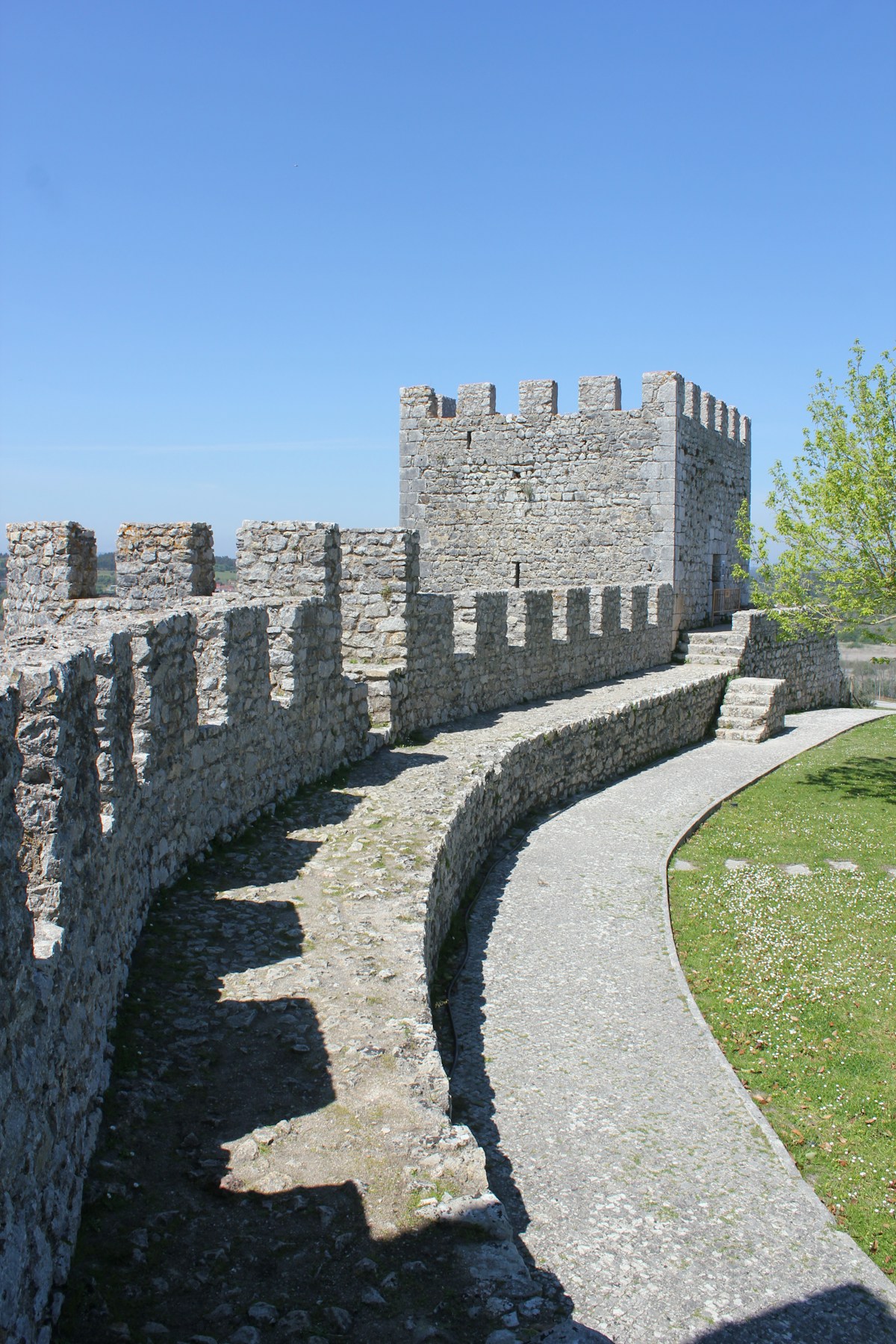
The walls were originally built by the Moors and extended by Afonso Henriques after the Portuguese conquest in 1148. The current circuit dates primarily from the 12th–14th centuries, with some later modifications. The wall walk runs approximately 2km around the full perimeter, with towers at intervals and views in all directions: the town interior below, the agricultural Oeste plains outside, and the castle at the northeast corner.
Entry to the wall walk is free. Several access points exist around the circuit - the main steps up from the Rua Direita (main street) are the most used. Some sections are narrow and exposed; the drops on the external face are significant. Young children and those uncomfortable with heights should be cautious.
The walls are most atmospheric early in the morning before the coach tour groups arrive, or in the late afternoon when the light is on the west-facing sections.
The Castle
The castle at the northeast end of the town has been a pousada (state heritage hotel) since 1951 - the first pousada in Portugal. It’s not a public museum, but the exterior is accessible from the wall circuit and the hotel operates a restaurant and bar that are open to non-guests. The interior courtyard can be viewed from the hotel’s public entrance. It’s atmospheric to have a drink here even without staying.
Rates for the castle pousada are in the luxury bracket. The small number of rooms means it books out in advance, particularly during the Christmas market period.
The Main Street and Town Interior
Rua Direita runs from the Porta da Vila (main gate with 18th-century azulejo tile murals inside) to the castle, and is the spine of the town. It’s lined with souvenir shops, ginjinha vendors, restaurants, and a few art galleries. The white and yellow houses with blue tile borders and purple bougainvillea are visually consistent across the town - this isn’t accidental, as there are strict rules on exterior colours and modifications within the protected area.
The Igreja de Santa Maria (parish church, 12th-century with 17th-century azulejo tile interior) contains the painting “Wedding of Catherine of Lancaster” on the altar and a Renaissance tomb attributed to João de Ruão. The church marks the spot where King Afonso V married his cousin Isabel at the age of eight in 1444.
Ginjinha
Sold throughout the town in several competing shops. The ritual involves a small ceramic or chocolate cup of ginjinha (sour cherry liqueur) for around €1–1.50. Some cups include a whole preserved cherry at the bottom. The chocolate cup version - where the dark chocolate cup is eaten after drinking - is the Óbidos-specific version, said to have been developed in the early 20th century. All versions are served at room temperature.
The Christmas Market
The Mercado Medieval de Natal runs from late November through early January. It’s set within the walls with medieval-themed stalls, warm ginjinha, crafts, and illuminations. The atmosphere is genuinely good - the historic setting works well for Christmas markets in a way that temporary structures in modern town squares don’t. Weekends are heavily crowded, particularly in December; mid-week visits during the market period are significantly more comfortable.
What to Eat
Óbidos is small enough that restaurant options are limited. The main street has several restaurants serving standard Portuguese dishes; quality varies. The Alcaide restaurant near the castle and Taberna da Lourinhã (a short drive, in the nearby town) are better options for a full meal. Budget travellers generally eat simpler - the tascas behind the main street offer lower prices.
Where to Stay
For our full accommodation guide with specific hotel recommendations across all budgets, see Where to Stay in Óbidos.
Search hotels in Óbidos on Booking.com to compare rates and availability.
Best Time to Visit
Spring (March–May) and autumn (September–October) offer comfortable temperatures, fewer crowds, and the full effect of the walls and town without summer congestion. December for the Christmas market, with the caveat that weekends will be very busy. July and August are the worst for crowds - the town’s small size means it can feel overwhelmed on peak days.
How Óbidos Compares
Óbidos vs Sintra: Both are popular day trips from Lisbon with a walled or hilltop historic core, but the similarities end there. Sintra is bigger, more dramatic, more expensive, and more crowded — the palaces justify a full day. Óbidos takes two hours at a comfortable pace: walk the walls, explore the main street, drink ginjinha from a chocolate cup. Sintra requires booking; Óbidos doesn’t. Sintra suits travellers with a day to spare and an appetite for palace architecture; Óbidos suits those wanting a brief, well-preserved medieval town without the queues. Both are doable from Lisbon by public transport — Óbidos by bus (Rede Expressos from Campo Grande, 1h15), Sintra by suburban train.
Óbidos vs Nazaré: Óbidos (20km south of Nazaré) makes the natural pairing on a Silver Coast day from Lisbon. They’re very different: Óbidos is landlocked and medieval; Nazaré is a coastal town with an active fishing culture and winter big waves. Combined in one day — Óbidos in the morning, Nazaré for lunch and the afternoon — they give a genuinely varied Silver Coast picture. A car is needed for the combination; neither has convenient direct public transport between them.
Óbidos in Context
Óbidos is most naturally combined with Nazaré (20km north) and/or Peniche (25km west). All three are within easy reach of each other and from Lisbon - Óbidos is 1h by car from the capital, making it viable as a day trip alongside either of the others. Our surfing Portugal guide covers Peniche in the context of a wider Silver Coast surf trip where Óbidos makes a logical stopover. For the Óbidos-Nazaré combination from Lisbon, the best time to visit Portugal guide notes that October–November is when the Óbidos Christmas market and Nazaré big wave season overlap - a strong window for visiting both. For the Christmas market specifically, Portugal in December covers the Óbidos market alongside Lisbon and Porto’s festive calendar. For the Easter medieval market, Portugal in April notes the Mercado Medieval de Páscoa that Óbidos runs during the holiday weekend. See also things to do in Óbidos and food in Óbidos.
Upcoming Events in Óbidos
- Óbidos Christmas Village 2026
obidos
Óbidos Christmas Village 2026, December. Medieval walled town becomes a Christmas village - craft stalls, ice rink, and festive light displays.
Frequently Asked Questions
- How do I get from Lisbon to Óbidos?
- There is no direct train to Óbidos. By bus from Lisbon's Campo Grande or Sete Rios terminal, the journey takes about 1h15 to 1h30. By car, take the A8 northbound - it's 80km and takes about 55 minutes. The bus drops you at the base of the hill below the main gate; the town is a short uphill walk.
- Can I walk on the Óbidos walls?
- Yes. The medieval walls form a roughly rectangular circuit of about 2km and are accessible at several points. The wall walk is the main activity in Óbidos and takes 30–45 minutes at a steady pace. There are no guardrails on some sections and the surfaces can be uneven; appropriate footwear is needed. Entry to the walls is free.
- What is ginjinha and why is it served in a chocolate cup?
- Ginjinha (or ginja) is a sour cherry liqueur made by steeping morello cherries in aguardente (Portuguese grape spirit) with sugar. It's a common drink across Portugal but Óbidos has its own local tradition of serving a small shot in a cup made of dark chocolate. You drink the liqueur and eat the cup. Several shops sell it from about €1.50 per cup.
- When is the Óbidos Christmas market?
- The Mercado Medieval de Natal typically runs from late November through early January. It's set within the walled town and is one of Portugal's most atmospheric Christmas markets, with medieval-themed stalls, craft vendors, warm ginjinha, and evening illuminations. It gets very crowded on weekends - visit on a weekday if possible.
Book an experience
Top experiences in Óbidos
Explore the best tours and activities in Óbidos, with instant confirmation and free cancellation on most bookings.
Where to stay in Óbidos: Find hotels in Óbidos →