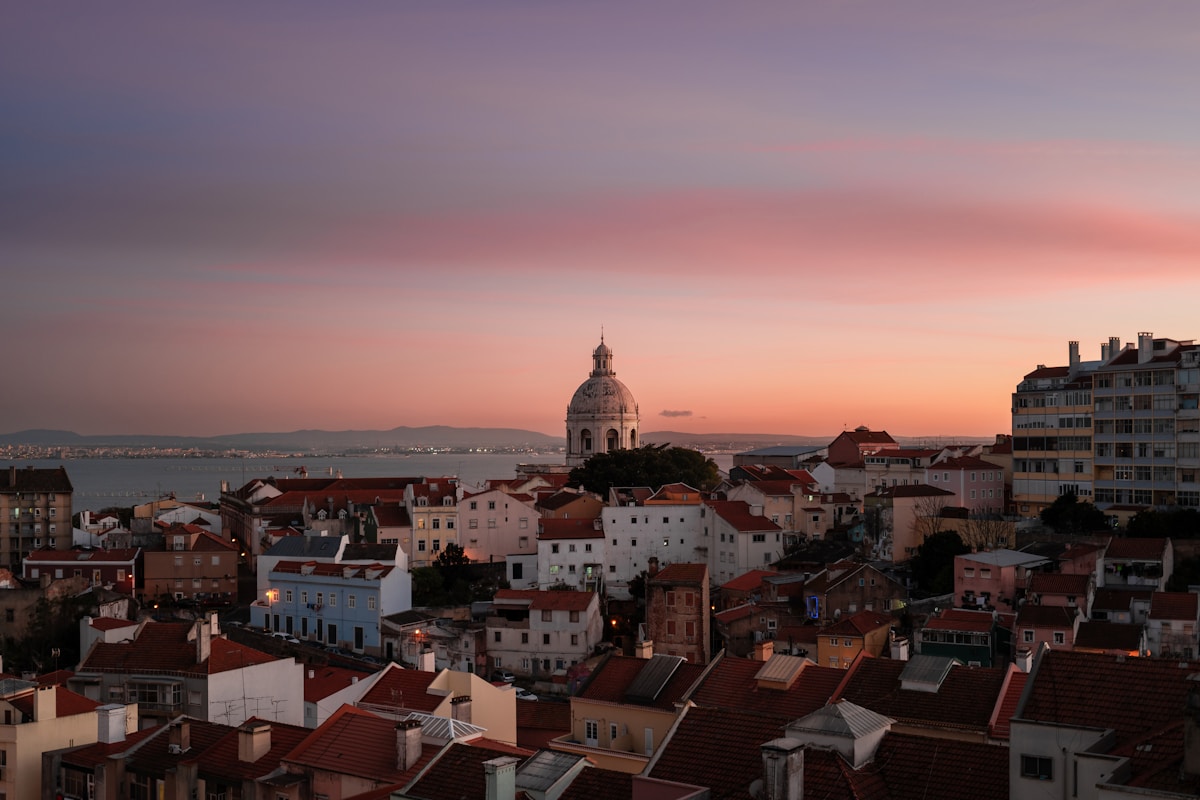
One week in Portugal divides naturally into three parts: Lisbon and its surroundings, Porto and the north, and the Algarve coast. This itinerary spends three days in Lisbon (including a Sintra day trip), two days in Porto, and two days in the Algarve. Fly into Lisbon and out of Faro (or the reverse) to avoid backtracking.
Days 1-3: Lisbon
Day 1 - Arrive and Explore the Baixa
Fly into Lisbon Humberto Delgado Airport. The metro Yellow Line runs to the centre in 20 minutes (approximately EUR 1.80 with a Viva Viagem card, plus EUR 0.50 for the card itself). A taxi or Uber to Baixa costs approximately EUR 15-20.
Where to stay: Hotel Borges Chiado (Rua Garrett 108, from approximately EUR 90 per night as of 2026) for a solid mid-range base. For something with more character, The Independente Suites in Bairro Alto (from approximately EUR 130 per night) overlooks the Miradouro de Sao Pedro de Alcantara. Budget option: Lisbon Destination Hostel at Rossio station (dorms from approximately EUR 25, private rooms from approximately EUR 70).
Afternoon: Walk the Baixa grid - Praca do Comercio on the Tagus waterfront, Rua Augusta (pedestrianised, lined with shops), and up to Praca do Rossio. The Elevador de Santa Justa (approximately EUR 5.30 return) gives a quick view over the Baixa rooftops, though the queue can be long - the free viewpoint at the top of the Carmo Convent ruins offers a similar angle.
Dinner: Cervejaria Ramiro (Avenida Almirante Reis 1) for seafood - tiger prawns, percebes (goose barnacles), and a prego steak sandwich to finish. Budget approximately EUR 40-60 per person. Book ahead or arrive before 7pm.
Day 2 - Alfama, the Castle, and Belem
Morning: Walk to the Alfama and up to the Castelo de Sao Jorge (approximately EUR 15, open 9am, book online). The castle walls give the widest panoramic view of the city. Allow 1.5 hours. Walk down through the Alfama, past the Se cathedral (free exterior) and Largo das Portas do Sol.
Lunch: Taberna da Rua das Flores (Rua das Flores 340) - petiscos (small plates) for approximately EUR 20-25 per person.
Afternoon: Tram 15E or bus 714 to Belem (25 minutes). Pasteis de Belem (approximately EUR 1.50 per tart), Jeronimos Monastery (approximately EUR 12, book online), and Torre de Belem (approximately EUR 8). These three sites take a full afternoon - allow 3-4 hours total.
Evening: Time Out Market (Mercado da Ribeira) at Cais do Sodre - stalls from top Lisbon chefs, approximately EUR 15-25 per person. Then walk up to Miradouro de Santa Catarina for sunset over the Tagus.
Day 3 - Sintra Day Trip
Train from Rossio to Sintra (40 minutes, approximately EUR 2.35 each way). Quinta da Regaleira first (approximately EUR 10, arrive at 9:30am opening), then bus 434 to Pena Palace (approximately EUR 14 for palace and park - book palace tickets online as same-day slots sell out in summer). Both sites need 2 hours each. If you would rather skip the bus logistics, a guided Sintra day tour from Lisbon bundles transport and timed entries.
Lunch: Incomum by Luis Santos in Sintra town (approximately EUR 25-35 per person) or Piriquita for travesseiros pastries (approximately EUR 2 each).
Train back to Lisbon by late afternoon.
Days 4-5: Porto
Getting to Porto
Alfa Pendular train from Lisbon Oriente or Santa Apolonia to Porto Campanha (2 hours 45 minutes, approximately EUR 25-45 as of 2026). Book online at cp.pt for the best fares - prices increase closer to departure. Trains run roughly hourly.
Day 4 - Ribeira, Port Wine, and the River
Where to stay: Pestana Porto (Praca da Ribeira, from approximately EUR 120 per night) sits directly on the UNESCO-listed riverfront. Mid-range: Gallery Hostel (Rua Miguel Bombarda, from approximately EUR 80 for a private room). Budget: Bluesock Hostels (Rua de Sao Joao Novo, dorms from approximately EUR 20).
Morning: Walk the Ribeira waterfront - the UNESCO World Heritage zone of medieval buildings stacked along the Douro. Cross the Ponte Dom Luis I (lower deck for pedestrians) to Vila Nova de Gaia for port wine tasting.
Port wine: Taylor’s (approximately EUR 15 for a guided tour and tasting, book online) is the best-known lodge with terrace views. Graham’s (approximately EUR 15-20) is equally good and slightly less crowded. Budget 1.5 hours for a tour and tasting. See our Porto wine tasting guide for a full breakdown of all the Gaia lodges and what each one does best.
Lunch: Cafe Santiago (Rua de Passos Manuel 226) serves Porto’s definitive francesinha - a meat-and-cheese sandwich drowned in beer-and-tomato sauce. Approximately EUR 12-15 per person.
Afternoon: Livraria Lello (Rua das Carmelitas 144, approximately EUR 8 entry, redeemable against a book purchase) - arrive before 10am or after 4pm to avoid the worst queues. Torre dos Clerigos (approximately EUR 8, 225 steps to the top, panoramic view). Sao Bento station - free to enter, the azulejo (tile) panels in the main hall depict Portuguese history.
Dinner: Cantinho do Avillez (Rua de Mouzinho da Silveira 166) - modern Portuguese by Jose Avillez. Budget approximately EUR 30-40 per person. For something cheaper, Taberna dos Mercadores (Rua dos Mercadores 36) serves traditional plates for approximately EUR 15-20.
Day 5 - Douro Valley and Porto Districts
Morning option A - Douro Valley: Take a Douro Valley day trip - most include a river cruise, two quinta tastings, and lunch. Going independently, the train from Porto Sao Bento to Pinhao follows the river through terraced vineyards (2.5 hours, approximately EUR 14 each way). Quinta do Bomfim (Symington family, approximately EUR 15 for tour and tasting) and Quinta do Crasto (approximately EUR 20) are both accessible from Pinhao. Return by late afternoon.
Morning option B - Porto: Visit the Bolhao Market (recently renovated, free to browse, open 8am-8pm Mon-Sat), then walk through the Cedofeita arts district and the galleries on Rua Miguel Bombarda.
Lunch: O Gaveto (Rua de Roberto Ivens 826, Matosinhos - 20 minutes by metro) for fresh seafood grilled over charcoal. Budget approximately EUR 25-35 per person. Matosinhos is where Porto locals go for fish.
Afternoon: Jardins do Palacio de Cristal - free public gardens with river views. Walk back through Miragaia to the Ribeira.
Days 6-7: Algarve
Getting to the Algarve
Fly from Porto to Faro (1 hour, from approximately EUR 30-70 one way with TAP, Ryanair, or easyJet as of 2026). From Faro airport, rent a car (from approximately EUR 30-40 per day) - public transport in the Algarve is limited and slow. Alternatively, drive from Porto (5-6 hours on the A1/A2, approximately EUR 35-45 in tolls).
Day 6 - Lagos and the Western Algarve
Where to stay: Cascade Wellness Resort in Lagos (from approximately EUR 150 per night as of 2026) has cliff-top pools. Mid-range: Hotel Marina Rio in Lagos marina (from approximately EUR 80 per night). Budget: Rising Cock Hostel in Lagos old town (dorms from approximately EUR 20).
Morning: Drive to Ponta da Piedade (just south of Lagos) - limestone sea stacks and grottoes. Boat trips from the marina cost approximately EUR 20-30 per person (1 hour). Walk the cliff path for free. For the full range of boat options including dolphin watching and Benagil cave kayaking, see our Algarve boat trips guide.
Lunch: Restaurante dos Artistas (Rua Candido dos Reis 68, Lagos old town) serves fresh fish and seafood - budget approximately EUR 20-30 per person. For something cheaper, Casinha do Petisco (Rua da Oliveira) serves grilled fish from approximately EUR 12.
Afternoon: Praia da Dona Ana - one of the Algarve’s most photographed beaches, sheltered by sandstone cliffs. In summer, arrive before 10am for space. Then walk the old town of Lagos - the 14th-century walls, the Moorish arch at Porta de Sao Goncalo, and the Mercado Municipal (fish market, open mornings).
Dinner: A Forja (Rua dos Ferreiros 17, Lagos) - traditional Algarvean cooking, cataplana (copper-pot seafood stew) for two costs approximately EUR 35-45. Book ahead in summer.
Day 7 - Faro and Departure
Morning: Drive east to Faro (1 hour from Lagos on the A22, approximately EUR 8 in tolls). Walk the Cidade Velha (old town) - the 13th-century Se (cathedral, approximately EUR 3, climb the tower for rooftop views), the Arco da Vila, and the Municipal Museum.
Take a ferry from Faro marina to Ilha Deserta (Barreta Island) - a barrier island with no buildings except one restaurant. Ferries run approximately EUR 5-8 return and take 30 minutes. The beach is long, flat, and uncrowded even in summer.
Lunch: Restaurante Estaminé on Ilha Deserta - the only restaurant on the island, serving grilled fish and seafood. Budget approximately EUR 25-35 per person. Book ahead in summer as space is limited.
Return to Faro for your flight home from Faro Airport (10 minutes from the city centre by taxi, approximately EUR 10-12).
Budget Summary
| Category | Budget Estimate (per person) |
|---|---|
| Accommodation (6 nights, mid-range) | From approximately EUR 540-750 |
| Meals (7 days) | Approximately EUR 210-350 |
| Attractions and port wine | Approximately EUR 80-120 |
| Transport (trains, flights, car) | Approximately EUR 150-250 |
| Total | Approximately EUR 980-1,470 |
All prices are approximate as of 2026. The Lisbon-Porto train and Porto-Faro flight should be booked at least 2-3 weeks in advance for the best fares. A Viva Viagem card in Lisbon and an Andante card in Porto will save money on local transport. If you want to slot in a guided tour at short notice during any leg of the trip, our last-minute tours page covers Lisbon, Porto, and the Algarve.
Book Your Trip
- Flights - Find the best fares to Portugal
- Travel Insurance - Portugal insurance guide (EHIC rules, Schengen cover, surf riders) · get covered with EKTA
- eSIM - Stay connected from landing
- Airport Transfers - Pre-book your transfer from Lisbon or Porto
- Car Rental - Compare prices across providers
- Tours & Activities - Browse Portugal tours on GetYourGuide