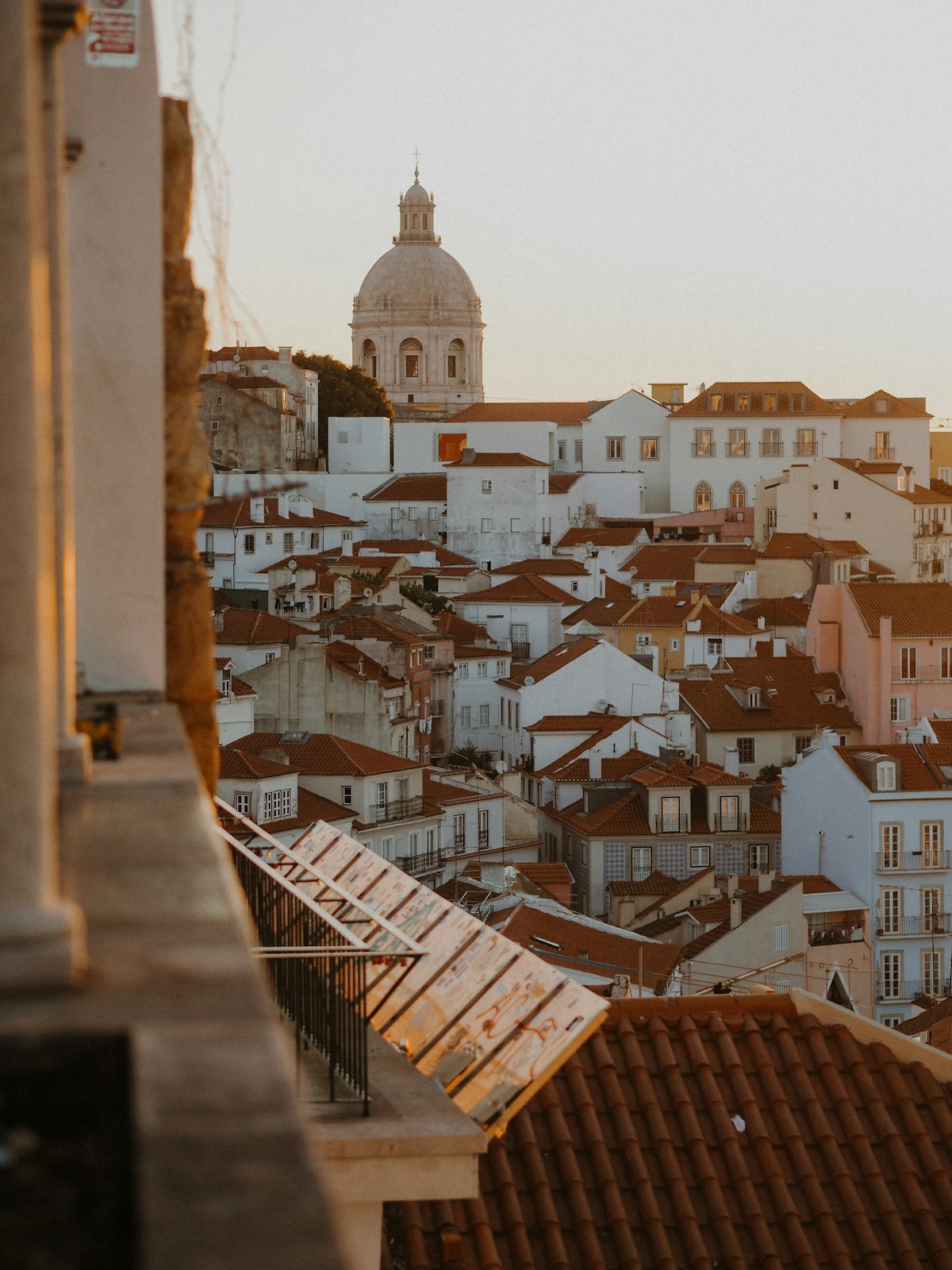
Lisbon’s reputation has caught up with it. The city that felt genuinely undiscovered a decade ago now handles around 5 million tourists a year, and the pinch points are predictable: São Jorge Castle, tram 28, the Alfama viewpoints, the Time Out Market. None of this makes Lisbon less worth visiting — but going in blind, expecting the city you’ve seen in the photographs, leads to disappointment. The crowds are real. So are the workarounds.
São Jorge Castle
The castle is the most-visited paid attraction in Lisbon, and the queues at the main gate on Rua do Chão da Feira can stretch 45 minutes or longer on summer mornings. Entry costs €15 per adult (as of 2026), and the crowds inside the walls peak between 10:00 and 14:00.
Buy tickets online. The official ticket at visitlisboa.com or the castle’s own site (castelodesaojorge.pt) includes a timed-entry slot. This does not eliminate the queue, but it cuts it significantly — you join a shorter dedicated line for pre-purchased tickets.
Go first thing or late. The castle opens at 09:00. Arriving at 09:00–09:30 gives you 60–90 minutes before the bulk of visitors from hotels and day-tour buses arrive. Late afternoon (16:00–17:30, closing at 18:00 in summer) is quieter as many tour groups have already left. The late afternoon light on the Tagus is also better for photos.
What you’re really there for: The views from the castle walls across Alfama and the Tagus are the main draw — the castle buildings themselves are largely reconstructed and there is less to see than you’d expect inside. Knowing this helps calibrate your time: 60–75 minutes is enough to do it properly. Don’t rush the ramparts, do skip the Mediaeval pop-up displays.
Alternatively: The Miradouro da Graça offers comparable elevated views over Alfama and the Tagus for free, and receives a fraction of the visitors. It is a 10-minute walk uphill from the castle gates and is at its best in early morning or evening. A small café operates on-site most days.
Tram 28
Tram 28 is photographed more often than it is usefully ridden. The yellow heritage tram runs from Martim Moniz through Alfama and Mouraria to Prazeres, passing through genuinely steep and narrow streets. It is also, in peak season, completely full by its second or third stop, with queues of 20–30 people waiting at each boarding point.
The honest truth: Tram 28 as a mode of transport to get somewhere quickly is rarely the right choice for tourists. It is slow, crowded, and — if you are standing — impossible to see anything through the windows. Pickpockets target it specifically; keep bags in front of you if you ride it.
How to actually enjoy it: Board at Prazeres (the western terminus, in the Estrela neighbourhood) on a weekday morning before 09:30. At this stop and this time, you can usually board without queuing and get a seat. The entire route to Martim Moniz takes around 35–40 minutes. This direction (west to east) is less popular than the tourist default (east to west from Martim Moniz into Alfama). Riding it this way, sitting down, in the morning quiet is legitimately pleasant.
A better alternative for the same views: Walking the Calçada de São Vicente from Largo das Portas do Sol through Alfama on foot takes 20 minutes, costs nothing, and lets you stop at the Miradouro de Santa Luzia (free, ornamental garden with Tagus views) and Miradouro das Portas do Sol (free, large terrace) along the way. You see everything the tram sees but at your own pace, with the option to duck into alleyways.
Tram 12E is the lesser-known heritage tram that runs a short circuit around Alfama. It starts from Praça da Figueira, costs the same fare (€3.10 as of 2026, payable on board), and is consistently less crowded than tram 28. Less photogenic, but more rideable.
Alfama and the Viewpoints
Alfama is Lisbon’s oldest neighbourhood — Moorish in origin, densely residential, and the source of most of the city’s fado tradition. It is also one of the most-visited areas, particularly the stretch between the castle and the Fado Museum.
Miradouro das Portas do Sol and Miradouro de Santa Luzia — the two most-visited viewpoints in Alfama — are free, open all day, and very busy from 10:00 to 17:00. They are worth visiting, but if you want them to yourself, go before 09:00 or after 18:00. In summer, both are occupied until dark by locals and tourists alike; the trick is going earlier than the day-trippers.
Quieter alternatives:
- Miradouro da Graça (mentioned above) — excellent views, far fewer people, a neighbourhood café
- Miradouro do Jardim do Torel — in Intendente, not on any tourist map, with a paddling pool and views across the Mouraria roofline. Bus 735 stops nearby.
- Miradouro da Serafina — in Parque Eduardo VII, not far from Marquês de Pombal, almost entirely used by locals. Views across the park to the Tagus. No café; bring water.
In the Alfama lanes themselves: The area directly around Largo do Intendente, 10 minutes walk north from Alfama, is a working neighbourhood square with a tiled Manueline fountain, several genuine local cafés, and almost no tourist infrastructure. It connects to the Mouraria neighbourhood, which is less visited than Alfama proper despite being equally historic and having better fado venues (Tasca do Chico on Rua do Diário de Notícias books out weeks ahead in summer; A Baiuca on Rua de São Miguel is more accessible).
The Time Out Market
The Mercado da Ribeira / Time Out Market in Cais do Sodré is excellent — good food from established Lisbon restaurants in a single roof — and it is also extremely crowded between 12:30 and 14:30 on weekends. Go on a weekday at 11:30 or 15:00 and you will find seating easily. Saturday lunchtime is the worst possible time to visit.
The original section of the Mercado da Ribeira (the fresh food market at the western end of the building, separate from the Time Out Market hall) opens early and closes by lunchtime. It is entirely used by locals, costs nothing to walk through, and is one of the most undervisited places in central Lisbon.
Belém
The Mosteiro dos Jerónimos (the great Manueline monastery at Belém) has a queue that can exceed an hour in peak season. Book online at mosteirojeronimos.gov.pt — entry is around €12, timed-entry slots available. The adjacent Torre de Belém (€6) has a shorter queue but a narrow staircase that creates bottlenecks; again, early morning or late afternoon is significantly better.
The Pastéis de Belém bakery on Rua de Belém has a permanent queue of its own — the custard tarts (pastel de nata) are genuinely better here than most bakeries, but the wait is rarely worth it. The same tarts from Manteigaria in the Chiado (Rua do Loreto 2) or from Forno d’Ouro in Mouraria are comparable quality with zero queue.
A General Principle
Most of Lisbon’s crowding problems have the same solution: move one hour earlier or later than the default tourist schedule. The city before 09:00 — cafés setting up, light on the Tagus, the sound of trams with no passengers — is one of the best things about it. Hotels breakfast from 07:30; it is worth eating quickly and getting outside.
Lisbon serves as a gateway to several crowd-free destinations: explore Sintra without the queues or medieval villages near Óbidos as day trips north, or take the train south to Évora without crowds for the Roman temple and Bone Chapel on your own terms.
Plan Your Trip
🏨 Search hotels in Lisbon on Booking.com
For a structured overview of how to use your time in the capital, our three-day Lisbon itinerary builds in the most popular sights with realistic timing and queue avoidance in mind. If you’re day-tripping from Lisbon to Sintra or the Alentejo, see Sintra without queues and Évora without crowds for the same approach applied to those destinations.
Plan Your Trip
- Flights - Find the best fares to Portugal
- Travel Insurance - Get covered before you go
- eSIM - Stay connected from landing
- Car Rental - Compare prices across providers
See also: Lisbon city guide · 3 days in Lisbon itinerary · How many days in Lisbon · Sintra without queues