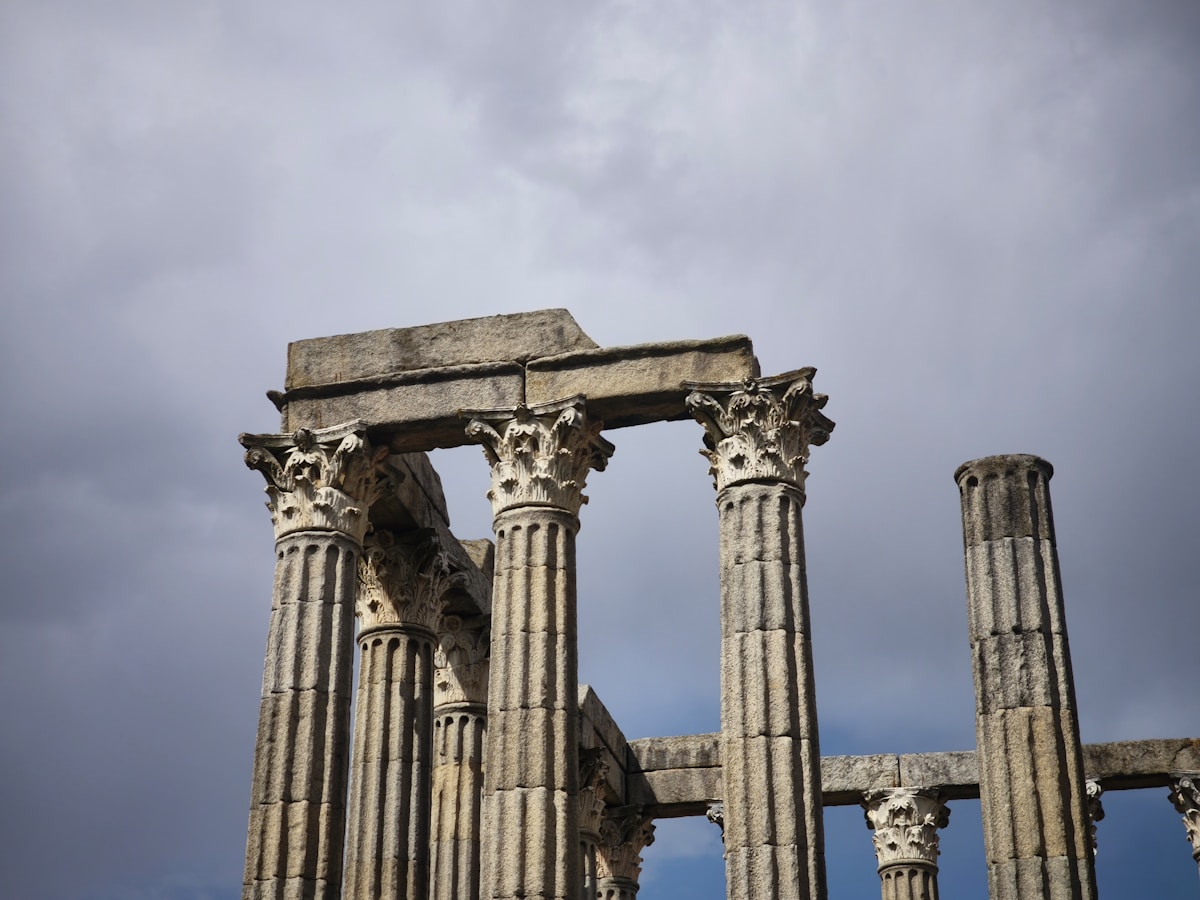
Évora arrives on most Portugal itineraries as a day trip from Lisbon, which is fine until every other Lisbon visitor has the same idea. By 11:00 on any Tuesday in July, the queue for the Bone Chapel snakes into the street and tour groups fill the main square in shifting, narrated clusters. The Roman temple — Évora’s most photogenic asset — becomes a tripod obstacle course.
None of this is necessary. Évora works beautifully on its own terms if you arrive before the coaches do or linger after they leave, and if you know which parts of the city reward independent visitors and which are essentially set dressing for a crowd.
Why the Crowds Concentrate Where They Do
Évora’s tourist infrastructure is efficient but narrow. The main loop — cathedral, Roman temple, Bone Chapel, Giraldo Square — is about 800 metres and takes under an hour to tick off. Day-trippers on the 09:15 Intercidades from Lisbon arrive around 10:45, spend two to three hours on that loop, eat lunch around 13:00, and catch the 15:15 or 16:15 train back.
That means the window between 11:00 and 14:00 is when the old city centre is at peak pressure. Everything either side of it is calm. If you can arrive on the 07:00 train (arriving 08:30) or stay overnight, you will experience a city that many visitors simply do not know exists.
Arriving Early: What You Get Before 10:00
The market on Praça 1° de Maio opens at 07:00 and finishes around 13:00. It is one of the best municipal markets in the Alentejo, selling local cheeses, smoked chouriço, almond sweets, and dried herbs. At 08:00 it is unhurried and the vendors will actually chat. By 11:30, it is thinning out just as tour groups are arriving at the Roman temple next door.
The Roman temple itself (officially the Temple of Diana, though likely dedicated to the imperial cult) sits in the open air with no admission fee and no gate — it is simply there on a raised plaza, and you can stand directly under its columns in the early morning with the square entirely to yourself. The light from the east hits the granite columns well between 08:00 and 10:00. By noon the sun is overhead and the columns photograph flat.
The cathedral (Sé de Évora) opens at 09:00. Entry to the cathedral is free; the cloister and museum cost around €4 each as of 2026. The cloister is less visited than the nave, and the rooftop terrace above it gives one of the best views in the city across the tiled roofscape towards the Roman temple. The only people up there before 10:00 tend to be staying in the city.
The Bone Chapel: How to Beat the Queue
The Chapel of Bones inside Igreja de São Francisco is genuinely remarkable — walls and columns lined with the bones and skulls of approximately 5,000 Franciscan monks, with a famous inscription above the door that reads, roughly, “We bones await yours.” It deserves to be seen without a crowd pressing from behind.
The chapel opens at 09:00. Arrive for opening. You will almost certainly be among the first ten visitors, and the attendant will explain the history in good English if you ask. The experience of standing in near-silence with that much mortality arranged around you is completely different from shuffling through with forty other people.
If you miss the opening slot, come back after 16:00. Most day-trip groups are gone by then. The light through the small windows is also better in the late afternoon.
Admission is around €5 as of 2026. Photography is permitted but video is not.
The Spots to Skip (or Approach Differently)
Giraldo Square (Praça do Giraldo): Évora’s central square is architecturally lovely — 16th-century marble fountain, arcaded facades, terracotta rooftops. It is also ringed with tourist cafés charging Lisbon prices for mediocre pastéis. Skip the square for coffee and instead walk 200 metres south to Café O Aqueduto (Rua do Raimundo), a proper local bar with bicas for under €1.20 and no menus in multiple languages.
The tourist wine shops around the square: Alentejo wine deserves better. Walk to Enoteca do Alentejo on Praça Joaquim António de Aguiar for a curated selection and staff who can talk through regional DO distinctions. Bottles from the Borba, Reguengos, and Vidigueira subregions start from around €8.
Silver jewellery shops on the main drag: There is no shortage of them, and the product is interchangeable. The exception is Oficina de Joalharia Tibor (Rua 5 de Outubro 29), a working workshop that produces handmade pieces in traditional Alentejo motifs — silver filigree earrings from approximately €35.
Hidden Corners That Reward Independent Visitors
The Mouraria Quarter
Behind the cathedral and down the slope from the main tourist circuit, the old Mouraria neighbourhood survives largely intact. The streets are narrower than the main thoroughfares, the houses are lower, and the silence in the middle of a busy afternoon is conspicuous. Walk down Rua de Serpa Pinto and then turn into any of the small alleys that cut towards the old Roman walls.
The walls themselves are substantial and continuous in places, running along the eastern edge of the city. Much of this section has no signage and almost no visitors. You can follow them for 20 minutes with a view over the plains and rarely pass another person.
The Jardim Público
The public garden south of the old city is a 10-minute walk from the cathedral and completely off the coach-tour circuit. It contains ruins of the Paço Real de São Francisco (the old royal palace), a small pavilion, and shade trees that make it one of the most civilised places in Portugal to sit down at midday. Entry is free. Bring water from the market.
Silver Route Villages by Bike
Évora has a small bike rental operation near the tourist office; rates run approximately €15 per day as of 2026. The agricultural plain (Alentejo is from the Arabic for “beyond the Tagus” — it is flat, open, enormous) is exactly the kind of landscape that cyclists discover and tour groups never see. Cycling to Valverde (12 km) or Santa Vitória do Ameixial (a harder 25 km) takes you through olive groves and cork oak forests where the only other people are working the land.
Where to Eat Without the Tourist Surcharge
Tasquinha do Oliveira (Rua Canivetes 47): Twelve seats, no website, legendary. Dona Conceição cooks a fixed menu based on what arrived that morning — expect migas (bread-based Alentejo staple), ensopado de borrego (lamb stew), and queijo de ovelha. Budget approximately €20–25 per person including house wine from the barrel. Booking essential; call ahead or knock on the door the morning before.
Zé Varunca (Rua dos Mercadores 14): A slightly larger but similarly unembellished tasca. The bacalhau à Brás (salt cod with egg and potato) is among the best in the Alentejo. Most mains are €12–16 as of 2026. They have a short wine list focused on local Alentejo producers and do not push tourists towards the most expensive bottles.
Café Alentejo (Rua de Serpa Pinto 128): A lunch-only spot with a daily set menu for around €9 — soup, main, and dessert. The clientele is almost entirely local. There is no English menu but the dishes are chalked on a board and the staff will mime explanations cheerfully enough.
O Corvo (Rua Cândido dos Reis 4): For evenings. A small wine bar and kitchen focused on natural Alentejo wines poured by the glass from approximately €4. Light plates of cheese, chouriço, and marinated olives. No reservation required — it fills up slowly from about 19:30 and turns over late by Évora standards.
Where to Stay Without Paying the Historic Centre Premium
Staying overnight is the single biggest lever you have on the crowd problem. Visitors who arrive and leave on the same day will never experience the city after 17:00, when it cools down, the locals come out, and the alleyways that were jostling two hours earlier feel entirely different.
Albergaria Solar de Monfalim (Largo da Misericórdia 1): A 15th-century mansion converted into a small guesthouse with 26 rooms. Double rooms start from approximately €85 per night as of 2026. The interior courtyard is worth the price. It books up in summer — reserve two to three weeks in advance.
Casa do Arco (Rua de Santa Marta 7): Cheaper and less famous. A family-run guesthouse with seven rooms around a courtyard, doubles from approximately €65. The hosts speak English and can advise on early-morning access to the market and Roman temple.
Évora Olive Hotel (Quinta Vale De Figueiral, just outside the walls): A small rural hotel about 2 km from the centre, set among olive groves. Doubles from approximately €90. Quieter than anything inside the walls, and you arrive by car with the option of leaving early before the coaches. Free parking.
Search hotels in Évora on Booking.com to compare rates and availability.
Timing Summary
| Time | What You Get |
|---|---|
| Before 09:30 | Roman temple, market, old streets entirely to yourself |
| 09:00–10:30 | Cathedral cloister quiet; Bone Chapel without a queue |
| 11:00–14:00 | Peak coach-tour pressure — focus on Mouraria, gardens, lunch off the main drag |
| 14:00–16:00 | Second quieter window; day-trippers eating before returning to Lisbon |
| After 16:00 | Bone Chapel queue gone; town comes back to locals |
| Overnight | See the city as a city rather than a destination |
Évora is not secret, but it rewards people who approach it differently from the standard day-trip loop. The Roman temple is genuinely one of the best-preserved in the Iberian Peninsula. The Bone Chapel is unlike anything else in Portugal. Both are far better experienced on your own terms.
Arriving early from Lisbon without queues on the morning train and lingering after the day-trippers leave gives you the city to yourself. For other Alentejo alternatives and quieter medieval villages in the broader region, see our guide to medieval villages near Óbidos.
Plan Your Trip
Évora fits naturally into an Alentejo day from Lisbon or as part of a longer road trip through the region — our Alentejo road trip itinerary routes through Évora alongside the walled town of Monsaraz and the Alentejo wine country. For more detail on the city itself, see the Évora city guide.
Plan Your Trip
- Flights - Find the best fares to Portugal
- Travel Insurance - Get covered before you go
- eSIM - Stay connected from landing
- Car Rental - Compare prices across providers
See also: Évora city guide · Alentejo region guide · Alentejo road trip itinerary