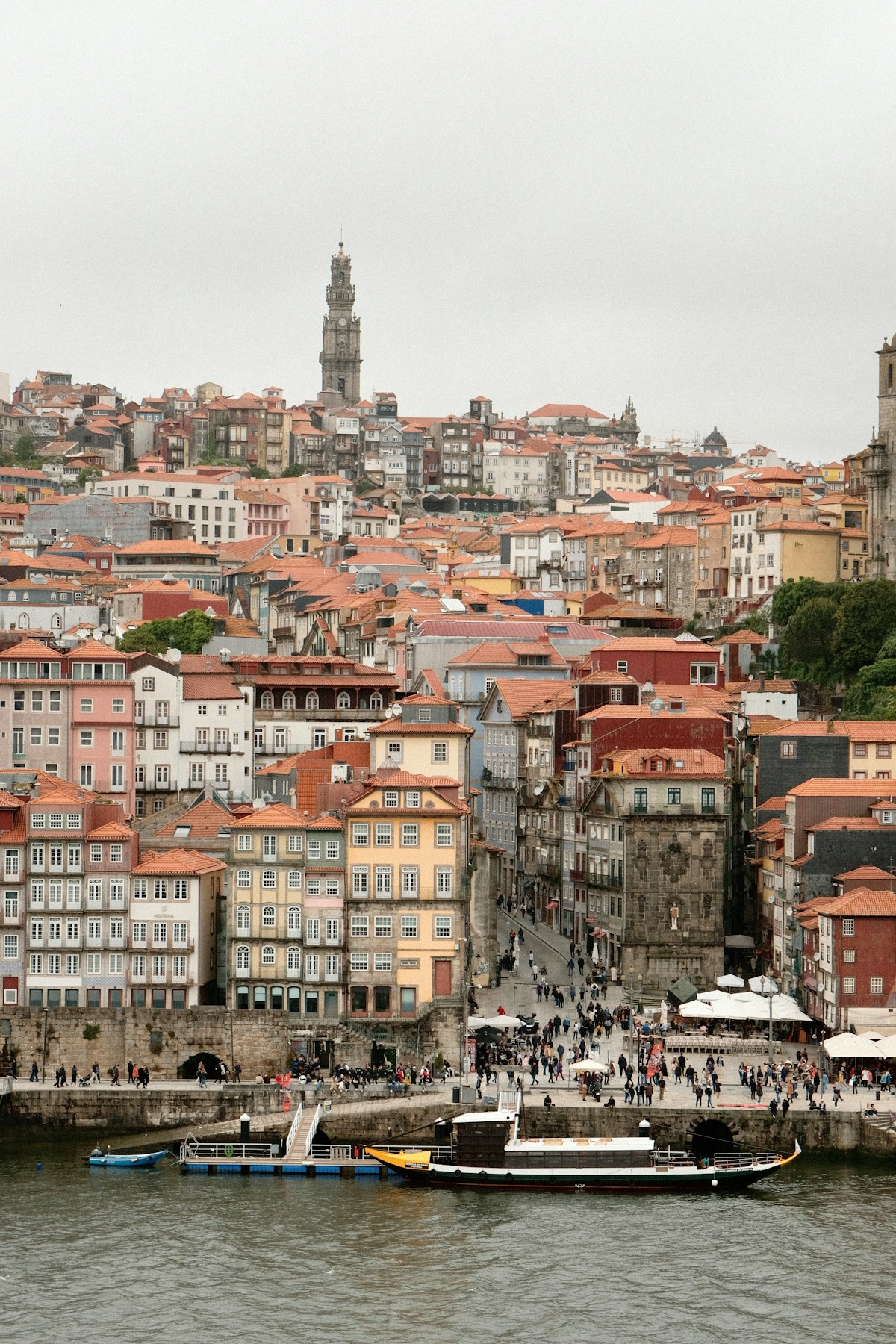
Porto and Madrid are both second-city alternatives to their countries’ capitals in the sense that Porto competes with Lisbon, while Madrid is the capital — which tells you something about how different these cities are to compare. One is an intimate Atlantic city of 250,000 people built on wine and azulejo tiles. The other is a sprawling European capital of 3.4 million with world-class museums and one of Europe’s most exuberant nightlife cultures. Here is how to choose between them.
Quick Verdict
| Category | Porto | Madrid |
|---|---|---|
| Value for money | Winner | — |
| Museum culture | — | Winner |
| Wine and port | Winner | — |
| Beaches nearby | Winner | — |
| Nightlife scale | — | Winner |
| Walkability | Winner | — |
| Day trips | Both strong | Both strong |
| Atmosphere | Intimate | Grand |
Choose Porto if you want a compact, affordable European city break with outstanding wine culture, Atlantic beaches nearby, and a strong local identity. Choose Madrid if world-class museums, serious nightlife, and big-city energy are your priorities.
Cost Comparison
Porto is consistently cheaper than Madrid, though not as dramatically so as the gap with Barcelona.
Porto: Hotels in the Ribeira, Bonfim, or Cedofeita neighbourhoods average €90–130/night. A francesinha sandwich at a classic Porto café — a city signature — costs €12–15. A proper port wine tasting at a Vila Nova de Gaia lodge runs €12–25 per person. The metro day pass costs €4.80. A seafood dinner for two with house wine at a neighbourhood tasca comes to €35–50 total.
Madrid: Mid-range hotels in Malasaña, Chueca, or La Latina average €130–180/night. A restaurant main in the same tier runs €16–24; a menú del día (three-course lunch with wine, still common in neighbourhood restaurants) goes for €13–16 which is excellent value if you eat your main meal at lunchtime. Entry to the Prado is €15, Reina Sofía €12, and Royal Palace €14. Uber across central Madrid averages €8–14.
Winner: Porto, though Madrid’s menú del día culture makes daytime dining affordable.
Architecture and Street Life
Porto’s visual identity is unlike any other city in Europe. The combination of azulejo-tiled building façades, granite church towers, ornate azul blue-and-white decorative panels, and dark iron bridges over the Douro creates a streetscape that is immediately distinctive. The interior of São Bento railway station — 20,000 blue-and-white tiles depicting scenes from Portuguese history, completed in 1930 — is free to enter and one of the genuinely unmissable interiors in Europe. The Igreja de São Francisco (€5) has one of Portugal’s most elaborately gilded Baroque interiors, and the Livraria Lello bookshop (€8, redeemable against a purchase) has a beautiful Art Nouveau staircase that inspired many of the crowds that now queue to see it.
Madrid operates on a different register. The architecture is Bourbon grand: the Royal Palace (€14, one of Europe’s largest) faces a formal garden; the Puerta del Sol is a proper working city square rather than a tourist set piece; the Retiro Park covers 125 hectares and has a crystal palace and rowing lake. The neighbourhood architecture in Chueca, Malasaña, and La Latina has the layered patina of a genuinely ancient capital. The Gran Vía is Broadway-style boulevard commercial architecture. It is not as photographically compact as Porto’s Ribeira, but it is enormous and varied.
Winner: Tie — Porto for visual distinctiveness and density; Madrid for scale and historical weight.
Food and Drink
Porto has one of Portugal’s most particular and proudly guarded food identities. The francesinha — layered bread, cured meats, sausage, and steak, sealed under melted cheese and drowned in spiced tomato-beer sauce, served with a fried egg and chips — is Porto’s contribution to European comfort food and available across the city from €12–16 (Café Santiago on Rua Passos Manuel 226 is the most argued-about address). Bacalhau (salt cod) in a dozen preparations is everywhere. The seafood at Matosinhos, 20 minutes by metro, is among the best-value in Portugal. A glass of dry Vinho Verde in a neighbourhood wine bar costs €2.50–4.
The port wine experience is Porto’s defining advantage in any comparison. Vila Nova de Gaia, across the Douro river, houses the cellars of Graham’s, Taylor’s, Sandeman, Calem, and a dozen other historic lodges. A cellar visit with tasting runs €12–20 per person. A bottle of 20-year-old tawny port from a lodge shop costs €20–35 — outstanding value for serious wine.
Madrid’s food culture is confident and broad. The bocadillo de calamares (fried squid in a bread roll, €3–5) from a bar on Plaza Mayor is a city ritual. The cocido madrileño — a hearty chickpea and meat stew typically served across three courses — is the canonical winter dish; Casa Carola on Calle de Fernández de la Hoz is one of the city addresses. The Mercado de San Miguel near Plaza Mayor is a well-curated food hall, expensive but worth a walk-through. Madrid’s bar culture runs on wine, vermouth, and tapas — small plates of jamón ibérico, patatas bravas, and croquetas de jamón that come free with drinks in some traditional bars in La Latina.
See our Porto food guide for specific restaurant recommendations.
Winner: Porto for port wine and culinary distinctiveness; Madrid for breadth and tapas culture.
Museums and Culture
This is Madrid’s clearest victory in any European comparison. The Prado Museum (Paseo del Prado, €15, free Sunday evenings and Monday–Saturday 6–8pm) houses the world’s most important collection of Spanish and Flemish masters: Velázquez, Goya, El Bosco, Rubens, Titian. Queues are long but manageable if you book online. The Reina Sofía (€12, free Monday and Wednesday–Saturday 7–9pm, Sunday) is Spain’s modern art museum and home to Picasso’s Guernica — one of the most powerful paintings in the world. The Thyssen-Bornemisza (€13, permanent collection) covers European art from the thirteenth century to the twentieth with rare comprehensiveness.
Porto’s Serralves Museum of Contemporary Art (€10, free Sunday mornings until 1pm) is a genuinely excellent museum of post-war and contemporary work set in an Art Deco estate with well-maintained gardens. The World of Wine (WOW) complex in Vila Nova de Gaia (from €13 per museum) opened in 2020 and covers port wine, chocolate, cork, and Portuguese fashion across six separate museums — more interesting than it sounds. But Porto cannot compete with Madrid’s museum density.
Winner: Madrid, clearly.
Beaches
This is Porto’s clearest win. Matosinhos beach is 20 minutes from the city centre on the metro (line A from Trindade station) — a long sandy Atlantic beach next to a working fishing harbour and an excellent strip of seafood restaurants. Leça da Palmeira (30 minutes) is quieter with rock pools. Foz do Douro at the river mouth has a pleasant esplanade walk. These are Atlantic beaches: cooler water (18–20°C in summer), consistent surf, bracing wind. Not Mediterranean, but real and reachable.
Madrid has no coastline and is 340 kilometres from the nearest sea. The closest beach options are Valencia (around 4 hours by high-speed AVE train) or Málaga (around 2.5 hours). The city has outdoor swimming pools (the Parque de la Pedriza is popular for wild swimming) and the Retiro lake for rowing, but for beach access, Madrid requires serious travel planning.
Winner: Porto, by a wide margin.
Nightlife
Madrid’s nightlife is legendary within Europe for its sheer staying power. Restaurants fill up at 10pm; bars get busy after midnight; clubs in Chueca, Malasaña, and Lavapiés run until 6am or later. Entry fees are typically €10–15; drinks €10–14 each. The neighbourhood bar culture — a glass of house wine for €2–3, tapas free or cheap, tables spilling onto pavements until 2am in summer — is genuinely excellent for casual late-night socialising. Madrid in summer feels like a city that never fully stops.
Porto’s nightlife has developed substantially over the last decade. Cedofeita has a concentration of craft beer bars and live music venues. Bonfim has attracted a younger creative crowd. The river bars along the Cais da Ribeira are active until late in summer. Traditional wine bars are Porto’s strongest late-night register — Vinho Verde by the glass from €3, unpretentious, and sociable. Porto winds down significantly earlier than Madrid, and at a smaller scale, but the atmosphere in the best spots is warmer and less transactional.
Winner: Madrid for scale and stamina; Porto for relaxed bar culture.
Day Trips
Both cities offer strong day-trip territory.
From Porto: The Douro Valley wine country (60–90 minutes by regional train to Pinhão, or a half-day Douro Valley tour) is Portugal’s most scenic river landscape and best experienced in September during the grape harvest. Braga (1 hour by train, from €3.50 each way) has the best Baroque religious architecture in Portugal and a strong café culture. Guimarães (1.5 hours, €4.20 each way) is where Portugal was founded in the twelfth century and is a UNESCO World Heritage city. Aveiro (1 hour, €4.80) is a canal town sometimes called the Portuguese Venice.
From Madrid: Toledo (30 minutes by AVE, from €13 each way) is a medieval walled city where Christian, Moorish, and Jewish cultures overlaid for centuries — one of the most atmospheric day trips from any European capital. Segovia (30 minutes by AVE, from €13) has a Roman aqueduct and a fairy-tale castle (alcázar) that directly inspired Cinderella’s castle at Disneyland. El Escorial (1 hour by Cercanías, €4.30) is Philip II’s vast monastery-palace complex. Ávila (1.5 hours) has the best-preserved medieval city walls in Spain.
Winner: Tie — both cities offer genuinely excellent day-trip options in different directions.
Getting There
Porto is well connected to UK and European airports by budget carriers — Ryanair, EasyJet, and TAP all operate routes, with fares as low as €30–60 each way from London during off-peak periods. Porto Francisco Sá Carneiro Airport is 15 minutes from the city centre by metro (€2.50).
Madrid Barajas is one of Europe’s busiest hub airports with direct connections from North America, Latin America, and across Europe. Long-haul options from Madrid are significantly better than Porto. For European origin cities, however, Porto and Madrid are similarly well served by low-cost carriers.
Flights to Portugal covers the main route options from UK and European cities.
Final Verdict
Porto and Madrid work for different kinds of trip. Madrid is one of Europe’s great capitals — substantial, culturally rich, and genuinely exciting in the way that only cities of real scale can be. The Prado alone justifies the journey. Porto is smaller, cheaper, and more immediately rewarding as a concentrated city break: extraordinary food and wine culture, a beautiful riverside setting, Atlantic beaches on the doorstep, and a character that feels genuinely its own.
If you want world-class museums, serious nightlife, and a city that rewards five or more nights of exploration, Madrid is the choice. If you want the most value for money, the most distinctive atmosphere, and the best wine culture in Iberia, Porto wins.
For tours in Porto — wine lodge visits, Douro Valley day trips, and city walking tours — book ahead for the most popular experiences. Car hire in Portugal is practical if you plan to combine Porto with the Douro Valley or Minho region.
More Portugal Comparisons
- Lisbon vs Madrid — the Portuguese capital against Spain’s
- Porto vs Barcelona — Porto against Spain’s most visited city
- Lisbon vs Porto — Portugal’s great city rivalry
- Portugal vs Spain — the full cross-border comparison
Plan Your Trip
🏨 Search hotels in Porto on Booking.com
✈️ Book your flights to Portugal 🛡️ Get travel insurance 📱 Stay connected with an eSIM 🚗 Rent a car