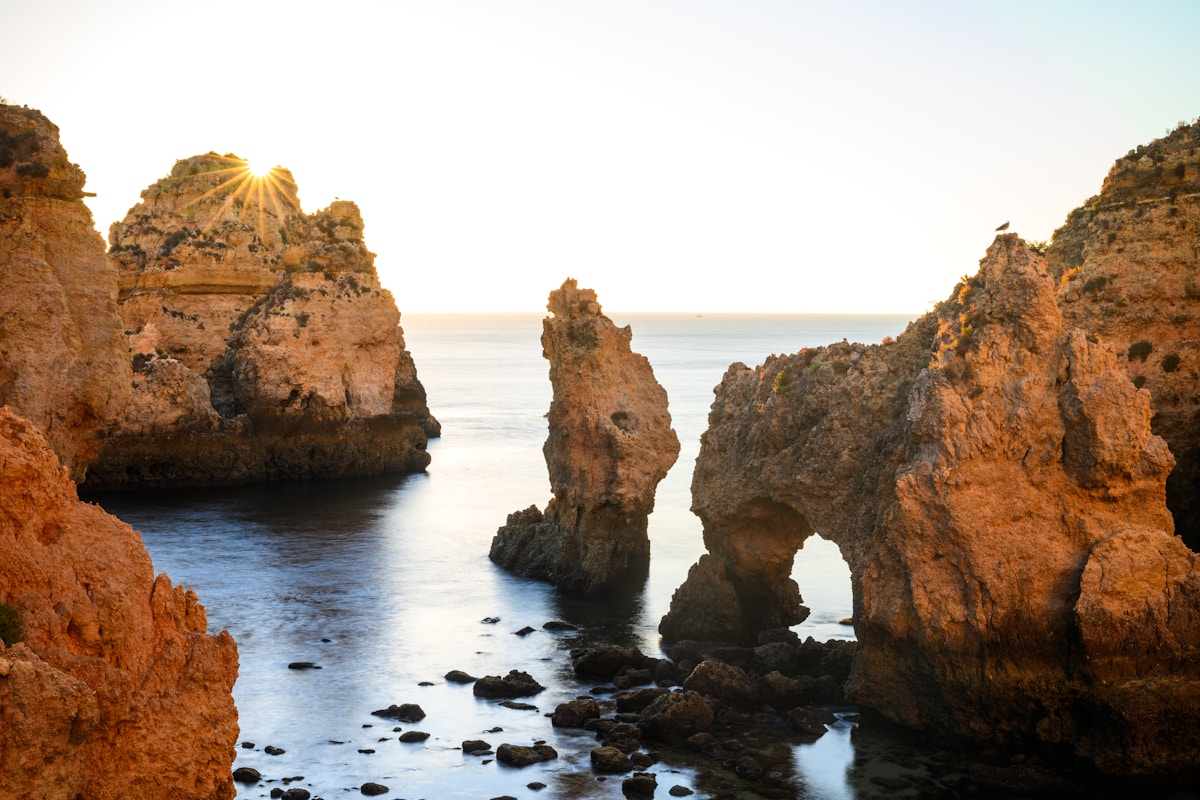
Portugal’s two most-visited destinations could hardly be more different. Lisbon is a capital city spread across seven hills, full of museums, tiled buildings, fado clubs, and some of the best food in Europe. The Algarve is a 150km stretch of Atlantic coastline at the country’s southern tip, built around golden beaches, limestone sea stacks, and more sunshine hours than almost anywhere else in Western Europe. The decision between them is really a decision about what kind of holiday you want.
Quick Verdict
| Category | Lisbon | Algarve |
|---|---|---|
| Beaches | Day trips only | Winner |
| Culture and museums | Winner | Limited |
| Food scene | Winner | Good resort food |
| Sunshine reliability | Good | Winner |
| Family holidays | Possible | Winner |
| Nightlife | Winner | Albufeira strip, limited elsewhere |
| Day trips | Winner | Some coastal options |
| Budget | Mid-range | Mid-range to expensive resort towns |
| Active holidays | Good | Winner (watersports, golf) |
Choose the Algarve if your priority is beach time, reliable sunshine, watersports, or a family holiday with young children. Choose Lisbon if you want a city break with culture, excellent food, and the energy of a major European capital.
What Lisbon Offers
Lisbon is one of the most rewarding city breaks in Europe. The city’s compact historic neighbourhoods — Alfama, Mouraria, Bairro Alto, Chiado — are best explored on foot, even if the hills test your legs. The viewpoints (miradouros) at Graça and Portas do Sol are free and spectacular. The Belém district holds Lisbon’s most famous monuments: Jerónimos Monastery (€10, free Sunday mornings until 2pm) and the Torre de Belém (€6). The Museu Nacional do Azulejo (€5) is essential for understanding Portugal’s tile tradition, and the LX Factory market on Sundays turns a repurposed industrial complex into one of the city’s best afternoons.
Food is Lisbon’s strongest card. The Time Out Market in Cais do Sodré brings together a dozen of the city’s best chefs under one roof (dishes €8–18). Alfama’s tascas serve grilled fish and petiscos for €10–15 a head. Cervejaria Ramiro, a classic seafood house near Intendente, does the best prawns and crab in the city — budget €35–50 per person. Fado dinner shows in Alfama run €35–60 including a meal and are worth doing once.
Day trips from Lisbon are excellent: Sintra (40 min by train from Rossio, €2.60) for palaces and forest, Cascais (40 min from Cais do Sodré, €2.60) for a charming beach town, and the Arrábida peninsula (best by car, 1 hour) for the most dramatic coastline in mainland Portugal north of the Algarve.
What the Algarve Offers
The Algarve is built around three distinct coastal types. The central and eastern Algarve (Lagos to Faro) is the classic postcard coast: golden limestone cliffs, hidden cove beaches with calm turquoise water, and small resort towns. The western Algarve around Sagres is wilder, windswept, and popular with surfers. The Ria Formosa Natural Park east of Faro is a lagoon system with barrier island beaches reachable by ferry — quieter and more natural than the resort coast.
Standout beaches: Praia da Marinha (near Lagoa) is widely considered the most beautiful beach in Portugal — limestone arches, clear water, smaller than the nearby alternatives. Praia da Rocha (Portimão) is a 1.5km sandy sweep backed by a clifftop strip of bars and restaurants. Meia Praia (Lagos) is a long, sheltered bay popular with families and watersports operators. Praia de Benagil (near Lagoa) is famous for the sea cave accessible by kayak or boat — tours run from €15 per person from Benagil beach.
Watersports are well organised across the Algarve: surfing schools around Lagos and Sagres, dolphin-watching and speedboat tours from Portimão and Albufeira (from €35 per adult), and several water parks including Aquashow (near Quarteira) and Slide & Splash (Lagoa) for families with children.
Beaches
This comparison is not close. The Algarve has some of the best beaches in Western Europe — sheltered cove beaches with clear water, soft sand, and reliable sunshine from June through September. Water temperatures reach 22–23°C in August.
Lisbon’s nearest beaches require a day trip. Cascais and Estoril are 40 minutes by train with solid Atlantic beaches but significant wave action — good for surfers, less suitable for young children. Sesimbra and the Arrábida coast (by car, 1 hour) are genuinely beautiful — turquoise water and empty in spring — but the journey limits how much time you spend there.
Winner: Algarve, clearly.
Food
Lisbon has more depth and variety. From excellent petiscos at neighbourhood tascas to Michelin-starred restaurants (Belcanto, José Avillez’s Chiado flagship, is two stars and €185 for the tasting menu), the dining scene covers every category and budget. Seafood is outstanding — grilled sea bass, percebes (barnacles), salt cod in thirty different preparations.
The Algarve’s food is good but anchored in the resort tourism trade. The towns of Lagos and Tavira have the most interesting restaurant scenes; Albufeira’s old town has decent local spots amid the tourist strips. Regional specialities worth seeking: cataplana (a copper-pot seafood stew, €16–28 per person), linguado grelhado (grilled sole, €16–22), and fresh-shucked ostras (oysters) from the Ria Formosa at Olhão’s market (€12–18 per dozen). Albufeira’s strip and the big resort areas around Vilamoura are largely international food — burgers, pizza, British breakfasts.
Winner: Lisbon for food quality and variety. The Algarve is fine but not a food destination in the Lisbon sense.
Accommodation
Lisbon: Mid-range hotels in Chiado, Príncipe Real, or Alfama run €120–180/night. The Bairro Alto Hotel is Lisbon’s most acclaimed five-star (from €350/night). The Memmo Alfama is a boutique four-star with a pool and Tagus views (from €200/night). Budget hostels in Intendente and Anjos start from €20/night for a dorm.
Algarve: Accommodation ranges from budget apartments in Albufeira for €60–90/night to large all-inclusive resorts around Vilamoura and Quinta do Lago for €300–600/night. The luxury end is among the best in Europe: the Pine Cliffs Resort near Albufeira (an Autograph Collection property with six pools, golf, and its own beach cliff elevator, from €280/night) and Vila Vita Parc near Armação de Pêra (two Michelin-starred restaurant, private beach, from €350/night) are standout options. Mid-range self-catering apartments are the most common choice for families and run €100–180/night in high season.
Winner: Draw — different products. Lisbon has better boutique city hotels; the Algarve has better large resort infrastructure and more high-end options for families.
Getting There and Around
Lisbon: Humberto Delgado Airport is 7km from the city centre. The Aerobus runs directly to Marquês de Pombal and Cais do Sodré (€4, 30–45 minutes). Uber from the airport to central Lisbon runs €12–18. The metro is easy and covers most of the city (€1.65 per trip).
Algarve: Faro Airport is the gateway, served by direct flights from the UK (Gatwick, Stansted, Birmingham, Manchester, Bristol, Edinburgh), Ireland, and across Europe. The airport is 6km from Faro town. Most visitors hire a car: the Algarve’s beaches and small villages are spread over 150km of coast, and a car opens up the cove beaches that no bus reaches. Car hire from Faro Airport starts around €30–50/day for a small car booked ahead.
When to Visit
Lisbon: Year-round destination. May and June are ideal — warm (22–26°C), not yet peak-season crowded. September and October are equally good. July and August are hot (often 30–35°C) and very busy. December and January are mild (13–15°C) with fewer tourists and lower prices.
Algarve: Best from mid-June through September. July and August deliver reliable 30°C+ temperatures and sea temperatures of 22–23°C — but also the highest prices and largest crowds. May and early June are pleasant but sea temperatures are still cool (18–19°C). October is the sweet spot for budget travellers — good weather, emptier beaches, prices drop by 30–40%.
Day Trips
Lisbon’s day trip options are stronger: Sintra (UNESCO World Heritage palaces, 40 min by train), Cascais (beach town, 40 min by train), Évora (Roman temple and medieval cathedral, 1.5 hours by bus or train, €13 return), and the Arrábida Natural Park (turquoise water, dramatic limestone cliffs, 1 hour by car).
The Algarve has fewer day trip options but some good ones: a boat trip to the Caves of Benagil (from €15), the Spanish town of Ayamonte across the Guadiana River (accessible by ferry from Vila Real de Santo António, €1), and the town of Tavira in the eastern Algarve — quieter, more elegant, and less developed than the central resort towns.
Final Verdict
First visit to Portugal, and you want beach time? Choose the Algarve. The combination of reliable sunshine, spectacular cove beaches, resort infrastructure, and easy access from the UK makes it one of Europe’s most dependable beach destinations. Families with young children should choose the Algarve without hesitation.
First visit to Portugal, and you want the full cultural experience? Choose Lisbon. No other Portuguese city matches it for food, history, architecture, nightlife, and the feeling of a genuinely interesting European capital. If you have 10 days or more, combine both: Lisbon for the first half, Algarve by AP train for the second. The contrast is ideal — you earn the beach time.
More Portugal Comparisons
- Porto vs Algarve — Portugal’s second city against its biggest beach region
- Algarve vs Madeira — sun-and-sea beaches versus volcanic island hiking
- Silver Coast vs Algarve — Portugal’s two Atlantic coastlines compared
- Is the Algarve Worth It? — the honest verdict on what the Algarve delivers
Plan Your Trip
✈️ Book your flights to Portugal 🛡️ Get travel insurance 📱 Stay connected with an eSIM 🚗 Rent a car