Tavira Travel Guide - Eastern Algarve's Elegant Old
Tavira guide - Roman bridge, Moorish castle, Ilha de Tavira barrier island by ferry, Ria Formosa tuna heritage, and the eastern Algarve at its best.
Guides for Tavira
Tavira is a town of around 26,000 in the eastern Algarve, 30km east of Faro and 30km west of the Spanish border at Vila Real de Santo António. The Algarve region guide puts Tavira in context alongside the western Algarve’s cliff coastline and the central resort strip. Of all the Algarve towns, Tavira comes closest to functioning as a genuine Portuguese community that accommodates tourists rather than one built primarily around them. The historic centre is architecturally coherent and largely intact, the Gilão River divides the town with a waterfront of outdoor restaurants, and the Ria Formosa barrier island opposite provides one of the best beaches in the region.
It’s frequently described as the most elegant town in the Algarve. That reputation is partly about the architecture (an unusually high concentration of 17th–18th century churches and mansions for a town this size), partly about the lower density of package resort infrastructure compared to the western Algarve.
Getting There
By train from Faro: 30–35 minutes on the Algarve line, €3–4. The Tavira station is on the north side of the river, a 10-minute walk from the centre via the pedestrian bridge. Trains run throughout the day.
By car from Faro: 30km east on the A22, 20–25 minutes.
By train from Spain: The Spanish rail system connects to Vila Real de Santo António, 30km east of Tavira (frequent bus connections run between Vila Real and Tavira).
The Historic Centre
Tavira’s old town sits on both sides of the Gilão River, connected by several bridges including the Ponte Romana (Roman Bridge) - though the current structure dates from the 17th century built on Roman foundations. The river front below the bridge on both banks has outdoor restaurant terraces and a riverside promenade.
Castelo de Tavira: The Moorish castle above the old town has largely collapsed walls, but the preserved battlements enclose a garden with views over the town’s distinctive double-pitched rooftops (a style more common in Tavira than elsewhere in the Algarve, possibly of North African origin). Entry is free.
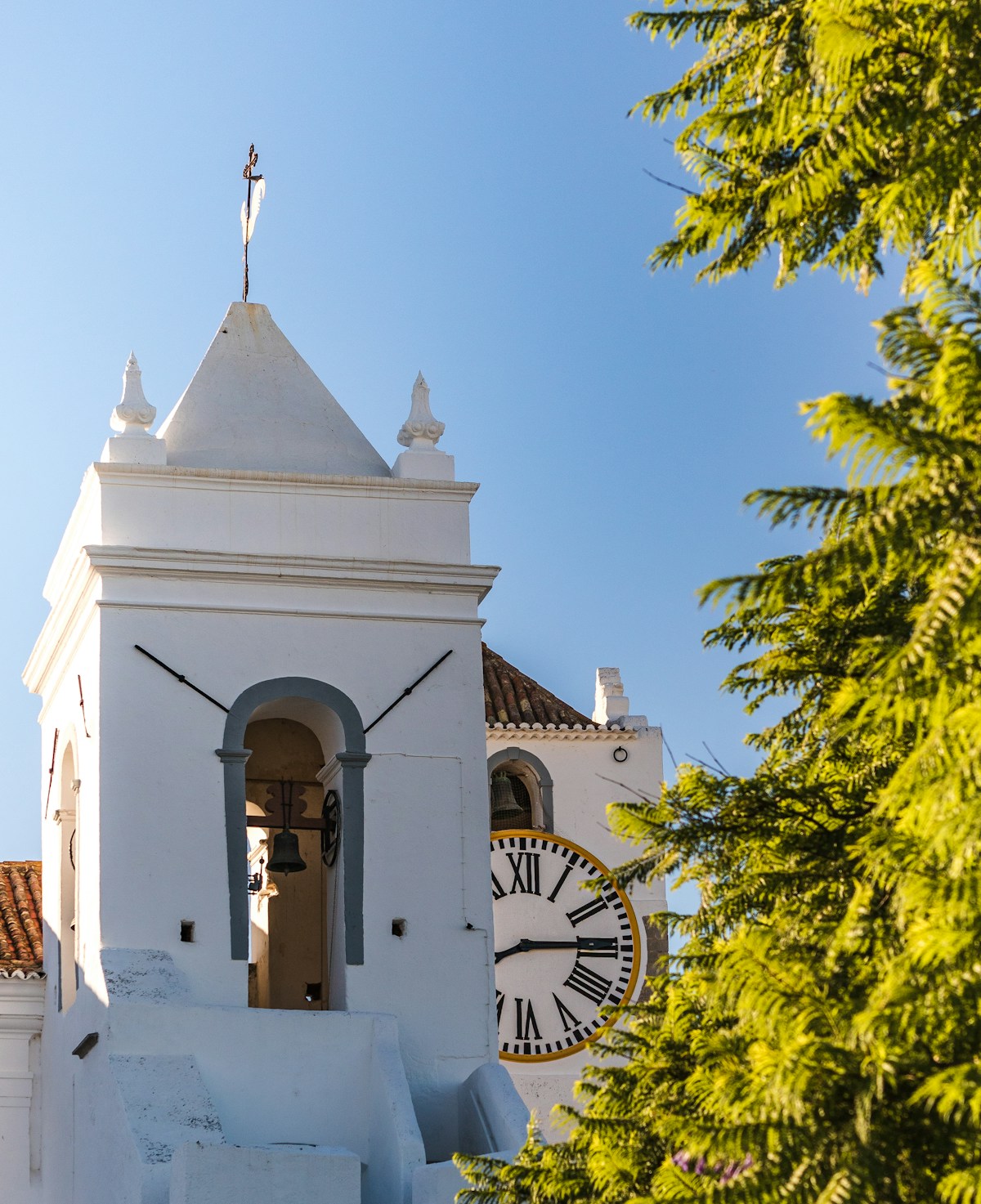
Igreja de Santa Maria do Castelo: Built on the site of a mosque after the 1242 Christian reconquest of Tavira, incorporating the original minaret as the bell tower. Contains the tombs of Dom Paio Peres Correia (the military commander who led the reconquest of Tavira and the eastern Algarve) and seven of his knights. The Gothic portal and interior are the highlights.
The 37 churches: Tavira is known for having an unusually high number of churches for its size - 37 at the last formal count, though not all are still active. Several are notable: the Igreja da Misericórdia (Renaissance façade), the Igreja do Carmo (18th-century), and the Igreja de São Paulo.
Núcleo Islâmico: A small museum documenting Tavira’s significant Moorish heritage, with archaeological finds from the Islamic period (8th–13th centuries). Entry €2.
Ilha de Tavira
The barrier island directly south of the town is the main beach destination. The aquatáxi ferry from Praça Dr. António Padinha in the centre runs throughout the day (10-minute crossing, €1.50 each way). Landing at the island brings you to a small cluster of beach bars and a long, low-key beach extending along both the lagoon side and the Atlantic-facing side.
The island itself is about 11km long and largely undeveloped. The lagoon-side beach is calm and shallow, good for families. The ocean-facing side has more Atlantic swell. Both sides are accessible via paths from the landing point.
The island tends to fill with day visitors in July and August but remains more spacious than most popular Algarve beaches due to its length. There is basic accommodation on the island (camping in season), though most visitors day-trip from Tavira.
The alternative ferry from Quatro Águas (2km east of town, accessible by water taxi from town or on foot along the Ria Formosa path) deposits you at a different section of the island with a slightly longer beach approach.
Ria Formosa and Local History
The eastern Algarve’s Ria Formosa section (the lagoon extends from Faro to near Tavira) has a deep history connected to the Atlantic tuna fishing industry. Bluefin tuna migrated through these waters annually on a known seasonal route, and the Portuguese developed the armação - a stationary net system capable of trapping and killing large numbers of tuna at once - which operated from Roman times through to the 20th century. The old tuna factory buildings (conserveiras) are visible near Pedras d’el Rei, a settlement on the lagoon edge east of town.
The lagoon also supports oyster cultivation, clam farming, and the flamingo and bird populations typical of the Ria Formosa throughout.
What to Eat
Seafood is reliable and generally well-priced in Tavira. The local speciality is atum (bluefin tuna) - served grilled, in açordas, and in moqueca-style preparations - though wild bluefin is now rare and expensive; farmed Atlantic tuna is increasingly common. Bivalves from the lagoon (ameijoas, ostras) are widely available.
The riverside restaurants along both banks of the Gilão offer broadly similar menus and views - the quality difference between them is not dramatic. Quatro Águas is a small fishing settlement on the lagoon 2km east with several simple restaurants serving fresh fish at lower prices.
Restaurante O Pátio on Rua Dr. António Cabreira is consistently recommended for traditional Algarve cooking. A Barquinha on the riverfront is popular with visitors for the setting.
Where to Stay
Tavira has a range of accommodation including boutique guesthouses in converted mansions, small hotels around the riverside, and self-catering apartments in the residential areas near the centre. Prices are somewhat lower than Lagos and Albufeira in peak season. Advance booking is required for July and August - Tavira’s reputation has grown considerably in the past decade. See our Tavira hotel guide for options.
Search hotels in Tavira on Booking.com to compare rates and availability.
Best Time to Visit
May, June, September, and October offer the best balance: water warm enough for the island beach (19–24°C), manageable visitor numbers, and the full range of restaurants open. July and August are busy but the island distributes crowds more effectively than enclosed cove beaches. Tavira in winter (November–March) is peaceful, with mild temperatures (14–18°C) - a good off-season option for the Algarve if beach use isn’t the priority. See our Tavira food guide for specific restaurants and local dishes, and things to do in Tavira for a full activity breakdown. For help choosing between the eastern and western Algarve, our Faro vs Lagos comparison puts Tavira’s position in regional context.
For guided experiences, browse tours in tavira - covering walking tours, food tours, and day trips from the city.
Getting here by air? airport transfers take the stress out of the journey from the airport to your hotel. Pick up an eSIM for Portugal before you land to stay connected on arrival.
Tavira in the Wider Algarve
Tavira is the eastern Algarve’s most rewarding town. The Algarve region guide describes the character difference between Tavira’s area (lagoons, barrier islands, quieter) and the western Algarve (cliffs, surf, more active). Faro is 30 minutes west by train and makes a practical transport base. The 7-day Algarve road trip includes Tavira and the Ria Formosa on the eastern leg. For dolphin watching boat trips that operate in the same coastal waters, see our dolphin watching Algarve guide. Tavira’s lagoon seafood - particularly bivalves from the Ria Formosa and local tuna - features in our Portuguese seafood guide as one of the best marisqueira destinations on the Algarve coast. Comparing the eastern Algarve with the west? See our Faro vs Lagos breakdown, which puts Tavira in the context of the two main Algarve base options. For a direct head-to-head between the two most contrasting Algarve towns, see our Tavira vs Lagos comparison — it covers beaches, cost, character, and who each base suits.
How Tavira Compares
Tavira vs Lagos: Lagos is on the western Algarve — dramatic sea stacks at Ponta da Piedade, a more active nightlife scene, and direct train connections from Lisbon. Tavira is on the eastern Algarve — calmer, quieter, with lagoon beaches reached by ferry across the Ria Formosa rather than cliffs. Lagos suits those who want activity and scenery packed tightly together; Tavira suits those who want an elegant, slower-paced Algarve town with barrier-island beaches. Cost in Tavira runs slightly lower than Lagos for comparable accommodation.
Tavira vs Faro: Faro is the Algarve’s capital — larger, with a functioning airport and better transport connections, but a smaller and less rewarding historic centre. Tavira has more to see in the old town itself, better restaurants in proportion to its size, and a more consistently pleasant atmosphere. Most visitors use Faro as a transport hub and Tavira as a destination. Couples consistently rate Tavira over Faro for a stay; families find Faro’s logistics easier. Best months for both: April–June and September–October, when the Ria Formosa is quieter and the weather ideal.
Frequently Asked Questions
- How do I get from Faro to Tavira?
- By train on the Algarve line, the journey takes about 30–35 minutes and costs €3–4. Trains run regularly throughout the day. Tavira station is a 10-minute walk from the historic centre. By car on the A22, it's 30km and takes about 20–25 minutes.
- How do I get to Ilha de Tavira?
- Take the ferry (aquatáxi) from the landing below Praça Dr. António Padinha in the town centre to the island - the crossing takes about 10 minutes and costs €1.50 each way (or €3 round trip). In summer, ferries run frequently. A longer water taxi route is also available from Quatro Águas, 2km east of town.
- Is Tavira more expensive than western Algarve resorts?
- Generally comparable to Lagos and significantly less expensive than Vilamoura. Tavira attracts a more independent, European travel-focused clientele than the package resort towns of the western Algarve, which means boutique accommodation and restaurants with better value-quality ratios than resorts like Albufeira, but it's still a tourist town with tourist pricing in summer.
- What is the tuna fishing heritage of Tavira?
- Tavira and the surrounding eastern Algarve coast were major centres of Atlantic bluefin tuna fishing from the Roman period until the mid-20th century. The armação (a complex stationary net system trapping migrating tuna) was used for centuries. Tuna processing factories operated along the coast. The industry collapsed with the decline of tuna stocks and industrial fishing. The heritage is documented in the Núcleo Islâmico museum and visible in the old tuna factory buildings near Pedras d'el Rei.
Book an experience
Top experiences in Tavira
Explore the best tours and activities in Tavira, with instant confirmation and free cancellation on most bookings.
Where to stay in Tavira: Find hotels in Tavira →