Lisbon Travel Guide - Neighbourhoods, Transport & What to Do
Lisbon: Alfama Fado, Baixa, Belem, Principe Real boutiques. Metro €1.61, airport taxi €15-20, Sintra train €2.35 (40min), castles €15.
Guides for Lisbon
Lisbon is Portugal’s capital and largest city, home to around 545,000 people in the city proper and 2.9 million across the metropolitan area. It sits at the mouth of the Tagus River, a position that made it one of Europe’s great maritime powers in the 15th and 16th centuries. Today it’s a functioning European capital with a dense, walkable historic centre, a metro system that covers most major sites, and a food scene that has improved considerably over the past decade.
Neighbourhoods
Alfama
Alfama is the oldest part of Lisbon - a Moorish-era hillside quarter that survived the 1755 earthquake intact while the rest of the city was levelled. The streets are narrow and steep, tiled buildings crowded together, laundry strung between windows. São Jorge Castle sits at the top and is worth visiting for the views over the Tagus even if the interior is less impressive than its silhouette suggests (€15, book ahead). Fado - the Portuguese melancholic folk music genre - is performed in casas de fado here. The Miradouro das Portas do Sol and Miradouro da Graça are two of the best viewpoints in the city. Alfama suits visitors who want atmosphere over convenience.
Baixa and Chiado
Baixa is the flat, grid-plan downtown built after the 1755 earthquake under the Marquês de Pombal. Praça do Comércio faces the Tagus and was once the gateway for goods arriving from Portugal’s colonies. The neighbourhood is primarily commercial, good for getting between places but not the most interesting to linger in. Chiado, just uphill, is more refined - independent bookshops, cafés, design stores, and the A Brasileira café where Fernando Pessoa spent time (the bronze statue outside is his). Baixa-Chiado metro station connects both areas.
Bairro Alto
Bairro Alto runs west of Chiado and is Lisbon’s main nightlife district. During the day it’s quiet and residential. From around 10pm on weekends the narrow streets fill with people moving between small bars. Fado can also be found here, though the venues tend to be more tourist-facing than those in Alfama.
Belém
Belém is 6km west of the centre along the Tagus waterfront, served by tram 15E (30–40 min from Praça da Figueira) or Uber. The Jerónimos Monastery is the finest example of Manueline architecture in Portugal and worth the €15 entry (free Sunday mornings until 2pm). The Torre de Belém is smaller than photos suggest but sits in a photogenic position on the water. The Padrão dos Descobrimentos monument and the MAAT (Museum of Art, Architecture and Technology) are also here. Pastéis de Belém, at Rua de Belém 84–92, has been making the original pastel de nata since 1837. Expect a queue but it moves fast.
Príncipe Real
Príncipe Real is an affluent residential neighbourhood west of Bairro Alto with an antiques market on weekends, independent restaurants, and some of Lisbon’s better boutique hotels. It feels less touristy than most of the centre and is a good base if you’re staying more than a few nights.
Getting Around
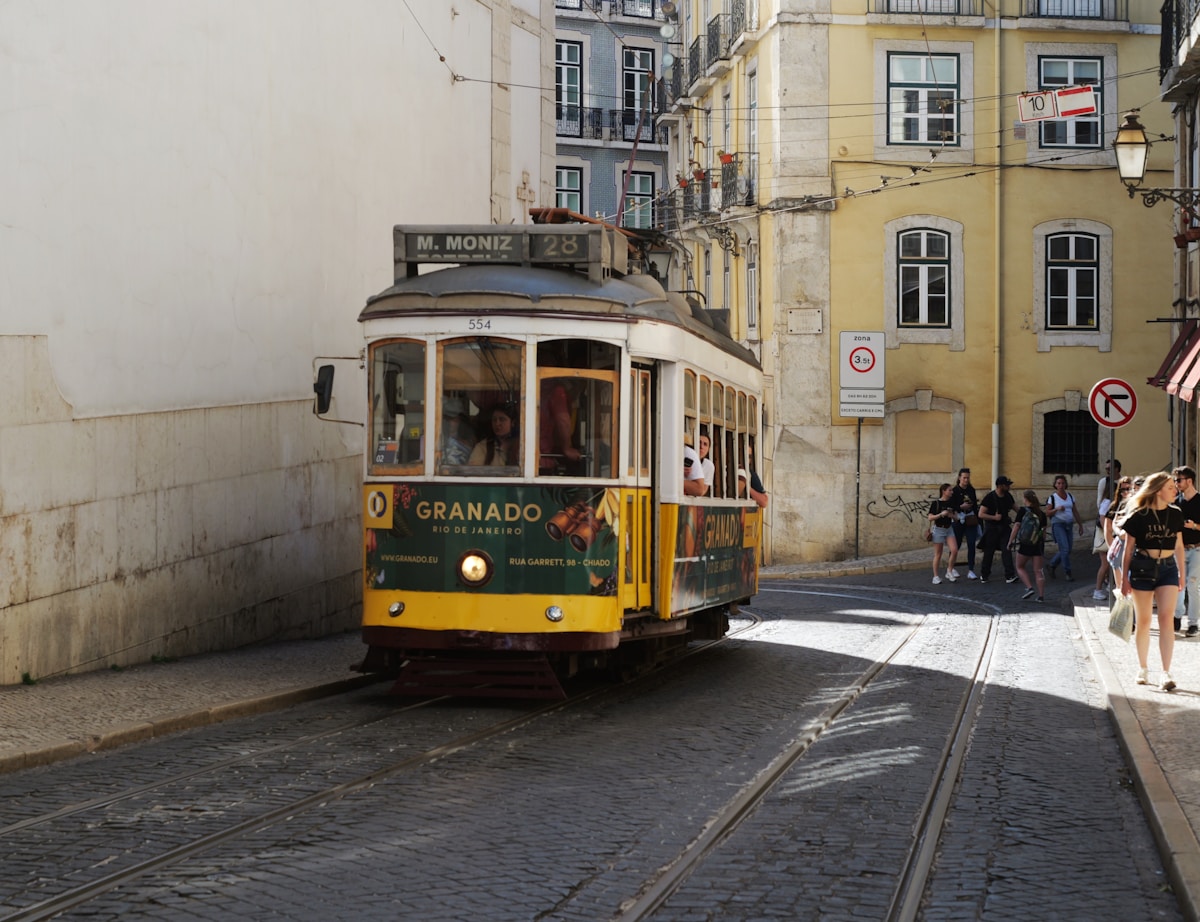
Lisbon’s metro has four lines (Blue, Yellow, Green, Red) and covers the main tourist areas, the airport, and Belém connections. Single tickets require an Andante card. Tram 28 connects Alfama to Estrela and is useful but crowded. Uber works well and is cost-effective for Belém or other off-metro destinations. The city’s hills mean that flat-soled shoes wear better than sandals for extended walking.
Getting There
Humberto Delgado Airport is 7km northeast of the centre. The Metro Yellow Line provides a direct connection to Rato, Marquês de Pombal, and Alameda interchange. Travel time is 20–30 minutes depending on destination. Taxis and Uber to Baixa typically cost €15–20 and take 15–30 minutes depending on traffic. For late arrivals with heavy luggage or groups, a pre-booked airport transfer to Lisbon avoids the taxi queue entirely.
Lisbon’s Santa Apolónia and Oriente stations serve long-distance rail. Porto takes around 2h45 by fast Alfa Pendular service (from €25 booked ahead). Faro is 3h30. Seville via Badajoz is 5h30.
Day Trips
Sintra (40 min by train from Rossio, €2.35) is the obvious day trip. Book palace tickets - especially Pena Palace - at least the day before in peak season. For a fully guided day out with transport included, day tours from Lisbon cover Sintra, Óbidos, and Évora - worth considering for first-time visitors who want a structured introduction. Deciding at short notice? Our last-minute tours page shows what still has spaces in the next few days. Our Sintra day trips guide covers the full logistics including palace order, hiking routes, and how to combine Sintra with Cascais (40 min from Cais do Sodré, €2.35) in a single day. For the full list of options including Évora, Óbidos, Setúbal, and the Berlengas Islands, see our day trips from Lisbon guide. A shorter alternative is the 10-minute ferry from Cais do Sodré to Almada - Cristo Rei and the Cacilhas waterfront restaurants offer the best view of Lisbon from the south bank, at a fraction of the cost of a day trip further afield.
Top Tours in Lisbon
If you’d rather skip the logistics, guided tours handle the distances and queues efficiently. These are the formats that work best:
Lisbon Essential Walking Tour — History, Stories & Lifestyle
A 2.5-hour small-group walking tour of Alfama, Mouraria, and Chiado with a local guide covering the city’s history from the Moorish period through the 1755 earthquake. One of GYG’s highest-rated Lisbon tours. Starts near Praça do Comércio.
- Duration: 2.5 hours
- Price: approximately €15–25 per person as of 2026
- Best for: First-time visitors wanting a historical orientation before exploring independently
- Book on GetYourGuide
Lisbon Half-Day Small-Group Tour with Transport
A structured half-day covering Belém (Jerónimos Monastery, Belém Tower), Alfama, and Chiado by minibus and on foot. Transport between neighbourhoods is included — which makes Belém much more convenient than navigating tram 15E alone. Group size limited to 12.
- Duration: 4 hours
- Price: approximately €35–55 per person as of 2026
- Includes: Transport between areas, local guide
- Book on GetYourGuide
Sintra, Pena Palace, Quinta da Regaleira & Cabo da Roca — Full Day
The best-selling day trip from Lisbon on GYG. Combines the two most iconic Sintra palaces, a stop at Cabo da Roca (the westernmost point of continental Europe), and often Cascais on the return. Everything logistically complex about Sintra — queue management, palace ticket timing, transport — is handled.
- Duration: 9–10 hours
- Price: approximately €65–85 per person as of 2026 (sometimes includes entry tickets — confirm at booking)
- Departs: Central Lisbon, hotel pickup sometimes available
- Book on GetYourGuide
Private Food & Wine Tour by Eco Tuk Tuk
A food-and-drink-focused tuk tuk tour through Baixa, Alfama, and Mouraria with stops for pastéis de nata, bifana, ginjinha, and a cheese board. The tour is private — you don’t share with strangers. Good for couples or small families wanting a tasting circuit without committing to a sit-down restaurant.
- Duration: 3 hours (private)
- Price: approximately €75–95 per person (minimum 2) as of 2026
- Includes: All food and drink tastings
- Book on GetYourGuide
For the full range of current prices and availability across all tour formats, browse all Lisbon tours.
What to Eat
Pastéis de nata (custard tarts) are the default starting point. Our Portuguese pastry guide covers all of Portugal’s regional pastries - not just nata but travesseiros, queijadas, tortas de Azeitão, and the egg-yolk-heavy conventual sweets from the Alentejo. Beyond pastry: bacalhau à brás (shredded salt cod with eggs and crisps), grilled sardines in summer, amêijoas à bulhão pato (clams in garlic and white wine). Time Out Market in Cais do Sodré is a reliable multi-vendor hall where you can sample several restaurants in one sitting - busy but not a bad option for a first evening. Taberna da Rua das Flores and Tasca do Chico in Bairro Alto are smaller, more local options. For a full breakdown of where to eat, see our Lisbon restaurants guide. If you’d rather have someone else navigate the food scene, our Lisbon food tours guide covers the best guided tastings and wine experiences.
Where to Stay
For our full accommodation guide with specific hotel recommendations across all budgets, see Where to Stay in Lisbon.
Search hotels in Lisbon on Booking.com to compare rates and availability.
Best Time to Visit
April to June and September to October offer mild temperatures (18–25°C), manageable crowds, and most daylight. July and August are hot (28–35°C) and very busy, particularly in Alfama and Belém. December is quieter with cool weather and Christmas markets around the Praça do Comércio. Lisbon’s Festas de Lisboa in June includes street parties in all major neighbourhoods - one of the better times to visit if you want to see the city in a local context.
Food and Drink
Portugal’s food culture has a depth that most visitors underestimate. Start with our Portuguese food guide for an overview of the national cuisine, then bacalhau for the country’s signature ingredient - salt cod prepared in hundreds of regional ways. For wine, the Portuguese wine guide covers Douro, Alentejo, Vinho Verde, and Madeira wines. Lisbon’s own restaurant scene is covered in the Lisbon restaurants guide.
Lisbon for Digital Nomads
Lisbon is one of Europe’s most established remote-work cities, with strong co-working infrastructure, a large expat community, and Portugal’s D8 Digital Nomad Visa offering a legal path for stays beyond 90 days. See our Lisbon digital nomad guide for co-working spaces, neighbourhoods, and practical visa information.
How Lisbon Compares
Deciding between Lisbon and another city? We’ve put together honest comparisons across the most common questions:
- Lisbon vs Porto - which city to base yourself in and why they’re genuinely different
- Lisbon vs Madrid - cost, sightseeing depth, and which suits your trip style
- Lisbon vs Barcelona - the two most-compared Iberian capitals head to head
- Lisbon vs Seville - Atlantic Portugal vs Andalusian Spain: architecture, food, and price compared
- Sintra vs Cascais - which Lisbon day trip to prioritise
Frequently Asked Questions
- How do I get from Lisbon airport to the city centre?
- Take the Metro Yellow Line from Aeroporto station. It runs directly to Rato, Marquês de Pombal, and Baixa-Chiado in about 25–35 minutes. Single tickets cost €1.61 with an Andante card (€0.50 one-time cost). Taxis and Uber are also reliable and typically cost €15–20 to central Lisbon. For a door-to-door option with a driver waiting in arrivals, [Welcome Pickups](/go/welcome-pickups-portugal/) offers pre-booked transfers at fixed prices.
- Is tram 28 worth taking in Lisbon?
- Yes, but go in early morning or late afternoon to avoid peak crowds. Tram 28 is a genuine city service (not a tourist attraction), running from Martim Moniz through Alfama to Estrela. It's the most scenic way to navigate the hills, but pickpocketing is common - keep bags in front.
- How far is Sintra from Lisbon?
- About 40 minutes by train from Rossio station. Trains run frequently throughout the day and cost €2.35 each way. Sintra is easily done as a day trip, though arriving before 9am is strongly recommended to beat the palace queues.
- What's the best neighbourhood to stay in Lisbon?
- Príncipe Real suits boutique hotels and a quieter residential feel. Baixa/Chiado is the most central and convenient for first-time visitors. Alfama has the most character but is hilly and quieter at night for eating out. Avoid booking in Mouraria if a lively nightlife scene isn't your priority.
Book an experience
Top experiences in Lisbon
Explore the best tours and activities in Lisbon, with instant confirmation and free cancellation on most bookings.
Where to stay in Lisbon: Find hotels in Lisbon →