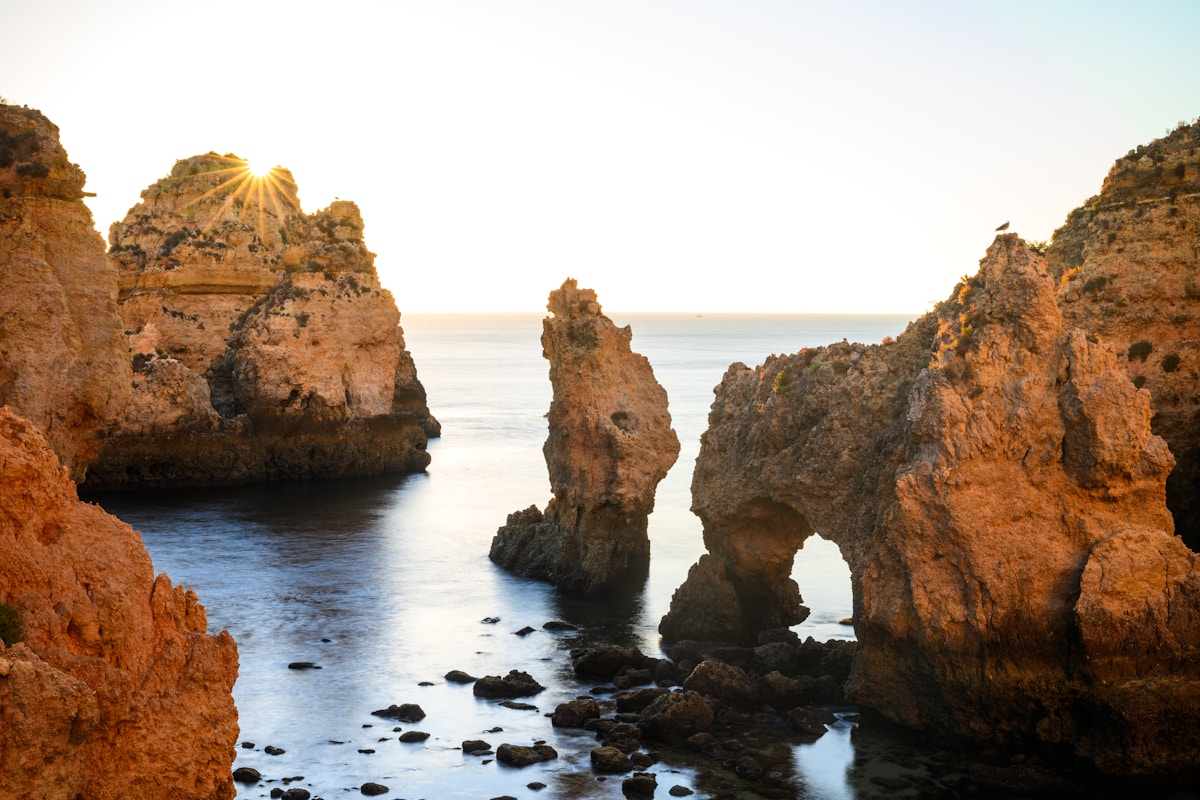
The Algarve runs 150 km along Portugal’s southern tip, from the Spanish border in the east to Cape St. Vincent - the southwestern corner of continental Europe - in the west. It is the country’s most visited region, and for good reason: the light here is extraordinary, the water is warm by European standards, and the geology produces coastal scenery unlike anywhere else in Western Europe.
Understanding the Algarve as a single destination is a mistake. The east and west are different countries in mood, price, and landscape.
West Algarve - Cliffs, Surf, and Lagos
From Lagos to Sagres, the coastline faces the full force of the Atlantic. The result is sea stacks, arches, sea caves, and beaches hemmed in by 30-metre orange limestone cliffs. Ponta da Piedade, just south of Lagos, is the most photographed stretch - kayak tours leave from Lagos beach and cost around €20.
Lagos is the western Algarve’s main town and the best base for this part of the coast. It has a functioning old town, good restaurants, and a lively but not overwhelming bar scene. Accommodation runs €80–150 per night for a decent double in July. For boat tours along this stretch - cave explorations, dolphin watching, and Benagil - see our Algarve boat trips guide.
Sagres, at the far southwest corner, is a different mood entirely - a small fishing town on a windswept headland, popular with surfers and people who want to feel genuinely at the edge of something. The Fortaleza de Sagres is worth an hour, and the surf at Praia do Tonel is consistent year-round.
Between Lagos and Sagres, Salema and Burgau are quieter fishing villages with small beaches and restaurants that serve the freshest grilled fish in the region.
Central Algarve - Resort Strip
Albufeira to Vilamoura is the resort heartland: high-rise hotels, golf courses, British-themed pubs, and beaches packed in summer. Marinha and Benagil are genuinely beautiful (the Benagil sea cave is one of Portugal’s most recognisable images), but both are overwhelmed by boat tours in July and August. Visit Benagil by kayak before 8am or after 5pm to avoid the worst of it.
Portimão is a working town with a covered market and a ferry across to Ferragudo - a quieter, prettier village with less tourist infrastructure and a better fish restaurant scene.
East Algarve - Lagoons, Islands, and Tavira
East of Faro, the coastline changes entirely. The Ria Formosa natural park - a system of barrier islands, mudflats, and tidal channels - runs for 60 km. The islands (Ilha da Culatra, Ilha da Armona, Ilha de Tavira) are reached by ferry and have no cars, no hotels, and beaches that feel a long way from the resort strip.
Tavira is the east Algarve’s best town - a small, elegant place of Roman bridges, white churches, and good seafood. Accommodation is cheaper than Lagos, the streets are quieter, and the nearby island beach (15 minutes by ferry) is one of the finest in Portugal.
Cacela Velha, 20 km east of Tavira, is a fortified hamlet above the lagoon with no facilities except a good restaurant. It is worth an hour and feels completely unlike the Algarve you see in brochures.
Getting Around
The A22 toll road runs the length of the Algarve and is the fastest way between towns. A car is essential for the western Algarve - hire a car at Faro airport; booking before you fly is reliably cheaper than the counter rate. The train line (Lagos–Faro–Tavira–Vila Real) is good for the eastern section and avoids the summer traffic on the N125 coast road, which gets very slow.
Faro airport serves the whole region, with flights from most European cities. Lagos is 75 minutes by car from Faro; Tavira is 35 minutes.
When to Go
May–June: Best overall. Warm (22–25°C), beaches manageable, prices 30% lower than peak.
July–August: Hot, crowded, and expensive. Book accommodation months in advance if you must go then.
September–October: Second best window. Sea temperature peaks in late September (22°C). Hiking and cycling become comfortable again.
November–April: Quiet and mild (14–18°C). Good for hiking the Via Algarviana (300 km east-west trail) and surfing. Most beach restaurants close.
Where to Base Yourself
- Lagos - best all-round base for the western Algarve; good transport links, genuine town life. See Lagos hotel guide.
- Tavira - best base in the east; quieter, cheaper, more authentic
- Faro - practical hub if you want both sides without driving the full length daily; airport town with underrated historic centre
- Sagres - for surfers and those wanting total quiet; limited restaurants in winter
For Algarve boat trips including sea cave kayaking, dolphin watching, and Ria Formosa lagoon tours, see our Algarve boat trips guide. To browse the full range of tours and activities in the Algarve, GetYourGuide lists options from both the east and west coasts. For dolphin and whale watching specifically, see our dolphin watching Algarve guide and kayaking to Benagil Cave guide. For a structured road trip, our 7-day Algarve itinerary covers Lagos to Faro via the wild Alentejo coast. Surf options in the Algarve are covered in depth by our Sagres surf guide and the Costa Vicentina surf guide for the wild coast north of Lagos. For comparing destinations before you book, see Lagos vs Albufeira, Faro vs Lagos, and Algarve vs Madeira. Search hotels in Algarve Portugal on Booking.com to compare rates and availability.