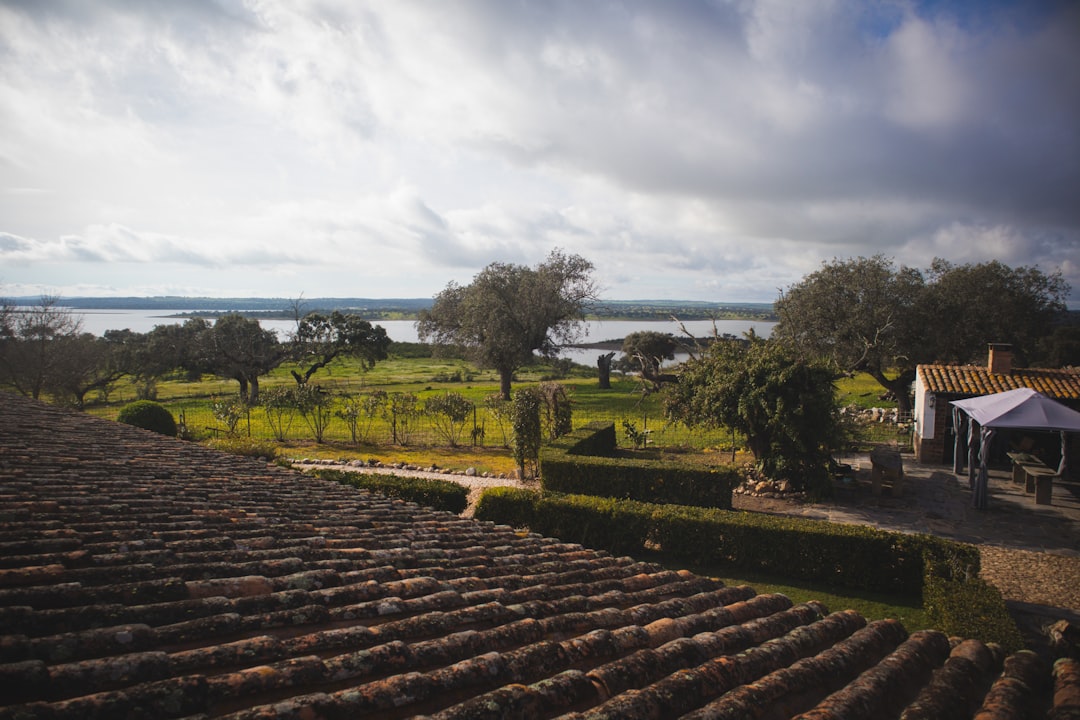
The Alentejo — covering a third of Portugal’s land area but only 7% of its population — is the country’s least-visited interior region by international travellers, and one of the most rewarding for those who make the effort. This five-day road trip circuit combines two contrasting Alentejo experiences: the coast (Comporta, with its rice fields and dune beaches) and the inland plateau (Évora’s Roman city, Monsaraz’s medieval village, Elvas’s fortress walls). A winery day is built in. The circuit begins and ends in Lisbon.
For a focused overview of the region before you travel, see our Alentejo region guide.
Route Overview
- Day 1: Lisbon → Comporta (ferry + 1h30 drive)
- Day 2: Comporta → Évora (1h30 drive)
- Day 3: Évora base — city and Cartuxa winery
- Day 4: Évora → Monsaraz → Reguengos (Esporão) → Évora
- Day 5: Évora → Elvas → Lisbon
Total driving: approximately 450 km.
Day 1 — Lisbon to Comporta
Morning: Collect your hire car in Lisbon. The A2 south to Setúbal takes 45 minutes; from Setúbal, take the Tróia ferry across the Sado estuary (approximately €11-12 per car, €3 per person; ferries run every 30-60 minutes, crossing time 20 minutes). Drive south from Tróia to Comporta — 30 km through pine plantations, 30 minutes.
Afternoon: Drop bags and go to the beach. Praia de Comporta is 10 minutes from the village — a wide, flat Atlantic beach with summer beach bars and thatched umbrellas. In July-August, the water is cold by Mediterranean standards (18-20°C) but swimmable. The light on the rice fields east of the village in late afternoon is exceptional.
Dinner: Sal (Rua do Comporta) serves Alentejo cooking in an open-air setting — grilled fish, açorda de marisco, local wine. Budget approximately €30-40 per person with wine.
Accommodation: Casas na Areia from approximately €200 per night (boutique, excellent). Quinta da Comporta from approximately €120-150 (simpler, pool, gardens). For budget, consider heading to Alcácer do Sal (30 km north, from €50 per night) and day-tripping to Comporta.
Day 2 — Comporta to Évora
Morning: One last walk to the beach or along the estuary rice field roads before checking out. Look for flamingos in the Sado estuary wetlands — best in early morning. Drive east to Évora (130 km via Alcácer do Sal and the IP8, approximately 1h30-1h45).
Afternoon in Évora: Check in, walk the old town circuit. The Roman Temple of Diana (14 Corinthian columns, 1st century AD) is visible from the surrounding square at no charge — best photographed in afternoon light. The Praça do Giraldo, the main square, has cafés and pastry shops; the Pastelaria Conventual at No. 62 is particularly good for afternoon coffee.
Chapel of Bones: The Igreja de São Francisco and its ossuary — bones of approximately 5,000 people lining the walls — is best visited mid-afternoon when tour groups have usually moved on. Entry approximately €4, open 9am-6pm daily. For the complete Évora picture, see our Évora guide. If you’d prefer a local guide for the Roman temple, cathedral, and bone chapel, Évora walking tours run most mornings and last around two hours.
Dinner: Taberna Típica Quarta-Feira (Rua do Inverno) — book ahead, small restaurant, exceptional Alentejo cooking, wine list strong on local producers. Approximately €35-50 per person.
Accommodation: M’AR De AR Aqueduto (boutique, from €130) or Albergaria do Calvário (historic building, from €95). Budget option: Residência Riviera from approximately €60.
Day 3 — Évora: City and Wine
This day uses Évora as a base without driving elsewhere.
Morning — Cartuxa Winery: The most historically significant Alentejo wine estate is 3 km from Évora’s town centre. Book a morning visit through the Fundação Eugénio de Almeida (approximately €10-15 per person). The estate produces Pêra-Manca, one of Portugal’s most collectable reds (€50+ per bottle), alongside the more accessible Cartuxa Colheita Seleccionada (approximately €18-25). The guided visit takes around 1.5 hours and includes tasting.
Late morning — Cromeleque dos Almendres: The neolithic stone circle 15 km west of Évora (free, no visitor infrastructure) is the largest megalithic complex in the Iberian Peninsula — approximately 95 granite stones in an oval formation, dating to 5,000-4,000 BC. Drive out in the morning, walk the field for 30 minutes, and return to Évora for lunch. The narrow road is signposted from the N114.
Lunch in Évora: Dom Joaquim (Rua dos Penedos) serves reliable Alentejo classics — black pork, lamb, and excellent migas (bread and pork fat side dish). Approximately €15-25 per person for a full meal.
Afternoon: The Évora Cathedral (Sé) is among the oldest Gothic cathedrals in Portugal (construction began 1186). Entry to the cloister and rooftop terraces approximately €4.50. The university, founded in 1559 by Cardinal Infante Henrique, occupies a building on the Praça do Colégio — the main hall is open to visitors.
Evening: Walk the aqueduct promenade — the 16th-century Aqueduto da Prata enters the city along Rua do Cano; the arch sections visible from street level give a sense of the engineering required to supply a city in this dry landscape.
Day 4 — Monsaraz and Esporão
Morning — Herdade do Esporão: Drive 45 km south to Portugal’s most visited wine estate (book the 10am tour, essential in summer — esporao.com, approximately €20-25 per person). The cellar tour covers fermentation tanks, barrel rooms, and the estate’s organic farming practices. Four wines included. The estate restaurant is open for lunch from 12:30pm — Alentejo cooking using estate-grown produce, approximately €35-50 per person. Book simultaneously with the cellar visit.
Early afternoon — Monsaraz: 15 km north of Esporão, the medieval walled village perches above the Alqueva reservoir. Drive up, park outside the gate (free), and walk the main street end to end. The castle at the upper end (approximately €2 entry) has 360-degree views across Europe’s largest artificial lake toward Spain. The cobblestones, whitewashed walls, and complete absence of commercial signage make Monsaraz look like a film set — it is not; people live here. Allow 1.5-2 hours.
If time: The submerged neolithic menhir at Menhir do Outeiro can be reached by boat from the Monsaraz lakeside pier (approximately €10-15 per person, operators on the pier). Takes 45 minutes. For structured tours combining Monsaraz, the Alqueva lake, and wine estates in one day, browse Monsaraz tours on GetYourGuide.
Late afternoon: Return to Évora (57 km, 50 minutes) or stay at Estalagem de Monsaraz (from approximately €95-140 per night) for a night in the village, which allows you to experience the village after the day visitors have left — genuinely atmospheric at dusk and on clear nights (the Alqueva dark-sky reserve designation means the Milky Way is visible without optical equipment).
Day 5 — Elvas and Return to Lisbon
Morning — Elvas: Drive from Évora east on the N4/A6 to Elvas (75 km, 1 hour). This UNESCO World Heritage site — the world’s largest bulwarked dry-moat fortification — takes around 2-2.5 hours to explore properly.
Start with the perimeter walls walk (free, 45-60 minutes) to understand the geometry of the bastion system. Then the castle museum (approximately €1.50), the main square with the former cathedral, and the MACE contemporary art museum (approximately €3). The Amoreiras aqueduct is visible from the road entering from the west.
Lunch in Elvas: Restaurante Aqueduto (near the aqueduct) for solid Alentejo cooking — carne de porco à alentejana, açorda de bacalhau. Approximately €25-35 per person with wine.
Afternoon — Return to Lisbon: The A6 west from Elvas to Lisbon is 220 km and takes approximately 2h15 with no traffic. If you want to extend slightly, Évora provides a final coffee stop midway. Alternatively, continue across the Spanish border to Badajoz (15 km east of Elvas) for tapas before the drive back — the border crossing is instant (Schengen), and Badajoz has several good Spanish tapas bars around the main square.
Budget Guide
| Tier | Accommodation | Food | Daily total (2 people) |
|---|---|---|---|
| Budget | Guesthouses €50-80/night | Self-catering + 1 restaurant meal | €80-100/day |
| Mid-range | Boutique hotels €100-160/night | 2 restaurant meals | €150-200/day |
| Comfortable | Design hotels €180-300/night | Estate restaurants, wine tastings | €250-350/day |
Hire car adds approximately €35-60 per day before fuel. Petrol stations are plentiful on main routes but sparse on country roads — fill up in Évora before driving to Monsaraz or Elvas.
What to Eat Across the Region
Alentejo cooking is built around bread, pork, game, and olive oil — not complicated, intensely satisfying. Key dishes to eat across the route:
- Sopa alentejana — thick garlic bread soup with a poached egg floating on top, €4-6
- Açorda de marisco — bread and seafood porridge, particularly around Comporta and the coast
- Carne de porco à alentejana — cubed pork with clams, paprika, and coriander — the defining dish of the region
- Migas — leftover bread fried with pork fat and greens, served as a side
- Black pork (porco preto) from free-range pigs fed on acorns — the Iberian pig is native to the Alentejo
- Queijo de Évora — a firm, salty sheep’s milk cheese
- Alentejo wines — reds from Esporão, Cartuxa, and Reguengos cooperative; whites from Antão Vaz grapes
For a full overview of where to eat across each destination, see the individual city guides for Évora, Comporta, Monsaraz, and Elvas.
Book Your Trip
- Hire car: Compare car rental prices for Portugal — essential for this circuit; book ahead for July and August.
- Travel insurance: Portugal insurance guide (what cancellation cover includes) · get covered with EKTA — worth having if you’re booking non-refundable winery visits or quinta stays.
- eSIM: Stay connected on the road — useful for offline maps when driving through rural Alentejo where signage can be sparse.