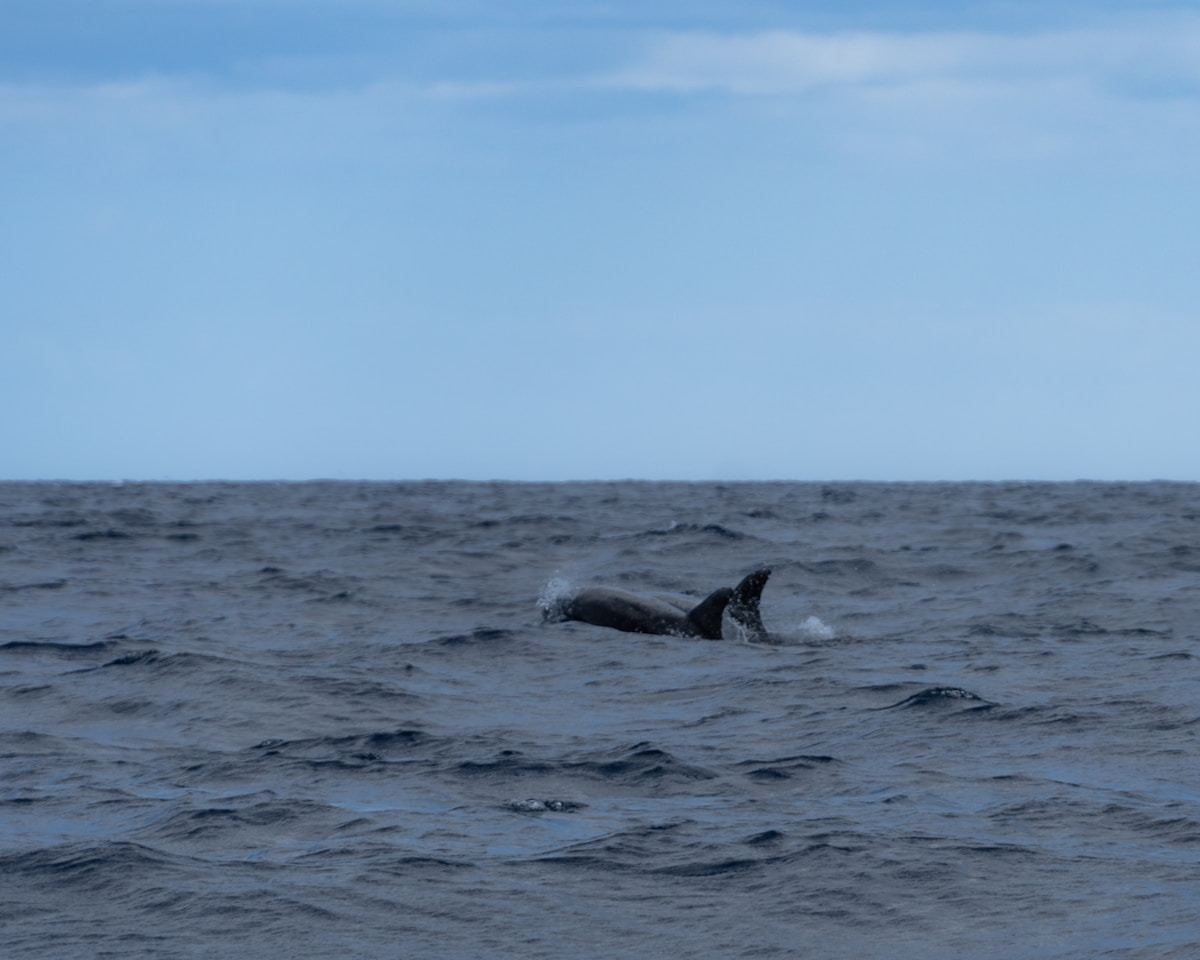
The Azores sit at the intersection of three tectonic plates in the mid-Atlantic, surrounded by ocean floor that drops to 2,000–3,000m just kilometres from shore. This underwater geography makes the archipelago one of the great whale watching destinations on Earth - sperm whales live here year-round, and seasonal migrations bring blue, fin, sei, and humpback whales through the same waters. Our Azores island-hopping itinerary covers how to combine whale watching with visits to São Miguel, Pico, Faial, and Terceira. The Azores region guide covers the archipelago’s nine islands, ferry connections, and what each island offers beyond whale watching. For seasonal planning, Portugal in April and Portugal in May cover the peak blue whale window in detail.
Why the Azores Work for Whales
The key is depth. The deep-water canyons immediately offshore of Pico and Faial give sperm whales the squid-rich, pressurised water column they need to hunt. Traditional Azorean whalers understood this and built their vigias - stone lookout platforms on clifftops - to spot spouting at distances of several kilometres. Modern whale watching operators use the same vigias, with radio communication to the boats below. When a spotter calls in a sighting, the boat is directed to the location - which is why success rates are so much higher here than on fixed-route tours elsewhere.
Islands and Operators
Pico Island
Pico is the specialist centre for whale watching in the Azores. The island’s economy was built on whaling until the last factory closed in 1981, and that legacy of marine knowledge lives on in the current generation of operators.
Espaco Talassa - one of the original whale watching operations on Pico, running since 1993. Uses naturalists and maintains close relationships with the spotter network.
- Price: approximately €65–75 per adult as of 2026
- Duration: 3–4 hours
- Type: RIB (rigid inflatable)
Terra Azul - operates across São Miguel and Pico with a focus on educational interpretation, ORCA-certified.
- Price: approximately €60–70 per adult as of 2026
- Duration: 3 hours
Dive Azores - runs combined whale watching and diving packages.
- Price: approximately €55–65 for whale watching only; combined packages approximately €130–160/day as of 2026
São Miguel
São Miguel is the most accessible island - it receives direct flights from the UK, Germany, and major Portuguese cities - and has a strong whale watching sector concentrated around the marina at Ponta Delgada.
Futurismo - the largest operator on São Miguel, with a naturalist on board every departure and a sighting-or-repeat guarantee.
- Price: approximately €55–70 per adult as of 2026
- Duration: 2.5–3 hours
- Fleet: both catamarans (more stable) and RIBs available - specify preference when booking
Whale Watch Azores - smaller group sizes (maximum 12), naturalist-led, focuses on responsible approach distances.
- Price: approximately €65–75 per adult as of 2026
Faial Island
Faial (reached via ferry from Pico, 30 minutes) has a smaller operator scene but some of the most experienced naturalists in the archipelago.
Peter’s Sport Club - veteran operation with marine biologist guides.
- Price: approximately €60–70 per adult as of 2026
Whale Species Calendar
| Month | Key Species |
|---|---|
| January–March | Sperm whale (resident), fin whale |
| April–May | Blue whale, fin whale, sei whale (peak baleen season) |
| June–August | Sperm whale, bottlenose dolphin, common dolphin, striped dolphin |
| September–October | Sperm whale, Bryde’s whale, false killer whale |
| November–December | Sperm whale (resident), rough-toothed dolphin |
Sperm whales are the guarantee across all months. The April–June window is when baleen whale diversity peaks - blue whales pass through in April and May in particular, and on good days it’s possible to see three or four large whale species in a single trip.
Booking and Logistics
Best months overall: April through October, with May and June offering the best diversity. July and August have the most stable sea conditions but also the most boats on the water.
Book in advance: Popular months (July–August) sell out weeks ahead. Pico operators in particular have limited capacity and book fast. Reserve at least two weeks ahead for peak season, one month for July–August on Pico.
Morning vs afternoon: Morning departures (typically 08:00–09:00) generally have calmer sea conditions and higher activity. Afternoon trips are worth doing if morning is sold out but expect more wind and chop by 14:00.
What operators include: Life jackets, wet weather gear, binoculars (some), and a naturalist guide. Some operators provide hydrophone headsets so you can listen to sperm whale clicks underwater during surface intervals.
Cancellations: Operators cancel trips when sea state is Beaufort 4 or above. This is most common in October–March. Most operators reschedule at no cost or offer full refunds.
Seasickness Management
The Azorean Atlantic is genuine open ocean - not sheltered bays. Swells of 1–2m are normal even on “calm” days, and RIB trips at speed amplify the motion considerably.
- Take proven seasickness medication (dimenhydrinate or meclizine) 30–60 minutes before boarding
- Eat a light meal beforehand - neither fasting nor a heavy meal helps
- Sit at the mid-point of the vessel if possible, not at the bow
- Keep your eyes on the horizon when not looking for whales
- Catamaran trips are measurably more stable than RIBs - if you have any seasickness history, book catamaran
Getting to Pico and Faial
Both islands are served by SATA Air Açores flights from Ponta Delgada (São Miguel) - approximately 35–40 minutes. Inter-island ferry connections run from Faial’s port of Horta to Pico (30 minutes, approximately €6 each way) via Atlanticoline. For an overview of flights, ferry routes, and inter-island logistics, see the Azores region guide.
Pico’s main whale watching departure point is Madalena on the island’s western tip. Faial departures are from Horta marina.
Book Azores Whale Watching on GetYourGuide
Verified departures from Ponta Delgada (São Miguel) and specialist operators on Pico. Prices are per-person “from” rates as of 2026.
| Tour | Island | Duration | From price | What it is |
|---|---|---|---|---|
| Whale Watching & Islet Tour with Marine Biologist | São Miguel | 3 hours | From €55 | Sperm whales and dolphins with a marine biologist; ends with a stop at the offshore Vila Franca islet |
| Half-Day Whale-Watching Cruise | São Miguel | 2.5 hours | From €50 | High-volume operator from Ponta Delgada marina with a 98% sighting success rate across the season |
| Whale and Dolphin Watching Trip | São Miguel | 3 hours | From €45 | Long-established operator; choice of catamaran (stable) or RIB depending on sea conditions |
| Pico Island Whale & Dolphin Watching | Pico | 3 hours | From €60 | Zodiac departure from Pico’s specialist hub — 100% refund guarantee if no cetaceans sighted |
Browse all tours in the Azores for cetacean and island activities beyond whale watching. If you’re in the Azores on short notice, our last-minute tours page sometimes has whale watching slots available in the next 24–48 hours.
A Portugal eSIM keeps you connected for navigation and booking confirmations without needing a local SIM card.
Plan Your Azores Trip
Our Azores island-hopping itinerary includes whale watching logistics within a 10-day circuit of the archipelago. The São Miguel island guide and Pico island guide both cover the whale watching infrastructure specific to each island. The Terceira island guide also lists whale watching operators for those visiting Angra do Heroísmo. For those choosing between the Azores and Madeira, see Madeira vs Azores. The best time to visit Portugal includes an Azores section noting when whale watching peaks. For the canyoning and adventure alternative on Madeira, see our canyoning Madeira guide.