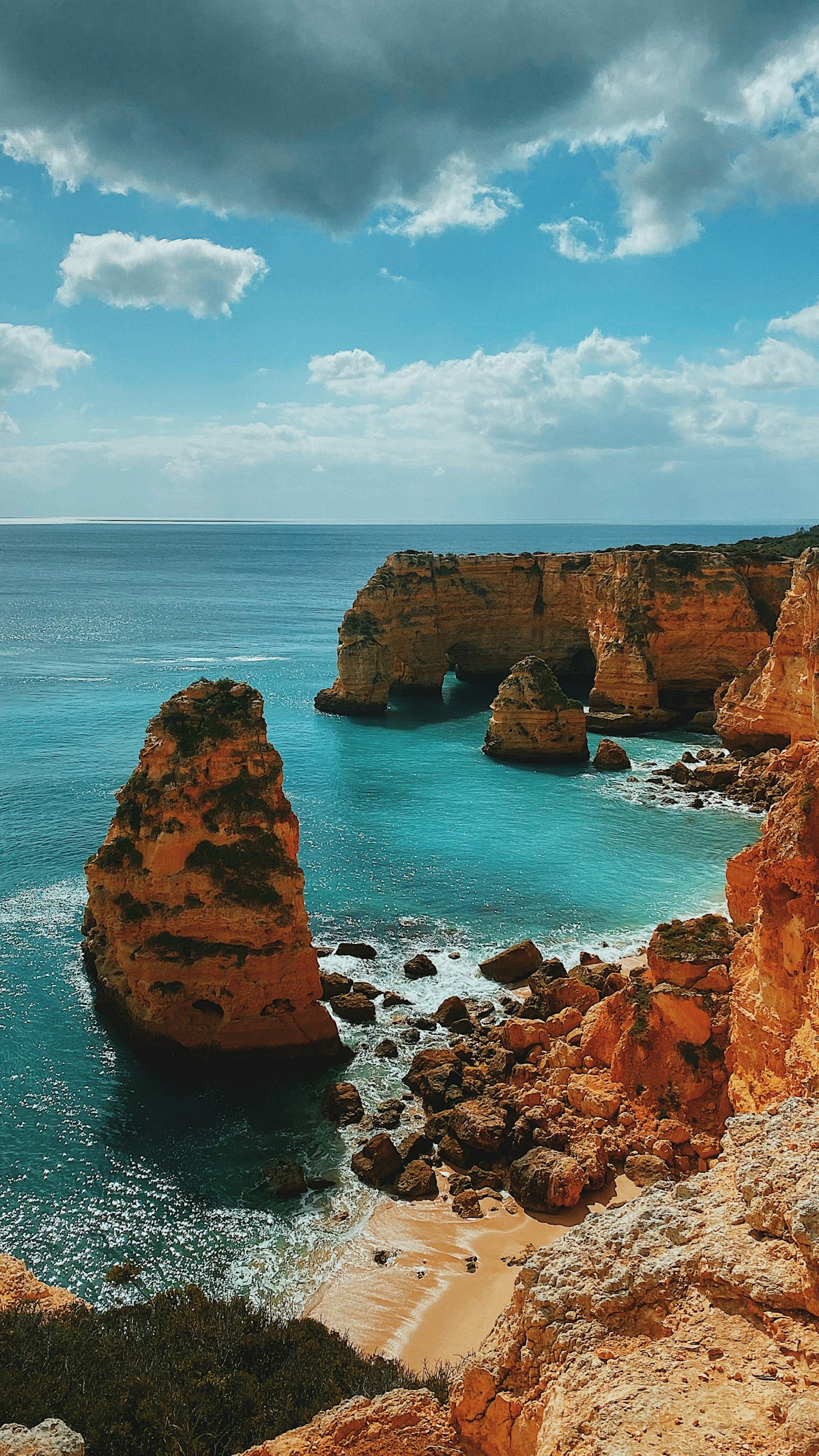
The Algarve has the strongest beach lineup in Western Europe. That’s not promotional copy - it’s a reasonable claim based on the combination of geology, climate, and water quality. The south-facing coastline between Lagos and Tavira sits in a natural wind shadow that keeps seas calmer than the exposed Atlantic to the north. The limestone cliffs, shaped by centuries of wave action, have produced sea stacks, sea arches, and grottoes that are unlike anywhere else in Europe. Water temperature peaks at around 22–24°C in August. The sun shines reliably from May to October.
The result is a coast where you can drive 10km and find four completely different beaches - intimate cove, open Atlantic strand, river-mouth estuary, and cliffside grotto - all within a 30-minute stretch. This guide covers the seven beaches worth prioritising, with honest advice on how to get there, how busy they get, and when to go.
For context on the wider region, see the Algarve region guide. If you’re planning a road trip, the 7-day Algarve road trip itinerary covers the full coastline east to west.
1. Praia da Marinha
Near Lagoa | The benchmark cliff beach
Praia da Marinha is consistently ranked among Europe’s best beaches, and it holds up under scrutiny. The beach itself is a 200m arc of pale sand framed by layered limestone cliffs in amber and ochre. At low tide, rock pools and sea tunnels open up below the headlands. The water is exceptionally clear - visibility in the shallows often extends 5–8 metres.
Getting there: Take the N125 between Porches and Lagoa, then follow signs for Praia da Marinha. There is a paid car park at the top of the cliffs (approximately €1.50 per hour as of 2026). Steps cut into the cliff lead down to the beach - around 150 steps, uneven in places. There is no disabled access to the beach itself.
Facilities: Snack bar at the top of the cliffs (summer only). No showers on the beach. One beach bar below the cliffs. No sun lounger rental - this is a natural beach, and long may it stay that way.
Crowd level: High from late June through August. Arrive before 9:30am for a parking space and space on the sand. By 11am on a summer weekend the car park is full. Out of season (May, September, October) this is one of the least crowded dramatic beaches in the Algarve.
Best time: Late May, June, or September. The light on the cliffs is best in the afternoon.
2. Benagil Cave (Algar de Benagil)
Benagil, near Lagoa | Portugal’s most iconic sea cave
Benagil Cave is not technically a beach, but it contains one - a circular chamber open to the sky through a hole in the roof, with a crescent of sand below and the sea entering through an arch at the base. It’s one of the most photographed natural formations in Portugal, and for good reason: the composition of light, stone, and water is extraordinary at mid-morning when the sun enters through the roof opening.
Getting there: The cave is only accessible from the water. You cannot walk to it. The options:
- Kayak or SUP rental from Benagil beach - approximately €20–€30 per kayak as of 2026. The cave is approximately 200m offshore. Straightforward in calm conditions, but swells can build quickly. Not recommended for inexperienced paddlers.
- Guided kayak tour - includes instruction and is safer in mixed conditions. Typically €35–€50 per person as of 2026.
- Boat tours from Benagil beach, Albufeira, or Lagos - these pass through the cave entrance by small RIB or inflatable. From approximately €20–€35 per person depending on departure point.
We have a full guide to kayaking to Benagil Cave covering operators, tides, self-guided vs guided options, and SUP alternatives in detail.
Crowd level: Extremely busy July–August. The cave gets congested; guided tours leave early morning for the best experience and lightest crowds. Go before 9am if possible.
Best time: Early morning from May to October. The interior light is best from around 10am to noon when the sun is directly overhead.
3. Praia de Dona Ana
Lagos | The classic western Algarve beach
Dona Ana is Lagos’s most recognisable beach - a compact arc of golden sand ringed by amber and terracotta sea stacks that rise from the water like natural sculpture. The beach is photogenic from every angle. The shallow, sheltered bay makes the water calmer than many Algarve beaches, and it’s popular with families for this reason.
Getting there: Well-signposted from Lagos town centre, about 2km south. Drive or take a taxi - the walk from Lagos’s Meia Praia car parks is lengthy. There is a car park directly above the beach (paid in summer, approximately €2 per hour as of 2026). Steps descend to the sand.
Facilities: Multiple beach bars and restaurants at cliff level. Lifeguard in summer. Sun lounger and parasol rental available at approximately €12–€15 for a set as of 2026. Showers at the top of the steps.
Crowd level: Very busy in peak season, with queues for parking. The size of the beach is limited by the surrounding cliffs, so it fills quickly. Come early or accept crowds.
Best time: Morning light is good here. Late September is excellent - the sea remains warm and the beach empties considerably after the school-holiday period.
4. Praia do Camilo
Lagos | The most dramatic staircase descent in the Algarve
Camilo is 500m around the headland from Dona Ana - the two beaches are distinct experiences despite their proximity. Camilo is more compact, accessed via a 200-step wooden staircase that descends through the clifftop. The surrounding rock formations are taller and more imposing than Dona Ana, and the beach has a slightly wilder feel. Snorkelling is excellent in the coves around the headland.
Getting there: Same approach as Dona Ana - follow signs from Lagos, park at the clifftop. The staircase is signed from the car park. Not suitable for anyone with mobility limitations.
Facilities: Small snack bar at the top (summer only). Lifeguard in peak season.
Crowd level: Moderately busy - slightly less than Dona Ana because the staircase deters some visitors and the beach capacity is smaller. Still popular; arrive early in summer.
Best time: Afternoon - the west-facing cliffs catch the late sun. The stairs at sunset are a good viewpoint even if the beach is closed.
5. Meia Praia
Lagos | The family beach that never gets old
Meia Praia is the antidote to the Algarve’s dramatic cliff beaches. It’s a 4km long flat sand beach stretching north of Lagos, east of the harbour. No cliffs, no sea stacks, no difficult access. Just a wide, gently shelving beach with calm water, reliable facilities, and enough space that it never really feels full.
Getting there: From Lagos, take the ferry across the harbour (a 5-minute crossing from the town quay, approximately €1 each way as of 2026) and walk or cycle along the beach. Alternatively, drive around via the N125 and park near the beach-front access points. Multiple entry points along the 4km stretch.
Facilities: Multiple beach bars and restaurants along the length. Lifeguards throughout the summer. Sun loungers available. Windsurfing and kitesurfing are popular at the eastern end of the beach where conditions are consistent.
Crowd level: Consistently busy in summer but the sheer length means crowd density is lower than at the cliff beaches. Always space to put a towel down.
Best time: Any time May to October. Best early morning for a quiet swim before the beach fills.
6. Praia da Falésia
Albufeira | The red cliff beach
Praia da Falésia is unusual in the Algarve: a 6km long beach backed by rust-red and ochre sandstone cliffs that reach up to 30 metres in height. The cliffs are the striking element - a continuous wall of layered red stone that glows at sunset. The beach itself is wide, with firm sand good for walking. The western end near Olhos de Água village is less developed; the eastern end near Salgados has resort access.
Getting there: Multiple access points along the N526-1 road between Albufeira and Vilamoura. Paid car parks at the major access points (approximately €2–3 per hour in season as of 2026). Steps or wooden walkways lead down the cliffs. The western access from Olhos de Água is the most scenic.
Facilities: Beach bars at several points along the beach. Lifeguards throughout the summer season. Sun lounger rental at the resort-adjacent sections.
Crowd level: The length means crowds spread out considerably. Even in August, it’s possible to walk 15 minutes from an access point and find a quieter stretch. One of the better choices in peak season for this reason.
Best time: Late afternoon - the red cliffs glow in low sun. Sunset from the clifftop path is one of the Algarve’s better viewpoints.
7. Praia dos Três Irmãos
Alvor, Portimão | Three arches and a coastal trail
Três Irmãos takes its name from three rock arches that frame the western end of the beach. It’s part of a longer beach stretch that includes Prainha (the small adjacent cove) and connects west towards Alvor’s estuary and east towards Meia Praia. The combination of rock formations, clear water, and relatively easy access makes it one of the western Algarve’s most complete beaches.
Getting there: From Portimão, follow signs for Alvor, then for Praia dos Três Irmãos. Large paid car park at the clifftop (approximately €2 per hour in season as of 2026). Steps down to the beach. The coastal walking path connecting Três Irmãos, Prainha, and the Alvor estuary is one of the best short coastal walks in the region.
Facilities: Beach bars at cliff level. Lifeguards in season. Sun lounger rental. The village of Alvor is a 10-minute walk inland and has excellent seafood restaurants - better value than the beach-adjacent cafes.
Crowd level: Busy in July and August but not as densely packed as Lagos’s beaches. The connecting trail along the cliffs draws walkers who aren’t all beach visitors, spreading the foot traffic.
Best time: Morning for swimming; afternoon for the coastal walk and cliff light.
Getting Around Algarve Beaches
Most beaches in the western Algarve require a car or taxi. Public transport is limited to routes between major towns, not individual beaches. Car hire in Portugal is the most flexible way to cover the full coastline - the 7-day Algarve road trip itinerary covers the full logistics of moving between beaches by car.
Boat tours offer a different perspective - many beaches look completely different from the sea, and some (including Benagil Cave) are only accessible from the water. Algarve boat trips covers the best options from Lagos, Portimão, and Albufeira with current pricing and operator recommendations.
Browse tours in the Algarve to combine your activity with a guided experience.
A Portugal eSIM keeps you connected for navigation and booking confirmations without needing a local SIM card.
Seasonal Timing
| Month | Sea Temp | Crowds | Notes |
|---|---|---|---|
| May | 17–18°C | Low | Quiet, some beach bars still closed |
| June | 19–21°C | Medium | Good balance of warmth and space |
| July | 22–24°C | Very High | Peak season; arrive early or visit at dusk |
| August | 23–25°C | Very High | Peak season; all beaches busy |
| September | 22–23°C | Medium | Best month overall - warm sea, fewer crowds |
| October | 19–20°C | Low | Cooler, many beach bars closed; beautiful light |
The Algarve rewards visitors who show up in June or September. The sea is warm, the cliffs look the same as August, and you won’t spend an hour finding parking.