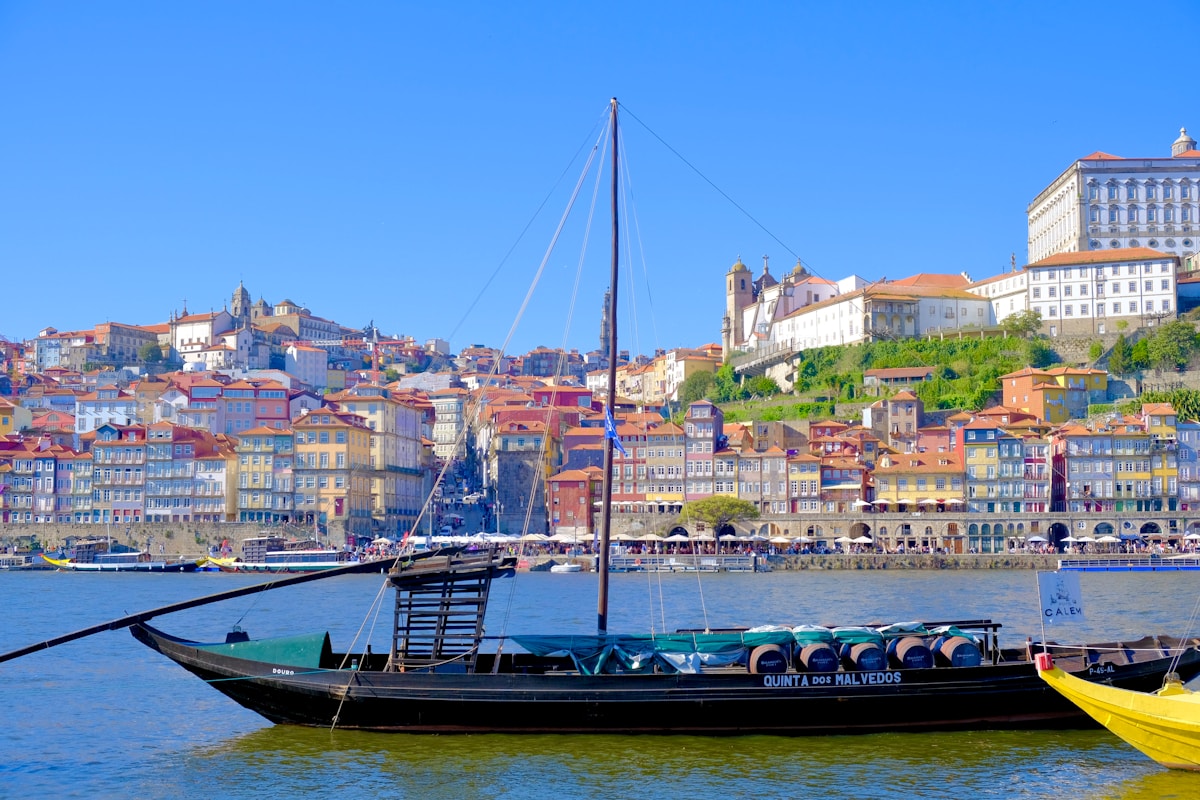
Porto has a geography problem. Nearly every tourist attraction sits within about 800 metres of the same riverside strip — Livraria Lello, São Bento station, the Clérigos tower, and then down the slope to the Ribeira waterfront where Cais da Ribeira runs a gauntlet of identically priced restaurants with photo menus in six languages. The Dom Luís bridge connects all of this to the Port wine caves in Vila Nova de Gaia, which adds its own coachload of visitors from the opposite bank.
This concentration is not an accident. Porto’s historic core is compact and photogenic, and tour operators route people through the highest density of recognisable sites. But it means a city of roughly 230,000 people is effectively being judged on a corridor 800 metres wide and 400 metres deep.
The other Porto — Bonfim with its working-class tascas, Paranhos with its market and unremarkable-looking cafés that have been feeding the same families for 40 years, the terraced gardens along the Douro’s upper bank — is five to fifteen minutes’ walk from the tourist strip and mostly empty.
What to Understand About the Tourist Corridors
Livraria Lello: Entry costs approximately €8 as of 2026, redeemable against a book purchase. On summer weekday mornings, queues typically run 45–60 minutes before opening; on weekends they can reach 90 minutes. The staircase is genuinely beautiful — carved Neo-Gothic woodwork, stained glass, art nouveau detail. If you want to see it without the crowd, go the moment it opens at 10:00 on a Tuesday or Wednesday. Do not queue mid-afternoon.
Dom Luís bridge: The upper deck is busiest between 11:00 and 16:00, when it functions as a pedestrian promenade and photo point. The lower deck is used by trams and the metro and has less foot traffic. If you want the classic view of the bridge from below (from either the Ribeira or Gaia side), go at 08:00 or after 18:00. The light is better and the foreground is mostly locals rather than tourist groups.
Cais da Ribeira: The waterfront restaurants between Praça da Ribeira and the Dom Luís bridge serve tourist food at tourist prices. Mains typically run €18–28 for fish that you could find one neighbourhood over for €10–14. There is nothing wrong with them as an experience — the views are unbeatable and the location is genuinely one of the best riverside strips in Europe. But eating there is a choice about atmosphere rather than about food quality.
The Ribeira You Are Not Being Shown
Walk west from Praça da Ribeira, away from the bridge, and within five minutes the restaurants thin out and the neighbourhood becomes itself again. Rua da Reboleira, Rua de São João, and the small alleys that climb away from the water towards Rua das Taipas contain old houses with laundry lines, small grocers, and almost no tourist activity. This is the Bairro da Vitória and the edge of the Barredo neighbourhood — genuinely old Porto, not the curated version.
Keep climbing and you reach Jardim das Virtudes (Rua das Virtudes), a terraced public garden cut into the hillside above the river. The views down to the Douro are better from here than from the main bridge viewpoints, there is no admission charge, and on weekday mornings you will typically share it with people eating lunch from Tupperware containers. The adjacent Miradouro do Passeio das Virtudes extends the same terrace for another 200 metres.
Bonfim: The Neighbourhood Porto Forgot to Make Famous
Bonfim sits one metro stop east of São Bento (line D, Heroísmo station) and has a thoroughly residential feel — apartment blocks, corner shops, a weekly market at Mercado de Bonfim. It is not glossy. The streets have been pedestrianised in places but not landscaped. This is the neighbourhood where the people who work in the tourist industry actually live, which means the restaurants are calibrated to their budgets and their expectations.
Tasca da Quinta (Rua de Bonfim 120): A lunch-only kitchen that opens at noon and closes when it runs out — usually around 14:30. The daily special is written on a chalkboard: typically a meat or fish dish with soup, bread, and dessert for around €9. The wine is from an unlabelled bottle and perfectly adequate. Regulars sit at the same tables they have occupied for years.
O Tanoeiro (Rua da Firmeza 27): A tiled interior, marble countertop, and a TV showing sport in the corner — the unmistakable signifiers of a proper Porto tasca. Tripas à moda do Porto (the city’s signature tripe and white bean stew, historically the meal of the working poor) is approximately €12 and done well. Mains generally run €10–15. No reservation required; it is the kind of place where you walk in and see what is on.
Patio 70 (Rua de Bonfim 70): A slightly younger spot with exposed stone walls and craft beer alongside the usual selection of Super Bock. Small plates of chouriço assado (grilled sausage), alheira (game sausage), and cheese plates from €7–12. Good for an evening drink that transitions into dinner without requiring a plan.
Paranhos: The Market, the Cafés, the Actual City
Paranhos is further north, beyond the university hospital, and genuinely off the tourist circuit. The Mercado de Paranhos (Rua de Paranhos) is a working neighbourhood market selling fish, vegetables, and local produce at prices aimed at the residents who live around it. Open Tuesday to Saturday mornings. No tourist gift section.
Café Guarany has a famous location on Avenida dos Aliados in the centre, but the Paranhos branch (Rua de Paranhos 58) lacks the centre’s self-consciousness. A bica costs €0.90, a pastel de nata is €1.20, and nobody photographs the interior. The same applied to half a dozen similar café-pastelarias along Rua de Paranhos and Rua do Amial — the kind of places where the same group of men occupies the same corner table every morning and the owner knows what they drink.
For dinner in Paranhos, Adega Regional de Paranhos (Rua de Costa Cabral 208) serves traditional dishes from Minho (the northern region bordering Galicia) — caldo verde, rojões à moda do Minho (pork braised in fat), and arroz de sarrabulho (rice with pork blood). A full dinner with wine runs approximately €15–18 per person as of 2026. It is not a destination restaurant but it is authentic in a way that many Ribeira restaurants have stopped trying to be.
Massarelos: Between the Tourist Strip and the Museum Quarter
Massarelos is the neighbourhood between the Ribeira waterfront and the Museu de Arte Contemporânea de Serralves, running along the upper bank of the Douro. It is close enough to the tourist corridor to attract some overflow, but far enough that the restaurants have not uniformly converted to tourist menus.
Casa de Chá da Boa Nova (technically in Leça da Palmeira, a taxi or Uber from the centre): Álvaro Siza’s 1963 restaurant built directly on the rocks at the sea’s edge. It holds a Michelin star. Lunch menus start from approximately €75 per person, making it a splurge by any standard — but the building and setting are unlike anything else in the Porto area. Book online at least two weeks in advance.
For something more affordable in the neighbourhood: Restaurante Escondidinho (Rua Passos Manuel 144, technically the lower edge of Bonfim) has been doing bacalhau com natas (salt cod gratin) since 1982. Mains run €13–18 as of 2026. The facade is unremarkable and it looks closed until you push the door.
Viewpoints the Crowds Miss
Jardim do Palácio de Cristal (Rua de Entre-Quintas): A 19th-century park above the river containing the Roseiral (rose garden), fountains, and peacocks wandering the lawns. The view from the western terrace takes in the entire Douro bend, the Atlantic coastline at Foz, and on clear days the hills of the Serra da Arrábida to the south. Free entry; never busy before 10:00. Café inside the park for coffee.
Miradouro da Vitória (Rua de São Bento da Vitória): Smaller and simpler than Serra do Pilar — a terrace above the old city with good views east towards Bonfim and the railway bridges. No admission, no café, no tour groups. A five-minute walk from Livraria Lello.
Foz do Douro at sunset: Take the historic tram (Linha 1, from Infante station) westward along the river towards Foz. The tram costs approximately €3 as of 2026 and takes 25 minutes. At Foz, the Douro meets the Atlantic. There are beaches (Praia de Molhe, Praia do Homem do Leme), a small fortress, and a string of moderately priced seafood restaurants aimed at Porto families rather than tourists. This is where people from Porto go on weekend afternoons — you will see almost nobody with a rolling suitcase.
Bars Worth Finding
Era Uma Vez (Rua do Almada 221): A wine bar with a good selection of Vinho Verde, Dão, and Douro producers by the glass from approximately €4. Low lighting, exposed brick, knowledgeable staff. Open from 18:00; fills up slowly from 20:30.
Candelabro (Rua da Conceição 3): A bookshop-bar hybrid that has been a local institution since the 1990s. Beers from €3, wine from €4 a glass, and you can browse the shelves. The back room has a quiet table most evenings.
Maus Hábitos (Rua Passos Manuel 178): A cultural venue — bar, art gallery, and occasional concert space — on the fourth floor of an otherwise nondescript building. The rooftop terrace has views over the lower city. Entry is free on most nights (some ticketed events). Cocktails from approximately €8.
Practical Notes
Getting between neighbourhoods: Porto’s hills are genuine — the metro is flat but surface travel involves inclines that catch many visitors off guard. The funicular (Funicular dos Guindais) connects the Ribeira to the upper city for €2.50 as of 2026 and runs until midnight in summer. Otherwise, the terrain is navigable on foot for anyone reasonably fit.
When to visit: October and November are optimal. The summer crowds have largely gone, the weather remains warm enough for outdoor seating, and the local cultural calendar — theatre, fado, exhibitions — is in full swing. April and May are also good but increasingly popular as the word gets out about shoulder-season Portugal.
Accommodation outside the centre: The tourist accommodation map has expanded significantly into Bonfim and Cedofeita over the past decade. Staying in either neighbourhood rather than the Ribeira puts you among local cafés and grocers from the moment you step out of the door. Guesthouses in Bonfim typically run €70–110 per night for a double as of 2026, compared to €130–200 for equivalent quality on the Ribeira waterfront.
Porto repays curiosity. The parts that are most visited are genuinely worth seeing — the staircase at Lello, the azulejos at São Bento, the Port cellars at Taylor’s or Graham’s in Gaia. But the city’s actual character lives in a 20-minute radius around those landmarks, in the tascas that have not changed their menus since the 1980s and the gardens where locals bring their children on Sunday mornings. The logistics of getting there are simple. The crowds have not arrived yet.
While based in Porto, take a day trip to the Douro Valley quintas accessible by train — it combines the pleasure of independent wine tasting with the same philosophy of avoiding crowds and tourist infrastructure that makes Porto’s neighbourhoods so rewarding.
Plan Your Trip
🏨 Search hotels in Porto on Booking.com
Our Porto weekend itinerary structures a two-night trip through the neighbourhoods covered in this guide, including Bonfim, the Ribeira, and a Douro day. If you’re combining Porto with Lisbon, how many days in Portugal helps you split your time between the two cities.
Plan Your Trip
- Flights - Find the best fares to Portugal
- Travel Insurance - Get covered before you go
- eSIM - Stay connected from landing
- Car Rental - Compare prices across providers
See also: Porto city guide · Porto weekend itinerary · How many days in Porto · Douro Valley region guide