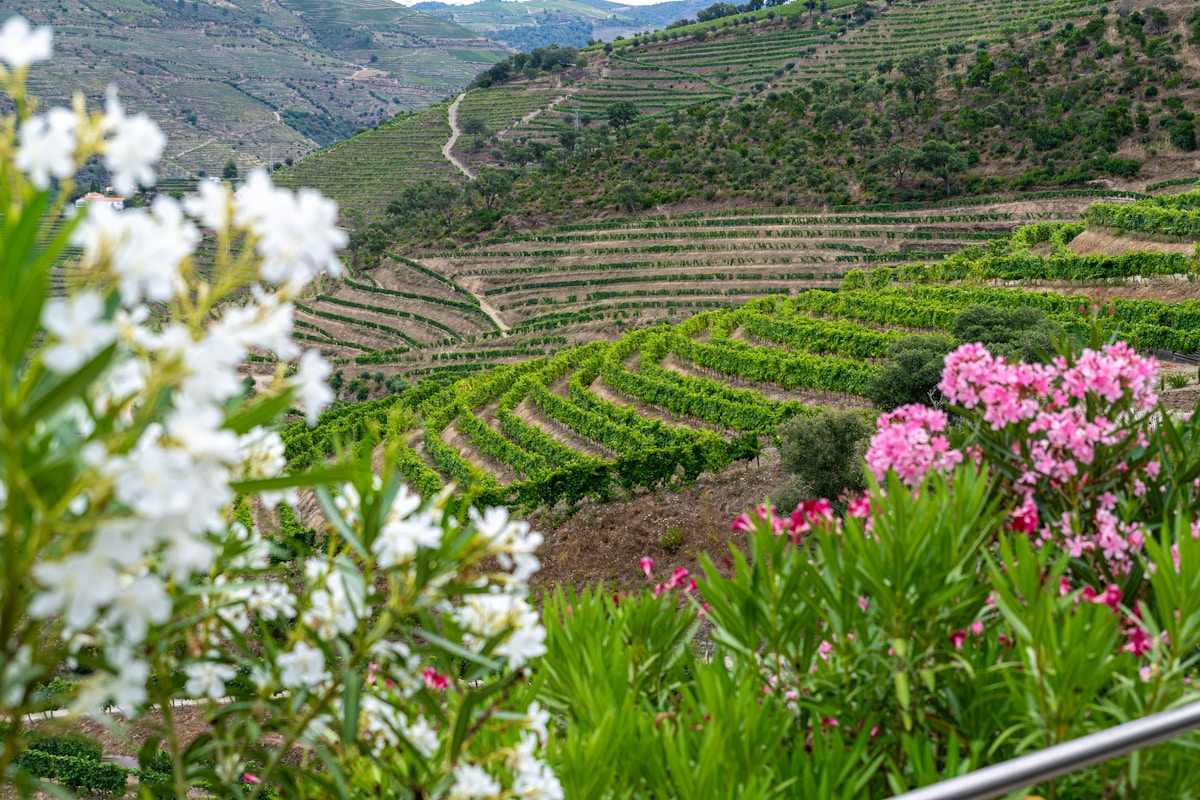
The Douro Valley is one of Europe’s oldest demarcated wine regions - the Denominação de Origem Controlada was established in 1756, making it the world’s first appellation. The landscape it produces is extraordinary: steep schist hillsides carved into hundreds of terraces, each planted with vines that would be uneconomical to farm anywhere less celebrated. The river runs 850 km from Spain before arriving at Porto, and the 100 km stretch from Régua to the Spanish border contains the valley’s most dramatic and visited scenery.
Understanding the Douro’s Three Sub-Regions
Baixo Corgo - the western, wetter end, between Peso da Régua and Mesão Frio. Produces lighter wines; cooler climate. The town of Régua is the main transport hub and has a fine azulejo-decorated train station.
Cima Corgo - the heart of the valley, from Régua to Pinhão and beyond. This is where the Port wine estates concentrate and where the terraced landscape reaches its most photogenic. Pinhão is the best base for exploring.
Douro Superior - the hot, dry, sparsely populated eastern section toward the Spanish border. Fewer visitors, wilder scenery. The Côa Valley with its prehistoric rock engravings (now a UNESCO World Heritage Site) is in this area.
Pinhão - The Essential Hub
Pinhão is a small riverside town that functions as the valley’s visitor hub. It has a handful of restaurants, a handful of guesthouses, and a train station decorated with blue and white azulejo tiles depicting Douro life - harvest scenes, ox carts, rabelo boats. The tiles are from 1937 and worth 20 minutes of attention.
From Pinhão, the roads climbing either side of the river offer the valley’s best views - take the N322 north for the high-altitude lookout at São Salvador do Mundo. The view from there, especially in early October, is one of the most memorable in Portugal.
Quintas - Wine Estates Open to Visitors
Most quintas require advance booking for tours and tastings. Entry typically costs €15–25 and includes 3–5 wines. Some recommended options:
Quinta do Crasto (Samodães, above Régua) - good reds and Douro whites; terrace views directly over the river.
Quinta de la Rosa (Pinhão) - family-run Port and Douro wine estate with accommodation; tours bookable without advance planning in most of the year.
Quinta da Roêda (Pinhão) - owned by Croft; excellent Port wine tour with barrel hall and tasting.
Quinta do Vallado (Régua) - contemporary architecture in a historic estate; modern and Reserva wines.
The Train Journey - Porto to Pinhão
The Linha do Douro from Porto Campanhã to Pinhão is one of Europe’s best rail journeys. For the first hour to Régua, the line runs alongside the Douro, periodically diving into tunnels before emerging above the water. After Régua, where the Corgo joins the Douro, the terraces begin in earnest and the line becomes more spectacular.
Sit on the right side (facing forward) for the best river views on the outbound journey. The train makes multiple stops - Régua is about halfway and worth a short break. Total journey time Porto to Pinhão: approximately 2.5 hours. Return tickets need to be checked in advance as the last train back to Porto leaves Pinhão at around 17:00 in winter and 19:00 in summer.
Douro River Cruises
Rabelo boats - flat-bottomed wooden vessels originally used to transport Port wine barrels from the valley to Porto - are now used for tourist cruises. Day cruises run between Régua and Pinhão and back (approximately 3 hours, €30–40 per person). The views from the water are quite different from the road: you see the full sweep of terraces that road drivers only glimpse.
Full-day cruises from Porto travel upriver to Régua or Pinhão with a quinta visit included; these run €90–120 and are better value if you are coming specifically from Porto rather than basing yourself in the valley.
Multi-day river cruises (typically 4–7 days) run the full length from Porto to the Spanish border. These are premium experiences at €500–1,500 per person but include accommodation, meals, and multiple quinta stops.
Harvest Season - September and October
Harvest (vindima) in the Douro runs from late August through October depending on altitude and grape variety. During this period, the valley changes character: the quintas are fully operational, the crush houses smell of fermenting juice, and temporary workers fill the hillside terraces. Many quintas allow visitors to watch or participate during harvest - ask directly when you arrive in Pinhão.
The harvest is the most photogenic period, with warm light, yellow and orange vine leaves, and working life filling the landscape. Accommodation books up early - reserve by July if visiting in September or October.
Where to Stay
Pinhão has the best concentration of accommodation for valley exploration. Options range from simple guesthouses (€50–80 per night) to wine estate lodges. Quinta de la Rosa and Quinta de Ventozelo offer stays on working estates for €120–250 per night. Régua has more hotels and better transport connections but is less atmospheric.
Search hotels in Douro Valley on Booking.com to compare rates and availability.
Practical Notes
- The valley road (N222, frequently named one of the world’s best driving roads) runs along the south bank from Régua to Pinhão. The views are better from the north bank (N323) at altitude, but the south bank road is faster.
- Mobile signal is patchy in the deeper parts of the valley. Download offline maps.
- Temperatures in summer exceed 40°C regularly. Most quintas open at 10am; tastings in late afternoon are more comfortable.
- The Douro Valley is not day-trip territory if you want to do it properly - stay at least one night.
For guided experiences in the region, tours across Portugal covers day trips, food and wine tours, and activity bookings.
car hire in Portugal gives you the most flexibility for exploring - particularly useful in rural areas where public transport connections are limited.
From Porto into the Douro
Porto is the natural gateway - the city’s port wine cellars in Vila Nova de Gaia are the downstream end of the same Douro trade. A visit to the Douro Valley pairs well with a stay in Porto: our Porto wine tasting guide covers the Gaia lodges, while this guide covers the upstream valley where the grapes are grown. The Douro Valley day trip is covered in our 1-week and 2-week itineraries. For wine context - Port styles, Douro table wines, and Vinho Verde - see our Portuguese wine guide. The Minho region to the north - covered in our Minho guide - produces vinho verde in a landscape with a completely different character to the Douro’s heat and schist.
For deeper planning: our Douro Valley by train guide covers the Linha do Douro journey from Porto Campanhã step by step, including timetables, which side of the train to sit on, and how to get around Pinhão without a car. For quinta visits specifically - which estates to book, how much tastings cost, and how to combine them - see the Douro Valley quintas guide. If you are weighing a guided day trip against the DIY train option, our Douro Valley day trips from Porto guide compares formats and prices.