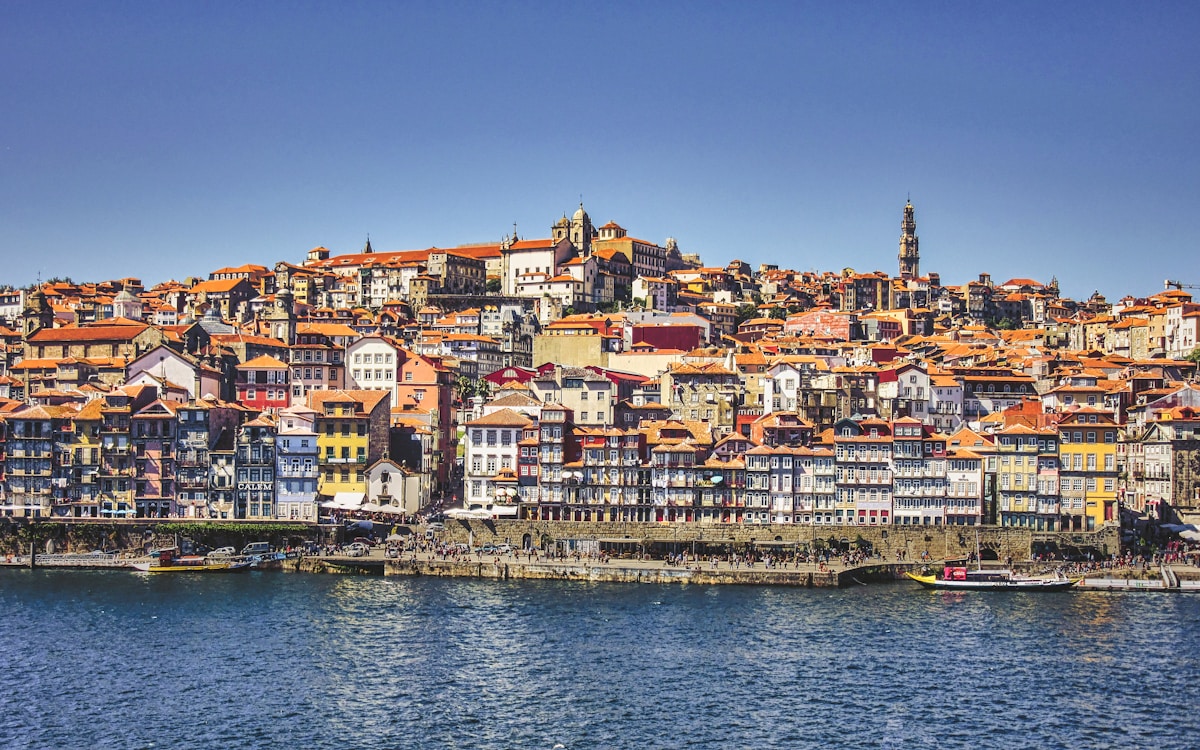
Porto and Braga sit just 50 km apart in northern Portugal, yet they feel like different worlds. Porto is Portugal’s second city - internationally famous, intensely visited, built around wine, the Douro river, and a spectacular cityscape of tiled facades. Braga is quieter, younger in spirit, intensely religious in heritage, and largely off the mass-tourism radar. Both are worth visiting. Here is how to decide which suits you, and how to fit both into a northern Portugal trip.
Quick Verdict
| Category | Porto | Braga |
|---|---|---|
| International fame | Winner | Lower profile |
| Wine tourism | Winner | - |
| Baroque architecture | Very good | Winner |
| University atmosphere | - | Winner |
| Nightlife | Winner | Good |
| Food scene | Excellent | Excellent |
| Value for money | Good | Winner |
| Day trips (Minho) | Good | Better base |
| Ease of visit | Very easy | Easy |
| Crowds | High in summer | Lower |
Choose Porto if you want world-class architecture, Port wine cellars, a famous food market, and one of Europe’s most photogenic waterfronts. Choose Braga if you prefer a lower-key northern Portuguese city with remarkable religious heritage, great restaurants, a student-town energy, and lower prices. Do both - they are only 50 minutes apart by train, and the combination makes for an excellent long weekend.
Getting Between Porto and Braga
The train is the simplest option. From Porto Campanhã station, regional trains run every 30–60 minutes and take 45–55 minutes; tickets cost €3.70. Alfa Pendular trains are faster (around 30 minutes) and cost €8–12. Porto’s São Bento station - in the city centre and worth visiting for its tile panels alone - connects to Campanhã by a short metro journey.
Buses from Porto’s Campo 24 de Agosto take around 1 hour and cost €5–7. Driving takes 40–50 minutes via the A3 motorway but parking in Braga’s centre requires some patience.
Porto: What to Expect
Porto is built around the Douro river gorge, with the historic Ribeira quarter - its painted azulejo-tiled houses stacked above the water - among the most recognisable urban landscapes in Europe. The city rewards slow walking: up to the Clerigos Tower, through the Bairro da Sé, down to the waterfront and across the Dom Luís I bridge to Vila Nova de Gaia.
What Porto does best:
- Port wine cellars in Gaia: Twenty or so major lodges sit on the southern bank opposite the Ribeira, all offering tours and tastings. Taylor’s (€15–20 with two glasses of Port) and Croft (€15) are reliable; Quinta do Crasto and Quinta do Noval run premium experiences from €30. The views of Porto from the Gaia side at dusk are exceptional.
- Livraria Lello: One of the world’s most beautiful bookshops, on Rua das Carmelitas. Entry costs €5 (deductible on a book purchase). The neo-Gothic interior and sweeping central staircase are worth the modest queue that forms from late morning.
- Mercado do Bolhão: Porto’s historic covered market, fully restored since 2022. Cheese, charcuterie, fresh fish, and local products in an elegant iron-and-tile building. Good for provisions or a coffee at one of the indoor stands.
- Clerigos Tower (€6): The most prominent landmark on Porto’s skyline, an 18th-century baroque bell tower with city views from the top. The adjacent church is free.
- São Bento Station: Free to visit. The entrance hall is lined with 20,000 blue-and-white azulejo tiles depicting scenes of Portuguese history - one of the most impressive public art installations in Europe.
- Foz do Douro: The western end of the city where the Douro meets the Atlantic. Quieter than the centre, with clifftop walks, seafood restaurants, and a calmer beach at Matosinhos nearby.
Porto’s food scene centres on francesinhas (a layered meat sandwich in a rich beer-and-tomato sauce, around €12–14), bacalhau in many forms, and the Mercado Bom Sucesso and Time Out-style food courts for a broader range. The Ribeira and the side streets above it have the highest concentration of restaurants; the Foz and Boavista neighbourhoods have fewer tourists and more local clientele.
The downside: Porto is busy from June through September. The Ribeira fills with tour groups by 10am; Livraria Lello queues stretch down the street by noon. Hotel prices rise sharply in summer. Arriving in spring or autumn gives you the same city at a noticeably slower pace.
Braga: What to Expect
Braga is Portugal’s third largest city and its religious capital, with more churches per square kilometre than anywhere else in the country. It also has one of Portugal’s largest universities - around 20,000 students - which gives the city a younger, more local feel than Porto’s tourist-forward surface.
What Braga does best:
- Bom Jesus do Monte: The sanctuary above the city is Braga’s defining landmark - a pilgrimage site with a Baroque staircase climbing 600 steps through a wooded hillside, each landing featuring fountains and chapels representing the Stations of the Cross. The view from the top across the Minho landscape is excellent. Buses run from the city centre; a funicular (€2 return, built in 1882) ascends from a station halfway up. Allow 2 hours.
- Braga Cathedral (Sé de Braga): The oldest cathedral in Portugal, founded in 1070. The exterior is sober Romanesque; the interior mixes Gothic, Manueline, and Baroque across different chapels. The treasury (€3) contains the oldest piece of gold jewellery found in Portugal. Entry to the main cathedral is free.
- City centre walking: The Arco da Porta Nova arch, the Praça da República with its arcaded town hall, and the tangle of pedestrianised streets between them are compact and easy to navigate on foot. Allow 1.5–2 hours.
- Roman ruins and museum: The Bracara Augusta Museum (free) and scattered Roman remains - baths, columns, a mosaic floor visible under a glass walkway - reflect Braga’s status as one of the most important cities of Roman Hispania.
- Student food scene: Braga has an unusually strong restaurant scene for its size, partly driven by 20,000 university students demanding good food at affordable prices. The area around Largo da Praça Velha and the streets behind the Sé have a concentration of good bacalhau, petiscos (small plates), and wine bars. A full meal with wine in Braga typically costs €15–25 per person, compared to €20–35 in Porto’s centre.
Holy Week in Braga is one of Portugal’s largest religious processions, drawing significant crowds to the city in the days before Easter. If you visit during this period, book accommodation well ahead.
Which Is Better as a Base for Northern Portugal?
For exploring the Minho region - Viana do Castelo, Ponte de Lima, the Lima Valley, and Peneda-Gerês National Park - Braga is the better base. It sits closer to the Minho heartland, hotel prices are lower, and day trips to Guimarães (22 km, 20 minutes) are more efficient than from Porto.
For exploring the Douro Valley - wine quintas, river cruises, the Douro train line - Porto is the better base. The Douro train line from Porto Campanhã to Pinhão passes some of the most dramatic river scenery in Portugal; the journey to Pinhão takes about 1 hour 45 minutes and costs €12 each way.
Combining Porto and Braga
The most effective northern Portugal itinerary uses Porto as the main base (more to see, more accommodation options) and does Braga as a day trip or an overnight. A 3-day structure that works:
- Day 1: Porto city (Ribeira, São Bento, Clerigos Tower, Livraria Lello)
- Day 2: Vila Nova de Gaia Port wine cellars; afternoon at Foz do Douro
- Day 3: Day trip to Braga (morning in the city centre, afternoon at Bom Jesus)
For longer trips, swap Braga to an overnight and add a day trip to Guimarães - Portugal’s medieval birthplace is one of the most complete medieval town centres in the Iberian Peninsula and takes 3–4 hours to see properly.
Cost Comparison
| Expense | Porto | Braga |
|---|---|---|
| Mid-range hotel (per night) | €120–160 | €70–100 |
| Meal with wine (per person) | €20–35 | €15–25 |
| Coffee | €1–1.50 | €0.80–1.20 |
| Day trip from each other | €3.70 by train | €3.70 by train |
| Main paid attractions | €6–20 | €2–15 |
Over a 3-night stay, basing yourself in Braga versus Porto can save €150–200 in accommodation alone.
Search hotels in Porto on Booking.com - Search hotels in Braga on Booking.com
Things to do: Tours and tickets in Porto - Tours and tickets in Braga
Final Recommendation
Porto is the non-negotiable. If you only visit one northern Portuguese city, it is Porto - the wine, the architecture, the Douro riverscape, and the food are a combination that has made it one of Europe’s most visited cities for good reason.
Braga is the upgrade. Once you have done Porto, Braga adds a layer of northern Portuguese life that Porto’s tourist infrastructure obscures: a working religious city, an affordable local food scene, and a landscape gateway to the Minho that most visitors never reach. The 50-minute train connection makes it one of Portugal’s most accessible and underrated city combinations. We cover this in more detail in Best Restaurants in Braga.
Plan Your Trip
🏨 Search hotels in Porto - Search hotels in Braga ✈️ Book your flights to Portugal 🛡️ Get travel insurance 📱 Stay connected with an eSIM 🚗 Rent a car