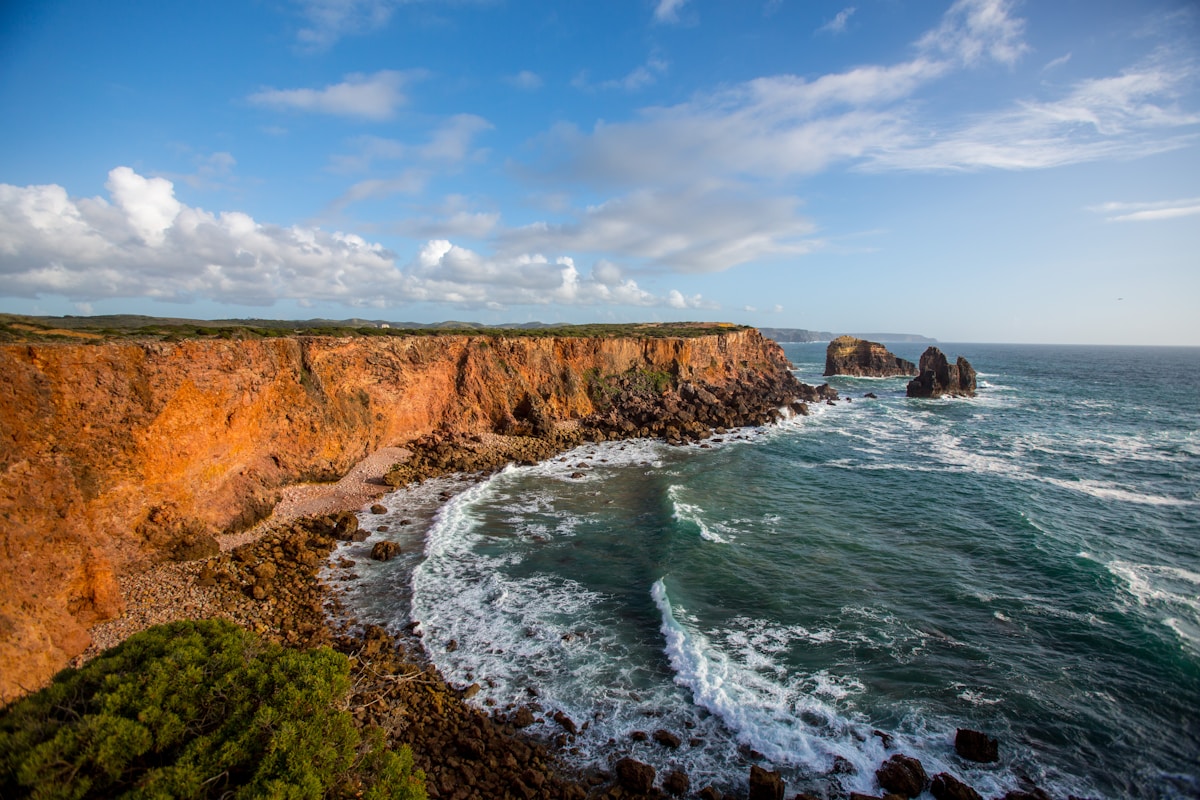
This 7-day itinerary starts in Lagos, the western Algarve’s best town, and moves east via Sagres and a detour to the Wild Alentejo Coast before returning south to finish in Faro. It uses a hire car throughout and is designed for travellers who want to combine beach time with genuine exploration rather than staying in one resort for a week. For a broader overview of the Algarve before diving into the day-by-day plan, see our Algarve region guide covering east vs west, best beaches, and when to go.
Day 1 - Arrive in Lagos
Fly into Faro, collect your hire car - booking before you fly is reliably cheaper than the airport counter, and expect approximately €30–50 per day in shoulder season as of 2026 - and drive west on the A22 to Lagos (1 hour, 80 km). Check into your accommodation in the old town.
Afternoon: Walk the old town circuit - the 17th-century city walls, the slave market (Mercado de Escravos, the oldest in Europe, now a museum - €3 entry), and the grid of narrow streets between the walls and the marina.
Evening: Eat on the old town’s restaurant strips - Rua 25 de Abril and the surrounding streets have good fish restaurants at €25–35 per person for a full dinner. Try grilled bream (dourada) or sea bass (robalo) rather than the tourist menus.
Day 2 - Lagos and Ponta da Piedade
Morning: The sea stacks at Ponta da Piedade are 2 km south of Lagos old town - drive and walk the cliff path for the full views from above. The rock formations at the tip (arches, sea caves, stacks of golden limestone) are the Algarve’s most photographed. If the water is calm, a kayak or boat tour from Lagos (€20 per person) takes you inside the sea caves - booking ahead beats the beach kiosks in July and August.
Afternoon: Drive west along the N125 toward Luz and Burgau - two quieter villages with good beaches. Praia da Luz has a wide sandy beach and a Roman villa (Museu Arqueológico de Luz, €3). Burgau has a small fishing harbour and excellent grilled fish at the restaurants above the beach.
Evening: Return to Lagos for dinner. Bar Três Caracóis above the market square, or any of the restaurants on the marina if you want a lighter evening.
Day 3 - Sagres and Cape St. Vincent
Drive west from Lagos to Sagres (30 km, 35 minutes on the N125). Check out of Lagos and check into Sagres - the accommodation is simpler here; budget €70–120 per night for a decent double.
Morning: The Fortaleza de Sagres (€3) sits on a headland above the Atlantic. The walls contain a huge wind compass (rosa dos ventos) carved into the ground - 43 metres in diameter. The view from the ramparts in both directions is one of the Algarve’s most dramatic, with cliffs dropping 50 metres to the sea.
Afternoon: Drive 6 km to Cabo de São Vicente - the southwestern tip of continental Europe, marked by a lighthouse open to visitors (free). The cliffs here face directly into the Atlantic and in stormy conditions the spray reaches the lighthouse walls. On calm days the water below is extraordinary shades of green and blue.
Late afternoon: If conditions allow, drive to Praia do Tonel (5 minutes from the Sagres fortress) for an hour watching surfers - this beach is one of the most consistent surf spots in Portugal.
Evening: Sagres has a handful of restaurants on the main street; A Sagres is reliable for fish. The village closes early in winter; in summer there are a few bars.
Day 4 - North to the Alentejo Coast
Leave Sagres and drive north on the N120 through Aljezur to the Alentejo coast (approximately 90 km, 1.5 hours). This is the Costa Vicentina - wild, undeveloped, and the most dramatic coastline in Portugal.
Stop at Praia de Odeceixe (turn off at Odeceixe village) - a river mouth beach where the Seixe river meets the sea. In summer the river is crossable on foot at low tide. The beach extends north, facing into Atlantic swells, and is usually much less busy than the Algarve equivalents.
Continue north to Vila Nova de Milfontes and check in for 2 nights. This small town at the mouth of the Mira river is the best base for the Alentejo coast section.
Evening: Walk the promenade along the Mira estuary and eat at one of the fish restaurants near the market - grilled fish for €20–30 per person. Tasca do Celso (if open) has the best caldo verde in the area.
Day 5 - Vila Nova de Milfontes and Porto Covo
Morning: Drive north 30 km to Porto Covo - a small fishing village on the northern Alentejo coast with a working harbour, a cliff-top fort, and restaurants that serve the catch of the day. Rissóis de camarão (shrimp pastries) from the bakery in the village square are worth stopping for.
From Porto Covo, the 7-km stretch of cliff-path walking south to Vila Nova de Milfontes (part of the Rota Vicentina Fishermen’s Trail) is one of the best short walks in Portugal. Alternatively, drive down to the beaches along the way - Praia de Almograve and Praia de Brejo Largo are both accessible by dirt track.
Afternoon: Return to Vila Nova de Milfontes and take the ferry (€2, 5 minutes) across the Mira river mouth to the beaches on the north bank - Praia do Farol and Praia das Furnas - which are larger and emptier than the town beach.
Evening: Vila Nova de Milfontes has a Thursday market with local producers. Dinner at Casa Milfontes or Restaurante Duna Mar - fish and rice dishes for €15–25 per person.
Day 6 - Return South to Tavira
Drive south from Vila Nova de Milfontes to Tavira (approximately 2 hours, 180 km, mostly on the A2 and A22). Tavira is the best town in the eastern Algarve and the right base for the final two days.
Afternoon in Tavira: The town has a Roman bridge, a Moorish castle (walk-in, free), and a concentration of churches (more than 30 in a town of 12,000 people, many with tiled façades). The Tavira market (near the bridge) sells good local produce. Walk across the bridge and take the ferry to Ilha de Tavira (€2 each way, 15 minutes) - a barrier island with a long Atlantic beach backed by dunes. The Ria Formosa lagoon on the ferry crossing is worth the trip alone.
Evening: Tavira has good restaurants on both sides of the river. Restaurante Bica on Rua Almirante Cândido dos Reis is consistently reliable for grilled fish; expect €20–30 for a full dinner. If you want a Ria Formosa boat trip tomorrow, Tavira lagoon tours run morning departures that fit before the drive to Faro.
Day 7 - Faro and Ria Formosa
Drive west from Tavira to Faro (35 km, 30 minutes). Drop your hire car at the airport or keep it for the day if your flight is afternoon.
Morning in Faro: The walled old town (Cidade Velha) is a surprise to visitors who only see Faro as an airport gateway - Roman walls, a Moorish-origin cathedral, an 18th-century episcopal palace, and the Ossuary Chapel of the Carmelite Convent. The interior of the cathedral costs €3 and the tower has good views over the Ria Formosa lagoon.
If time allows, take a ferry from Faro’s old town pier to Ilha da Culatra (€3, 30 minutes) - a fishermen’s island with no cars, no hotels, and a very long beach on the Atlantic side. The village has two restaurants and very cold water.
Lunch at Faro: The covered market (Mercado Municipal) has fish stalls and simple lunch counters. Or eat at Gardy on the main square - a traditional Algarvian restaurant with good cataplana (fish or seafood stew) for €18–22 per person.
Practical Notes
- Fill fuel whenever you see a station in the Alentejo coast section - petrol stations are sparse between Aljezur and Vila Nova de Milfontes.
- The N120 through the Alentejo coast is narrow and winding in sections. Drive carefully on blind bends. Mobile signal disappears in parts.
- Book accommodation for July and August at least 3 months ahead, particularly in Sagres and Vila Nova de Milfontes.
- A26 and A22 toll charges add up - budget €15–25 in tolls for the full road trip.
- The ferry to Ilha de Tavira runs all year but frequency drops in winter. Check the Aquamar timetable before planning your visit.
Book Your Trip
- Flights - Find the best fares to Faro or Lisbon
- Travel Insurance - Portugal insurance guide (EHIC rules, Schengen cover, surf riders) · get covered with EKTA
- eSIM - Stay connected from landing
- Airport Transfers - Pre-book your transfer from Faro Airport
- Car Rental - Compare prices across providers
- Tours & Activities - Browse Algarve tours on GetYourGuide Search hotels in Algarve Portugal on Booking.com to compare rates and availability.