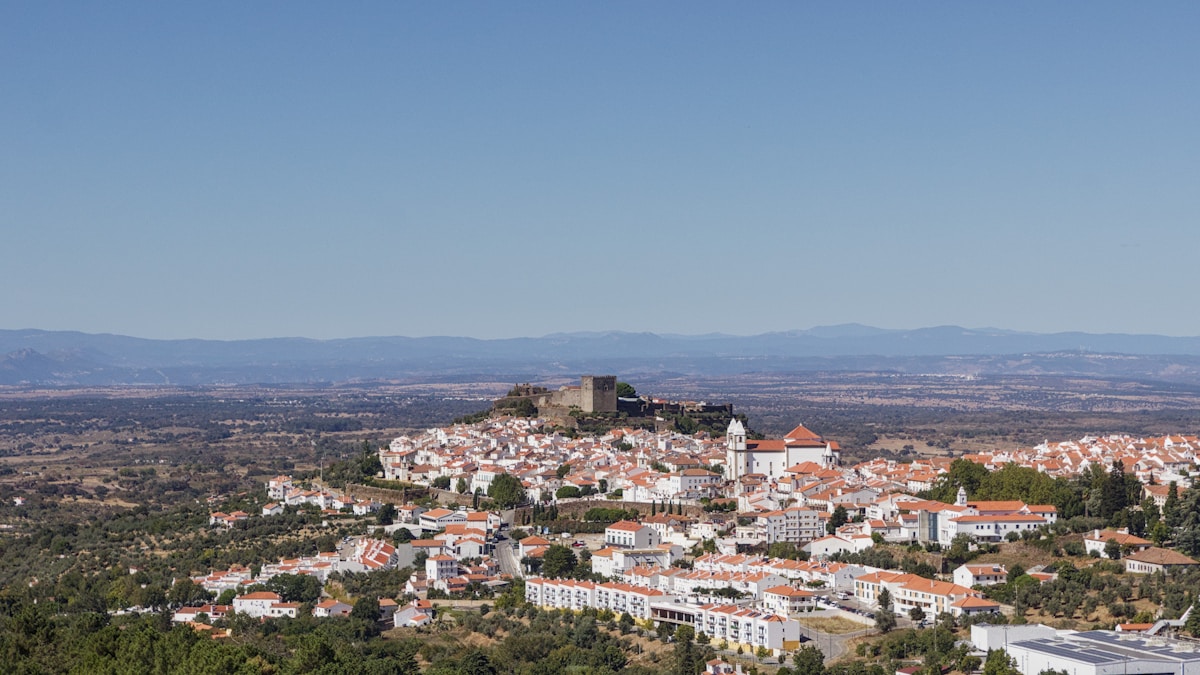
Two weeks in Portugal is enough to cover the mainland from south to north without rushing. This itinerary starts in Lisbon, heads south through the Alentejo plains and the Algarve coast, then tracks north through the Silver Coast, Coimbra, Porto, the Douro Valley, and finishes in the Minho region. The Algarve section covers Lagos, Sagres, and Tavira; for a more detailed Algarve exploration, see our 7-day Algarve road trip itinerary. A rental car is recommended for the Alentejo and Algarve stretch - return it in Lisbon before taking the train north.
Day 1 - Arrive in Lisbon
Fly into Lisbon Humberto Delgado Airport. Metro to the centre (approximately EUR 1.80) or taxi (approximately EUR 15-20).
Where to stay (Lisbon, 3 nights): Hotel do Chiado (Rua Nova do Almada 114, from approximately EUR 130 per night as of 2026) for a central base. Budget: Lisbon Destination Hostel (Rossio station, private rooms from approximately EUR 70). Splurge: The Lumiares (Bairro Alto, from approximately EUR 220 per night, rooftop pool).
Afternoon: Walk the Baixa - Praca do Comercio, Rua Augusta, Rossio. The Carmo Convent ruins (approximately EUR 5) are worth 30 minutes.
Dinner: Solar dos Presuntos (Rua das Portas de Santo Antao 150) - traditional Portuguese, cured ham, and seafood rice. Budget approximately EUR 35-50 per person.
Day 2 - Alfama, Castle, and Belem
Morning: Castelo de Sao Jorge (approximately EUR 15, book online, open 9am). Walk down through the Alfama, past the Se cathedral and the Portas do Sol viewpoint.
Lunch: Taberna da Rua das Flores (Rua das Flores 340) - petiscos for approximately EUR 20-25 per person.
Afternoon: Tram 15E to Belem. Pasteis de Belem (approximately EUR 1.50 per tart), Jeronimos Monastery (approximately EUR 12, book online), Torre de Belem (approximately EUR 8). Allow a full afternoon.
Evening: Time Out Market at Cais do Sodre (approximately EUR 15-25 per person). Sunset at Miradouro da Graca.
Day 3 - Sintra Day Trip
Train from Rossio to Sintra (40 minutes, approximately EUR 2.35 each way). Quinta da Regaleira (approximately EUR 10, arrive at opening) and Pena Palace (approximately EUR 14 - book timed-entry tickets ahead online). Both sites need 2 hours each. A guided Sintra tour from Lisbon is the easier option if you would rather skip the bus connections.
Lunch: Incomum by Luis Santos (approximately EUR 25-35 per person).
Return to Lisbon by late afternoon. Pick up your rental car this evening or early tomorrow - booking ahead is cheaper than the counter rate, especially in summer.
Optional Cascais extension: Instead of returning directly to Lisbon, take the Scotturb 403 bus from Sintra toward Cascais via Cabo da Roca (the westernmost point of continental Europe, free viewpoint - allow 30 minutes at the lighthouse). Continue to Cascais by bus, then the commuter train back to Cais do Sodre takes 40 minutes (approximately EUR 2.65). The fish market area in Cascais has several solid restaurants in the EUR 20-35 range if you stay for dinner.
Day 4 - Evora and the Alentejo
Drive: Lisbon to Evora (1.5 hours on the A6, approximately EUR 10 in tolls).
Where to stay: Pousada Convento de Evora (Largo do Conde de Vila Flor, from approximately EUR 130 per night as of 2026) - a converted 15th-century convent. Mid-range: Vitoria Stone Hotel (Rua Diana de Lis, from approximately EUR 80).
Morning/Early afternoon: Evora is a UNESCO World Heritage city. The Se de Evora (cathedral, approximately EUR 3.50, Romanesque-Gothic, climb the roof terrace for views), the Temple of Diana (Roman temple, 1st century, free to view from outside), and the Capela dos Ossos (Chapel of Bones, approximately EUR 5 - walls lined with 5,000 skulls and bones from monks) are the three essential sites. Allow 3 hours total.
Walk the walled old town - the Praca do Giraldo is the central square, surrounded by arcaded buildings and cafe terraces.
Lunch: Tasquinha do Oliveira (Rua Candido dos Reis 45) - Alentejo cooking at its simplest. Migas (bread-based dishes), black pork, and local cheese. Budget approximately EUR 15-20 per person.
Afternoon: Drive through the Alentejo plains - cork oak forests and wheat fields. Stop at Monsaraz (45 minutes east of Evora) - a hilltop village overlooking the Alqueva reservoir. The castle walls are free to walk and the views stretch to Spain.
Dinner: Back in Evora at Fialho (Travessa das Mascarenhas 16) - one of the Alentejo’s best restaurants, serving regional cuisine since 1948. Budget approximately EUR 30-45 per person.
Day 5 - Drive to the Algarve
Drive: Evora to Lagos (3 hours on the A2 and A22, approximately EUR 20 in tolls).
Where to stay (Algarve, 3 nights): Cascade Wellness Resort in Lagos (from approximately EUR 150 per night as of 2026). Mid-range: Hotel Marina Rio (Lagos marina, from approximately EUR 80). Use Lagos as your base for three nights - it is central enough to reach both the western and eastern Algarve.
Afternoon: Arrive in Lagos. Walk the old town - 14th-century walls, the Moorish arch at Porta de Sao Goncalo, and the Igreja de Santo Antonio (approximately EUR 3, extraordinarily ornate gilded Baroque interior).
Dinner: A Forja (Rua dos Ferreiros 17) - cataplana (copper-pot seafood stew) for two costs approximately EUR 35-45.
Day 6 - Western Algarve: Lagos and Sagres
Morning: Ponta da Piedade - limestone sea stacks and grottoes south of Lagos. Boat trips from the marina cost approximately EUR 20-30 per person (1 hour). The cliff-top path is free and gives a different perspective.
Lunch: Restaurante dos Artistas (Rua Candido dos Reis 68, Lagos) - fresh fish, approximately EUR 20-30 per person.
Afternoon: Drive to Sagres (40 minutes west). The Fortaleza de Sagres (approximately EUR 3, open 9:30am-5:30pm) sits on a windswept headland - this is traditionally considered the point from where Henry the Navigator launched the Age of Discoveries, though historians debate this. The Cabo de Sao Vicente (Cape St Vincent, 6km west) is mainland Europe’s most south-westerly point - a lighthouse on a 75-metre cliff. Free to visit.
Dinner: A Eira do Mel in Sagres (Estrada do Castelejo) - grilled fish and Algarvean dishes. Budget approximately EUR 20-25 per person.
Optional wild-coast extension: Drive north from Sagres on the N120 to Aljezur (45 minutes) and detour to Praia da Bordeira near Carrapateira - a dune-backed Atlantic beach with no development and consistent swell, one of the least-commercialised stretches of the Algarve coastline.
Day 7 - Eastern Algarve: Tavira and Ria Formosa
Drive: Lagos to Tavira (1.5 hours on the A22, approximately EUR 12 in tolls).
Morning: Tavira - the most elegant town in the Algarve. Walk the Roman bridge over the Gilao river, climb the castle walls (free), and visit the Camera Obscura in the Torre de Tavira (approximately EUR 5 - live panoramic projection of the town).
Take a ferry to Ilha de Tavira (approximately EUR 2 return, 5 minutes) - a barrier island with a long sandy beach and beach restaurants.
Lunch: Restaurante Quatro Aguas (on the waterfront opposite the Tavira island ferry) - grilled fish and seafood rice. Budget approximately EUR 20-30 per person.
Afternoon: Drive to the Ria Formosa Natural Park near Olhao (30 minutes west). Take a boat trip through the lagoon (approximately EUR 15-25 per person, 1.5 hours) - flamingos, salt pans, and barrier islands.
Return to Lagos.
Day 8 - Algarve to Nazare via Lisbon
Drive: Lagos to Nazare (4 hours via the A2 and A8, approximately EUR 30 in tolls). Drop the rental car in Lisbon if you prefer to continue by train - otherwise keep it through Coimbra.
Stop option: Break the drive at Comporta (2 hours from Lagos) - a low-key beach town on the Alentejo coast with rice paddies and pine forests. Lunch at Comporta Cafe (Praia da Comporta) - grilled fish on the beach, approximately EUR 20-25 per person.
Where to stay (Nazare/Obidos, 1 night): Hotel Praia in Nazare (from approximately EUR 60 per night as of 2026) or stay in Obidos at the Literary Man Hotel (a hotel-bookshop hybrid, from approximately EUR 90).
Evening: Walk the Nazare beachfront. Funicular to the Sitio clifftop (approximately EUR 1.50 each way) for views. Dinner at A Tasquinha (Rua Adriao Batalha 54) - caldeirada (fish stew), approximately EUR 15-25 per person.
Day 9 - Obidos and on to Coimbra
Morning: Obidos (15 minutes from Nazare by car, or 45 minutes by bus). Walk the town walls (free, 30 minutes). Sample ginjinha in a chocolate cup (approximately EUR 1.50). The town is small - 1.5-2 hours is enough.
Drive to Coimbra (1.5 hours) or take the train from Caldas da Rainha to Coimbra-B (2 hours with a change, approximately EUR 15).
Where to stay: Sapientia Boutique Hotel (from approximately EUR 90 per night as of 2026). Budget: Stay Hotel Coimbra Centro (from approximately EUR 55).
Afternoon: University of Coimbra - the Biblioteca Joanina (Baroque library, approximately EUR 13 combined ticket, book online for timed entry). The chapel, the ceremonial hall, and the university courtyard with views over the Mondego Valley are included.
Dinner: Ze Manuel dos Ossos (Beco do Forno 12) - chanfana (slow-cooked goat in red wine). Fewer than 20 seats - arrive before 7:30pm. Budget approximately EUR 10-15 per person.
Day 10 - Coimbra to Porto
Morning: Walk the old town. Cross the Ponte de Santa Clara to the Convento de Santa Clara-a-Nova (approximately EUR 4). Portugal dos Pequenitos (approximately EUR 12, a miniature park of Portuguese monuments - primarily aimed at children but architecturally interesting).
Train: Coimbra-B to Porto Campanha (1 hour 15 minutes by Alfa Pendular, approximately EUR 18-25).
Where to stay (Porto, 2 nights): 1872 River House (Rua do Infante D. Henrique, from approximately EUR 100 per night as of 2026). Splurge: The Yeatman in Vila Nova de Gaia (from approximately EUR 280, terraced above the port lodges with Douro views).
Afternoon: Walk the Ribeira waterfront. Cross the Ponte Dom Luis I to Gaia. Port tasting at Taylor’s (approximately EUR 15, book online) or Graham’s (approximately EUR 15-20).
Dinner: Cantinho do Avillez (Rua de Mouzinho da Silveira 166) - approximately EUR 30-40 per person.
Day 11 - Porto: Full Day
Morning: Sao Bento station (free, azulejo panels). Torre dos Clerigos (approximately EUR 8, 225 steps). Livraria Lello (approximately EUR 8 entry, redeemable against a book).
Lunch: O Gaveto in Matosinhos (20 minutes by metro) - grilled seafood, approximately EUR 25-35 per person.
Afternoon: Bolhao Market (free). Museu de Serralves (approximately EUR 15) for contemporary art and the Alvaro Siza Vieira building. Jardins do Palacio de Cristal for river views.
Evening: Sunset from the upper deck of the Ponte Dom Luis I (free, pedestrian access). Dinner at Taberna dos Mercadores (Rua dos Mercadores 36, approximately EUR 15-20 per person).
Day 12 - Douro Valley
Train from Porto Sao Bento to Pinhao (2.5 hours, approximately EUR 14 each way). Sit on the right side heading east - the river views are worth the early start.
Morning: Quinta do Bomfim (approximately EUR 15, tour and tasting). Walk through the terraced vineyards.
Lunch: DOC by Rui Paula (Folgosa, 10 minutes by taxi from Pinhao) - river-level dining. Tasting menu from approximately EUR 65 per person.
Afternoon: Rabelo boat cruise on the Douro (from approximately EUR 15, 1 hour). Return to Porto by evening train. If the train timetable does not suit, a Douro Valley day tour from Porto covers transport, tastings, and lunch in one booking.
Day 13 - Braga and Guimaraes
Train from Porto Sao Bento to Braga (1 hour, approximately EUR 3.50-6).
Morning: Bom Jesus do Monte - take the funicular up (approximately EUR 2) and walk down the Baroque staircase. Se de Braga (approximately EUR 3 for the treasury).
Lunch: Centurium (Praca da Republica) - bacalhau a Braga, approximately EUR 15-20 per person.
Afternoon: Bus or train to Guimaraes (30 minutes from Braga, approximately EUR 2-3). The city is considered the birthplace of Portugal. The Castelo de Guimaraes (approximately EUR 2) and the Palacio dos Duques de Braganca (approximately EUR 8, 15th-century ducal palace) are both on the hill above the old town. The Largo da Oliveira square below is medieval and pedestrianised.
Return to Porto by evening.
Day 14 - Departure
Morning: Final walk in Porto - coffee at Majestic Cafe (Rua Santa Catarina 112, Art Nouveau interior, approximately EUR 5 for a coffee - expensive but the room is worth seeing once). Browse the shops on Rua Santa Catarina.
Depart from Porto Airport (Francisco Sa Carneiro, 20 minutes by metro on the Violet Line, approximately EUR 2.50).
Transport Summary
| Route | Method | Duration | Cost |
|---|---|---|---|
| Lisbon airport → centre | Metro (Yellow Line) | 20 min | ~EUR 1.80 |
| Lisbon → Sintra | Train from Rossio | 40 min | EUR 2.35 each way |
| Lisbon → Porto | Alfa Pendular train | 2h 45min | EUR 25-45 |
| Porto → Douro (Pinhão) | Train from Sao Bento | 2h 30min | ~EUR 14 each way |
| Porto → airport | Metro (Violet Line) | 20 min | ~EUR 2.50 |
| Lisbon → Evora | Drive (A6) | 1h 30min | ~EUR 10 tolls |
| Evora → Lagos | Drive (A2/A22) | 3h | ~EUR 20 tolls |
Budget Summary
| Category | Budget Estimate (per person) |
|---|---|
| Accommodation (13 nights, mid-range) | From approximately EUR 1,040-1,690 |
| Meals (14 days) | Approximately EUR 420-700 |
| Attractions | Approximately EUR 130-180 |
| Transport (trains, car rental 5 days, tolls, fuel) | Approximately EUR 300-450 |
| Total | Approximately EUR 1,890-3,020 |
All prices are approximate as of 2026. Book trains on cp.pt in advance. Reserve a rental car for the Alentejo-Algarve section (days 4-8) and return it in Lisbon. Fly into Lisbon and out of Porto to avoid backtracking.
Book Your Trip
- Flights - Find the best fares to Portugal
- Travel Insurance - Portugal insurance guide (EHIC rules, Schengen cover, surf riders) · get covered with EKTA
- eSIM - Stay connected from landing
- Airport Transfers - Pre-book your transfer from Lisbon or Porto
- Car Rental - Compare prices across providers
- Tours & Activities - Browse Portugal tours on GetYourGuide