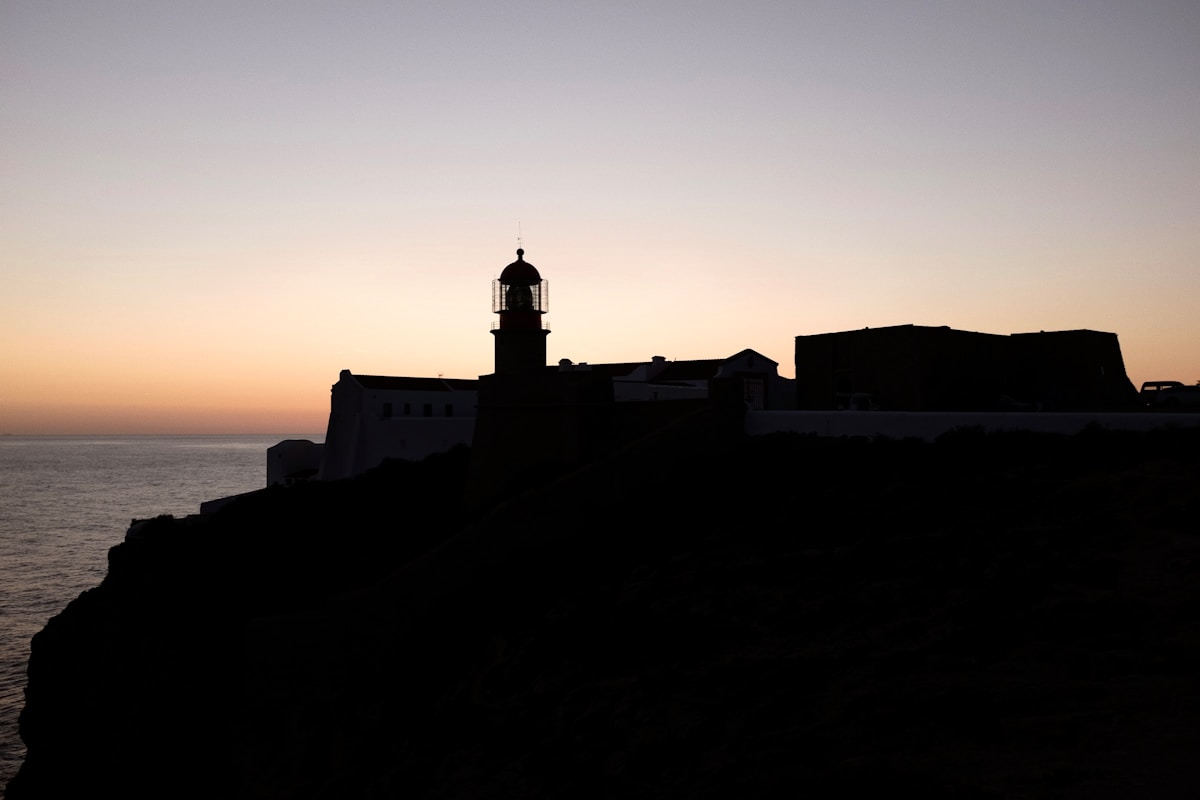
Sagres occupies a dramatic position at the southwestern corner of continental Europe - the point where the Atlantic and the Algarve coast meet at the Cabo de São Vicente headland. The geography delivers remarkably consistent surf for much of the year, and the remoteness keeps crowds manageable even in the increasingly crowded Portuguese surf market. Sagres is 30km west of Lagos, the Algarve’s best base for combining surf with beaches and town life. For when to visit, see our best time to visit Portugal guide.
The Breaks
Praia do Beliche
A sheltered beach break at the base of the cliffs between Sagres and Cabo de São Vicente, accessible by a steep path. Beliche works in northerly and westerly swells and is partially protected from the prevailing SW winds by the headland. Consistent and more forgiving than the exposed breaks - a good learning environment in small-to-medium conditions. Generally 0.5–1.5 metres. Good for beginners and intermediates.
Praia do Tonel
The main break in Sagres village. A consistent beach break on the protected south side of the Sagres promontory. Works in south and southwest swells; sheltered from north wind. More powerful than Beliche. Popular with local surfers and surf schools. Can get crowded when conditions align. 1–2 metres most days in winter.
Praia da Mareta
A sandy beach break in Sagres bay. Usually the smallest and most protected of the Sagres breaks. Used by beginners and surf schools in small conditions. Not the best choice for experienced surfers.
Ponta de Sagres (Boca do Rio area)
Outside the village, accessible by car. Exposed reef and point breaks that handle more size. Less documented than Beliche and Tonel but worth exploring with local knowledge. Up to 3 metres in good winter swell.
Zavial
14km east of Sagres towards Lagos. A right-hand point break over sand, one of the most consistent and high-quality waves in the Algarve. Works in southwest swell, offshore in northerly wind, handles up to 2.5 metres well. The wave peels for 150–200 metres on good days. Better than anything in Sagres when conditions are right. A local knowledge spot - worth the drive.
Seasonal Guide
October–April (best conditions): North Atlantic winter swells generate consistent 2–4 metre swells reaching Sagres from the northwest. Wind can be onshore from the south but morning glass-offs are common. Water temperature 15–17°C (3/2mm wetsuit minimum, 4/3mm recommended in December–February).
May–June: Swell drops to 1–2 metres but becomes more consistent in direction. Offshore winds more reliable. Crowds begin to arrive. Good for intermediate surfers.
July–September: Small, inconsistent, often south wind (onshore). Not recommended for surf. The beaches are excellent for swimming.
Learning to Surf
Sagres has several surf schools:
- Sagres Surf School - main village location, full-day lessons €35–45, board and wetsuit included
- Wavesensations - longstanding operation, good reputation for beginners
- Algarve Surf School - also operates from Lagos, picks up from Sagres accommodation
Most schools offer 2-hour lessons in the €35–45 range and week-long packages (€180–250). Beliche and Mareta are the preferred lesson breaks.
Surfboard Hire
Surfboard hire is €20–30/day at most surf shops in Sagres. Wetsuits €10–15/day. Shops on the main road through the village include Fun Surf, Mar Unlimited, and several independent operations.
Where to Stay
Sagres is a small village - accommodation is basic but atmospheric. Most surfers prefer self-catering and cook their own food.
Sagres Surf Hostel - purpose-built surf hostel, dorms from €22, private rooms from €60. Social atmosphere, surfboard storage, pick-up to breaks.
Martinhal Sagres Beach Family Resort - 5-star family resort on Martinhal Beach (2km from the village). More expensive (€180–300/night) but the best facilities in the area.
Casa Sagres and similar guesthouses - basic self-catering apartments, €60–90/night. Most book by the week in peak surf season (November–March).
Sagres to Lagos is 30 minutes by car. Staying in Lagos and driving to Sagres daily is viable and provides more restaurant and café options.
Search hotels in Sagres Portugal on Booking.com to compare rates and availability.
Getting There
No public transport reaches the surf breaks directly. Car hire from Faro Airport (60km, 45 minutes) is the practical option. Lagos to Sagres: 30 minutes on the EN125.
The nearest major surf centre is Ericeira (3.5 hours north), but for Algarve-based surfers, Sagres is the target.
car hire in Portugal is the most practical way to move between breaks - most of Portugal’s surf beaches are poorly served by public transport.
an eSIM for Portugal keeps you connected for real-time surf reports and swell forecasts. For guided surf lessons and camp packages, browse surf tours in Sagres.
Sagres and the Algarve
Sagres is usually paired with a base in Lagos, 30km east. The Algarve region guide covers the wider southern coast including the transition from the dramatic west Algarve cliffs to the calmer eastern lagoon coast. For boat trips and dolphin watching along the same stretch of coast, see our Algarve boat trips guide and dolphin watching guide. The wild coastline north of Sagres - the Costa Vicentina surf guide - covers Arrifana, Bordeira, and the protected surf beaches of the natural park. For the full picture of surfing in Portugal, including all major breaks from the Algarve to the Silver Coast, see our surfing Portugal guide.