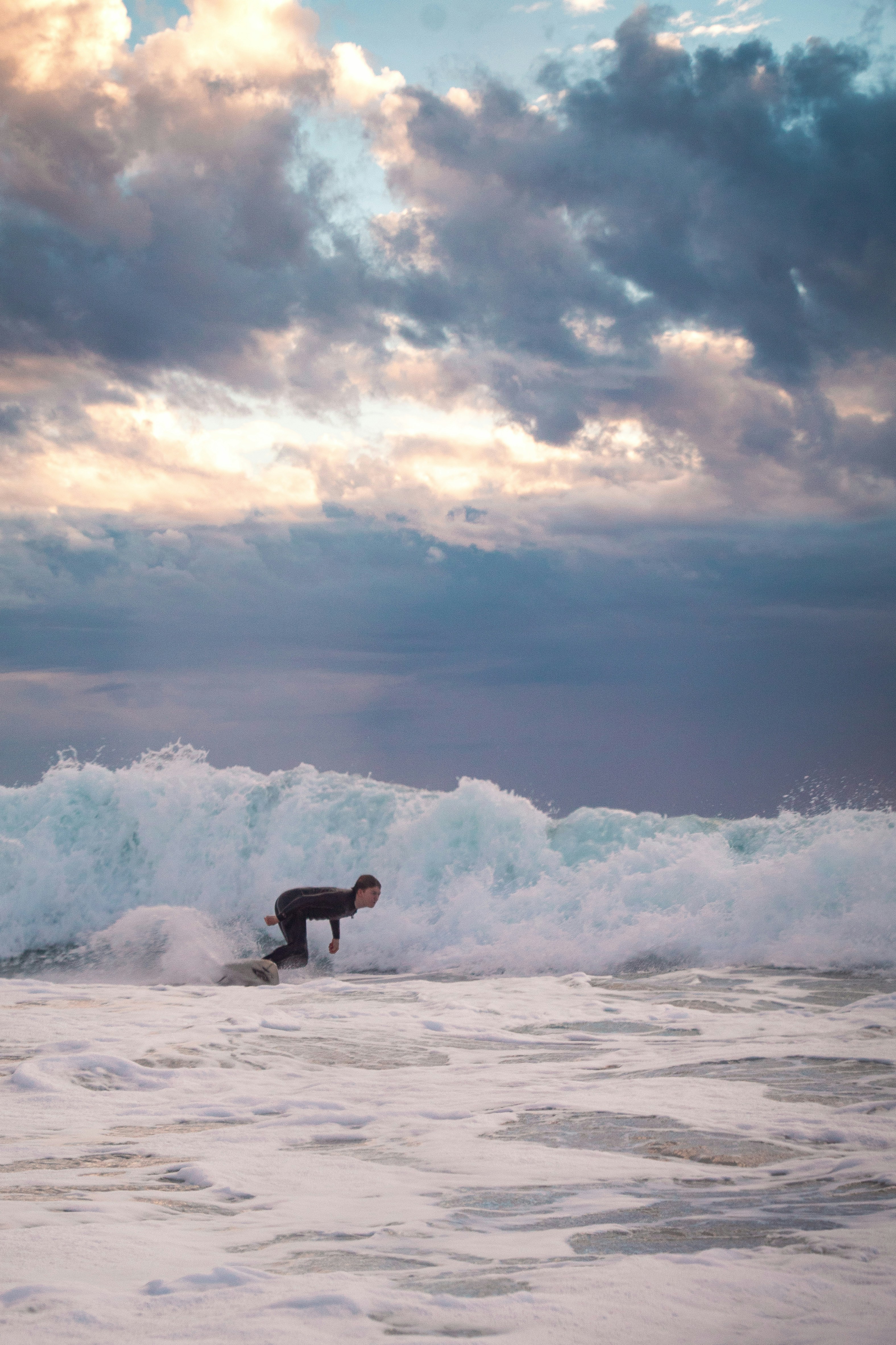
Portugal has more than 800km of Atlantic coastline and some of Europe’s most consistent surf. The country produces world-class waves at every level — big-wave slabs at Nazaré, world-renowned reef breaks at Ericeira, learner-friendly beach breaks at Peniche — and a well-developed infrastructure of surf schools, surf camps, and board hire that makes it easy to plan a trip whether you’ve never stood on a board or you’re chasing heavy water.
Why Portugal Works for Surf Travel
The Atlantic swell that drives Portuguese surf is generated by low-pressure systems in the North Atlantic, producing groundswells that wrap around the Iberian Peninsula and hit the west coast with consistent size and power. Portugal sits at a latitude where these swells arrive year-round, with peak swell season running October to March and a more mellow summer window that works well for beginners.
The other factor is proximity. From the UK, Ireland, and most of northern Europe, a flight to Lisbon or Faro puts you within two hours of every major surf region. Combined with relatively affordable costs compared to other European surf destinations — Biarritz, the Basque Country — Portugal offers strong value.
The Main Surf Regions
Ericeira
Ericeira was designated the second World Surfing Reserve on the planet in 2011, recognising its 4km stretch of coastline containing seven classified breaks. The breaks here are primarily reef and rock — Ribeira d’Ilhas, Reef, Coxos, Cave, Pedra Branca, São Lourenço, and Crazy Left — each with distinct optimal conditions and swell direction.
Coxos is widely considered Portugal’s best wave: a long, powerful right-hander on a rock shelf that only works with north swell and a clean line-up. It’s not suitable for beginners. Ribeira d’Ilhas is more approachable and hosts the Rip Curl Pro Portugal when conditions align.
Getting there: 50km north of Lisbon, 45–55 minutes by car on the A8. Regular coach service from Lisbon’s Campo Grande terminal.
Best for: Intermediate to advanced surfers. Beginners have options at São Sebastião beach on smaller days.
Peniche
Peniche is a peninsula 90km north of Lisbon with surf on multiple sides, which means there’s nearly always somewhere rideable. Supertubos — a heavy beach break that fires hollow barrels — hosts the MEO Rip Curl Pro annually and draws professional surfers every October. Outside contest season, the wave belongs to whoever paddles out.
Baleal, a few kilometres north of Peniche town on a sheltered bay, is the beginner hub. The break is forgiving, the wave long, and there are more than 20 surf schools operating on the beach in summer. Prices start from €35 for a group lesson. A week-long camp including accommodation runs €350–€550 depending on the school and season.
Best for: All levels. Supertubos for advanced; Baleal for beginners.
Nazaré
Nazaré is famous worldwide for one reason: the Praia do Norte break, which produces some of the largest surfable waves on earth. Swell hitting the submarine Nazaré Canyon amplifies dramatically, producing winter faces that regularly exceed 20m. Professional big-wave surfers including Garrett McNamara, Sebastian Steudtner, and Maya Gabeira have set world records here.
This is spectator territory for most visitors, not a place to surf. The waves at Praia do Norte are accessible only to elite big-wave athletes. The main town beach — Praia da Nazaré — offers gentler conditions in summer, but most surfers who come to Nazaré come to watch.
Best for: Watching. Advanced big-wave surfing (professional/elite level only).
Costa Vicentina and the Alentejo Coast
The Costa Vicentina stretches south from Peniche through the unspoilt coastline of the Alentejo Natural Park. Spots like Arrifana, Carrapateira, and Odeceixe receive consistent swell with far fewer crowds than the more accessible central coast breaks. The coastline is protected from development, which means the landscape here — cliff-backed coves, empty beaches — remains intact.
The trade-off is access: most beaches require a car and some navigation off main roads. Arrifana is a natural cliff amphitheatre with a bay that catches north and northwest swell; it works for intermediate surfers and beginners on smaller days.
Best for: Intermediate surfers, road trips, anyone wanting crowd-free waves.
The Algarve
Portugal’s southern coast faces mostly south and southwest, sheltered from the dominant north Atlantic swell by the continental shelf and the turn of the coastline at Cape St. Vincent. This makes the Algarve a secondary surf destination compared to the west coast, but it works well in summer when north swells flatten and south-facing exposures pick up whatever swell exists.
Sagres and nearby Zavial work in most conditions because they’re close to the Atlantic corner at Cape St. Vincent. Guincho near Cascais, technically not the Algarve but south-facing, is one of the few spots near Lisbon that produces quality waves.
Best for: Summer surfing, beginners, those combining surf with beach holidays.
When to Go
October–March: Peak swell season. Consistent groundswells produce the best waves across all regions. Water temperature 14–16°C on the west coast — 4/3mm wetsuit essential. Ericeira and Peniche both see their biggest and most powerful conditions. Nazaré becomes world-class in November–February.
April–May / September–October: Shoulder season. Smaller, cleaner swells. Water warming to 17–19°C. The best balance of conditions, crowds, and prices. Recommended for intermediate surfers.
June–August: Summer. Consistent small-to-medium swells, warm water (18–22°C west coast, 22–24°C Algarve), busiest beaches and surf schools. Ideal for beginners at Peniche and Ericeira. The Algarve picks up whatever south swell is running.
Surf Schools and Lessons
Portugal’s surf school infrastructure is well-developed and certified. The main clusters are:
- Peniche: 20+ schools at Baleal. Group lessons from €35, equipment included. Camps from €350 per week. Popular names include Peniche Surf Camp, Baleal Surf Camp, and Lobos Surfcamp.
- Ericeira: Smaller cluster of schools. Better for intermediate lessons and progression. Expect €40–€55 for a group session.
- Sagres and Lagos (Algarve): Smaller operations, fewer crowds in high season. Prices similar to Peniche.
Most schools include board and wetsuit hire in the lesson price. For longer stays, buying or hiring a board separately works out cheaper after three days. Surf camps in Portugal offer packages combining accommodation, lessons, and equipment — the most cost-effective format for a dedicated surf trip.
Getting Around Portugal’s Surf Regions
A hire car is the most practical way to access multiple breaks. Lisbon is the logical base — Ericeira and Peniche are both within 90 minutes, and the drive to the Costa Vicentina and Algarve is feasible in a day. Public transport reaches Peniche (regular coaches from Lisbon) and Ericeira (Mafrense coaches from Campo Grande) but won’t get you to the breaks along the Costa Vicentina or the best Algarve spots without a car.
Surfboard transport on coaches is generally permitted; check with the operator. Domestic flights to Faro cut travel time to the Algarve. Board bag fees apply on most carriers.
See our guides to Ericeira, Peniche, Nazaré, Sagres, and surf camps for specific logistics and break information.