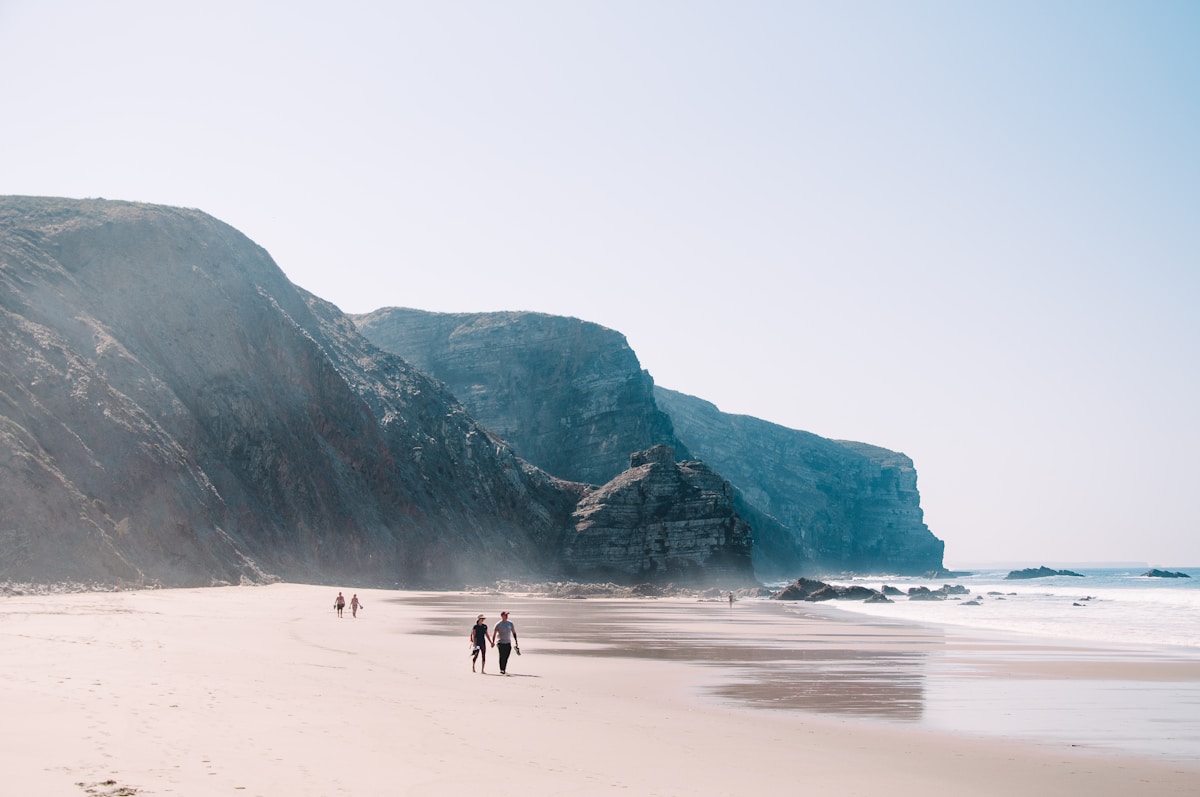
Arrifana sits in a sheltered cove on Portugal’s southwest coast, roughly 8km west of Aljezur at the edge of the Costa Vicentina Natural Park. The cove is bounded by tall basalt and schist cliffs on three sides, which gives it a distinctive character - wave energy funnels into the bay from the open Atlantic to the west, while the cliffs partially shelter the lineup from wind.
It is not as well known internationally as Peniche or Ericeira, which works in its favour. The lineup is calmer, the beach is wide, and the surrounding landscape is as wild and undeveloped as anywhere on the Portuguese coast.
The beach break
The beach break at Arrifana runs along most of the bay and is the more accessible of the two main waves. On moderate swells (1.5–2.5m offshore), it produces peaks across a wide stretch of sand, allowing surfers to spread out rather than competing for a single takeoff zone.
Wave quality is variable by nature - beach breaks shift with sandbars, and Arrifana’s sand moves across seasons. Autumn and late winter tend to produce the most consistent banks. The wave faces can be long on the right day, particularly on west swells that approach the bay cleanly without too much period variation.
It suits intermediates most - confident enough to read the takeoff and generate their own speed on flatter sections, but not requiring the precision timing of a reef break. Beginners who are past the white-water stage will find manageable conditions here during smaller swells (0.8–1.5m) in spring and early summer.
The reef left
The more interesting wave at Arrifana is a left-hand reef break on the south side of the bay, closer to the cliff base. When conditions align properly - a clean west to northwest swell of 1.5–3m with northeast or east wind - it produces long, peeling left walls that give experienced surfers multiple turns and occasional sections.
The reef sits on rock rather than sand, which means consequences for falling are higher. Anyone surfing the reef at Arrifana should be comfortable reading lineups, confident paddling through white water in moderate surf, and not relying on a leash as their primary safety measure. This is an intermediate to advanced break.
Local surfers tend to be protective of the reef during quality sessions, particularly on weekend evenings. Arriving early - before 9am on autumn and winter weekends - avoids most of the crowd and gives the best light for reading the break.
Best conditions
Swell direction: west and northwest, 1.5–3m. Larger northwest swells tend to close out the beach and make the reef hollow and fast. Very small swells (under 1m) produce weak, uninspiring conditions.
Wind: northeast and east are ideal offshore winds at Arrifana. The cliffs behind the bay provide some protection from northerlies. The notorious Nortada - the summer north wind that plagues coastal Portugal from late morning - tends to arrive later here than on the Silver Coast, making mornings relatively sheltered.
Tides: mid tide to high tide generally works better at the reef. Low tide exposes more rock and makes the drop onto the wave steeper. The beach break is functional at most tides.
Best months: October through April for the most consistent swell. September and May offer shoulder-season conditions - smaller but cleaner. Summer (June–August) is workable in the early morning when swell is present but tends to go flat or onshore by mid-afternoon.
Getting to Arrifana
Arrifana is 8km from Aljezur and has no direct public transport link. A car is the practical requirement for visiting.
From Lagos: 35km north via the N120, approximately 35–40 minutes. From Sagres: 30km northeast, around 30 minutes. From Lisbon: 290km south, around 2h45 via the A2 and IC1.
Parking above the beach is free, with a gravel car park accessed via a narrow road down the cliff. The beach itself is reached by a boardwalk staircase from the cliff edge. Early morning (before 9am on weekends) finds spaces easily; late morning in summer requires patience.
Pick up a Portuguese eSIM before you travel — coverage along the coast road is good, and you will want a reliable data connection for surf forecast apps when planning early starts from Aljezur.
Surf schools and equipment
A small number of surf schools operate at Arrifana, mainly in spring and summer. Lessons run from approximately €35–45 for a two-hour group session. Board and wetsuit hire is available from the beach kiosk at the car park level, typically €20–25 per day. Availability can be limited in shoulder season - calling ahead is sensible.
There is no large surf camp infrastructure here comparable to Peniche or Ericeira. Arrifana functions as a day-trip or self-contained destination rather than a week-long surf camp hub. For organised multi-day surf camps in the region, Costa Vicentina surf camps offer packages based at different points along the southwest coast.
Where to stay
Aljezur village (8km inland) is the main base. It splits into an older Moorish quarter on a hill and a more modern lower town. A handful of guesthouses, one or two small hotels, and several self-catering apartments accommodate visitors. Prices in 2026 run from approximately €60–80 per night for a double room in a guesthouse to €110–150 for a self-catering apartment for two or three nights.
Monte Clérigo (5km north of Arrifana) and Odeceixe (17km north) offer more accommodation options and their own beaches, useful if Arrifana is your primary surf destination but you want to range further along the coast.
For a broader base, Lagos is 35km south and has the widest range of accommodation, restaurants, and nightlife in the western Algarve - convenient if you want to combine Arrifana with other southwest surf spots.
Search hotels in Arrifana Portugal on Booking.com to compare rates and availability.
Where to eat
Options at the beach itself are limited to a small cafe at the car park. For a proper meal, Aljezur has several restaurants in the lower town worth knowing:
Bar Restaurante Ponto de Encontro in Aljezur’s lower town serves grilled fish and Alentejo-style meat dishes. Main courses run from approximately €10–16. It is straightforward, unfussy, and consistently well-regarded by locals.
The village’s proximity to the Alentejo wine region and the Barlavento fishing coast means the combination of fresh Atlantic fish and Alentejo wines (particularly the reds and whites from around Vidigueira) appears on most menus here.
Combining Arrifana with nearby spots
The southwest coast concentrates several surf spots within a 40km stretch:
- Praia de Odeceixe (17km north): a river mouth beach that offers some protection from direct Atlantic swells, good for beginners and learners
- Praia do Amado (20km south, near Carrapateira): a wide open beach break with surf schools - see our Carrapateira surf guide
- Sagres (30km south): the landmark at Portugal’s southwest tip, with breaks at Tonel and Beliche - see our Sagres surf guide
Car hire in Portugal is the only practical way to string these together in a week. The coast road is scenic, distances are short, and each spot has its own character. For guided surf lessons and coastal activities at Portugal’s southwest tip, tours in Sagres offer organised options covering the nearby breaks.