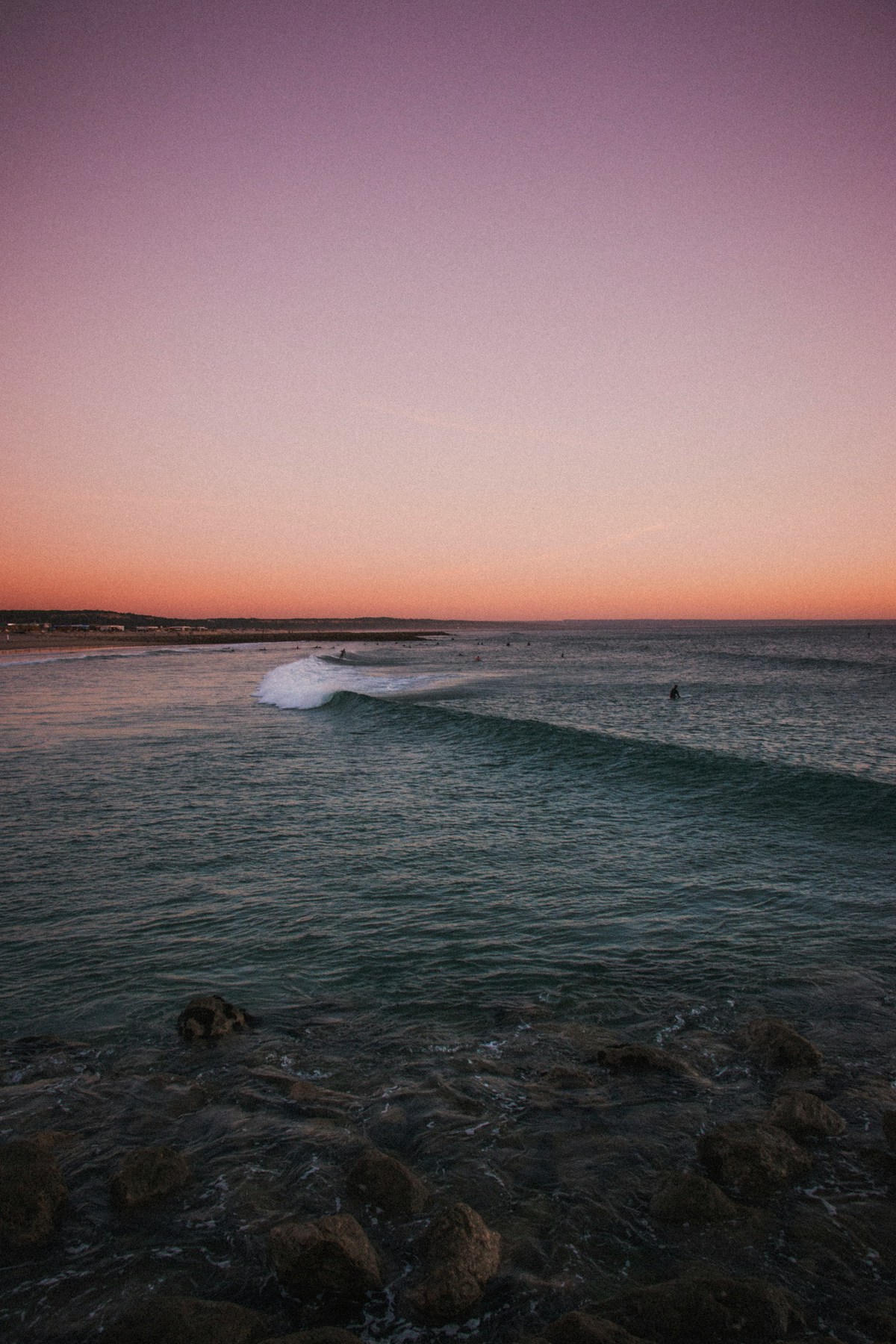
Costa da Caparica is a 30km stretch of Atlantic-facing beach running south from the mouth of the Tagus estuary on the Setubal Peninsula, directly across from Lisbon. It is the most accessible surf destination from the Portuguese capital - 25 minutes by car, under an hour by public transport - and it handles an enormous volume of surfers, beach-goers, and day-trippers as a result.
What saves it from becoming a crowded mess is the sheer scale. Thirty kilometres of beach breaks, numbered from 1 at the northern end near Caparica town to 30 and beyond to the south, means there is almost always space even on a summer Saturday. The character changes significantly as you move south: the northern sections are densely serviced and more beginner-oriented; the southern sections are wilder, less developed, and better suited to surfers who want waves without crowds.
The beach sections
Sections 1–5 (northern end): These run closest to the town of Costa da Caparica. The waves here are generally smaller and more forgiving due to slight refraction from the Tagus estuary mouth. Most of the surf schools operate in this zone. Lifeguard coverage runs through summer. Good for beginners and intermediates, and for anyone travelling without a car who arrives by bus.
Sections 6–15 (central): The Transpraia tram (a single-car train that runs seasonally along the beach access road) connects these sections in summer. Wave quality improves as you move south and away from the estuary influence. Banks here can produce quality beach break peaks on moderate swells, with more barrel opportunities than the northern sections. The crowds thin out proportionally - section 10 might have a tenth of the surfers you’d find at section 2.
Sections 16–30+ (southern): Increasingly exposed to open Atlantic swell, with more consistent sandbars built up by longshore drift. This is where the better waves are. No surf schools, fewer facilities, and in the southern sections sometimes no facilities at all. Best accessed by car. The dune system here is more intact, the beach wider, and the Atlantic feels genuinely wild by the time you reach the far end.
Wave conditions
Caparica faces west-southwest, which means it picks up swell from a wide range of North Atlantic storm systems. It is not quite as directly exposed as Ericeira or Peniche on the Silver Coast to the north, but the open fetch delivers consistent waves across most of the year.
Best swell: west to northwest, 1–2.5m. On larger swells the northern sections can close out and become difficult to navigate, while the middle sections hold shape better. Very small summer swells (below 0.8m) produce weak, unpredictable beach break conditions.
Wind: North and northeast are offshore here, giving the characteristic glassy mornings when Lisbon has clear sky and a light land breeze. The Nortada afternoon north wind - the coastal wind that builds each day from roughly midday onward from May through September - arrives at Caparica later than at spots directly on the northern coast, but it still turns conditions choppy by early afternoon in summer. Morning sessions are reliably better.
Best months: October through April for the strongest swell. September and May are excellent shoulder months. Year-round surfing is entirely viable; summer mornings with swell can be excellent for beginners before the crowds and wind arrive together.
Surf schools and equipment
Costa da Caparica has one of the densest concentrations of surf schools in Portugal, concentrated in the first five beach sections. Group lessons run from approximately €35–50 for a two-hour session including board and wetsuit. Private lessons range from €60–90 per session.
Board and wetsuit hire without a lesson is available at most school kiosks along the northern sections, typically €20–30 per day. In summer (July–August), booking ahead is advisable as popular schools run full groups from 9am to 6pm and can sell out.
The town of Costa da Caparica (1km inland from section 1) has several surf shops with equipment sales. For a surf camp of several days, the town’s accommodation and proximity to consistent surf makes it a practical base.
Getting there from Lisbon
By car: Cross the Ponte 25 de Abril bridge heading south, exit at Costa da Caparica on the IC32, and follow the coast road south to your chosen beach section. Total journey from central Lisbon is 25–30 minutes in normal traffic, 45–60 minutes on a summer weekend morning when the bridge backs up. Parking near the northern sections charges a fee in summer (approximately €5–8 per day); southern sections have free or unmanaged parking.
By public transport: Take the Transtejo ferry from Cais do Sodre terminal (central Lisbon) to Cacilhas pier on the south bank (€1.40 each way, 10 minutes), then catch bus 161 or 153 from Cacilhas to the Caparica town terminus (approximately 30 minutes, €1.50–2). The journey takes 50–60 minutes total. In summer, TST also operates direct buses from Praca de Espanha in Lisbon to the beach; check TST Transportes Tejo for current routes and times.
Transpraia tram: From late June through September, a seasonal tram service connects the Caparica town terminus to the southern beach sections (roughly sections 1–17). It runs every 20–30 minutes and costs approximately €1.50 per single or €4–5 for a day pass. This is the most practical way to reach quieter central sections if you arrive without a car.
Where to stay and eat
Costa da Caparica town has a full range of accommodation at broadly lower prices than Lisbon: budget guesthouses from approximately €45–65 per night, mid-range hotels from €80–130. The town itself is functional rather than charming - it serves surfers and Lisbon beach-goers rather than international tourists, which keeps prices realistic.
For restaurants, the town’s Rua dos Pescadores and the streets around the central bus terminus have grilled fish restaurants, tascas, and cafes. Expect to pay €9–15 for a main course. Seafood is the local strength: fresh Atlantic fish, percebes (barnacles), and garlic prawns are standard across most menus.
For a day trip: Caparica is entirely practical as a Lisbon day trip. Leave central Lisbon by 8am, surf the morning session before the wind arrives, eat lunch at one of the town restaurants, and return to Lisbon by mid-afternoon. In summer this is exactly what a significant portion of Lisbon’s surfing population does on weekends.
Search hotels in Costa da Caparica on Booking.com to compare rates and availability.
Caparica vs Carcavelos
Carcavelos is the other major surf beach in the Lisbon area, 20km west of the city centre near Cascais. It is more urban in feel and significantly more crowded, particularly on weekends. The wave quality is similar on moderate swells - a beach break with shifting peaks.
Caparica’s main advantages are scale (30km vs roughly 1km of beach at Carcavelos), less congestion outside the northern sections, and better wave quality at the southern sections. Carcavelos’ advantage is convenience from central Lisbon - the suburban train runs directly to Carcavelos station, 200m from the beach.
For beginners in groups who want organised lessons and the easiest logistics, Carcavelos and Caparica’s northern sections are comparable. For surfers who want actual quality and space, the middle and southern sections of Caparica are clearly superior.
Car hire in Portugal opens up the full length of Caparica and the surrounding Setubal Peninsula coast, including Arrábida (no surf, but excellent sea kayaking and rock climbing) and the quieter breaks around Sesimbra. A Portuguese eSIM is useful for navigating the beach access roads and checking live forecasts from the car park before paddling out. If you are combining a surf day with sightseeing, tours in Lisbon cover the city’s main attractions and can be booked around morning surf sessions.