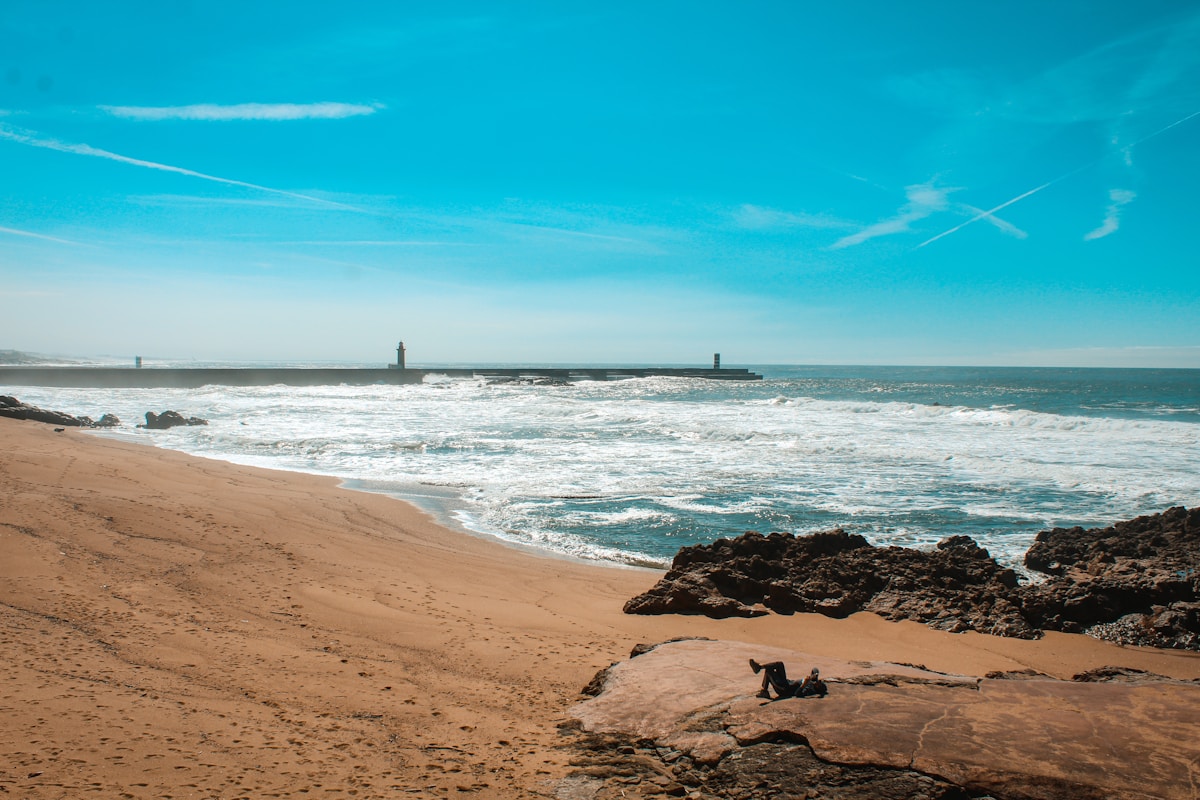
Espinho is a compact coastal town 20km south of Porto on the Atlantic coast. It has a grid-pattern street layout that dates to the nineteenth century, a casino that has operated since 1904, and a beach break that has supplied Porto’s surf community with waves for as long as organised surfing has existed in northern Portugal.
It is not a destination that appears on many international surf travel shortlists, and that is part of what makes it worth considering. The waves are consistent, the access is among the easiest of any surf beach in Portugal (direct train from Porto), and the northern Atlantic atmosphere - rougher water, colder temperatures, a real working-town character - gives it a different quality from the tourist-oriented surf towns of the Silver Coast.
The wave
Espinho’s beach break runs for several kilometres along a sandy coastline facing west-northwest, directly exposed to North Atlantic swell. The wave is a typical beach break in character: multiple shifting peaks, variable quality depending on sandbar position, and conditions that change season to season as the sand moves.
The best peaks tend to form at the northern end of town, near the casino area and pier. The pier itself creates some wave focusing on certain swell angles, producing a more defined left or right in the vicinity of its base. The central and southern sections of the beach are more open and produce the spread-out beach break character typical of exposed Atlantic sand.
On a solid northwest swell of 1.5–2.5m with light northeast or east wind, Espinho can produce genuinely enjoyable surf - powerful, consistent beach break with real shape. The limitations are the same as most beach breaks: on larger swells the bar sections close out, and on very small swells (below 0.8m) there is not enough energy to produce clean peaks.
Northern Atlantic conditions
Surfing in northern Portugal is a different physical experience from the Silver Coast around Lisbon. The water is colder, the swell is often more raw and less refined by sheltering geography, and the atmosphere in and around the lineup reflects the local character rather than international surf culture.
Water temperature at Espinho:
- Summer (July–August): approximately 18–19°C. A 3/2mm full wetsuit is standard. Some local surfers use a shorty in August on warmer days.
- Autumn (September–November): 16–18°C. A 3/2mm is adequate for most of autumn; 4/3mm becomes comfortable by November.
- Winter (December–March): 13–15°C. A 4/3mm is the minimum, with gloves (3mm) and booties standard for sessions longer than 90 minutes.
- Spring (April–June): 14–17°C. 3/2mm is sufficient by late spring; 4/3mm for April.
This makes winter surfing at Espinho a commitment - it is proper cold-water surfing, not the relatively mild conditions of the Algarve. Surfers who are used to Portuguese surf and travel from south to north will notice the difference immediately.
Best months and seasons
October to February: the best surf season for Espinho. North Atlantic low-pressure systems drive consistent northwest and west swells. Waves are frequent, can be substantial (2–3m and larger), and the crowds are minimal. This is when the local surf community is most active and when Espinho feels most genuinely like a surf town.
March to May: swells ease off toward spring but remain more consistent here than at the Silver Coast during summer. A solid transitional period, good for intermediates who want regular waves without the size and cold of winter.
June to August: smaller, slower swell (typically 0.5–1.5m). Water warms to its annual maximum. Beginner and early-intermediate surf schools run full programmes in summer, and this is the most accessible entry point for visitors who want a first experience of northern Portugal surf. The mornings are generally clean before the afternoon sea breeze arrives.
September: reliable early autumn swells begin to arrive. September is arguably the best single month at Espinho - swell quality improves significantly from August, water is still relatively warm, and the crowds of peak summer have thinned.
Getting from Porto to Espinho
The train is the definitive way to do this journey. Comboios de Portugal runs the Linha do Oeste suburban service from Porto Campanha and Porto São Bento stations to Espinho. Journey time is approximately 25–30 minutes from Campanha. The fare is approximately €1.35 as of 2026 (verify current fares at cp.pt). Trains run every 20–30 minutes during most of the day.
Espinho station is central to the town, and the beach is a 5-minute walk west. This makes a surf day trip from Porto one of the simplest logistics in Portuguese surf travel: no car, no parking, no bridge tolls. A Portuguese eSIM is handy for checking the forecast on the train and navigating from the station to the beach.
By car: south on the A1 or the coastal N109 road from Porto. The A1 takes approximately 20 minutes in off-peak traffic; the N109 takes longer but is more scenic, passing through coastal Vila Nova de Gaia and Miramar.
Espinho town
Espinho is functional and unpretentious. The grid street pattern was imposed in the nineteenth century after earlier settlements were periodically destroyed by Atlantic storms - a reminder that the Atlantic here is not decorative. The casino (Casino de Espinho) remains the architectural focal point and anchors a small cluster of hotels near the beachfront.
Search hotels in Espinho Portugal on Booking.com to compare rates and availability. Where to eat: the town has a practical range of restaurants and tascas serving grilled fish, arroz de marisco (seafood rice), and standard Portuguese lunch menus. Prices are consistently lower than Porto - expect €8–13 for a main course. Restaurante Peixe Frito near the central market is well regarded locally for fried fish served in the traditional northern style.
Where to stay: hotels near the beach front start from approximately €60–90 per night for a double room. Self-catering apartments are available from €70–120 per night for two people. For a day trip from Porto, staying in Espinho is not necessary - the train makes it easy to base yourself in Porto and arrive at the beach within 30 minutes.
Surf schools and hire
Several surf schools operate at Espinho, most concentrated on the central beach in front of the casino area. Group lessons cost approximately €35–45 for a two-hour session including equipment. Board hire alone is available from around €15–20 per day, wetsuit hire from €10–15. Call ahead in shoulder season (October–April) to confirm availability, as not all schools operate year-round. For a broader range of guided surf activities and ocean experiences based out of Porto, tours in Porto include surfing day trips, kayaking, and Atlantic coast excursions that cover the northern coastline.
The northern Portugal surf circuit
Espinho anchors the southern end of Portugal’s northern surf coast, which extends to Viana do Castelo and beyond. Worth noting for a week-long surf trip to the north:
Miramar (15km north): a short beach break close to Porto with an iconic chapel (Senhor da Pedra) built on a rock in the tide zone. Worth stopping for the view even on non-surf days.
Matosinhos (near Porto): the city beach closest to Porto’s centre, with consistent beach break waves. Busy with local surfers, good for an early morning session if basing yourself in the city.
Viana do Castelo (70km north): a more substantial town with Atlantic beach breaks and a strong local surf culture. A longer half-day drive but worthwhile for a multi-day northern Portugal surf trip.
For the full context of surf conditions through the year, including how the north compares to the Silver Coast and Algarve, see our best time to surf Portugal guide.