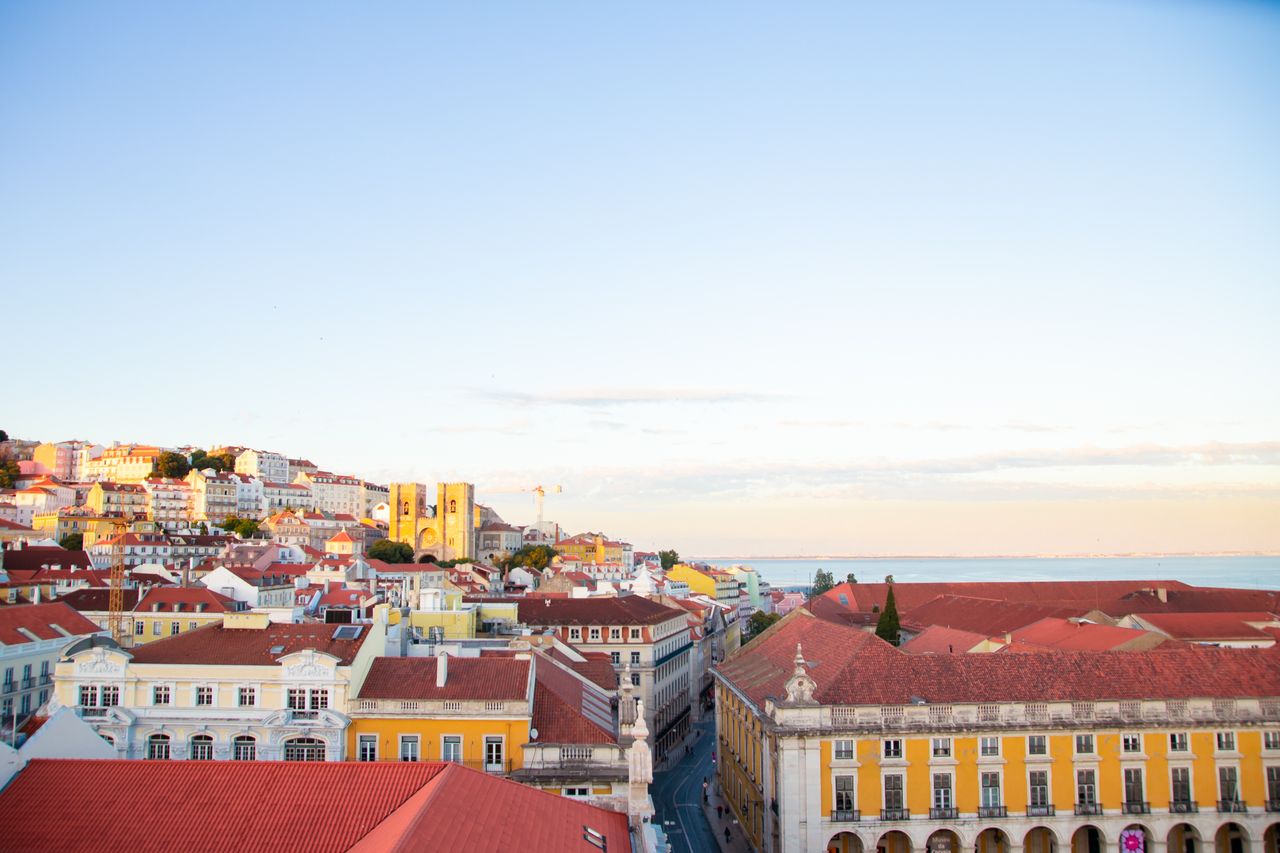
Portuguese is the language of Portugal - and of around 260 million people worldwide, making it the sixth most spoken language by native speakers globally. But the Portuguese spoken in Lisbon is a different proposition from the Brazilian variety most English speakers have heard on television. In Portugal, the language has a clipped, consonant-heavy quality that can make it sound almost Eastern European to an untrained ear. Vowels are often reduced to near-silence in casual speech. The word obrigado (thank you), for example, is commonly heard as something close to “oh-bree-GAH-doo” in formal speech - but at speed on the street in Porto, it contracts to barely two syllables.
That said, Portugal is one of the most English-friendly countries in southern Europe. Younger generations in particular speak English very well, and in Lisbon, Porto, and across the Algarve, you can navigate almost entirely in English. The effort to learn even a handful of phrases, however, pays dividends in how warmly you are received.
A Brief History of the Language
Portuguese belongs to the Ibero-Romance family, closely related to Galician (the regional language of northwestern Spain) and more distantly to Spanish and Catalan. It evolved from Vulgar Latin spoken in the Iberian Peninsula after the Roman conquest in the 3rd century BC. After the Moorish period, the Portuguese-Galician dialect spoken in the northwest consolidated into the literary language of medieval troubadour poetry, widely considered more lyrical than Castilian Spanish of the same era.
Portugal’s maritime expansion in the 15th and 16th centuries carried the language to Brazil, Africa, and Asia. Today it is the official language of eight countries. Within Portugal itself, there are mild regional variations - Lisbon has a distinct accent from Porto, and the Alentejo drawl differs from the faster pace of coastal cities - but the written standard is uniform and mutual comprehension is complete.
Portugal uses the Latin alphabet, identical to English in structure, with five additional characters carrying accent marks: à, á, â, ã, ç, é, ê, í, ó, ô, õ, ú, and the cedilla ç. There is no transliteration challenge - every word is written in familiar Roman characters.
Pronunciation: Key Rules
European Portuguese pronunciation follows consistent rules once you know them. The trickiest sounds for English speakers are:
| Character / Pattern | How it sounds | Example |
|---|---|---|
| ã / ão | Nasal “owng” or “ang” - air through nose | não (NOWNG), pão (POWNG) |
| ç | Like English “s” | obrigação (oh-bree-gah-SOWNG) |
| lh | Like “ly” in “million” | bilhete (bil-YET) |
| nh | Like “ny” in “canyon” | vinho (VEEN-yoo) |
| x | Varies: usually “sh”, sometimes “ks”, sometimes “z” | taxi (TAK-see), baixa (BY-shah) |
| -ão (word ending) | Nasal “owng” | obrigado/obrigação |
| -s / -z (word ending) | “sh” | dez (DESH), comboios (kom-BOY-oosh) |
| e (unstressed) | Often nearly silent | de sounds like “d” |
| o (unstressed) | Reduced, like “oo” | obrigado ends in faint “oo” |
| r (word initial) | Guttural, like French “r” | rua (HOO-ah) |
| rr | Guttural, like French “r” | carro (KAH-hoo) |
The single most useful tip: slow down when reading Portuguese aloud. The letters are familiar, but the stress patterns are different from Spanish and very different from English. Stressed syllables are marked with accent marks, which removes much of the guesswork.
Essential Phrases by Situation
Greetings and Basics
| English | Portuguese | Pronunciation |
|---|---|---|
| Hello | Olá | oh-LAH |
| Good morning | Bom dia | bom DEE-ah |
| Good afternoon | Boa tarde | BOH-ah TARD |
| Good evening / Good night | Boa noite | BOH-ah NOYT |
| Goodbye | Adeus / Tchau | ah-DAY-oosh / CHOW |
| See you later | Até logo | ah-TEH LOH-goo |
| Yes / No | Sim / Não | SEEM / NOWNG |
| Please | Se faz favor / Por favor | seh fahz fah-VOR |
| Thank you (said by man) | Obrigado | oh-bree-GAH-doo |
| Thank you (said by woman) | Obrigada | oh-bree-GAH-dah |
| You’re welcome | De nada | deh NAH-dah |
| Excuse me (to get past) | Com licença | kom lee-SEN-sah |
| Sorry | Desculpe | desh-KOOL-peh |
| I don’t understand | Não compreendo | nowng kom-pree-EN-doo |
| Do you speak English? | Fala inglês? | FAH-lah in-GLAYSH? |
| I speak a little Portuguese | Falo um pouco de português | FAH-loo oom POH-koo deh por-too-GAYSH |
Getting Around
| English | Portuguese | Pronunciation |
|---|---|---|
| Where is…? | Onde fica…? | OND-eh FEE-kah? |
| Left / Right | Esquerda / Direita | esh-KAIR-dah / dee-RAY-tah |
| Straight ahead | Em frente | em FRENT |
| Near / Far | Perto / Longe | PER-too / LON-zheh |
| Train station | Estação de comboio | esh-tah-SOWNG deh kom-BOY-oo |
| Airport | Aeroporto | ah-eh-roh-POR-too |
| Bus stop | Paragem de autocarro | pah-RAH-zhem deh OW-too-KAH-roo |
| Tram | Eléctrico | eh-LEH-tree-koo |
| Metro / Underground | Metro | MEH-troo |
| A single ticket, please | Um bilhete simples, se faz favor | oom bil-YET SIM-plesh |
| How much is the fare? | Quanto custa o bilhete? | KWAN-too KOOSH-tah oo bil-YET? |
| Stop here, please | Pare aqui, se faz favor | PAH-reh ah-KEE |
| I need a taxi | Preciso de um táxi | preh-SEE-zoo deh oom TAK-see |
Accommodation
| English | Portuguese | Pronunciation |
|---|---|---|
| I have a reservation | Tenho uma reserva | TEN-yoo OO-mah reh-ZER-vah |
| Check-in / Check-out | Check-in / Check-out | (same as English) |
| Do you have a room? | Tem um quarto disponível? | TEM oom KWAR-too dish-pon-EE-vel? |
| How much per night? | Quanto custa por noite? | KWAN-too KOOSH-tah por NOYT? |
| Where is the lift? | Onde fica o elevador? | OND-eh FEE-kah oo eh-leh-vah-DOR? |
| Wi-Fi password | Senha do Wi-Fi | SEN-yah doo wee-fee |
| The room is cold / hot | O quarto está frio / quente | oo KWAR-too esh-TAH FREE-oo / KENT |
| Can I have a towel? | Pode dar-me uma toalha? | POD-eh DAR-meh OO-mah too-AH-lyah? |
Eating and Drinking
| English | Portuguese | Pronunciation |
|---|---|---|
| A table for two, please | Uma mesa para dois, se faz favor | OO-mah MEH-zah PAH-rah DOYSH |
| The menu, please | A carta / O menu, se faz favor | ah KAR-tah |
| I would like… | Queria… | keh-REE-ah |
| Water (still / sparkling) | Água (natural / com gás) | AH-gwah (nah-too-RAL / kom GASH) |
| House wine (red / white) | Vinho da casa (tinto / branco) | VEEN-yoo dah KAH-zah |
| A coffee (espresso) | Um café | oom kah-FEH |
| A large white coffee | Um galão | oom gah-LOWNG |
| The bill, please | A conta, se faz favor | ah KON-tah |
| Is service included? | O serviço está incluído? | oo ser-VEE-soo esh-TAH in-kloo-EE-doo? |
| It’s delicious | Está delicioso | esh-TAH deh-lee-see-OH-zoo |
| I am a vegetarian | Sou vegetariano/a | SOH veh-zheh-tah-ree-AH-noo/nah |
| No gluten, please | Sem glúten, se faz favor | SEM GLOO-ten |
| What is this? (pointing at menu) | O que é isto? | oo keh EH ISH-too? |
| Fish | Peixe | PAY-sh |
| Chicken | Frango | FRAN-goo |
| Cod | Bacalhau | bah-kahl-YOW |
| Bread | Pão | POWNG |
Emergencies
| English | Portuguese | Pronunciation |
|---|---|---|
| Help! | Socorro! | soh-KOH-roo! |
| Call the police | Chame a polícia | SHAH-meh ah poh-LEE-see-ah |
| Call an ambulance | Chame uma ambulância | SHAH-meh OO-mah am-boo-LAN-see-ah |
| I need a doctor | Preciso de um médico | preh-SEE-zoo deh oom MEH-dee-koo |
| Hospital | Hospital | osh-pee-TAL |
| Pharmacy | Farmácia | far-MAH-see-ah |
| I have been robbed | Fui roubado/a | FWEE roh-BAH-doo/dah |
| I am lost | Estou perdido/a | esh-TOH per-DEE-doo/dah |
| Fire! | Fogo! | FOH-goo! |
| Emergency number | 112 | - |
The European emergency number 112 works everywhere in Portugal for police (PSP), fire (bombeiros), and medical emergencies (INEM). English-speaking operators are generally available.
Numbers
| Number | Portuguese | Pronunciation |
|---|---|---|
| 0 | Zero | ZEH-roo |
| 1 | Um / Uma | OOM / OO-mah |
| 2 | Dois / Duas | DOYSH / DOO-ahsh |
| 3 | Três | TRAYSH |
| 4 | Quatro | KWAH-troo |
| 5 | Cinco | SEEN-koo |
| 6 | Seis | SAYSH |
| 7 | Sete | SET |
| 8 | Oito | OY-too |
| 9 | Nove | NOV |
| 10 | Dez | DESH |
| 20 | Vinte | VEENT |
| 50 | Cinquenta | sin-KWEN-tah |
| 100 | Cem / Cento | SEM / SEN-too |
| 1,000 | Mil | MEEL |
Note on gender in numbers: Portuguese nouns have grammatical gender, and numbers agree with them. One euro is um euro but one night is uma noite. Two men are dois homens, two women are duas mulheres. In practice, pointing and smiling covers most situations where gender agreement is uncertain.
English Proficiency in Portugal
Portugal consistently ranks in the top five countries in the world for English proficiency among non-native speakers (EF English Proficiency Index). In practical terms:
- Lisbon and Porto: Very high. Hotel staff, restaurant servers, tour operators, and most younger service workers speak good to fluent English.
- The Algarve: High, particularly in coastal resort areas like Lagos, Albufeira, and Faro. Many staff in the hospitality industry are English or northern European.
- Major historic towns (Évora, Sintra, Óbidos, Coimbra): Good in tourist-facing businesses; moderate among older locals and shopkeepers.
- Rural areas (Alentejo interior, Trás-os-Montes, Beira Alta): Can be low. In village cafes, local markets, and petrol stations far from tourist routes, Portuguese may be the only option.
- Madeira and the Azores: Good in Funchal and Ponta Delgada; lower in the smaller islands and interior parishes.
Language Etiquette
Say hello before asking anything. Launching straight into a question without a greeting - bom dia or boa tarde - comes across as rude. The Portuguese are formal in initial interactions. A brief exchange of pleasantries opens every transaction.
Obrigado or obrigada, not “obrigado” always. The word for thank you agrees with the speaker’s gender, not the recipient’s. Men say obrigado; women say obrigada. Getting this right is noticed and appreciated.
Do not switch to Spanish. Portuguese and Spanish are related but distinct, and Portuguese speakers can generally understand written Spanish. Speaking Spanish to a Portuguese person is sometimes perceived as presumptuous - particularly in Porto, where Castilian influence has a complicated history. If you know some Spanish, stick to your own language and let them respond in Portuguese; comprehension tends to work better than hybrid communication.
The couvert is not free. The bread, butter, olives, and small starters placed on restaurant tables are charged per item - typically €1–3 each. Say não, obrigado/a when they arrive if you do not want them. This is not rude; it is normal.
Learning a few words is always worth it. Portuguese people do not expect foreign visitors to speak Portuguese. But any attempt - a correct bom dia, a properly-gendered obrigada, a com licença on a crowded tram - registers as a gesture of respect. Portugal is not a country where effort is met with impatience. It is met with warmth.
For broader context on customs, tipping norms, and the concept of saudade, our Portuguese culture guide covers the social rules that shape everyday life in Portugal. For planning the practicalities, see our Portugal travel costs and visa requirements guide.
Plan Your Trip
🏨 Search hotels in Lisbon on Booking.com
✈️ Book your flights to Portugal 🛡️ Get travel insurance 📱 Stay connected with an eSIM 🚗 Rent a car