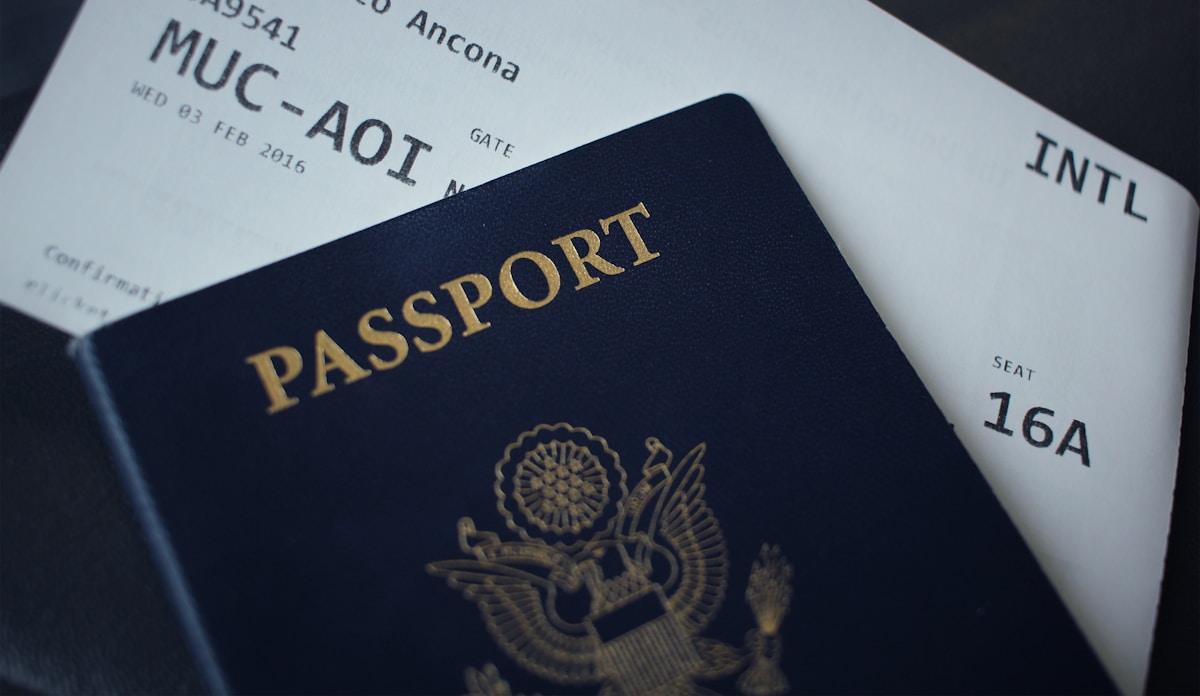
Portugal is a Schengen Area member, meaning it applies the same visa framework as most of the EU. Entry rules depend on your nationality - most Western visitors need no visa for short stays, but longer stays and residency require specific applications. Two major border systems - EES and ETIAS - are also changing how all non-EU visitors enter.
Before You Travel
- Travel insurance: EKTA — covers medical emergencies, trip cancellation, and travel delays. Required documentation for Schengen visa applicants; strongly recommended for all visitors.
- eSIM: Airalo — pre-load data before you land, no physical SIM swap needed.
- Flights: search flights to Portugal — compare fares across carriers.
Quick Reference by Nationality
| Nationality | Visa required? | Maximum stay | Notes |
|---|---|---|---|
| EU / EEA / Switzerland | No | Unlimited | Freedom of movement |
| UK | No | 90 days / 180 | Schengen 90/180 rule; EES registration required |
| USA, Canada, Australia, NZ | No | 90 days / 180 | Schengen 90/180 rule; EES + ETIAS pending |
| Japan, South Korea, Singapore | No | 90 days / 180 | Schengen 90/180 rule |
| Brazil | No | 90 days / 180 | Specific bilateral agreement |
| India, China, Pakistan | Yes | Up to 90 days | Schengen visa required |
| Most African countries | Yes | Up to 90 days | Schengen visa required |
| Russia, Belarus | Yes | Up to 90 days | Schengen visa required |
This table is a general guide - always verify with the Portuguese consulate in your country before travelling. Conditions can change without notice.
EES - Entry/Exit System (Now Operational)
The EU’s Entry/Exit System (EES) began rolling out across Schengen borders in late 2025 and is now operational at Lisbon Humberto Delgado Airport, Porto Francisco Sá Carneiro Airport, and all major land border crossings.
What it means for you: All non-EU/EEA/Swiss travellers must register biometric data (fingerprints and a facial image) on their first entry into the Schengen Area per trip. This is a one-time registration per journey - not a re-entry requirement each time you cross an internal Schengen border.
- Expect additional time at passport control on first entry - Portuguese border officials report first-time registrations taking 2–5 minutes per passenger
- The EES replaces the old paper-stamp system for tracking the Schengen 90/180-day limit
- It does not change visa-free access rights for eligible nationalities
ETIAS - Pre-Travel Authorisation (Coming 2026/2027)
The European Travel Information and Authorisation System (ETIAS) will require visa-exempt non-EU nationals to obtain pre-travel authorisation before entering the Schengen Area. This applies to UK, US, Canadian, Australian, and New Zealand citizens, among others.
Key details (based on current EU Commission information):
- Cost: €7 per application
- Validity: 3 years or until passport expiry
- Application: online only, takes approximately 10 minutes
- Processing: most applications approved within minutes; some take up to 96 hours
ETIAS was not yet active as of the time of writing - confirm the live date and apply at the official eu-ETIAS.com portal before travelling. Do not use third-party websites charging higher fees.
If You Need a Schengen Visa
Nationals without visa-free access must apply for a Schengen visa (category C) through the Portuguese consulate in their country of residence, provided Portugal is the main destination.
Fees (2026): €80 for adults; €40 for children aged 6–11; free for children under 6.
Processing times by consulate:
- UK consulate (London): 15–20 calendar days standard; allow 4–6 weeks in peak season (June–August)
- US consulate (Washington DC / New York): 15–25 calendar days
- India consulate (New Delhi / Mumbai / Chennai): 4–8 weeks - book appointments as far ahead as possible
- China consulate (Beijing / Shanghai): 3–5 weeks
Required documents:
- Valid passport (must be valid for at least 3 months after planned departure)
- Completed application form (downloadable from the consulate website)
- Two recent biometric photos (35mm × 45mm)
- Confirmed travel itinerary and proof of accommodation
- Travel insurance covering at least €30,000 in medical expenses
- Proof of sufficient funds (typically €75/day for the stay, or a valid bank statement)
- Return or onward flight booking
- Proof of employment, self-employment, or study
Embassy and consulate contacts:
| Country | Address | Appointment booking |
|---|---|---|
| UK | Portuguese Consulate General, 11 Belgrave Square, London SW1X 8PP | london.consulado.mne.gov.pt |
| USA (DC) | Embassy of Portugal, 2012 Massachusetts Ave NW, Washington DC 20036 | visasforportugal.mne.gov.pt |
| USA (NY) | Consulate General, 590 Fifth Ave, New York NY 10036 | visasforportugal.mne.gov.pt |
| India | Embassy of Portugal, 13 Sunder Nagar, New Delhi 110003 | newdelhi.embaixada.mne.gov.pt |
Appointment slots fill quickly at all locations. Book as far in advance as possible - the official booking system is at visasforportugal.mne.gov.pt.
EU, EEA, and Swiss Citizens
Citizens of EU member states, the European Economic Area (Norway, Iceland, Liechtenstein), and Switzerland have the right to enter, live, and work in Portugal without a visa or residence permit.
What you need: a valid national ID card or passport. EU citizens do not need formal residence registration for short stays but should register with the local Câmara Municipal (town hall) for stays beyond three months, particularly if taking up employment or registering for healthcare.
UK Citizens (Post-Brexit)
UK citizens lost EU freedom of movement rights on 1 January 2021. The current rules:
- Visa: not required for stays up to 90 days within any 180-day period
- Document: a valid UK passport is required - not just any travel document
- Schengen 90/180 rule: applies across all 26 Schengen countries combined. Time spent in France, Spain, or any other Schengen country counts toward the 90-day total
- EES: biometric registration required at first entry - operational since late 2025
- ETIAS: expected to launch in late 2026 or 2027 - monitor the official eu-ETIAS.com site
- Work: UK citizens cannot work in Portugal on a tourist entry
US, Canadian, Australian, and New Zealand Citizens
Visa-free for stays up to 90 days within any 180-day period. Key practical points:
- The 90 days covers the entire Schengen zone, not just Portugal
- Entry via another Schengen country (e.g., landing in Spain and driving to Portugal) does not reset the clock - time is counted from first Schengen entry
- A return or onward ticket and proof of sufficient funds may be requested at border control
- EES biometric registration is now required at first entry per trip
- ETIAS pre-travel authorisation will be required once the system goes live - check eu-ETIAS.com before your trip
Digital Nomad Visa - D8
Portugal’s D8 Visa is for non-EU remote workers who want to live in Portugal legally for more than 90 days. Requirements as of 2026:
- Minimum monthly income: approximately €4,080/month (4× the Portuguese minimum wage of €1,020/month)
- Valid health insurance covering Portugal
- Portuguese tax number (NIF) - obtainable before arrival via a Portuguese tax representative
- No criminal record
- Proof of remote work contract or self-employment income
Applications go through the Portuguese consulate in your home country. For the full step-by-step process, see our Portugal Digital Nomad Visa guide.
Golden Visa
The Golden Visa grants Portuguese residency through qualifying investment. Following 2023 amendments, real estate purchases no longer qualify in Lisbon, Porto, or coastal areas. Current qualifying routes:
- Fund investment: €500,000 minimum in a qualifying Portuguese investment fund
- Scientific research contribution: €500,000
- Artistic or cultural heritage contribution: €250,000
- Job creation: 10 permanent jobs for Portuguese nationals
After five years, Golden Visa holders can apply for permanent residency or citizenship.
Long-Stay Visas - D7 (Passive Income)
The D7 Visa is for non-EU citizens with sufficient passive income (pensions, rental income, dividends) who wish to reside in Portugal without working. As of 2026:
- Minimum income: approximately €1,020/month (Portuguese national minimum wage), though consulates typically expect 1.5–2× that level in practice (around €1,530–€2,040/month)
- Additional dependants: 50% of the minimum per dependent (around €510/month)
- Actual residency required - holders must spend the majority of their time in Portugal
Staying Longer - AIMA Registration
The Agência para a Integração, Migrações e Asilo (AIMA) - which replaced SEF in late 2023 - handles residence permits, renewals, and immigration matters. For any stay beyond 90 days or any residency application, contact AIMA at aima.gov.pt.
Appointments are in very high demand. Apply online well in advance - waiting times of several months for first appointments are common in Lisbon and Porto.
tours across Portugal - guided experiences from cultural walking tours to day trips from major cities.
an eSIM for Portugal - stay connected from arrival without swapping SIM cards. travel insurance - worth comparing before you leave.
Search hotels in Lisbon on Booking.com to compare rates and availability.
Related Guides
- Portugal Digital Nomad Visa (D8) - full application guide for remote workers wanting to stay beyond 90 days
- Lisbon digital nomad guide - living and working from Lisbon
- Porto digital nomad guide - northern Portugal alternative
- Portugal travel costs - budgeting for your stay
- Solo travel in Portugal - safety, logistics, and planning for solo visitors
- Portugal safety guide - general safety information
- Best time to visit Portugal - month-by-month guide to when to book and what to expect
Travel Insurance
Travel insurance is worth sorting at the same time as your visa — it covers medical treatment, emergency evacuation, and trip cancellation if your plans change before departure. We recommend EKTA for straightforward policies that cover most nationalities travelling to Portugal. A quote takes under five minutes and single-trip cover typically starts from around $30 for a two-week stay.
Plan Your Trip
✈️ Book your flights to Portugal 🛡️ Get travel insurance 📱 Stay connected with an eSIM 🚗 Rent a car