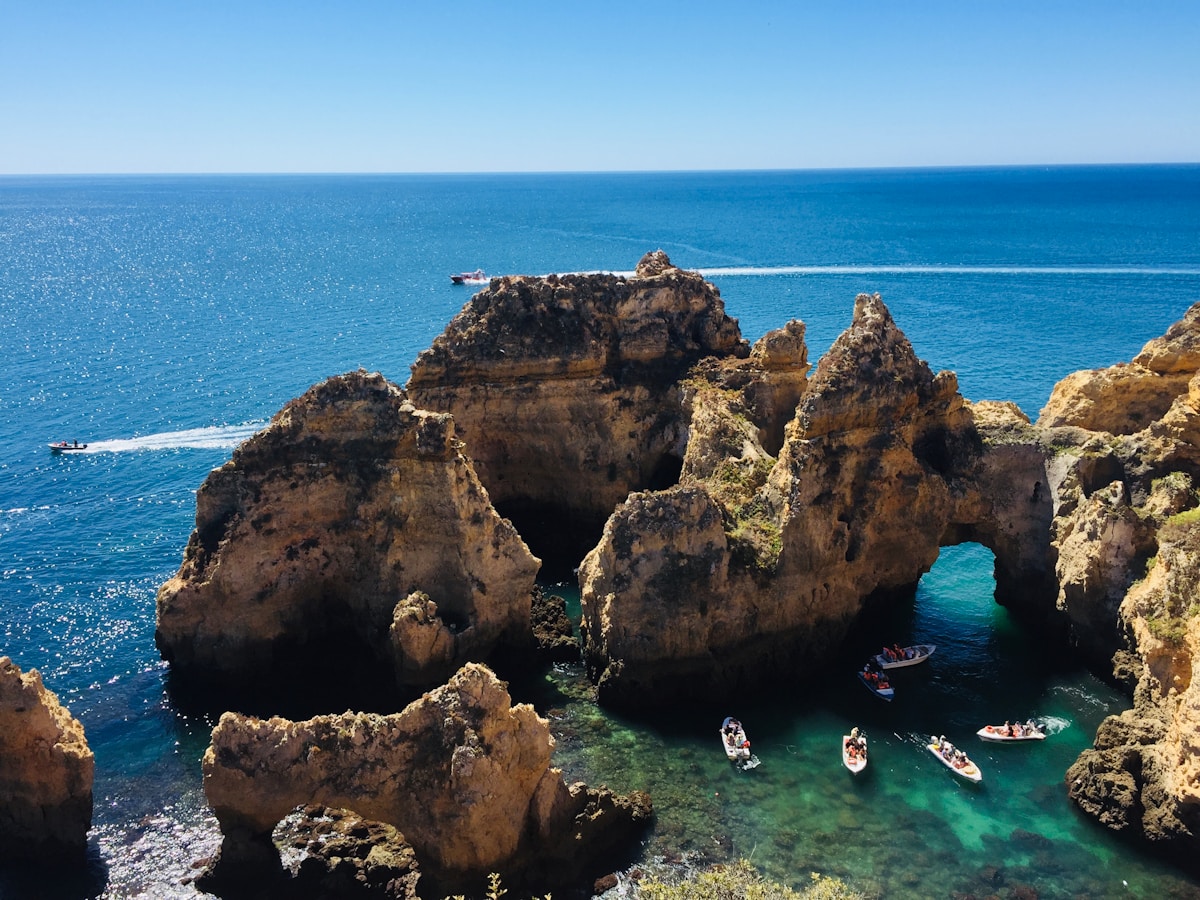
Lagos and Albufeira are the Algarve’s two most popular bases - and they represent distinctly different holidays. Lagos is a genuine Portuguese town with a medieval old town, outstanding nearby beaches, and a traveller-friendly atmosphere that has not entirely lost its local soul. Albufeira is larger, more resort-oriented, and the undisputed nightlife capital of the Algarve. Here is how to choose between them.
Quick Verdict
| Category | Lagos | Albufeira |
|---|---|---|
| Beach scenery | Winner | Good |
| Nightlife | Good | Winner |
| Town character | Winner | - |
| Resort infrastructure | Less | More |
| Family packages | - | Winner |
| Water parks | - | Winner |
| Backpacker culture | Winner | Less |
| Historical charm | Winner | - |
Choose Lagos for scenery, character, and a more balanced mix of beaches, culture, and nightlife. Choose Albufeira for resort infrastructure, dedicated nightlife, and package holiday convenience.
The Towns
Lagos
Lagos has a genuine Portuguese old town - walls, cobbled streets, a 16th-century slave market building (now the Municipal Museum, €3), and a pleasant central square (Praça Gil Eanes) with outdoor café seating. The church of Santo António (€3 together with the museum) has an extraordinary gilded Baroque interior. The town has a mix of Portuguese locals, long-term expat residents, backpackers, and families - an unusual demographic spread that gives Lagos a more interesting street life than a purely resort town.
The marina is a busy hub for boat tours to the sea caves and grottos at Ponta da Piedade - every major operator offers 45-minute to 2-hour trips from €15–35 per person depending on tour length. Kayaking tours leave from the same area from €25–35 per person. The most established boat tour operators at Lagos marina are Sea Xpert Lagos (standard cave circuit, €15–20/person, no booking needed for the basic route) and Algarve Boat Trips (longer circuit including Praia do Camilo, €20–25/person). For kayaking, Lagos Kayak runs twice-daily guided paddles inside the Ponta da Piedade caves at approximately €35/person; book the day before from June through August as these groups fill. The 45-minute motorboat tour is the minimum meaningful cave experience — the 90-minute version adds Praia do Camilo and the Lagos coastline north of the headland and is worth the extra €10.
Albufeira
Albufeira’s historic Old Town (Cidade Velha) has whitewashed houses, a cliffside tunnel to the main beach, and a handful of genuine Portuguese restaurants around the central square. But the town’s identity is shaped more by the entertainment strip and surrounding hotel developments than its original character. Albufeira is less compact than Lagos - the resort strip stretches several kilometres, and the Oura entertainment zone (2 km east) is effectively a separate district.
The waterpark infrastructure is a significant practical advantage: Slide & Splash (near Lagoa, 20 minutes west) is one of Europe’s largest, with day tickets approximately €30 for adults and €22 for children under 12. Aquashow (near Quarteira, 20 minutes east) is another large option. These make Albufeira a natural base for families with younger children who want waterpark days.
Beaches
Lagos beaches range from the sheltered and family-friendly to the genuinely spectacular.
- Meia Praia: 5 km of gently shelving sand east of Lagos town, sheltered from Atlantic swell. Water sports hire available. A small beach train runs from the marina in summer. One of the Algarve’s best family beaches.
- Praia Dona Ana: 15-minute walk south of the town centre, small cove with golden rock formations. Very photogenic but gets extremely crowded in July–August - go early.
- Praia do Camilo: Steps down a cliff to a narrow cove with extraordinary rock formations. Crowds arrive by 10am in summer; arrive at 8am for the full experience.
- Ponta da Piedade: Not a swimming beach but the sea caves and rock stacks here are the Algarve’s most photogenic coastal feature. Accessible by boat tour, kayak, or a 30-minute walk from the town centre.
Albufeira beaches:
- Praia dos Pescadores (Old Town beach): Sheltered, central, good facilities. Busy from June to September but manageable.
- Praia da Falésia: 15 minutes east of Albufeira by taxi or bus - arguably the Algarve’s most striking beach beyond the western caves, with 6 km of sand backed by red ochre and white sandstone cliffs up to 30m high. Fewer crowds than town-centre beaches.
- Praia de São Rafael: A sheltered cove with rock formations west of Albufeira, accessible by bus or taxi (10 minutes).
Winner: Lagos for beach scenery and character; Albufeira for Falésia’s dramatic cliffs.
Cost
Both towns are mid-Algarve pricing - neither is the cheapest nor most expensive in the region.
Lagos: A mid-range apartment or hotel in the town centre or near the beaches runs €90–150/night in shoulder season (May–June, September), rising to €180–280 in peak July–August. Restaurant mains in the old town run €14–22. A boat trip to Ponta da Piedade costs €15–25 depending on the operator and tour length.
Albufeira: Similar mid-range accommodation runs €100–160/night in shoulder, €200–320 in peak. The Old Town restaurants are moderately priced; the Strip restaurants are tourist-menu territory (€12–18 for mediocre food). Slide & Splash day tickets add to the budget (€30 adult, €22 children).
Both towns are substantially less expensive than major Portuguese cities for accommodation, and food is good value by Northern European standards.
See our Portugal travel costs guide and Algarve road trip itinerary for a fuller picture.
Nightlife
Albufeira has the Algarve’s most concentrated nightlife. The Old Town Strip - Rua Cândido dos Reis and surrounding streets - has dozens of bars running from 9pm to 4–5am. The Oura Strip 2 km east is more aggressive: flashing signs, shots promotions, loud music from the street. It is popular with UK package tourists and British stag and hen parties. If this is what you want, Albufeira does it well. If it is not, stay elsewhere.
Lagos has a livelier nightlife scene than Algarve towns like Tavira or Sagres, but it is dramatically smaller than Albufeira’s. Rua Soeiro da Costa has a concentration of backpacker bars. Stevie Ray’s and Ferramenta are long-standing music bars. The crowd is more international and diverse, less orientated around British package tourism.
Winner: Albufeira for dedicated nightlife; Lagos for a more mixed and relaxed evening scene.
Accommodation
Lagos has a mix of independent guesthouses, boutique hotels, and hostels:
- Cascade Wellness Resort: The most luxurious option near Lagos (5km from the old town), with pools, spa, and golf; from €250/night in shoulder season
- Lagos Avenida Hotel: Well-located four-star in the old town; from €120/night
- Hospedaria Caravela: Guesthouse in the old town; from €80/night
Search hotels in Lagos — book 6–8 weeks ahead for July and August, when old town options at €100–140/night sell out quickly. The marina district and Meia Praia road have newer apartment-style properties that can work out cheaper than hotels for groups of three or more.
Albufeira skews more toward large resort hotels and all-inclusive options:
- Salgados Palace: Large five-star all-inclusive east of Albufeira; from €200/night all-inclusive
- Hotel Bellevue: Mid-range, central Old Town location; from €100/night
- NAU Morgado Golf & Country Club: Golf resort complex near Portimão; from €150/night
Search hotels in Albufeira — the Old Town area has fewer options than the hotel strip east toward Oura, but it’s quieter and closer to the beach tunnel and restaurants. The all-inclusive resorts around Salgados (3km east) represent better value for families than paying restaurant prices during a week-long peak stay.
Booking strategy: Both towns sell out their best mid-range accommodation by May for July–August. For shoulder season (May–June, September), booking two to three weeks ahead is usually sufficient. The biggest price swing is between June and July — a hotel at €120/night in June can run €200+ in the first week of August.
Getting Around
Lagos is compact enough to walk everywhere central, though the beach of Meia Praia requires a taxi or the seasonal beach train. The train station is 5 minutes’ walk from the old town. Regional buses connect Lagos to Sagres (45 min, €4) and Portimão (25 min, €2.90).
Albufeira’s sprawl makes transport more important. Local buses connect the Old Town, Oura, and the hotel zones. Taxis and Uber are readily available. The Albufeira train station is 6 km north of town - a taxi costs approximately €8–10.
A hire car is useful in both towns if you plan to explore beaches beyond walking distance. See our car hire Portugal guide for booking advice.
When to Visit
Both towns follow the same Algarve pattern: May–June and September–October are the best months - warm, sunny, and post-peak crowds. July and August are maximum heat and maximum crowds; Albufeira in particular becomes extremely busy. In June the daytime temperature averages 26°C with very low humidity, making it ideal.
The Algarve region guide covers the full western and eastern Algarve for planning context.
If you’re heading to lagos, tours in Lagos covers guided experiences and day trips. For albufeira.md, tours across Portugal has the same.
car hire in Portugal is the most practical way to combine both destinations without relying on bus timetables.
Combining Lagos and Albufeira
The two towns are 65 km apart by road — approximately 55 minutes by car or 90 minutes by bus via Portimão. On a week-long Algarve trip, it is straightforward to base yourself in one and make a day trip to the other, or to split your accommodation.
Suggested split (7 nights): 4–5 nights in Lagos (main focus: cliff beaches, town character, boat tours to Ponta da Piedade) + 2–3 nights in Albufeira (for Falésia beach, the Old Town restaurant scene, and an evening on the Strip). This direction tends to work better than the reverse because Lagos offers more variety over multiple days — Albufeira can feel repetitive by the third night for travellers who are not specifically there for nightlife.
Day trip logistics: Regional buses connect Lagos and Albufeira via Portimão roughly every 90 minutes. The bus takes approximately 90 minutes and costs around €5.90. A hire car makes the day trip straightforward and opens up the coastline between the two towns — Carvoeiro, Algar Seco, and Praia de Benagil (the cave beach) are all en route and worth stopping for. See our car hire Portugal guide for booking advice.
Final Verdict
Lagos is the more complete destination - better for cultural interest, more characterful, and with the Algarve’s most photogenic coastline directly accessible. It suits travellers, backpackers, couples, and families who want more from a holiday than sun and parties.
Albufeira is the better choice for package holidays, all-inclusive resorts, dedicated nightlife, and families who want a waterpark on their doorstep. The resort infrastructure is more extensive and the Strip delivers a specific kind of holiday reliably.
They are different products - choose based on which you actually want.
More Portugal Comparisons
- Faro vs Lagos — gateway city versus beach capital of the western Algarve
- Lagos vs Sagres — the western Algarve coast: how far west to go
- Tavira vs Lagos — the elegant eastern Algarve versus the dramatic west
- Is the Algarve Worth It? — the honest verdict on what the Algarve delivers
Plan Your Trip
✈️ Book your flights to Portugal 🛡️ Get travel insurance 📱 Stay connected with an eSIM 🚗 Rent a car