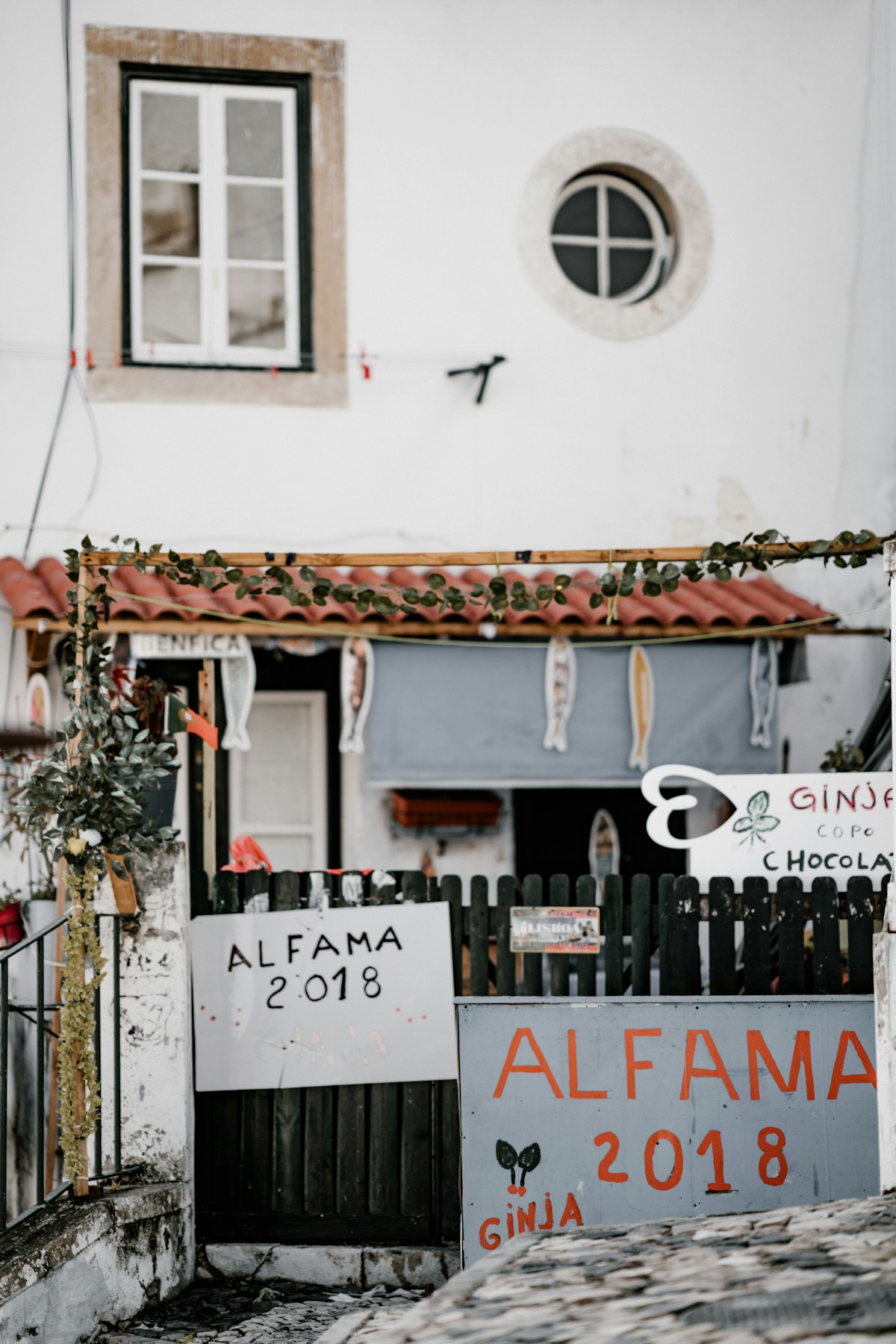
European Portuguese sounds quite different from its Brazilian cousin - the vowels are more clipped, consonants are softer, and the rhythm is faster. Portugal has high English proficiency in Lisbon, Porto, and the Algarve, but stepping into the Alentejo countryside or northern villages, you will find Portuguese is the only option. The language uses the Latin alphabet with a few accented characters, and once you grasp the nasal vowels, pronunciation becomes more predictable.
Greetings and Basics
| English | Portuguese | Pronunciation |
|---|---|---|
| Hello | Olá | oh-LAH |
| Good morning | Bom dia | bom DEE-ah |
| Good afternoon | Boa tarde | BOH-ah TARD |
| Good evening | Boa noite | BOH-ah NOYT |
| Goodbye | Adeus | ah-DAY-oosh |
| Yes / No | Sim / Não | SEEM / NOWNG |
| Please | Se faz favor / Por favor | seh fahz fah-VOR / por fah-VOR |
| Thank you (m/f) | Obrigado / Obrigada | oh-bree-GAH-doo / oh-bree-GAH-dah |
| Excuse me | Com licença | kom lee-SEN-sah |
| I don’t understand | Não compreendo | nowng kom-pree-EN-doo |
| Do you speak English? | Fala inglês? | FAH-lah in-GLAYSH |
Getting Around
| English | Portuguese | Pronunciation |
|---|---|---|
| Where is…? | Onde fica…? | OND fee-kah |
| How much does it cost? | Quanto custa? | KWAN-too KOOSH-tah |
| Left / Right | Esquerda / Direita | esh-KAIR-dah / dee-RAY-tah |
| Straight ahead | Em frente | em FRENT |
| Stop here | Pare aqui | PAH-reh ah-KEE |
| Train station | Estação de comboio | esh-tah-SOWNG deh kom-BOY-oo |
| Airport | Aeroporto | ah-eh-roh-POR-too |
| Bus | Autocarro | OW-too-KAH-roo |
| Tram | Eléctrico | eh-LEH-tree-koo |
| A ticket, please | Um bilhete, se faz favor | oom bil-YET, seh fahz fah-VOR |
Food and Dining
| English | Portuguese | Pronunciation |
|---|---|---|
| I would like… | Queria… | keh-REE-ah |
| Water | Água | AH-gwah |
| Wine (red / white) | Vinho (tinto / branco) | VEEN-yoo (TEEN-too / BRAN-koo) |
| Coffee (espresso) | Um café | oom kah-FEH |
| Fish | Peixe | PAY-sh |
| Chicken | Frango | FRAN-goo |
| The bill, please | A conta, se faz favor | ah KON-tah, seh fahz fah-VOR |
| Delicious | Delicioso | deh-lee-see-OH-zoo |
| Bread | Pão | POWNG |
| Cod | Bacalhau | bah-kahl-YOW |
Numbers
| Number | Portuguese | Pronunciation |
|---|---|---|
| 1 | Um / Uma | OOM / OO-mah |
| 2 | Dois / Duas | DOYSH / DOO-ahsh |
| 3 | Três | TRAYSH |
| 4 | Quatro | KWAH-troo |
| 5 | Cinco | SEEN-koo |
| 6 | Seis | SAYSH |
| 7 | Sete | SET |
| 8 | Oito | OY-too |
| 9 | Nove | NOV |
| 10 | Dez | DESH |
tours across Portugal covers guided experiences across Portugal - from cultural walking tours to day trips from major cities.
an eSIM for Portugal is a straightforward way to stay connected throughout the country. travel insurance is worth comparing before departure.
Emergency Phrases
| English | Portuguese | Pronunciation |
|---|---|---|
| Help! | Socorro! | soh-KOH-roo |
| I need a doctor | Preciso de um médico | preh-SEE-zoo deh oom MEH-dee-koo |
| Police | Polícia | poh-LEE-see-ah |
| Hospital | Hospital | osh-pee-TAL |
| I am lost | Estou perdido/a | esh-TOH per-DEE-doo/dah |
| Emergency | Urgência | oor-JEN-see-ah |
European Portuguese has a few sounds that catch English speakers off guard. The “ão” ending (as in não and pão) is a nasal sound - try saying “owng” through your nose. Final “s” and “z” are pronounced “sh” (so dez sounds like “desh”). Unstressed vowels are often swallowed almost entirely, which is why spoken Portuguese can sound like a Slavic language to untrained ears. Do not let this intimidate you - Portuguese people are patient and encouraging, and even a stumbling bom dia at the pastelaria will earn you a warmer reception than jumping straight to English. For a broader introduction to customs, dining etiquette, cafe culture, and the concept of saudade, see our Portuguese culture guide. For trip planning, our guide to Portugal travel costs covers what to budget, and visa requirements for Portugal explains entry rules by nationality. For the best time to travel, see when to visit Portugal.
Plan Your Trip
🏨 Search hotels in Lisbon on Booking.com
✈️ Book your flights to Portugal 🛡️ Get travel insurance 📱 Stay connected with an eSIM 🚗 Rent a car