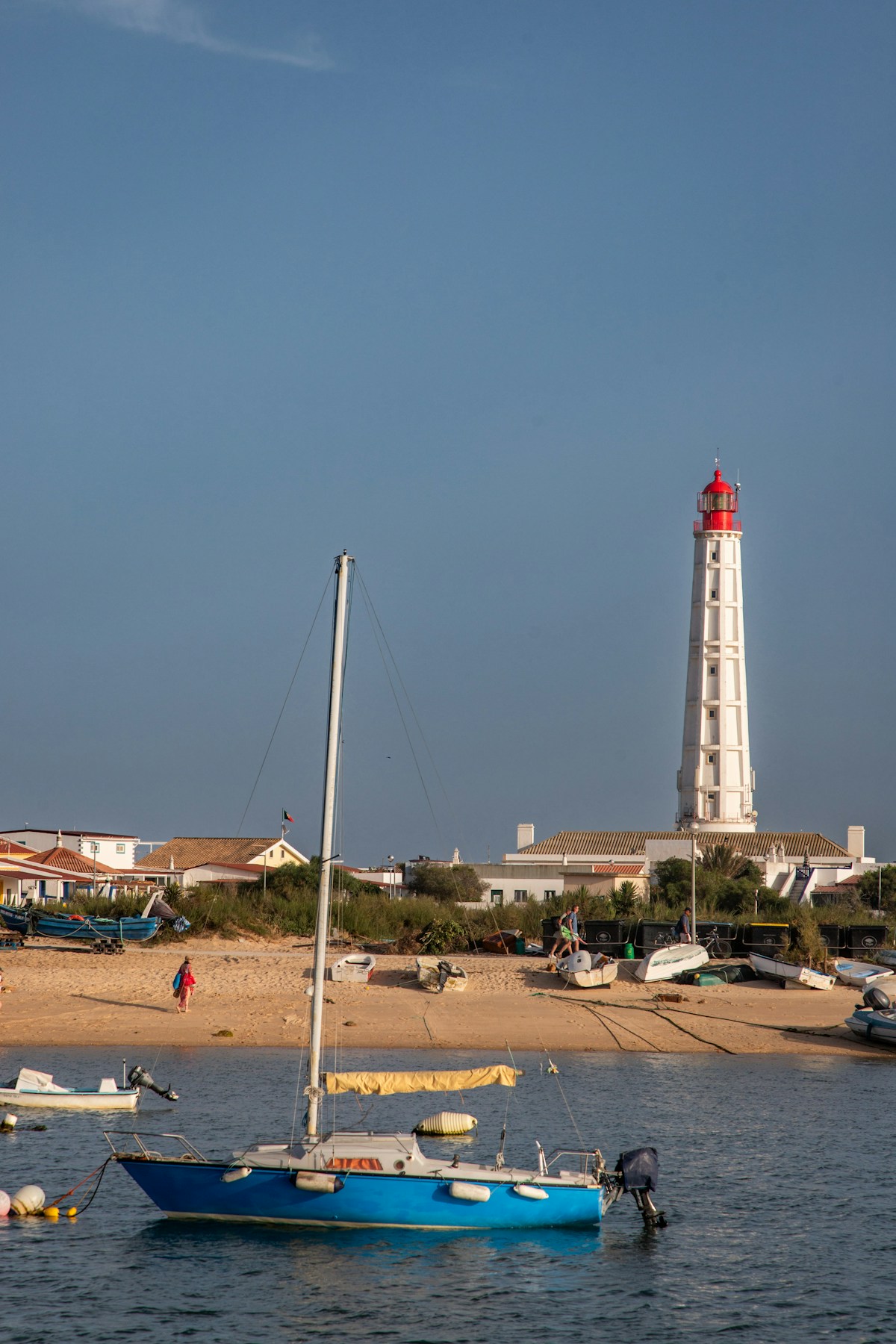
Faro and Lagos are both in the Algarve and both connected by rail and road, but they have distinctly different characters and suit different kinds of travellers. Faro is the Algarve’s regional capital - understated, genuinely Portuguese, and often treated purely as an airport transit point (which does it a disservice). Lagos is the Algarve’s most popular independent traveller base - a walled old town with outstanding beaches, a strong restaurant scene, and more nightlife than Faro.
Quick Verdict
| Category | Faro | Lagos |
|---|---|---|
| Beach scenery | Good (barrier islands) | Winner |
| Old town | Winner | Good |
| Transport hub | Winner | - |
| Eastern Algarve access | Winner | - |
| Western Algarve access | - | Winner |
| Nightlife | Limited | Winner |
| Tourist numbers | Fewer | More |
| Airport proximity | Winner (on-site) | 1 hour away |
Choose Faro if you want a genuine Portuguese city base, easy access to the Ria Formosa islands, and fewer tourists. Choose Lagos if you want dramatic beaches, a more active social scene, and a base for the western Algarve and surf towns.
The Cities
Faro
Faro is the administrative capital of the Algarve and home to around 64,000 people - large enough to have a university, a working marina, and a genuine local life beyond tourism. The Cidade Velha (Old Town) sits within medieval walls on the edge of the Ria Formosa lagoon. The Sé Cathedral (€3.50) dates from the 13th century with significant Baroque alterations; climbing the tower rewards with panoramic views over the lagoon and barrier islands. The Museu Municipal (€2) is housed in the former Convent of Our Lady of the Assumption and has a worthwhile archaeological collection.
Beyond the old town, Faro has a busy pedestrian shopping street (Rua de Santo António), a pleasant marina area, and the Horta das Figuras wetlands for birdwatching. The city is rarely on tourist shortlists but rewards those who spend a day exploring rather than rushing to their hotel.
Lagos
Lagos has a history that belies its current reputation as a backpacker and beach holiday destination. The town was a significant Portuguese port during the Age of Discovery - Vasco da Gama and Gil Eanes set sail from here, and the Slave Market building (Mercado de Escravos, now the Municipal Museum, €3) is Europe’s first slave market, built in 1444. The old town walls enclose a compact and attractive centre with the Igreja de Santo António (€3, gilded Baroque interior) as its architectural highlight.
The marina is the departure point for boat tours to Ponta da Piedade and the sea caves - dozens of operators run these from €15–20 per person for a 45-minute trip to €35–50 for a longer kayak tour. The most reliable operators are Sea Xpert Lagos (motorboat cave tours, €15–20/person, departs roughly every 30 minutes in summer from the marina pier) and Algarve Boat Trips (slightly longer route including Praia do Camilo arch and Grutas de Ponta da Piedade, €20–25/person). Kayak tours — which allow you to enter the caves under your own power — run from Lagos Kayak and Kayaking the Algarve from approximately €35/person for a 2.5-hour guided paddle, including time inside the main cave arches. Book kayak tours at least a day ahead from June through August; motorboat tours can usually be arranged on arrival at the marina kiosk.
Evening in the old town is pleasant - outdoor restaurant seating, a backpacker bar scene, and a genuinely mixed crowd of Portuguese, European, and international travellers.
Beaches
Faro’s beaches are a ferry or taxi-boat ride away. The Ria Formosa Natural Park’s barrier island beaches - Ilha de Faro (connected by road bridge, 10 minutes), Ilha Deserta (ferry from Faro marina, approximately 20 minutes, €8–12 return), and Ilha Barreta - are some of the least crowded in the Algarve. Ilha Deserta in particular has a nearly untouched 10 km stretch of sand. Ferries run frequently in summer from Faro’s Cais da Porta Nova.
Lagos’s beaches are better-known and more dramatic:
- Meia Praia: 5 km long, gently shelving, sheltered from Atlantic swell; water sports hire available
- Praia Dona Ana: Golden rock formations, small cove; 15-minute walk from the centre
- Praia do Camilo: Reached by cliff steps; extraordinary rock formation backdrop
- Ponta da Piedade sea caves: Not a swimming beach but Portugal’s most photographed coastal feature, accessible by boat from the marina (€15–25) or kayak tour (€25–35)
Winner: Lagos for beach quality and scenery; Faro for quieter, less-visited beaches.
Food
Faro has a more local-facing restaurant scene than Lagos. The Marina area and the streets around Rua de Santo António have fish restaurants patronised by residents rather than tourists - the difference in price and quality is noticeable. The Tasca da Verónica (petiscos and wine, approximately €15–20 per person) and the Restaurante Bivar (traditional Algarve seafood, mains €14–20) are both reliable. The covered Mercado Municipal (open mornings until early afternoon) has good fish, vegetables, and local produce.
Lagos has more variety: from the traditional tascas near the slave market to a solid mid-range restaurant scene around Rua Afonso d’Almeida. The waterfront has tourist-facing restaurants (better for views than food); better value is found two streets back. The Portuguese food guide covers Algarve food traditions in more detail.
Winner: A draw - Faro for authenticity; Lagos for variety.
Transport
Faro is unquestionably the better transport hub. Faro International Airport handles direct flights from across the UK, Ireland, Germany, and Northern Europe year-round; Ryanair, easyJet, Jet2, and TUI all operate extensive schedules. The airport is 5 km from Faro city centre (€10–15 by taxi, or a 30-minute walk/bus).
From Faro, the rail line connects east to Tavira (30 min, €3.20) and west toward Lagos (1h45 with change). The bus station is adjacent to the train station and connects the full Algarve. Car hire desks at the airport make Faro the natural starting point for any Algarve road trip.
Lagos’s train station is 5 minutes from the old town. Direct trains to Portimão (25 min), Faro (1h45 with change), and Lisbon (approximately 3.5–4 hours) make it well connected, but the western terminus of the rail line means less flexibility than Faro.
See our car hire Portugal guide for hire car booking strategy.
Winner: Faro for transport connections.
Cost
Both towns are comparable in price, but Faro edges slightly cheaper due to fewer tourists and a higher proportion of local-facing businesses.
Faro: Mid-range hotel or guesthouse in or near the old town runs €80–130/night. Restaurant mains €12–18 at local restaurants; tourist area mains €15–22. Very few premium luxury options - the Eva Senses Hotel (four-star, from €120/night) and the Hotel Sol e Mar (from €90/night) are the best mid-range options.
Lagos: Mid-range hotels €90–150/night in shoulder season, €180–280 in peak July–August. Restaurants €14–22 for mains. The Cascade Wellness Resort (upscale, 5 km from town, from €250/night) is the area’s top luxury option. For mid-range stays in the old town, search hotels in Lagos — options in the €100–140 range near the marina and Praça Gil Eanes fill quickly in July and August, so book at least 6–8 weeks ahead for peak season.
Winner: Faro for budget-conscious travellers; Lagos for the broader range of accommodation options.
Who Should Choose Each?
Choose Faro if you:
- Fly into Faro Airport and want to base yourself near the airport (with genuine things to see nearby)
- Want to explore the eastern Algarve (Tavira, Olhão, the Ria Formosa)
- Prefer a real Portuguese city with local life over a tourist-oriented resort town
- Want quieter beaches with fewer fellow tourists
Choose Lagos if you:
- Want the most scenic Atlantic beaches in the western Algarve
- Plan to explore towards Sagres, Aljezur, and the Vicentina coast
- Enjoy some evening nightlife alongside beach days
- Are travelling as a backpacker or independent traveller on a social budget
If you’re heading to Faro, tours in Faro covers guided experiences and day trips. For Lagos, tours in Lagos has the same.
car hire in Portugal is the most practical way to combine both destinations without relying on bus timetables.
Final Verdict
Faro and Lagos are not really competing - they appeal to different travellers and are best thought of as complementary rather than interchangeable. First-time Algarve visitors who want beaches and drama should go to Lagos. Travellers seeking an authentic regional capital with barrier-island beaches and fewer crowds will find Faro genuinely rewarding.
For a week-long Algarve trip with a hire car, a combination works well: arrive at Faro airport, spend a day or two in Faro (old town, Ria Formosa), drive to Lagos for the beaches and western Algarve exploration, and drive back to Faro to fly home. The Algarve road trip itinerary links both towns in a logical circuit.
More Portugal Comparisons
- Lagos vs Albufeira — the western Algarve’s two most visited towns
- Lagos vs Sagres — how far west to push along the Algarve coast
- Tavira vs Lagos — the elegant eastern Algarve versus the dramatic west
- Lisbon vs Algarve — city culture versus the classic beach holiday
Plan Your Trip
✈️ Book your flights to Portugal 🛡️ Get travel insurance 📱 Stay connected with an eSIM 🚗 Rent a car