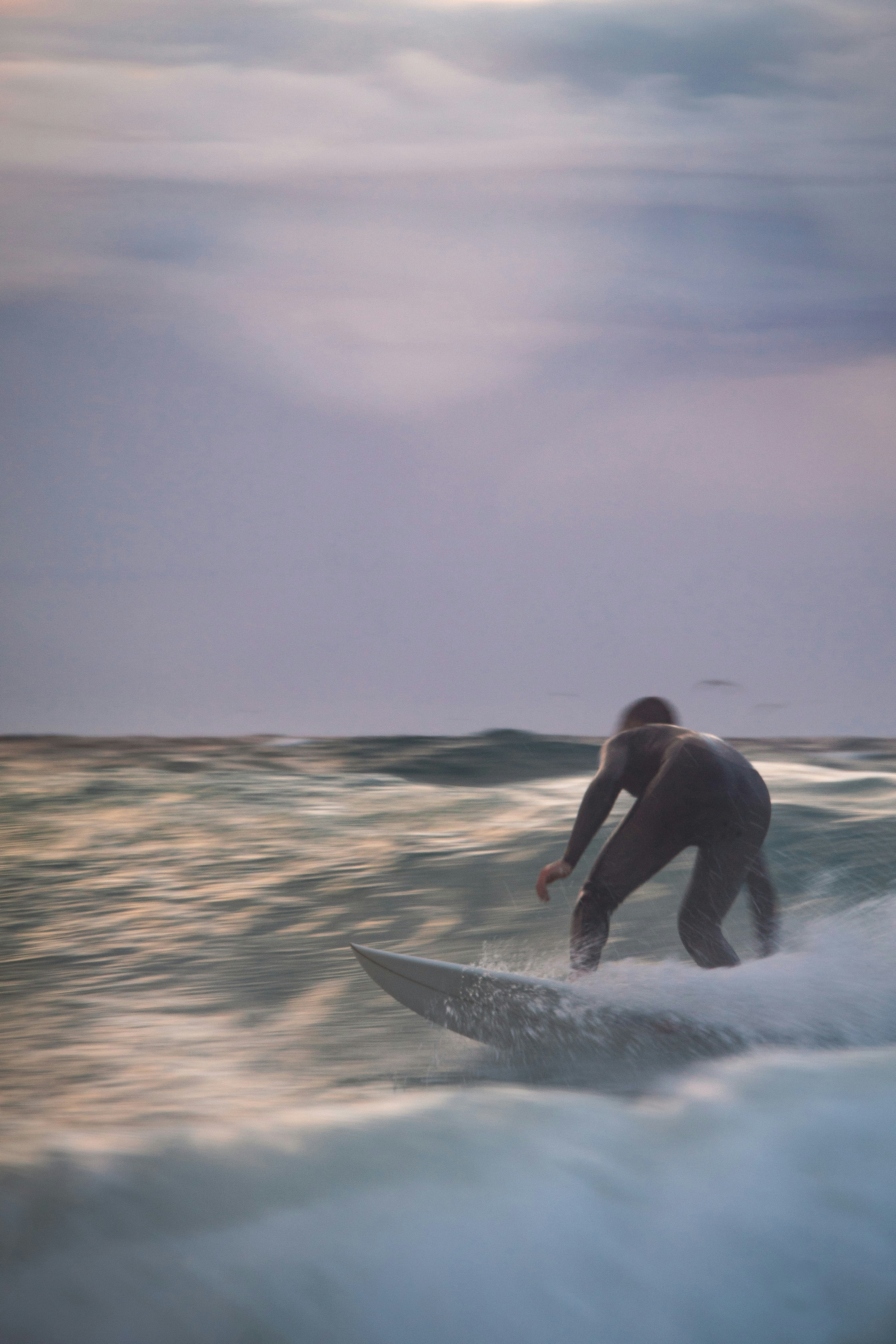
Portugal has roughly 800km of Atlantic coastline and more consistent surf than anywhere else in continental Europe. The North Atlantic delivers swells year-round, but the quality, size, and conditions vary significantly by month - and by region. A surfer who thrives at Peniche in November would struggle at the same spot in July, and vice versa.
This guide breaks down the surf season by month and by region, with wave height ranges, water temperatures, crowd levels, and a verdict on who each period suits best.
The short version: when to go and why
| Month | Avg swell (Silver Coast) | Water temp | Crowds | Best for |
|---|---|---|---|---|
| Jan | 2.0–3.5m | 14–15°C | Low | Advanced |
| Feb | 2.0–3.0m | 14°C | Low | Advanced |
| Mar | 1.5–2.5m | 14–15°C | Low–Med | Intermediate+ |
| Apr | 1.2–2.0m | 15–16°C | Low–Med | Intermediate |
| May | 0.8–1.5m | 16–17°C | Med | Beginners–Intermediate |
| Jun | 0.5–1.2m | 18–20°C | High | Beginners |
| Jul | 0.5–1.0m | 20–22°C | Very high | Beginners |
| Aug | 0.5–1.2m | 21–22°C | Very high | Beginners |
| Sep | 1.0–2.0m | 19–21°C | Med | All levels |
| Oct | 1.5–2.5m | 18–19°C | Med | All levels (best) |
| Nov | 2.0–3.0m | 16–17°C | Low | Intermediate+ |
| Dec | 2.0–3.5m | 15–16°C | Low | Advanced |
Swell heights above refer to open-ocean wave faces at Silver Coast breaks. Sheltered spots and beach breaks will be smaller; exposed reef breaks can be notably larger.
Month-by-month breakdown
January–February: big, cold, quiet
These are the biggest swell months of the year. Nazaré can receive waves exceeding 20m on the right North Atlantic storm swells. Peniche and Ericeira are working with 2–3m+ faces regularly. Water temperature drops to 14°C - a 4/3mm wetsuit with gloves and boots is standard.
Crowds are minimal because the casual surf tourist has gone home. Local surfers, pro teams, and dedicated intermediates-and-above have the line-up largely to themselves. If you’re comfortable in serious surf and cold water, January and February offer some of the best uncrowded conditions in Europe.
Beginners: avoid this period. The combination of powerful swell, strong rip currents, and cold water makes it genuinely unsafe for learners without close supervision.
March–April: the shoulder season
Swells ease off slightly but remain powerful (1.5–2.5m on average). Water warms a degree or two - from 14°C in March to around 16°C by late April. A 3/2mm full wetsuit is comfortable for most sessions.
This is excellent for intermediates. Peniche’s Supertubos and Ericeira’s Ribeira d’Ilhas are working at rideable size without the ferocity of January. Prices for accommodation and surf lessons are lower than peak season, and lineups are uncrowded.
For beginners, the later weeks of April start to become viable - swell is still consistent but there are more manageable days at Baleal (Peniche) and Foz do Lizandro (Ericeira).
May: the transition month
May is often the most under-rated month in Portugal’s surf calendar. Swell size drops to a more accessible 0.8–1.5m, water warms to 16–17°C, and crowds haven’t yet arrived. It’s the ideal month for someone progressing from beginner to intermediate - enough wave to practice on, not so much that the line-up is intimidating.
Surf schools ramp up to full capacity in May. Lessons are available daily at Peniche, Ericeira, Sagres, and Arrifana. Equipment hire is straightforward at any of the established surf towns.
June–August: peak summer
Portugal’s most popular surf months among tourists are, paradoxically, its least productive in terms of wave quality for experienced surfers. Swell typically drops to 0.5–1.2m with long, slow periods - ideal for learners but frustrating for anyone who wants performance waves.
Water temperature peaks at 20–22°C on the Silver Coast and up to 23°C in the Algarve. A light shorty or even a rash vest is sufficient for the warmest days in August. The Algarve’s Atlantic-facing spots (Arrifana, Odeceixe, Praia do Amado) hold slightly larger swell than the main Silver Coast breaks in summer.
The trade-off: lineups at Baleal, Carcavelos, and Ribeira d’Ilhas are at their most crowded. Beginner surf schools are running back-to-back lesson groups. Book camps and lessons in advance - popular schools at Peniche and Ericeira sell out in July and August.
For experienced surfers, the Algarve and the far north (Viana do Castelo, Moledo) offer slightly better alternatives, but summer in Portugal is broadly a period of small, crowded surf.
September–October: the sweet spot
September and October are the most consistently recommended months by both surf schools and visiting surfers. The summer crowds have thinned, Atlantic swells return with energy, and water temperature stays warm enough (18–21°C in September, 17–19°C in October) that a 3/2mm full suit is adequate.
October in particular delivers what many consider the ideal balance: consistent 1.5–2.5m swell, mild water, low tourist crowds, and reasonable accommodation prices. The surf schools continue running but with smaller groups. Ericeira and Peniche are both surfable at quality right-hand reef peaks without the intimidating size of winter.
For groups of mixed ability, October is the most practical month - beginners and advanced surfers can both find appropriate conditions.
November–December: the winter returns
Swell builds back toward winter scale. November is still manageable for confident intermediates - the biggest swells of November average around 2–3m but are less frequent than December or January. Water drops to 16°C in November and 15°C in December - a 4/3mm is appropriate by mid-November.
December marks the start of big-wave season. Nazaré typically sees its first XXL swell events in late November or December. Peniche’s Supertubos starts producing the kind of powerful barrels that attract European pros.
If you’re an advanced surfer and you want the best waves with the least fuss, November is arguably better than January - waves of similar quality but slightly warmer water and slightly fewer storm days that close out the breaks entirely.
Region-by-region differences
Silver Coast (Ericeira, Peniche, Carcavelos)
This is the core of Portuguese surf - directly exposed to North Atlantic swell, consistent year-round, with established surf infrastructure. Ericeira’s World Surfing Reserve reefs work best in autumn and winter (October–February). Peniche is more forgiving and better for beginners even in spring. Carcavelos, just outside Lisbon, is the most accessible but most crowded spot.
Alentejo / Costa Vicentina (Odeceixe, Arrifana, Bordeira)
Exposed to swell from both north and south-west, this stretch of the Alentejo coast picks up size more consistently than the Algarve in summer. Arrifana is a right-hander on a headland that works across the widest range of swells. Less developed than the Silver Coast - fewer surf schools, smaller crowds. Good from April to November.
Algarve (Sagres, Amado)
Sagres and Praia do Amado are the best surf spots in the Algarve, sitting on the south-west tip where the Atlantic meets the southern coast. They work when the Silver Coast is too big or too crowded. Water is warmest here. Best from May to October; winter storms can create unsurfable conditions more frequently than further north.
North (Viana do Castelo, Moledo, Espinho)
Portugal’s northern surf coastline is consistent and uncrowded but colder - water rarely exceeds 18°C even in summer, and beach breaks are more exposed to northerly winds. The best conditions tend to be autumn and early winter. Less surf infrastructure means fewer schools and hire options.
What to pack by season
May–September: 3/2mm or 2mm full suit, or shorty in August. Reef boots optional. October–November: 3/2mm full suit - 4/3mm if you run cold. December–April: 4/3mm minimum. Gloves and booties below 15°C (January–February). Sunscreen: year-round. Atlantic reflections are strong even in winter.
A good starting point for gear is to ask your surf school or camp - most provide wetsuits as part of lesson packages and can advise on the week’s swell forecast and what thickness suits current conditions.
Planning your surf trip to Portugal
For guided surf lessons, surf camps, and organised ocean activities across Portugal’s main breaks, tours in Portugal cover everything from beginner group lessons at Peniche to advanced coaching sessions at Ericeira.
Travel insurance that covers water sports activity is worth arranging before departure — travel insurance for Portugal covers surfing under standard activity cover for most policy tiers.
A Portuguese eSIM is useful for checking live surf forecasts (Windguru, MagicSeaweed, Surfline) on location without relying on roaming charges or patchy beach-side Wi-Fi.
Further Reading
If you’re choosing between Portugal’s two main surf hubs, Ericeira vs Peniche runs through the differences in wave quality, access, and town character. For beginners heading to either location, our beginner surfing in Portugal guide covers what to book and what to expect from your first sessions. For accommodation and pricing across all regions, our surf camps in Portugal guide covers Ericeira, Peniche, Sagres and the Algarve with current prices and what each region suits best.
Plan Your Trip
🏨 Search hotels in Portugal on Booking.com
- Flights - Find the best fares to Portugal
- Travel Insurance - Get covered before you go
- eSIM - Stay connected from landing
- Car Rental - Compare prices across providers
See also: Beginner surfing in Portugal · Ericeira vs Peniche · Best time to visit Portugal