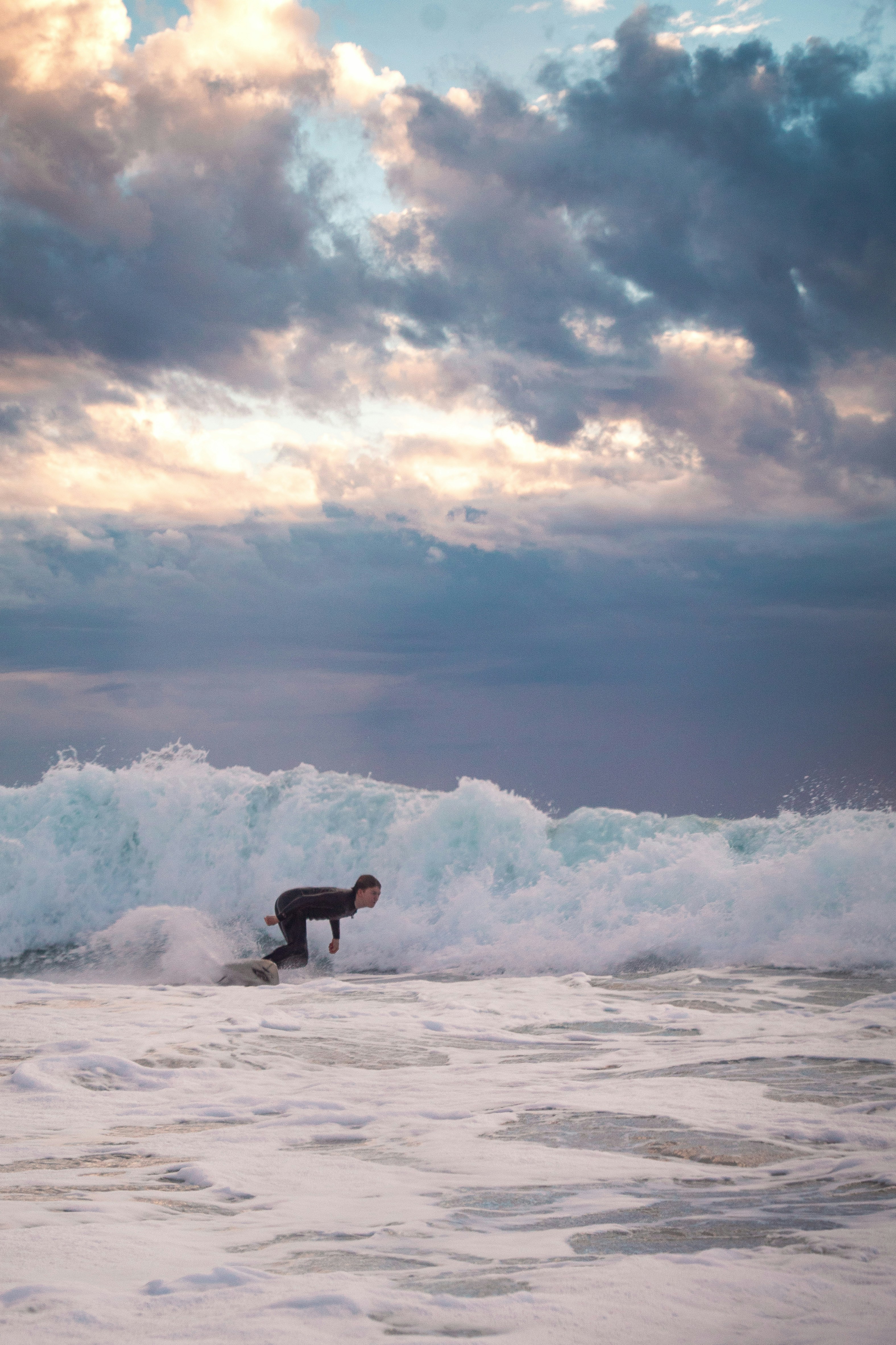
Portugal has earned a serious reputation as one of the best places in Europe to learn to surf - and not just because it looks good on an Instagram story. The Atlantic coastline delivers consistent, forgiving beach breaks at the right spots, surf schools are plentiful and affordable, and the season for beginner-friendly conditions runs from roughly May through October. If you’ve been thinking about trying surfing for the first time, Portugal is one of the most sensible places to do it.
This guide covers the best beaches for complete beginners, what actually happens in your first lessons, how much it costs, where to hire equipment, and what will make your week in the water more productive.
Best spots to learn to surf in Portugal
Not every Portuguese beach is suitable for beginners. The country’s coastline includes serious reef breaks and heavy beach breaks that are actively dangerous for first-timers. These are the spots where beginner infrastructure is established and the waves are genuinely learnable.
Baleal, Peniche
Baleal is the single most developed beginner surf spot in Portugal and arguably the best in continental Europe for first-timers. The peninsula sits slightly sheltered from the full Atlantic swell, producing softer, slower-breaking waves that give beginners time to find their feet. Over 40 surf schools operate from Baleal - Baleal Surf Camp, Peniche Surf Camp, and Ride Surf Camp are three of the largest - running morning and afternoon sessions year-round.
Lesson prices at Baleal: group lesson (2 hours) from €35, private lesson (1 hour) from €65. Week packages with 5 lessons typically start at €200–240 including board and wetsuit.
The beach is sandy, relatively shallow, and well-monitored by school instructors throughout the day. Water temperature from May to October runs 17–21°C - a 3/2mm wetsuit is typically provided by your school.
Foz do Lizandro, Ericeira
Ericeira is Portugal’s World Surfing Reserve and best known for its quality reef breaks at Ribeira d’Ilhas and Coxos. But those breaks are not where beginners learn. Foz do Lizandro is a river mouth beach 2km north of the town centre where slower, sandbottom waves suit learners well. Several surf schools - Ericeira Surf School, Uau Surf School, and a handful of others - run beginner sessions here.
Lesson prices at Foz do Lizandro: group lessons from €40, week packages from €240. Slightly more expensive than Peniche on average, but Ericeira has more to do off the water (restaurants, bars, town life).
Ericeira suits beginners who want to combine surf lessons with a lively beach town rather than being based exclusively around a surf camp.
Mareta Beach, Sagres
Sagres sits at Portugal’s south-west tip where the Atlantic meets the southern coast. Mareta is a sheltered horseshoe bay inside the town - it picks up less swell than the exposed spots north of the cape, making it consistently gentle for beginners. Several small schools operate here, including Sagres Surf School and AltanticRide.
Lesson prices at Sagres: group lessons from €40. The Algarve’s water is marginally warmer than the Silver Coast - typically 18–21°C from June through October.
Sagres is a good choice for beginners who want to combine learning with the Algarve landscape without being surrounded by resort infrastructure. It’s quieter and more rugged than most Algarve beach towns.
Arrifana, Aljezur
Arrifana is a right-hand point break backed by dramatic cliffs on the Alentejo coast. The southern end of the beach picks up less direct swell and produces longboard-friendly, mellow waves on small to medium days - ideal for beginners progressing from whitewater to their first unbroken waves. Arrifana Surf School runs daily lessons.
Lesson prices at Arrifana: group lessons from €38. Arrifana is more remote than Peniche or Ericeira - there’s one café, a few surf shops, and not much else. Good if you want to focus on surfing without distraction.
Praia do Amado, Algarve
Praia do Amado is a wide, exposed beach on the Alentejo/Algarve border that receives more consistent swell than the sheltered southern Algarve beaches. It’s one of the better spots in the region for beginners who want progression beyond pure whitewater. Amado Surf School operates from the car park above the beach.
Lesson prices at Amado: group lessons from €40. The remote setting and lack of tourist infrastructure means you need a car - but the beach is stunning and less crowded than Baleal or Foz do Lizandro.
What happens in your first surf lesson
Most beginner lessons follow the same structure regardless of school or location.
On the beach (30–45 minutes). Your instructor covers the basics: how to read whitewater, how to paddle, the pop-up technique (getting from lying to standing), and basic stance. You practice the pop-up repeatedly on the sand until the movement is automatic. This land session is not optional padding - it determines how quickly you progress in the water.
In the water (60–90 minutes). You start in the whitewater (the broken foam after a wave has passed). Your instructor pushes your board into the wave at the right moment and you practice the pop-up with the wave doing the work of carrying you. Most first-timers stand up within the first 15–20 minutes. The instructor is typically in the water beside or behind you, adjusting your board position and timing.
By the end of lesson 1, most complete beginners are riding whitewater waves to the beach standing up, with varying degrees of stability. That’s the benchmark - not turning, not catching unbroken waves, just standing on white water.
By lesson 3–4 in a week-long course, the majority of beginners are starting to catch the shoulder of unbroken waves (the face before it breaks). This is where the real surfing feeling begins.
Equipment hire
Most beginner lessons include a board and wetsuit in the price. If you’re continuing to surf independently after your lessons, hire is straightforward at any of the main surf towns.
Board hire: a foam board (longboard or 8ft mini-mal) typically costs €15–25 per day. A standard fibreglass shortboard is €20–30 per day. Beginners should stick to foam boards for at least the first week - they’re more stable, more buoyant, and significantly safer if the board hits you.
Wetsuit hire: €5–10 per day at most hire shops. In summer, many shops offer a basic 3/2mm or shorty. If you’re there in autumn, make sure you’re getting a proper sealed 3/2mm, not a summer suit - the difference in warmth between sessions is significant.
Where to hire: every surf town has multiple hire shops. In Peniche: Peniche Surf Shop near the market, and several shops along Rua José Falcão. In Ericeira: multiple shops on Rua Dr. Eduardo Burnay in the town centre. In Sagres: hire available from most surf schools even if you’re not taking lessons.
Safety: what beginners need to know
Choose a beach break over a reef break. Reef breaks (Ericeira’s Ribeira d’Ilhas, Peniche’s Supertubos) break in shallow water over rock or coral. If you fall - and you will - the surface matters. Sand-bottom beach breaks like Baleal and Foz do Lizandro are the appropriate choice while you’re learning.
Understand rip currents. Rips are channels of water flowing away from the beach. As a beginner, you should learn to recognise them (the water looks darker and choppier, the foam from waves doesn’t reach the shore) and know that the response is to paddle parallel to the beach, not against the rip. Your instructor will cover this in your first lesson.
Only surf in patrolled areas when starting out. Portuguese beaches have lifeguard seasons that run approximately June to September. Outside those dates, check flags before entering - a red flag means no swimming or surfing.
Respect the line-up. Once you progress beyond the whitewater zone, there are right-of-way rules. The surfer closest to the breaking part of the wave has priority. Your surf school instructor will cover surf etiquette, but the core rule is: don’t drop in on someone already riding a wave.
Progressing faster
A few things that make a measurable difference in your first week:
Book a course, not individual lessons. Muscle memory builds with repetition across consecutive days. A 5-day course will advance you further than 5 scattered single lessons. Most schools offer week packages with a small discount.
Surf morning sessions. The Atlantic is typically calmer in the mornings before onshore winds arrive (usually from noon onward). Most schools run two sessions - 9am and 2pm. Choose morning.
Watch better surfers. Spend 20 minutes watching the intermediate and advanced surfers at the break before your lesson. You’re learning paddle timing, wave reading, and pop-up technique from observation even before you get in the water.
Ask your instructor for one specific thing to fix each session. General feedback is hard to act on. Ask: “what’s the single thing that would most improve my last ride?” Most instructors appreciate the focus and give more useful feedback in return.
Plan Your Trip
🏨 Search hotels in Portugal on Booking.com
For context on when conditions are best suited to learning, our best time to surf Portugal guide breaks down wave height, water temperature, and wind by month across all the main breaks. If you’re choosing between the main surf towns, Ericeira vs Peniche covers the practical differences between Portugal’s two dedicated surf destinations.
Plan Your Trip
- Flights - Find the best fares to Portugal
- Travel Insurance - Get covered before you go
- eSIM - Stay connected from landing
- Car Rental - Compare prices across providers
See also: Best time to surf Portugal · Ericeira vs Peniche · Getting around Portugal