Elvas Travel Guide: UNESCO Fortifications on the Spanish Border
Elvas guide: UNESCO World Heritage fortifications, the world's largest dry-moat bulwark, 843-arch aqueduct, and day-trip distance from Evora.
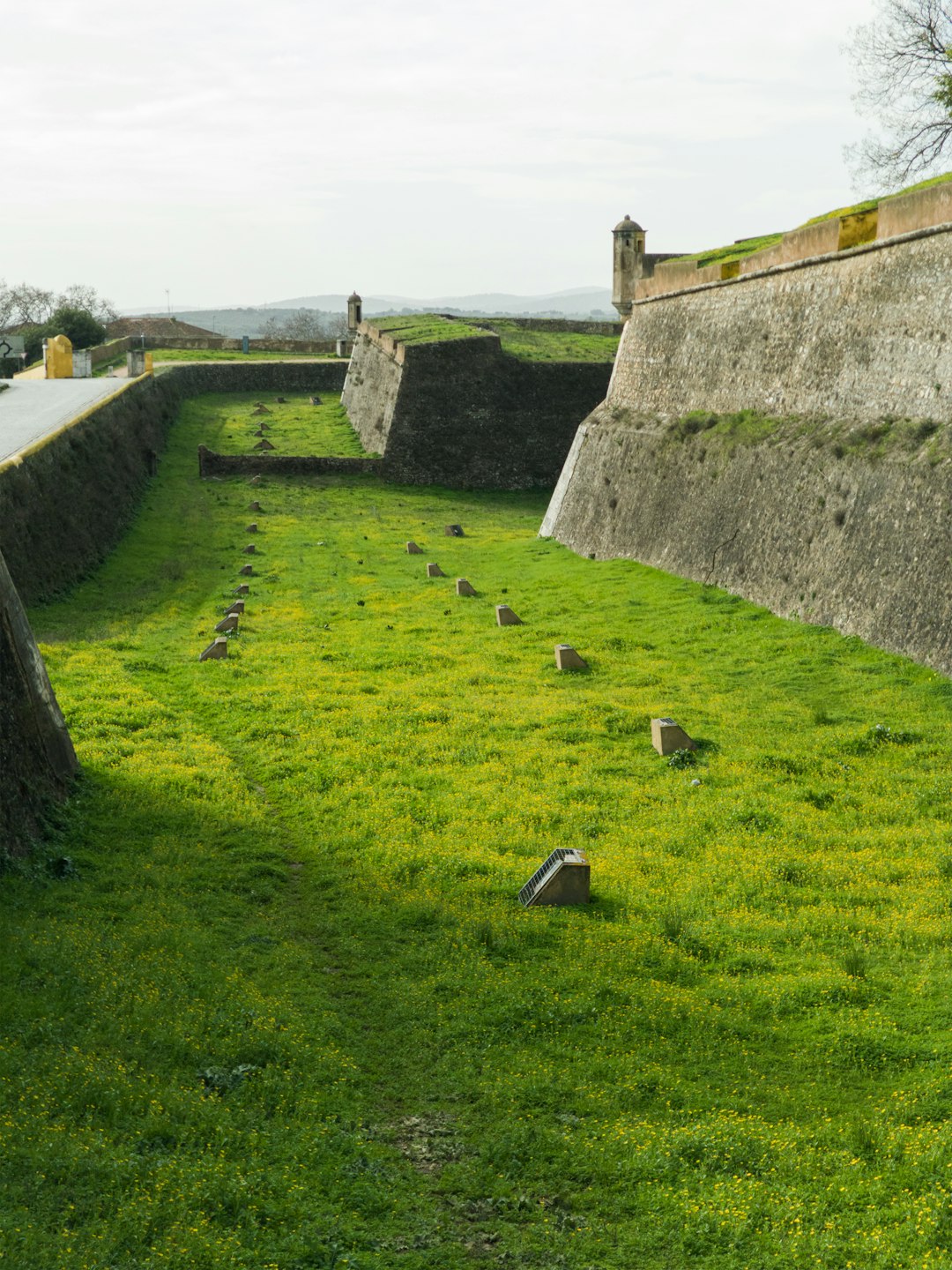
Elvas is a frontier town in the eastern Alentejo, 15 km from the Spanish border and 220 km from Lisbon. It has been a significant military post since the Roman period, and the fortifications layered across the centuries — medieval castle, 17th-century polygonal bastions, an enormous dry moat, and several outlying forts — constitute the largest and most complete set of bulwarked dry-moat fortifications in the world. UNESCO awarded the site World Heritage status in 2012 under the title “Garrison Border Town of Elvas and its Fortifications.”
Elvas receives far fewer international visitors than its designation warrants. Évora — 75 km west — is better known and more frequently visited. Elvas is quieter, less self-consciously touristic, and, for anyone interested in military architecture, European history, or simply an Alentejo town that has not reorganised itself around tourism, considerably more interesting.
Getting to Elvas
The A6 motorway from Lisbon runs directly to Elvas and continues across the border to Badajoz (Spain). From Lisbon, the drive is 220 km and takes approximately 2h15 in normal traffic. From Évora, it is 75 km east (about 1 hour on the N4/A6).
By bus, Rede Expressos runs several daily services from Lisbon Sete Rios to Elvas, taking approximately 2h30 and costing from €15 as of 2026. The bus terminal is on the edge of town. For those combining Elvas with Évora, guided tours of Elvas include full-day options from Lisbon or private half-day extensions combining Elvas with Évora.
By train, the Linha do Leste connects Elvas-Assunção station (7 km from the centre) to Évora and Lisbon-Oriente. Journey time from Lisbon is approximately 2h20; from Évora, 40 minutes. A taxi from the station to the town centre costs around €8-10. Check CP (cp.pt) for current timetables.
The Fortifications
The fortifications are the reason Elvas exists as a significant destination, and understanding what they are helps to appreciate their scale.
The outer ring consists of three outlying forts — Forte de Santa Luzia (17th century, south of the town), Forte de São Mamede (18th century), and Forte da Graça (18th century, the most impressive, on a hill north of town) — designed to hold the terrain surrounding Elvas before an enemy could approach the city walls. Between the forts and the main walls runs a dry moat up to 10 metres deep and 30 metres wide, with angled bastion walls designed to deflect and absorb cannon fire. The geometry of the bastions — hexagonal projections at intervals — eliminates dead angles and allows defenders to cover every approach.
Walking the walls is free and accessible during daylight hours. The perimeter path takes 45-60 minutes at a comfortable pace and provides clear views of the angled bastions, the dry moat below, and the Alentejo plain extending toward Spain. The walls are in good condition and well-maintained.
Forte da Graça sits on a hill 1.5 km north of the town centre and is the most architecturally impressive of the outlying forts. It was used as a prison until recently; restoration work is ongoing. Check current access locally before the drive up.
Forte de Santa Luzia (south of town) is open for guided visits arranged through the Elvas tourism office; unaccompanied entry is sometimes possible. The fort’s interior barracks and powder magazines survive in good condition.
The Castle and Old Town
Castelo de Elvas is a Moorish castle built around the 10th century and subsequently expanded by the Portuguese after the reconquest. It now houses a small municipal museum covering local military history. Entry approximately €1.50. Open Tuesday-Sunday 9am-6pm (summer hours; confirm locally).
The castle hill commands the town’s highest point. From the ramparts, the triangular geometry of the outer fortifications is visible laid across the plain — a rare opportunity to understand the spatial logic of 17th-century military engineering from above.
Praça da República is the main town square, lined with orange trees and containing the Igreja de Nossa Senhora da Assunção, formerly the cathedral (Elvas had a bishopric until 1882). The early 16th-century church shows Manueline decoration at its doorways — characteristically Portuguese maritime stonework with ropes, spheres, and coral motifs.
Museu de Arte Contemporânea de Elvas (MACE) is an unexpected find in a town this size — a contemporary art museum occupying the 16th-century convent of Nossa Senhora da Consolação, holding one of the most significant collections of post-war Portuguese art in the country. António Cachola, a local collector, donated over 450 works to the municipality. Entry approximately €3; open Tuesday-Sunday 10am-6pm.
The Amoreiras Aqueduct
The Amoreiras aqueduct runs 7 km from the water sources at Amoreiras to the town centre, completing in 1622 after more than a century of construction. Its most dramatic section — visible from the road entering Elvas from the west — has 843 arches across three tiers, reaching 31 metres at the tallest point. For scale: it was built to supply a garrison town that needed to resist sieges lasting months; the water had to be secure and reliable under conditions where the surrounding countryside might be occupied by an enemy.
The aqueduct is accessible from road level at no charge and is best photographed from the N4 road several hundred metres outside the walls. Early morning or late afternoon light is best.
Where to Eat
Restaurante Aqueduto (near the aqueduct, Rua do Aqueduto) is the most established restaurant in town — Alentejo cooking, large portions, outdoor terrace with aqueduct views. The carne de porco à alentejana (pork with clams, approximately €14-16) and the ensopado de borrego (lamb stew, approximately €12-15) are both well-made. Dinner for two with wine approximately €50-65.
Taberna Alentejana (Rua de Olivença) serves the regional bread dishes — açorda, migas — that define Alentejo cuisine, alongside local sausages and black pork. Simple, inexpensive, and genuinely local. Lunch main courses from approximately €9-13.
Pastelaria Conventual Pão de Rala (Praça da República) produces Elvas’s most famous pastry — ameixas de Elvas, crystallised greengage plums that have been a local speciality since the 17th century. The shop also sells conventional Portuguese pastries and espresso.
Where to Stay
Convento de São João de Deus - Pousada (inside the town walls) is the best address in Elvas — a 16th-century convent converted into a national pousada hotel. High stone ceilings, cloister courtyard, and a pool. Rates from approximately €100-160 per night in summer as of 2026; cheaper in autumn and winter. The pousada restaurant serves Alentejo dishes with reasonable quality. Book directly at pousadas.pt.
Residencial D. Luís (Rua de Olivença) is the practical budget option — a straightforward guesthouse in the old town with rooms from approximately €45-70 per night. Clean, central, no frills.
Hotel São João de Deus (adjacent to the pousada) is a mid-range option in the same historic building complex, managed separately. Rates approximately €70-110 per night; book via standard hotel platforms.
For our full accommodation guide with specific hotel recommendations across all budgets, see Where to Stay in Elvas.
Elvas and Badajoz
The Spanish city of Badajoz is 15 km east — 20 minutes by car across the border. It is a significantly larger city (approximately 150,000 people) with its own Moorish alcazaba, a Baroque cathedral, and a main square lined with outdoor café terraces. The combination of Elvas in the morning and Badajoz for a long tapas lunch is a practical and rewarding day, particularly if you have not visited Spain’s Extremadura region.
The border crossing on the A6 is unmanned and instantaneous — Schengen membership means there are no passport checks between Portugal and Spain.
Day Trips and Combinations
Évora (75 km west) is the Alentejo’s major historic city — the most natural combination with Elvas in a multi-day circuit. See our Évora guide for detail.
Monsaraz (60 km south) adds the medieval walled village and Alqueva lake views. The three-city combination of Évora, Monsaraz, and Elvas covers the core of inland Alentejo in two or three days.
Portalegre (60 km north) is a quieter Alentejo city with a tapestry museum and access to the Serra de São Mamede natural park.
How Elvas Compares
Elvas vs Évora: Both are UNESCO World Heritage cities in the Alentejo, but Évora is significantly more developed for tourism — better restaurants, more accommodation choice, a full day’s sightseeing. Elvas has one of Europe’s most complete bulwarked fortification systems and almost no international tourist crowds. It is the better choice for visitors who want to explore a Portuguese historic city without the coach-tour infrastructure. Évora and Elvas work well together as a two-day circuit; Elvas alone warrants a half day to a full day.
Elvas vs Mérida (Spain): Mérida is 60km east across the border, with the most complete Roman theatre and amphitheatre in the Iberian Peninsula. Pairing Elvas with Mérida in a single day — Portugal’s finest fortified city and Spain’s finest Roman site — is an unusual and worthwhile combination. The border crossing takes seconds (Schengen). Cost in Elvas is low; Mérida’s sites charge entry (approximately €15 combined). Best months for both: March–May and September–October. July and August are very hot on both sides of the Extremadura plain.
Frequently Asked Questions
- How do I get from Lisbon to Elvas?
- By car, take the A6 motorway east from Lisbon to the Spanish border — Elvas is just before Badajoz, about 220 km and 2h15 from Lisbon. By bus, Rede Expressos runs several daily services from Lisbon's Sete Rios terminal to Elvas (approximately 2h30, from €15 as of 2026). By train, there is no direct service — the nearest station is Elvas-Assunção, 7 km from the centre, served by trains from Évora and Lisboa-Oriente on the Linha do Leste. A taxi from the station costs approximately €8-10.
- Are the Elvas fortifications free to visit?
- Walking the perimeter of the walls and exploring the dry moat is free and accessible during daylight hours. The castle (Castelo de Elvas), which houses a small museum, charges approximately €1.50 as of 2026. The Amoreiras aqueduct is visible from road level at no charge. The Museu de Arte Contemporânea de Elvas (MACE) charges approximately €3 entry and holds a significant collection of contemporary Portuguese art.
- What is the best day trip from Elvas?
- Badajoz in Spain is 15 km across the border — a 20-minute drive. It is a larger city with a Moorish alcazaba, a cathedral, and excellent tapas bars. Several travellers combine an Elvas morning with a Badajoz afternoon. Évora is 75 km west (1 hour) and is the most historically rich city in the region. Monsaraz is 60 km south (45 minutes), combining the fortress town with the medieval walled village in a single circuit.
- Why do so few tourists visit Elvas?
- Elvas sits at the end of the A6, which most travellers drive through at speed en route to Badajoz or Seville without stopping. It has no international airport, no beach, and no famous landmark that has penetrated travel media in the way Évora's Roman temple or Sintra's palaces have. Its UNESCO designation (awarded 2012) is for military engineering that requires some context to appreciate. The result is a UNESCO World Heritage city with very few foreign visitors — which is part of its appeal.
Book an experience
Top experiences in Elvas
Explore the best tours and activities in Elvas, with instant confirmation and free cancellation on most bookings.
Where to stay in Elvas: Find hotels in Elvas →