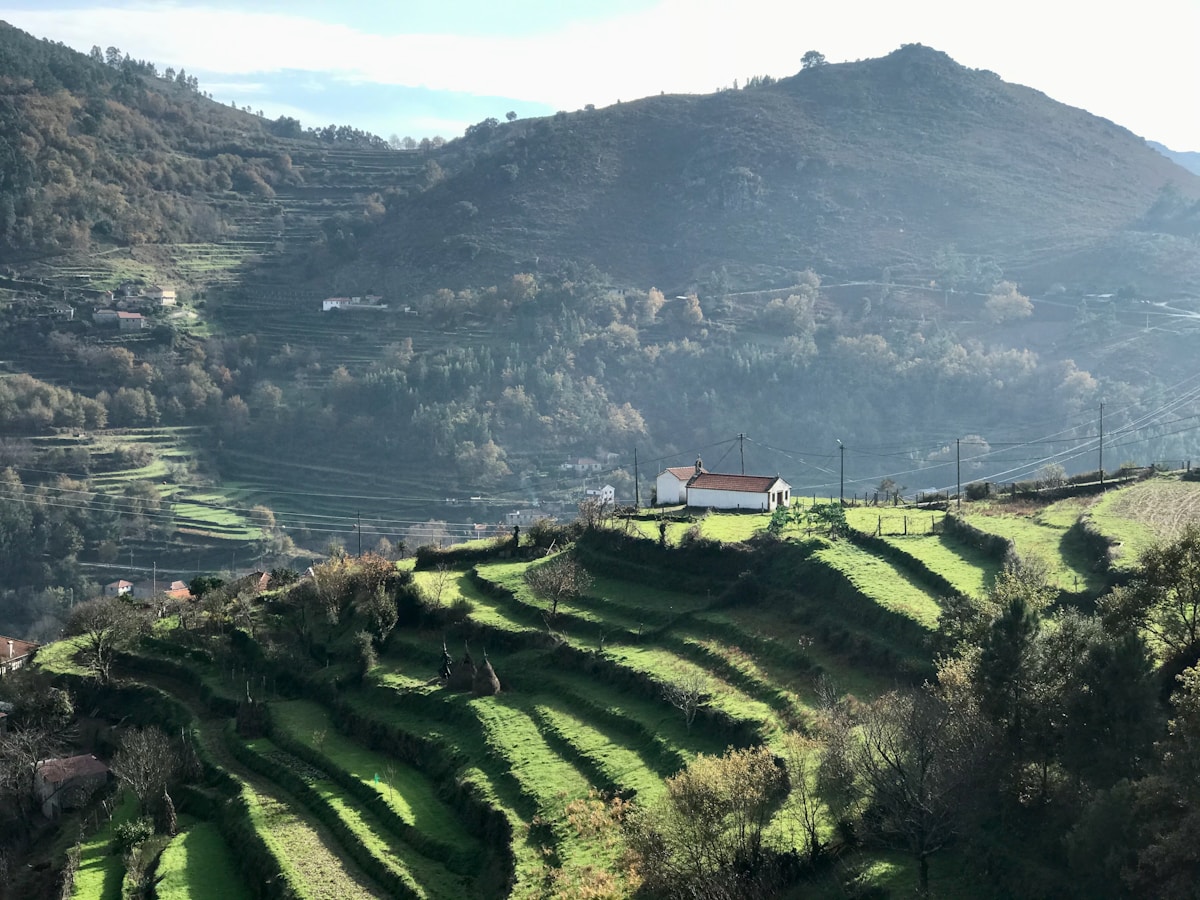
Vinho verde is not a grape variety. That is the first and most important thing to understand about the wines of the Minho. It is a denomination — an area and a style — covering the entire northwestern corner of Portugal between the Minho River border with Spain and the outskirts of Porto. The name means “green wine”, and the green refers to age, not colour: these wines are bottled young, typically within six months of harvest, to preserve their characteristic freshness and high acidity.
The vinho verde denomination is the largest in Portugal by area. Its landscape is equally distinctive: vines trained high on stone and granite posts (the traditional ramada or enforcado system), with space beneath for maize, vegetables, and the general agriculture of small family holdings. Drive any back road in the Minho and you will see vines overhead, draping pergolas along roadsides and walls in a way that looks nothing like any other wine region in the world.
What Vinho Verde Actually Is
Most vinho verde is white, light (9–11% alcohol in the traditional style), with a slight natural spritz from residual CO₂ retained during bottling. The acidity is high — this is one of the most food-friendly wine styles in the world, cutting through rich bacalhau (salt cod) dishes and fatty pork preparations with equal ease. Red vinho verde also exists and is worth trying: deeply coloured, tannic, and bracingly astringent in a way that takes getting used to but is completely at home on a table with roast lamb and simple beans.
Prices at the producer gate run from around €8 for an everyday blended white to €20 and above for premium single-varietal Alvarinho. In Lisbon restaurants, standard vinho verde rarely exceeds €15–20 a bottle; in the region itself, a glass over lunch at a local taberna will cost €1.50–2.50.
The Sub-Regions
The denomination is divided into nine sub-regions, each with slightly different soil, climate, and varietal focus:
Monção e Melgaço is the most celebrated — a narrow strip along the Minho River in the far north where Alvarinho thrives on granite and schist soils. The wines here are the most complex and age-worthy in the denomination. Expect to pay €15–30 for quality bottles. Monção town itself has a pleasant central square and a clutch of good restaurants.
Lima runs along the Lima River valley from the Spanish border down to Viana do Castelo. This is the most scenically dramatic sub-region — granite villages, terraced hillsides, ancient water mills, and the medieval bridge town of Ponte de Lima at its centre. Loureiro is the dominant grape, producing wines with floral, citrus, and stone-fruit notes.
Cávado covers the area around Braga, where the Cávado River drains into the sea south of Esposende. A working landscape of mixed agriculture and scattered quintas producing both blended and single-varietal wines.
Ave and Basto sit inland, with cooler temperatures and higher altitude producing wines of higher natural acidity. Less visited by wine tourists but home to some serious smaller producers.
Sousa, Baião, Amarante, and Paiva are the southernmost sub-regions, closest to Porto, where Avesso is the key white grape — broader and rounder than Loureiro, with less floral character and more body.
Named Quintas and Where to Taste
Quinta de Soalheiro (Melgaço) — The estate that did most to establish Alvarinho as a serious varietal. Founded in 1982, when single-varietal Alvarinho was not yet permitted under denomination rules. The wines are consistently among the finest in the north of Portugal. Tours and tastings are available by appointment; allow 1.5 hours. The Primeiras Vinhas (old vines) bottling at around €22 is the reference.
Quinta da Aveleda (Penafiel, southern edge of the denomination) — One of the most visitor-friendly estates in the region, with formal gardens, a ruined chapel draped in centuries-old wisteria, and a full tasting programme. Open most days; admission to gardens €5, tastings from €10. The entry-level Casal Garcia is one of the world’s best-selling Portuguese wines; the estate’s premium Loureiro is more interesting.
Quinta do Crasto do Lima (Ponte de Lima area) — Smaller family estate producing single-varietal Loureiro of real quality. By appointment only; the owner is typically the guide.
Palácio da Brejoeira (Monção) — An 18th-century palace estate producing Alvarinho under the Palácio da Brejoeira label, one of the most expensive wines in the denomination (€25–40). Visits by appointment; the manor house alone justifies the drive.
The Rota dos Vinhos Verdes (Green Wine Route) connects over 100 member properties. The route’s website lists opening hours, tasting fees, and contact details for estates across all nine sub-regions.
Food and the Minho Table
Vinho verde’s acidity makes it an almost universal food wine in the region — which is useful, because the local cooking is rich and fatty. The classic pairings:
Bacalhau (salt cod) — The national dish of Portugal appears in the Minho in particularly hearty preparations: bacalhau à braga (baked with onions, eggs, and olives), bacalhau com broa (with cornbread crust). A crisp Loureiro or blended vinho verde cuts through the salt and oil perfectly. A plate in a local restaurant costs €10–18.
Lampreia (lamprey) — A jawless river fish, considered a delicacy in the Minho and served from January to April when it runs upstream from the sea. Lampreia à bordalesa (slow-braised in its own blood, wine, and spices) is the classic preparation — intense, rich, and polarising. Most restaurants in Ponte de Lima and Monção offer it during season; expect to pay €18–28 for a main course. A red vinho verde, or a richer Alvarinho, handles the preparation better than a lighter white.
Caldo verde — The soup that defines Portuguese comfort food. Shredded couve galega (a local dark kale), potato, olive oil, and a disc of chouriço floating on top. Found everywhere, costs €3–5, pairs equally well with a glass of light white or a simple red.
Rojões (fried marinated pork) and papas de sarrabulho (pork blood and meat stew) are the more challenging local specialities — the kind of cooking that has sustained agricultural labourers through wet winters for centuries. Available in traditional tascas and village restaurants rather than tourist-oriented spots. Expect to pay €9–14 for a main.
Where to Stay
Braga is the natural base — 50 minutes from Porto by train, with a wide range of accommodation and the best restaurant scene in the north outside Porto. Hotel Melia Braga (from €90/night, riverside) and Hotel do Parque near Bom Jesus (from €70/night) are the most convenient for sightseeing. Budget options cluster around the university quarter.
Viana do Castelo works well if you are focused on the Lima sub-region and the northern coast. Pousada de Viana do Castelo (from €120/night), in the hilltop Santa Luzia basilica, has extraordinary views over the Lima estuary. Hotel Vianense (from €60/night) is a reliable mid-range option in the town centre.
Ponte de Lima is ideal for wine route days, particularly if you want immediate access to Lima sub-region quintas. Carmo’s Boutique Hotel (from €95/night) in the old town is the best option; several rural quintas in the Lima valley rent rooms directly, typically from €70–110/night, often with breakfast and estate wines included.
Monção has limited accommodation but the riverside Ibis Monção (from €55/night) is clean and perfectly placed for tasting visits in the far north.
Search hotels in Minho Portugal on Booking.com to compare rates and availability.
Getting Around
The Minho has reasonable train connections between Braga, Viana do Castelo, and Porto, but reaching the wine quintas requires a car. Car hire in Portugal is the most practical approach for a wine-focused visit — the roads between Lima Valley estates are narrow and infrequent buses serve only the main towns. Porto is the natural starting point: the airport is 20 minutes from the city centre, and the Minho’s main entry points are all within 90 minutes’ drive.
For organised wine and food tours from Porto or Braga, tours across Portugal includes day trips into the vinho verde region with transport included.
The Minho region guide covers the broader area — history, Braga’s baroque architecture, Guimarães, and Peneda-Gerês National Park — for visitors who want more than wine as a focus.