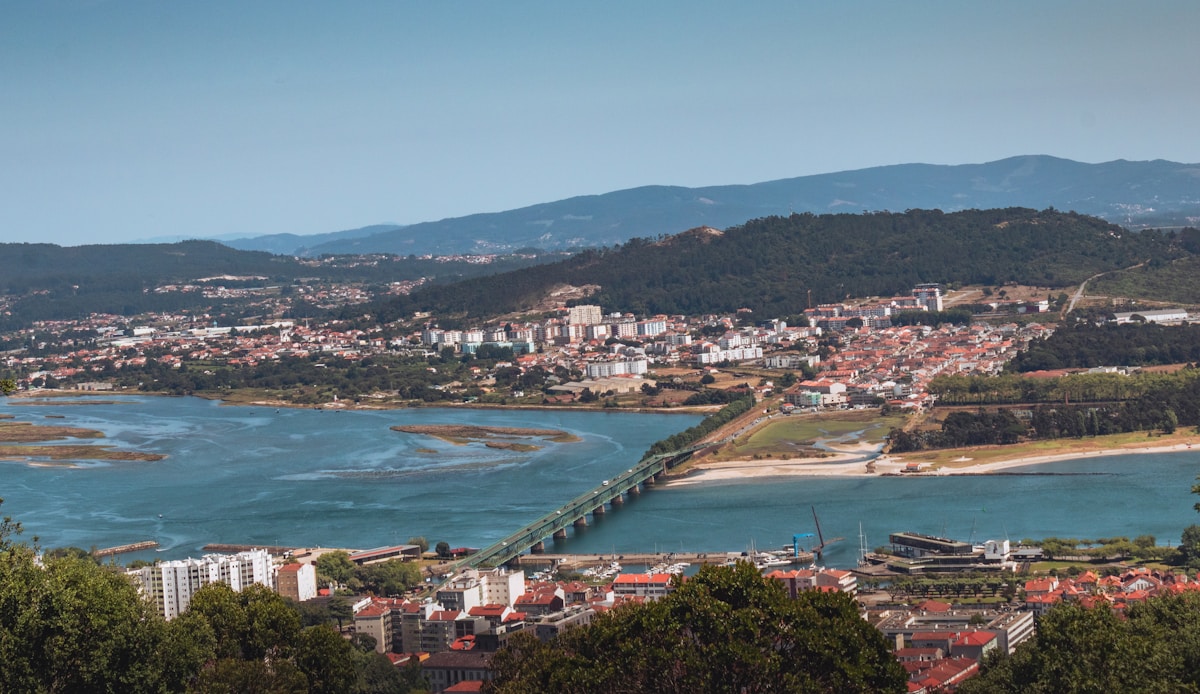
The Minho occupies the extreme northwest corner of Portugal, bordered by the Minho River (which forms the Spanish border) to the north and the Atlantic to the west. It is the wettest part of Portugal - the same rain that makes it greener than anything else in the country feeds rivers, waterfalls, and the dense forests that cover the Peneda-Gerês mountains. Everything the south does in dust and heat, the Minho does in water and granite.
Braga - Baroque Capital
Braga is Portugal’s third-largest city and a place that has been getting more interesting every year. The historic centre sits around a cathedral that was begun in 1070 (making it one of Portugal’s oldest) and the city’s baroque architecture - facades of carved granite, stairways, fountains - is some of the most ornate in the country.
Bom Jesus do Monte, 5 km uphill from the centre, is Braga’s most visited site - a pilgrimage church at the top of a 116-step zigzag staircase lined with chapels, fountains, and allegorical figures. The climb takes 20 minutes; a funicular (one of the world’s oldest water-powered ones, dating to 1882) goes up in 3 minutes for €1.30. The view back over Braga from the terrace is excellent.
The Braga market (Mercado Municipal) on Thursday mornings is worth getting up for - produce, textiles, and the kind of regional cheese that doesn’t travel far. Braga’s restaurant scene has improved considerably in the past five years, driven partly by the city’s university population.
Guimarães - Birthplace of Portugal
The city of Guimarães carries a particular weight in Portuguese history: Afonso Henriques, the first King of Portugal, was born here in 1109, and the city still leads with the slogan “aqui nasceu Portugal” (here Portugal was born). The historic centre - a UNESCO World Heritage Site - is better preserved than almost any other Portuguese city of its size.
The medieval castle (admission €2) is small but intact, with views over the red-tiled rooftops of the old town. The Paço dos Duques, a 15th-century palace with tapestries and armour, costs €5. The Largo da Oliveira square, with its Gothic canopy and medieval church, is one of Portugal’s most handsome public spaces.
Guimarães is 30 minutes from Braga by train (€3) and an easy half-day from Porto. It is not well set up for overnight stays but the Centro Cultural Vila Flor, a contemporary arts centre installed in an 18th-century palace, is worth checking if you have interest in performance or exhibitions.
The Vinho Verde Wine Region
The entire Minho is the vinho verde denomination - the largest wine region in Portugal by area, producing wine from small family plots scattered between vegetable gardens and maize fields. The vines are trained high on trellises and granite posts, leaving space below for other crops - a distinctive feature of the landscape.
For tastings, the Lima Valley between Ponte de Lima and Viana do Castelo has the highest concentration of accessible quintas. Quinta de Soalheiro (Monção) and Quinta da Aveleda (Penafiel, just south of Minho) offer tours and tastings; Aveleda has particularly good gardens. Most quinta visits cost €10–20 for a tasting.
The Lima Valley - Ponte de Lima
Ponte de Lima is a small town that claims to be the oldest in Portugal, with a market history going back to the 12th century. Its market - held every other Monday on the riverside - is the country’s oldest running market and worth planning around. On market days the town fills with produce, animals, and people from surrounding villages who come by foot and tractor.
The Roman bridge that gives the town its name still carries foot traffic. The riverside esplanade is planted with enormous plane trees and the town’s main social scene plays out on the café terraces beneath them.
The Lima Valley is good cycling country - flat to rolling along the riverbank, with a well-maintained EuroVelo cycle route (EV3) passing through.
Peneda-Gerês National Park
Portugal’s only national park occupies the mountainous northeast corner of Minho, along the Spanish border. Its highest point is 1,545m and it contains granite boulder fields, waterfalls, upland bog, and wolves (around 60 individuals, rarely seen). The park is popular with Portuguese families in summer - Gerês village, the main entry point, gets crowded in August.
For walkers, the route from Castro Laboreiro in the north through the Planalto da Mourela offers the park’s most remote and atmospheric walking. The GR50 long-distance path crosses the park. An overnight at one of the park’s rural guesthouses, surrounded by absolute quiet and birdsong, is a strong contrast with city travel.
Viana do Castelo - Coast and Lima Estuary
Viana do Castelo sits where the Lima river meets the Atlantic. It has a fishing fleet, a long beach north of the river mouth (Praia do Cabedelo, reached by ferry from the town centre), and a hilltop basilica (Santuário de Santa Luzia) with a panoramic view over the coast and river. The view from the basilica terrace extends north to the Minho border and south toward Porto.
The town’s embroidery and gold filigree traditions are still active - the weekly market sells both. Viana’s population dresses in traditional costume for the Romaria de Nossa Senhora d’Agonia in August (third weekend), one of northern Portugal’s largest festivals.
Practical Notes
- Minho weather is unpredictable. Pack a layer regardless of the season - even August can bring afternoon downpours.
- Driving is the most flexible way to explore the Lima Valley and Peneda-Gerês. Public transport connects cities well but rural villages are infrequent.
- The Minho is gastronomy country - caldo verde (kale soup), bacalhau (salt cod in many preparations), rojões (fried pork), and papas de sarrabulho (blood-thickened pork stew) are regional staples. None are for the faint-hearted. See our Portuguese food guide and Portuguese wine guide - the latter covers vinho verde in detail.
For guided experiences in the region, tours across Portugal covers day trips, food and wine tours, and activity bookings.
car hire in Portugal gives you the most flexibility for exploring - particularly useful in rural areas where public transport connections are limited.
Planning Your Minho Trip
Braga is the natural gateway - 50 minutes by train from Porto and a comfortable base for exploring the region. Our Porto city guide covers day trip logistics to both Braga and Guimarães. The Minho pairs naturally with the Douro Valley - Porto sits between the two regions and both are reachable in under an hour. The 2-weeks Portugal itinerary includes a Braga-Guimarães day with suggested routing from Porto. For city comparisons, see Coimbra vs Braga to help decide how much time to allocate to each.
Search hotels in Minho Portugal on Booking.com to compare rates and availability.