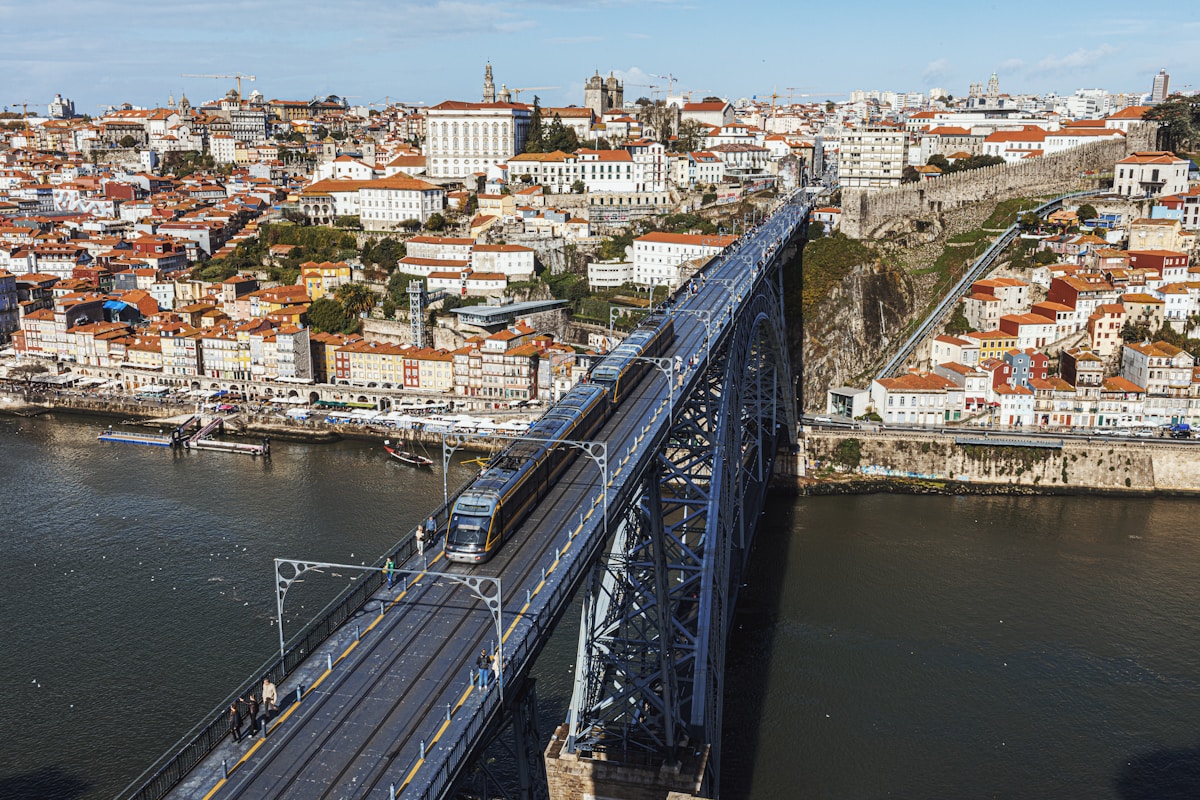
The Linha do Douro - the railway line that runs east from Porto along the Douro Valley - is one of the best train journeys in Europe. For around €13 each way, it delivers two hours of increasingly dramatic riverside scenery without requiring a driving licence, parking costs, or navigating the valley’s steep and narrow roads. This guide covers how to use it practically: where to board, which side of the train to sit on, how to read the timetables, and what to do once you arrive in Pinhão or Régua without a car.
Starting Point: Porto Campanhã, Not São Bento
This matters. Porto has two central train stations: São Bento (the famous tile-covered terminus in the city centre) and Campanhã (the main interchange, about 2 km east). Douro Valley trains depart from Campanhã, not São Bento.
São Bento and Campanhã are connected by frequent suburban trains (the S line) - the journey takes under 5 minutes. If you’re staying in central Porto, take any Campanhã-bound suburban service from São Bento, pick up your Douro connection at Campanhã, and you’ll be on the right platform within 20 minutes of leaving your hotel. Metro Line D also stops at Campanhã.
Train Types: Intercidades vs Regionais
The Linha do Douro carries two types of service from Campanhã:
Intercidades (IC) - faster trains with reserved seats. Campanhã to Pinhão in approximately 2 hours 45 minutes. These services are worth booking a day ahead during harvest season (September–October) and on summer weekends. Reserve online at cp.pt or at the Campanhã ticket office.
Regionais (R) - slower stopping trains that take around 3 hours 10 minutes to Pinhão. No seat reservation required - buy a ticket on the day at the automated machine or the ticket counter. Regionais stop at more stations, which makes no practical difference for most visitors; all services stop at Peso da Régua and Pinhão.
One IC service typically departs Campanhã in the morning (around 08:30–09:00) and one in the early afternoon. A handful of Regionais depart across the day. Check the current timetable at cp.pt before you go - schedules change seasonally and on public holidays.
Which Side to Sit: The Right
Sit on the right side of the train (facing the direction of travel) for the best river views on the outbound journey from Porto to Pinhão. From about Caíde onward, the line descends into the Douro valley and the river appears on the right. It stays there for most of the remaining journey.
The views get progressively better after Régua as the terraces begin in earnest. The stretch between Régua and Pinhão - the last 25 minutes of the journey - is the most dramatic, with the train running close to the water level through steep schist hillsides entirely covered in vines.
On the return journey to Porto, sit on the left side.
Peso da Régua - The Midpoint Worth a Stop
Régua (to use the short form everyone uses) is about halfway between Porto and Pinhão, reached in approximately 1 hour 45 minutes. It’s the main town in the Baixo Corgo sub-region and a working wine hub rather than a tourist destination.
The Régua train station has its own set of azulejo tile panels (1926, depicting scenes of Douro wine production) though they’re less celebrated than Pinhão’s. The Museu do Douro is a five-minute walk from the station and gives good context on the valley’s wine history. For visitors doing a day trip, Régua works well as a base for the morning before continuing to Pinhão in the afternoon - the train journey between Régua and Pinhão alone (25–30 minutes) is worth doing at least once.
Arriving in Pinhão
Pinhão’s station is small and immediately identifiable by its azulejo tile panels - 24 blue and white panels installed in 1937 depicting harvest scenes, ox carts, rabelo boats, and Douro Valley life. Allow 15–20 minutes to see them properly.
The town sits directly on the river. Restaurants, guesthouses, and wine shops are within a short walk of the station. For accommodation, options range from simple rooms above cafés (from approximately €60 per night) to wine estate lodges. Book in advance for harvest season.
Getting Around Pinhão Without a Car
The best quintas near Pinhão are within 3–4 km of the station, reachable on foot or by taxi:
- Quinta de la Rosa - approximately 2.5 km east along the river road (N222), walkable in 30 minutes on a flat road. No need to book a taxi.
- Quinta da Roêda (Croft) - directly opposite Pinhão on the north bank. A small footbridge and then a 10-minute walk gets you there. Tasting tours run approximately €20–25 per person.
- Quinta do Bomfim (Symington) - 3 km west of Pinhão by road. Best reached by taxi (approximately €8 one way). Tours and tastings run most days from April to October.
Taxis in Pinhão are not abundant - ask your guesthouse or restaurant to call one the evening before rather than assuming you can hail one on the street. Some accommodation owners will arrange a transfer to and from quintas.
Provesende and the Viewpoints
Provesende is a small hilltop village about 9 km from Pinhão, set among vines at altitude with views across the valley. Without a car, it’s taxi-only (approximately €15–20 one way from Pinhão). The village itself takes 20 minutes to walk through - it’s the elevated viewpoint and the silence that justify the trip. Ask the taxi driver to return at a fixed time.
The Miradouro de São Salvador do Mundo (accessible by car from the N322 north of Pinhão) is another frequently photographed viewpoint - a hilltop chapel with panoramic views over the river. This one is harder without a car; most visitors combine it with a quinta taxi trip rather than making a separate journey.
The Return Journey
Check the last train from Pinhão to Porto before you go - it typically departs between 18:30 and 19:00 in summer and earlier in winter (around 17:30–18:00). Missing it means an expensive taxi to Régua and a connection there, or staying the night.
If you can stay overnight, do. The valley at dusk and first light is a different place from the midday tourist version. One night in Pinhão is enough to walk the river road at sunset, have dinner at a local restaurant, and take the morning train back to Porto refreshed.
Guided Tours vs Going Solo
The train-based approach described in this guide gives you more flexibility than a group day trip, but guided tours from Porto have real advantages worth understanding before you decide.
Guided day trips from Porto typically include transport from central Porto, a river cruise on a rabelo boat, lunch at a quinta, and two to three wine tastings — all for approximately €60–90 per person as of 2026. The advantage is that they reach quinta viewpoints and elevated terrace areas that are taxi-only from Pinhão and unavailable to solo train travellers without forward planning. The disadvantage is the group format, fixed itinerary, and the fact that you see the valley from a boat or a bus rather than from the train window.
Key guided tour operators running Porto–Douro Valley day trips:
- Douro Exclusive Tours — small group (max 12), includes river cruise, quinta lunch, and tasting at Quinta do Bomfim; from approximately €75/person
- Porto Walkers Douro Day Trip — larger group, coach-based, lunch included; from approximately €60/person
- Emerald Cruises and local river operators — multi-day river cruises from Porto that include Pinhão and Régua as overnight stops; typically 3–7 nights, from approximately €900/person full-board
The train-and-taxi hybrid gives the best of both: take the IC train to Pinhão (€13 each way, book at cp.pt), arrange a taxi to one quinta for a morning tasting (€15–20 return), have lunch in Pinhão, and take the late afternoon train back. Total cost for two people including train, taxi, tasting, and lunch: approximately €80–100 — comparable to a guided group tour, but at your own pace.
Browse Douro Valley day trips and guided tours to compare current operators departing from Porto.
For a full overview of the valley - quintas, wine styles, river cruises, and harvest season - see our Douro Valley guide. If you’d prefer a guided day trip from Porto combining transport, wine, and lunch, our Douro Valley day trips from Porto guide compares the options. For exploring further afield at your own pace, car hire in Portugal remains the most flexible option.
Plan Your Trip
🏨 Search hotels in Douro Valley on Booking.com
✈️ Book your flights to Portugal 🛡️ Get travel insurance 📱 Stay connected with an eSIM 🚗 Rent a car