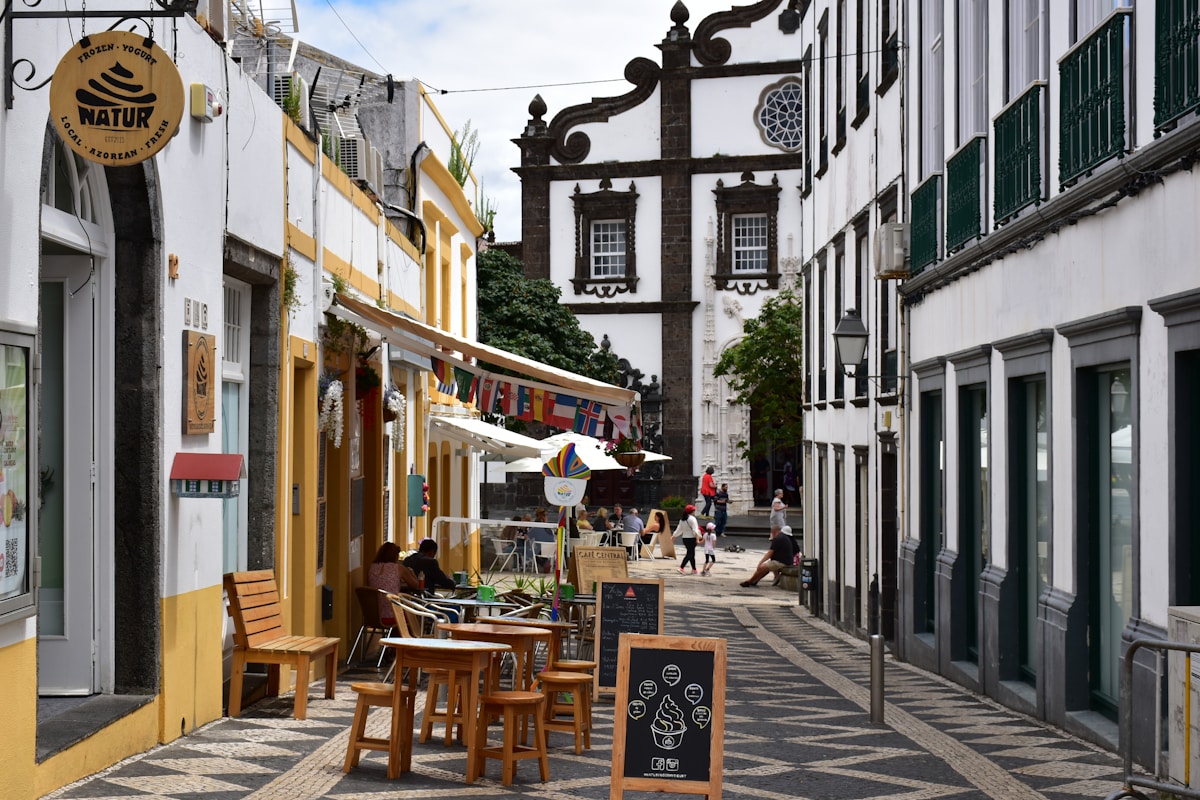
The Azores are nine volcanic islands in the mid-Atlantic, roughly a third of the way from Portugal to North America. The landscape is unlike anywhere else in Europe — crater lakes filled with hydrangeas, steaming geothermal valleys, whale-watching waters, and cliffs dropping straight into the ocean. See our island guides for São Miguel, Terceira, Faial, and Pico for detailed coverage.
Accommodation across the archipelago ranges from converted manor houses (quintas) and small guesthouses to modern hotels in Ponta Delgada and Angra do Heroísmo. Expect fewer five-star resort options than Madeira — the Azores attract visitors who want the landscape, not the poolside.
Choosing Your Island Base
São Miguel — the most visited and most varied
Home to Ponta Delgada (the largest city in the Azores), São Miguel has the best flight connections, the most accommodation options, and the most diverse scenery — all on one island. The Sete Cidades crater lakes in the west, the Furnas geothermal valley in the east, and the whale-watching waters in between. Most first-time Azores visitors base here.
Terceira — the historical island
Angra do Heroísmo is a UNESCO World Heritage city, with a grid of 16th-century streets, a castle on a volcanic cone, and a harbour that was the mid-Atlantic staging post for centuries of Portuguese exploration. Terceira has good flight connections and suits visitors who want cultural depth alongside the volcanic scenery.
Pico — the volcanic island
Pico is dominated by the 2,351-metre volcano Mount Pico, Portugal’s highest point. Wine production in UNESCO-listed vineyards and one of the Atlantic’s best whale-watching locations make Pico distinctive. Smaller and quieter than São Miguel or Terceira — the accommodation options are more limited and the pace is deliberately slow.
Faial — the marina island
Faial’s Marina of Horta is the mid-Atlantic waypoint for transatlantic sailors, and the Peter Café Sport bar is famous across the nautical world. The Capelinhos volcano, which erupted in 1957 and extended the island into the sea, is an extraordinary landscape. Faial pairs naturally with Pico — the ferry crossing takes 30 minutes.
Azores Hotels by Budget
Budget — approximately €70–€110 per night
Terra Nostra Garden Hotel (Furnas, São Miguel) — a hotel adjacent to the famous Terra Nostra botanical garden, with rooms overlooking the park and access to the warm geothermal pool. At this price point, it is one of the best value-for-experience options in the Azores. Approximately €90–€120 per night as of 2026.
Guest House Tulipa (Ponta Delgada, São Miguel) — a guesthouse with clean rooms and a central location in Ponta Delgada, suitable for visitors focusing on the city before heading out to explore the island. Approximately €70–€90 per night.
Angra Marina Hotel (Angra do Heroísmo, Terceira) — a modern hotel close to the marina in Angra’s UNESCO centre, with harbour views and easy walking access to the historic streets. Approximately €80–€110 per night.
Mid-range — approximately €110–€180 per night
Caloura Hotel Resort (Lagoa, São Miguel) — a clifftop hotel above a natural sea pool on São Miguel’s south coast. The position is exceptional — one of the best in the Azores — and the facilities include good restaurant and a pool. Approximately €120–€170 per night.
White Exclusive Suites & Villas (Ponta Delgada, São Miguel) — a boutique hotel with contemporary rooms, a rooftop pool, and views over the Atlantic. Well-regarded for service and location. Approximately €130–€180 per night.
Quinta da Meia Eira (Faial) — a rural guesthouse near Horta with a pool and gardens, managed with attention to the island’s quieter character. Approximately €110–€150 per night.
Luxury — approximately €180–€280 per night
Furnas Boutique Hotel Thermal & Spa (Furnas, São Miguel) — a design hotel in the geothermal valley, with a spa, thermal pools, and a restaurant serving the local cozido das Furnas (stew cooked underground by volcanic heat). One of the most distinctive hotel experiences in the Azores. Approximately €180–€250 per night.
Pousada de Angra do Heroísmo (Terceira) — part of the Portuguese Pousada heritage hotel network, in a historic building in Angra’s World Heritage centre. High ceilings, period features, and an excellent restaurant. Approximately €160–€240 per night.
Octant Pico (Pico island) — a contemporary hotel overlooking Faial from Pico’s north coast, with a pool and minimalist design that frames the ocean views. From approximately €200 per night.
Practical Advice for the Azores
Book accommodation and car hire together, early. São Miguel and Terceira are increasingly popular and summer accommodation (July–August) books out weeks or months in advance. Car hire simultaneously tightens, as the island fleets are small.
The cozido das Furnas is worth planning a meal around. The geothermal stew — meat, vegetables, and blood sausage slow-cooked in pots buried in volcanic earth — takes seven hours and must be ordered in advance. Tony’s Bar in Furnas and Terra Nostra Park Hotel both serve it. It is a genuine regional experience.
Inter-island flights are operated by SATA Air Açores. Journey times between islands are typically 20–40 minutes, and services run several times daily on the main routes. The Faial-Pico ferry is 30 minutes and runs frequently. Plan inter-island logistics before booking — connections are reliable but schedules are not always convenient.
Whale watching in the Azores is among the best in the world. Nine species of cetacean pass through the waters regularly. Most tours operate from Pico, Faial, and São Miguel, and last approximately three hours. Book through an accredited operator; the marine environment around the islands is protected.