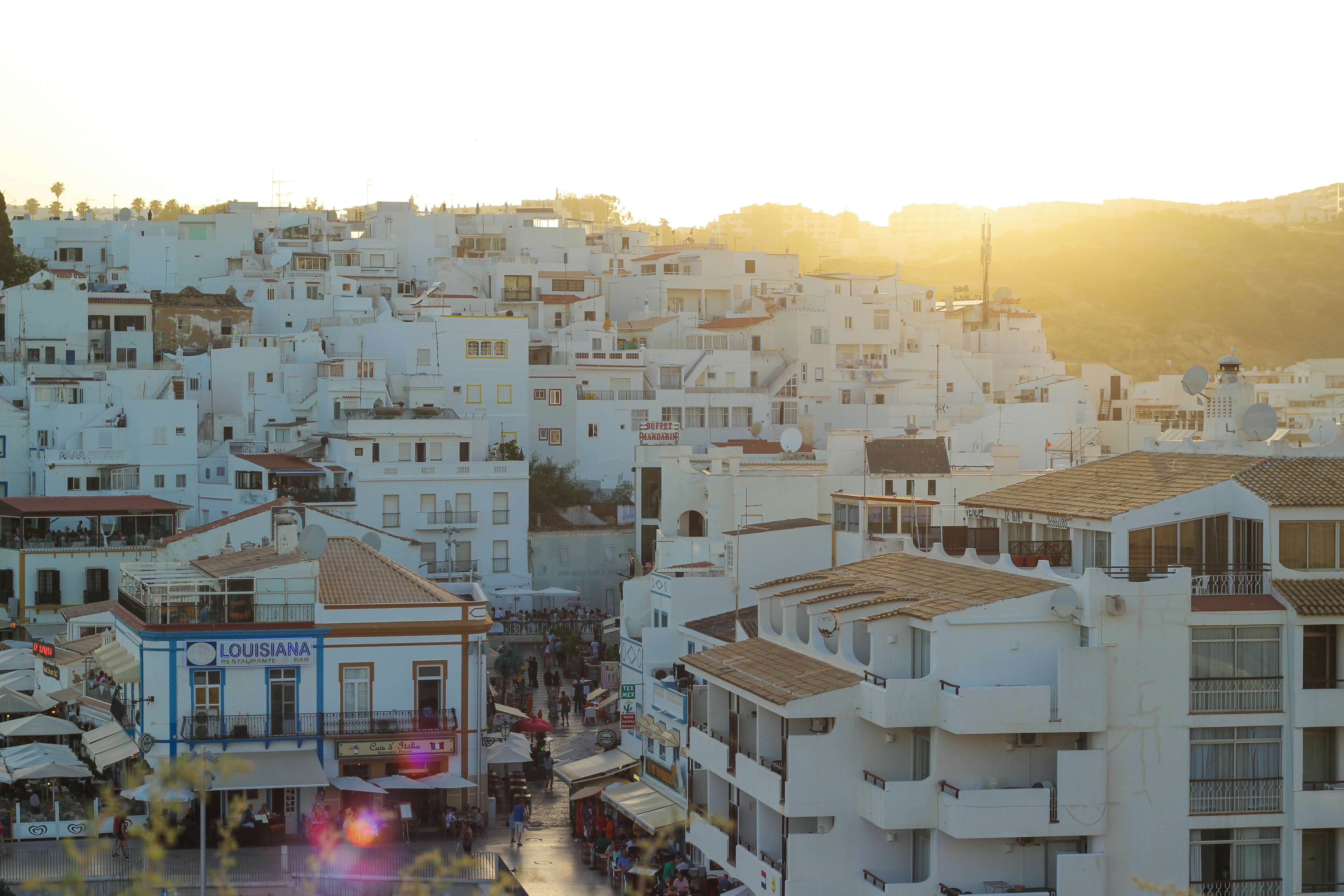
The Algarve is one of Europe’s most practical extended-stay destinations, and not only for its weather. With more than 300 days of sunshine annually, a coast that shifts from dramatic limestone cliffs in the west to broad barrier-island lagoons in the east, English spoken fluently across most towns, and a monthly cost base well below Lisbon or Porto, the region makes a compelling case for stays of four weeks or longer.
The central question for a long stay is not whether the Algarve works — it does — but which town to base yourself in. Each has a distinct character, price range, and practical infrastructure, and getting that choice right shapes how much you get from the experience.
For broader context on the region, see our Algarve travel guide. For the full visa and tax picture, our Portugal digital nomad guide covers the D8 Visa and NHR tax status in detail.
How Much Does Extended-Stay Accommodation Cost in the Algarve?
Prices below are for furnished accommodation as of 2026. Winter rates (November–February) run 25–40% below peak summer. Monthly rentals booked outside the summer window represent significantly better value than equivalent accommodation in July or August.
| Type | Budget | Mid-Range | Upper |
|---|---|---|---|
| Furnished apartment (monthly) | €500 | €800–1,400 | €2,200+ |
| Serviced apartment (monthly) | €700 | €1,100–1,800 | €2,800+ |
| Extended-stay hotel (monthly) | €900 | €1,500–2,500 | €3,500+ |
Rates in Lagos and Portimão tend to sit at the upper end of each range; Tavira, Silves, and inland villages come in at or below mid-range.
Best Towns for an Extended Stay in the Algarve
Lagos
The western Algarve’s most popular long-stay base, and for good reason. Lagos has the strongest digital nomad infrastructure in the region: The Working Boat is the main co-working hub, operating a hot-desk model from approximately €120/month with reliable fibre internet. The historic centre is compact and walkable, with a cluster of independent cafés along Rua 25 de Abril that are genuinely accommodating of laptop workers. Meia Praia, the town’s main beach, is a 10-minute walk or 5-minute bus ride from the centre.
Monthly furnished apartments in Lagos run approximately €700–1,800 as of 2026, depending on size and proximity to the beach. One-bedroom apartments in the older residential streets behind the marina sit at the lower end; modern apartments with sea views or near Meia Praia push toward the upper range. Internet speeds of 50–150 Mbps are standard in newer builds. The town is large enough that facilities do not close entirely in winter, though the summer tourist economy does shrink back.
Lagos is the right base if remote work infrastructure and café culture matter, or if you want easy access to the western Algarve’s best cliff walks and beaches (Ponta da Piedade is 3 km from the centre).
Faro
The Algarve capital and its only university city. Faro has a year-round local population — students, civil servants, university staff — which means that shops, restaurants, and services do not pack up in October the way resort towns do. The old town (Cidade Velha) sits within medieval walls and has genuine architectural character: the Cathedral, the Arco da Vila, and the 18th-century Bishop’s Palace surround a square that is quiet and pleasant for evening walks.
Monthly rentals in Faro run approximately €550–1,400 as of 2026, making it consistently cheaper than Lagos for comparable space. A one-bedroom apartment in the residential streets between the bus station and the university costs approximately €700–950/month furnished. The town has direct train connections to Lagos (1 hour 40 min) and to Tavira (40 min), which gives access to the wider Algarve without needing a car. Faro Airport is 4 km from the centre, which matters for long-stay arrivals with luggage.
Faro suits long-stay visitors who want authentic Algarvian life rather than a digital nomad bubble, and who benefit from the university city’s range of cafés, bookshops, and cultural venues operating year-round.
Tavira
The most consistently praised town in the eastern Algarve among slow travellers and retirees. Tavira is bisected by the Gilão River, lined with Roman and Moorish bridges, and surrounded by the Ria Formosa nature park — a protected lagoon system where barrier island beaches are accessed by small ferry. The ferry to Ilha de Tavira (approximately €2 each way) runs to the beach in 10 minutes; the beaches are long, largely undeveloped, and significantly quieter than the Algarve’s western resorts.
Monthly furnished apartments in Tavira run approximately €500–1,300 as of 2026. The town is smaller than Lagos or Faro, and the digital nomad infrastructure is thinner — fewer co-working spaces, fewer third-wave cafés. It suits those who prioritise quiet and proximity to nature over social infrastructure. A car is helpful for exploring the surrounding villages; public bus and train connections to Faro take approximately 40 minutes.
Portimão and Praia da Rocha
Portimão is a working fishing and commercial port with a beach suburb (Praia da Rocha) directly to the south. For long stays, the distinction matters: Portimão itself has the practical infrastructure — supermarkets, medical facilities, a hospital — while Praia da Rocha has the beach and a strip of restaurants and bars. Staying in Portimão proper with daily access to Praia da Rocha is the most practical combination.
Monthly rentals in Portimão and Praia da Rocha run approximately €650–1,600 as of 2026. The resort infrastructure means the town is quieter and meaningfully cheaper in winter, when many tourist-facing businesses close. For long-stay visitors arriving in October or November, this represents good value. Public transport connects to Lagos (45 min) and Faro (1 hour) without a car.
Silves and Inland Villages
For those who want the lowest cost base in the Algarve and are prepared to have a car. Silves — the medieval Moorish capital of the Algarve, 15 km north of Portimão — has a castle, a cathedral, and a market town feel that has not been substantially altered by tourism. Monthly furnished apartments here start from approximately €450 as of 2026. The rural villages of Caldas de Monchique, São Brás de Alportel, and Alte offer hillside landscapes and significantly lower prices than coastal towns.
The trade-off is car dependency: public transport connections are infrequent from inland towns, and accessing beaches requires a 20–30 minute drive. For retirees or remote workers who drive and actively prefer a quieter environment, the inland Algarve offers the best price-to-quality ratio in the region.
Named Properties for Extended Stays
Tivoli Lagos Algarve Resort (Lagos) — A full-service resort hotel with pool access, spa, and a restaurant. Extended stay suites run from approximately €2,200/month in shoulder season (October–May) as of 2026. Suited to long-stay guests who want hotel amenities and full service without self-catering. The Lagos beach is a 10-minute walk from the property.
Hotel Colina da Lapa (Portimão area) — A smaller property in the hills above Portimão with pool, quiet grounds, and good access to both the town and Praia da Rocha. Monthly deals run from approximately €1,100 in shoulder season as of 2026. Better value than equivalent Lagos hotels for the same standard of accommodation.
Monte da Casteleja (near Lagos) — An organic farm and boutique property 6 km from Lagos town centre, surrounded by cork oak and olive trees. Long-stay rates from approximately €900/month as of 2026 for self-catering cottages. The farm produces its own wine and olive oil; a car is required to access Lagos beaches, but the rural setting is the draw for guests who choose it.
For a wider range of self-catering apartments and serviced flats across all Algarve towns, Booking.com’s Algarve entire-place listings include aparthotels and serviced apartments accepting 7, 14, and 30-day stays, with prices automatically adjusted for length of stay.
Direct Rentals in the Algarve
For monthly furnished rentals outside the hotel system:
- Idealista (idealista.pt) — filter by furnished and set minimum stay to 30 days; Lagos, Faro, and Tavira have consistent inventory
- Flatio — medium-term furnished lets from one to twelve months; useful for verified Wi-Fi speeds and no-admin contracts
- Uniplaces — room and studio inventory; useful for solo travellers on lower budgets
- Facebook groups — “Expats in the Algarve” and “Algarve Digital Nomads” both have active rental listings from owners bypassing platforms
The Algarve rental market splits sharply between summer and winter. In peak season (June–August), landlords maximise returns through short-term tourist lets and monthly furnished availability drops substantially. Planning a long stay for October–April gives access to far better choice at lower prices.
Digital Nomad Infrastructure
Lagos is the best-equipped Algarve town for remote workers. The Working Boat is the primary co-working space, running hot-desk access from approximately €120/month with fibre internet. Additional café-working spots in Lagos include Casinha Café and Meia Praia’s beach-side terrace establishments, which maintain reliable Wi-Fi year-round.
Internet speeds of 50–150 Mbps are standard in modern Lagos apartments via NOS or MEO fibre. Ask landlords for current speed test results before committing — speeds in older buildings on ADSL can drop to 10–20 Mbps, which is workable but not ideal for video calls.
Faro’s co-working scene is smaller but growing — the university city’s student population supports a number of café-working options in the centre, and several independent co-working spaces have opened since 2023. For most professional remote work, Faro’s infrastructure is adequate; for those who need dedicated desk space or regular in-person co-working community, Lagos remains the stronger choice.
Seasonal Pricing and Availability
The Algarve’s tourism economy is sharply seasonal. Summer (June–September) drives rates up by 40–80% across all accommodation types and significantly reduces furnished apartment availability as landlords shift to short-term tourist lets. September remains warm (26–28°C) but sees the first price softening.
October to April is the optimal window for long-stay visitors: weather remains mild (18–22°C average, sunny), prices drop substantially, and the towns return to their off-season character — local restaurants open more days per week for local customers, café seating is available without queueing, and the beaches are almost empty on weekdays. March and April in particular offer good weather with spring wildflowers on the cliff walks and warm enough sea temperatures for swimming.
Practical Details
Transport: The Algarve’s main train line (Linha do Sul) connects Lagos, Portimão, Albufeira, Faro, and Tavira. For journeys between towns, trains are reliable and cheap — a Lagos-to-Faro return costs approximately €10. Within towns, walking suffices in most historic centres. A car becomes necessary for accessing inland villages, remote beaches, or rural properties. Rental rates for a month run approximately €400–700 for a small car from Faro Airport as of 2026.
Healthcare: Faro has the Algarve’s main hospital (Centro Hospitalar Universitário do Algarve). Private clinics operate in Lagos and Portimão. The European Health Insurance Card (EHIC) covers EU citizens for public health treatment. Non-EU long-stay visitors should carry valid travel or expat health insurance.
Grocery shopping: Lidl, Pingo Doce, and Continente are present in all main towns. Organic and artisan markets run in Faro (Saturday) and Lagos (Saturday morning near the market building). For a month-long self-catering stay, weekly supermarket runs and Saturday market visits cover most needs.
Visa: EU nationals face no restrictions. Non-EU visitors on tourist entry have 90 days in any 180-day Schengen window — a one-month Algarve stay falls comfortably within this. For stays beyond 90 days, Portugal’s D8 Digital Nomad Visa requires proof of remote work income of at least €3,040/month as of 2026 and is applied for at a Portuguese consulate before travel. The NHR (Non-Habitual Resident) tax regime offers a flat 20% income tax rate for qualifying new residents — see our Portugal digital nomad guide for current income thresholds and application steps.