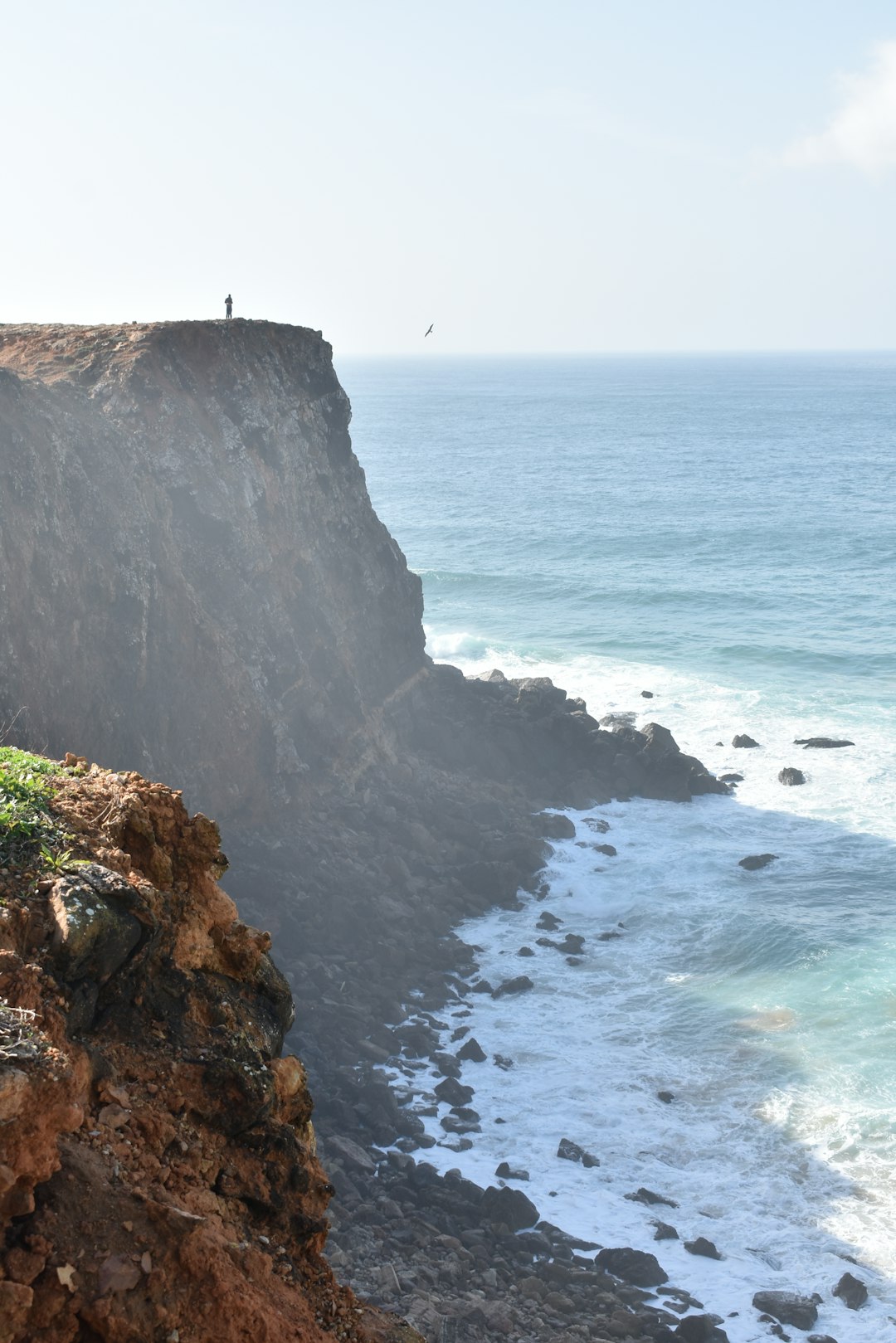
Sagres sits at the far southwestern corner of Portugal, where the Algarve’s golden resort coast gives way to something much wilder. The cliffs here are 60 to 100 metres high, the Atlantic arrives unimpeded from 3,000 kilometres of open ocean, and the wind is a constant presence. It’s a different Portugal entirely — less crowded, less manicured, and more compelling for it.
The village itself is small, but the surrounding headland is packed with things to do. You can visit one of Portugal’s most important historic fortresses, stand at the true southwestern tip of Europe, surf some of the best waves on the Iberian Peninsula, or take a boat out to look for dolphins and whales. Most visitors underestimate how much is here. See our Sagres beaches guide for swim and surf beach breakdowns, and our Lagos things to do guide for the wider Algarve context.
Fortaleza de Sagres
The Fortaleza de Sagres is the promontory-top fortress that dominates the headland south of the village. It was here, according to tradition, that Prince Henry the Navigator established his school of navigation in the early 15th century — the institution that launched Portugal’s Age of Discovery. The historical record is contested (most scholars now believe Henry’s school was based in Lagos rather than Sagres), but the site’s strategic importance is undeniable. The headland is a natural fortification surrounded on three sides by the Atlantic.
What you’ll see inside: The most remarkable feature is the Rose of the Winds (Rosa dos Ventos) — a massive circular compass pattern carved into the ground near the entrance. It’s approximately 43 metres in diameter and its exact purpose remains debated. Beyond it, the fortress contains a small chapel (Nossa Senhora da Graça), restored battlements, and sweeping views over the cliffs and ocean in every direction.
Entry: Approximately €3 per adult, €1.50 for students, free for children under 14 (as of 2026). Open daily 9:30am–8pm May through September, 9:30am–5:30pm October through April. The car park outside is free.
Time needed: 45–90 minutes depending on your interest in the history. The cliff walk along the western edge of the promontory adds another 30 minutes.
Cape St. Vincent (Cabo de São Vicente)
Six kilometres northwest of Sagres, Cape St. Vincent is the southwesternmost point of mainland Europe. The lighthouse here — operational since the 13th century in some form, rebuilt in the 19th — stands on cliffs that drop vertically to the sea. At sunset, the cape turns amber and the Atlantic glows. It’s one of the most dramatic natural viewpoints in Portugal and the crowds that gather for the evening light are well justified.
The lighthouse: The current structure dates from 1846. It houses one of the most powerful lighthouse lenses in Europe (historically visible for 32 nautical miles). There’s a small market of stalls selling Sagres-area goods at the cape entrance. Entry to the lighthouse itself is not routinely offered, but the headland and viewpoints are completely free to access.
Getting there: Driving from Sagres takes 10 minutes. There’s no reliable bus connection between Sagres town and the cape. A round-trip taxi from Sagres costs approximately €12–15 as of 2026. Cyclists make the trip — the road is flat and the views are extraordinary — but wind can make the return journey harder than expected.
Timing: Sunrise and sunset are exceptional. Midday in July and August brings significant crowds. The cape is open year-round at no charge.
Surfing in Sagres
The Sagres area is one of Portugal’s best surf destinations for intermediate and advanced surfers. The combination of Atlantic swell exposure, consistent wind, and varied beach configurations produces reliable waves from September through April. Summer is smaller and more crowded.
Key spots around Sagres:
- Tonel — the most powerful and consistent beach break in the area, working best in 2–4ft+ swell with west or northwest groundswell. More advanced surfers. Access down a steep path from the road.
- Praia do Martinhal — sheltered bay facing south, which makes it more protected from Atlantic swell. Smaller and gentler waves, good for learners and longboarders. Calm water periods make it suitable for kayaking and paddleboarding.
- Praia da Mareta — the village beach, facing south. Works on smaller south and southwest swells, best for beginners. Surf schools operate here.
For full surf conditions and break details, see our Sagres surf guide.
Surf schools in Sagres: Several operate from April through October. Expect to pay approximately €35–40 for a group lesson (1.5 hours) or €60–80 for a private lesson as of 2026. Most schools provide boards and wetsuits. Sagres Surf School and Sagres Natura are among the longer-established operators.
Whale and Dolphin Watching
The waters around Cabo de São Vicente are productive for cetacean sightings. Common dolphins, bottlenose dolphins, and short-finned pilot whales are regularly seen. Striped dolphins and sperm whales appear less frequently. The convergence of the Atlantic and the deeper waters off the cape creates upwelling that attracts fish — and the animals that follow them.
Tours from Baleeira Harbour: Boats depart from the small fishing harbour just east of Sagres town. A 2–3 hour dolphin and whale watching excursion costs approximately €45–55 per adult as of 2026. Tours run year-round but are most reliable from April through October. Manta Diving and Sagres Angling Club are established operators with good track records. Browse Sagres whale watching and sea cave tours on GetYourGuide to compare operators and check live availability.
Sea cave tours: Similar departure point, running south along the coast to explore sea caves, grottos, and rock arches. Approximately €30–40 for 1.5 hours. Worth doing on calm days when the caves are accessible by boat.
Cliff Walks and Birdwatching
The Ponta de Sagres headland has marked walking trails along the cliff edges. The views are extraordinary in any direction. From October through November, the Sagres headland is one of Europe’s most important raptor migration watch-points — thousands of honey buzzards, marsh harriers, sparrowhawks, and black kites pass through, along with rarer species. Birdwatchers from across Europe come specifically for this migration window.
The Vicentina Nature Reserve (Parque Natural do Sudoeste Alentejano e Costa Vicentina), which extends north along the Costa Vicentina, has additional walking routes and dramatic coastal scenery accessible from Sagres.
Practical Notes
When to visit: September and October are the best months — surf is picking up, summer crowds have gone, weather is still warm (averaging 22–24°C), and raptor migration is at its peak. June and July are the busiest months. February and March are quietest but wind is relentless. Winter is for surfers and birdwatchers primarily.
Getting around: Sagres is compact enough to walk between Fortaleza, Mareta beach, and the village. Cape St. Vincent requires a car, bike, or taxi. Tonel beach needs a short drive. Baleeira Harbour is a 10-minute walk east of the main square. See our getting to Sagres guide for transport details.
Search hotels in Sagres Portugal on Booking.com to compare rates and availability.