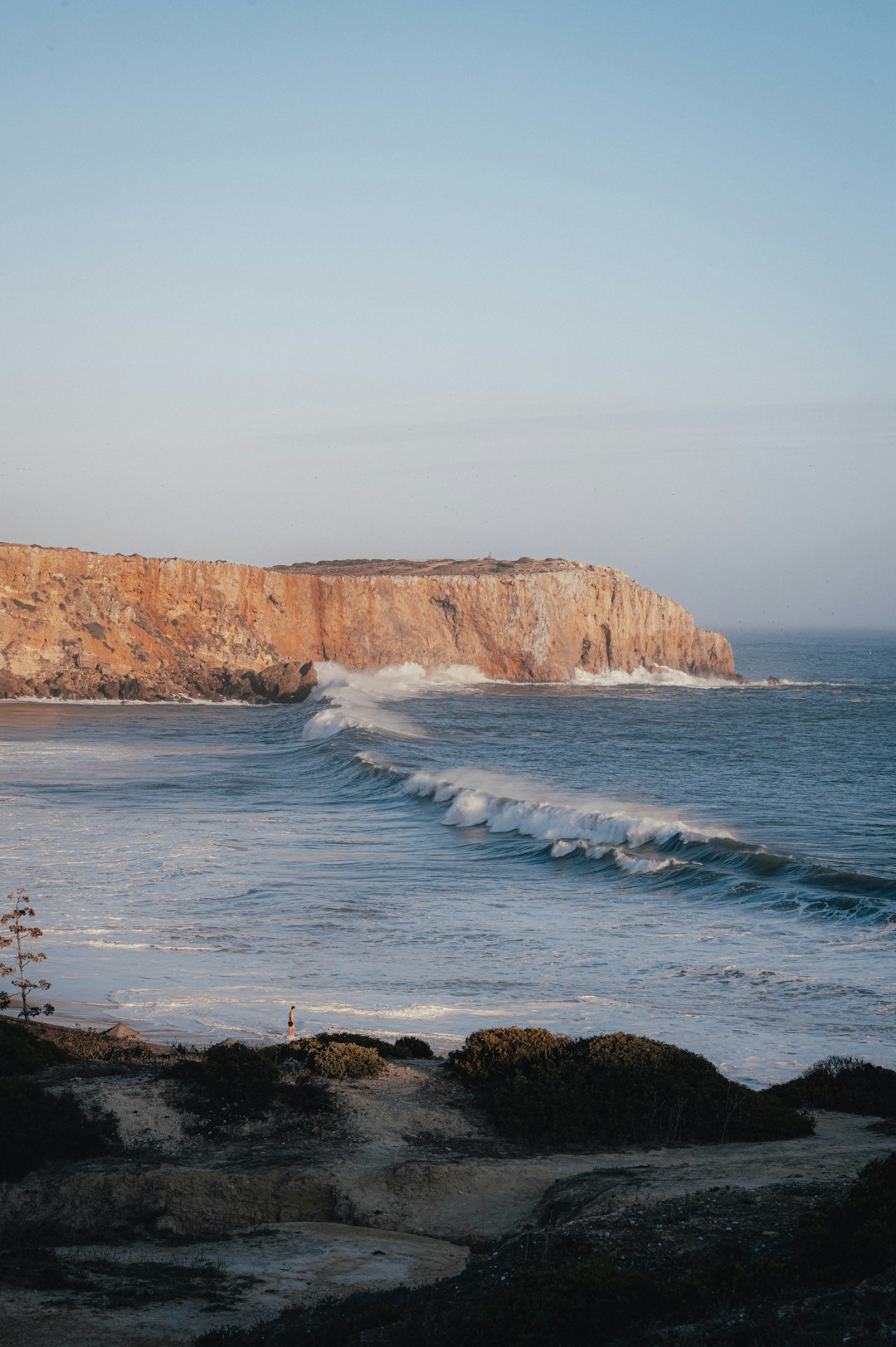
The beaches around Sagres are unlike anything else on the Algarve. The central coast’s soft golden sand and calm turquoise water give way here to something more raw — Atlantic-facing beaches backed by red-ochre cliffs, with consistent swell and a wind that reminds you you’re at the edge of a continent. They suit surfers, walkers, and anyone who prefers their coastal scenery with a bit of drama.
There are four main beaches within easy reach of Sagres village. Each has a different character and works best in different conditions.
Praia da Mareta
Praia da Mareta is Sagres’s most accessible beach — a 10-minute walk south from the village centre, facing southeast in a sheltered bay. It’s the calmest of the Sagres beaches in most conditions, which makes it the best choice for families and anyone not there for the surf.
Size and setting: Around 400 metres of sand, backed by low cliffs and a small promenade with parking. The bay’s orientation provides some protection from the dominant northwest wind, though it’s not as sheltered as Martinhal. On summer afternoons with a southerly breeze, it’s genuinely pleasant for swimming.
Surf: Mareta picks up small south and southwest swells and is used by several Sagres surf schools for beginner lessons. Waves are typically 1–2ft in summer, reaching 3ft on good swell in autumn and winter. Not the place for experienced surfers, but ideal for first-timers. Group surf lessons cost approximately €35–40 for 1.5 hours as of 2026.
Facilities: A café-restaurant operates year-round (the Mareta View, perched at the top of the cliff, has good views and reasonable food — expect to pay around €12–18 for mains). Public toilets at the beach. Lifeguards operate in summer. Free parking in the lot above.
Getting there: Walk from Sagres village (10–15 minutes) or drive and park in the free lot. There’s no regular bus service between the village and the beach.
Praia do Martinhal
Martinhal is 4km east of Sagres town on the eastern edge of the headland, facing south into the calm waters of a natural bay. It’s the most sheltered beach in the Sagres area — a significant consideration when the Atlantic wind is howling at the exposed beaches. The setting is also beautiful: a wide crescent of pale sand backed by low scrubland, with Martinhal Rock (a flat-topped islet) sitting just offshore.
Size and setting: Approximately 600 metres of sand, wider than Mareta and generally less crowded despite being more accessible by car. The bay’s southward orientation and protection from the northwest give genuinely calm swimming conditions much of the year. Water clarity is excellent.
Surf: Because Martinhal is so sheltered, it doesn’t produce much surf in normal conditions. On rare south or southeast swells, there can be small waves, but this is not a surf beach. It works well for kayaking, paddleboarding, and open-water swimming in conditions that would make the exposed beaches too rough.
Facilities: A beach bar operates May through September (sunbeds approximately €10–12 per day as of 2026, umbrella hire €5). Limited public facilities outside season. Parking is free in the area around the beach. The Martinhal Sagres Beach Family Resort sits above the bay and non-guests can use the area.
Getting there: 4km from Sagres by car or bike (road is mostly flat, suitable for cycling). No regular bus service. Uber from Sagres village costs approximately €6–8 as of 2026.
Tonel
Tonel is the serious surf beach — a north-facing bay just below the Fortaleza de Sagres promontory, exposed to Atlantic groundswell from the northwest and west. It’s a powerful beach break that works most consistently in autumn, winter, and spring when solid swell arrives from the North Atlantic.
Surf conditions: Tonel works best in 2–6ft groundswell from the northwest or west. The shape of the bay creates peaks across the beach that suit intermediate and advanced surfers. At 4–6ft, it can be challenging and fast. It’s not appropriate for beginners in any swell above 1ft. Autumn and winter mornings before the afternoon wind comes up are the best windows.
Setting: The beach is backed directly by the cliffs of the Fortaleza promontory. Access is down a steep concrete path from the road — about 5 minutes on foot. The beach itself is narrower than Mareta and Martinhal, with coarser sand. On flat days or very small swells, the rock pools at the northern end are good for exploring.
Facilities: No permanent café or facilities. Surf school vans sometimes operate from the car park above in season. Bring what you need. Parking is free.
Getting there: 1km from Sagres village by car or on foot along the headland road. The viewpoint above is worth stopping at before descending to the beach.
Praia de Beliche
Beliche is the most remote of the Sagres beaches, sitting 3km northwest of the village on the road to Cape St. Vincent. It faces west into full Atlantic exposure and is one of the more dramatic beaches on the entire Algarve coast.
Setting: A narrow beach enclosed by towering cliffs, accessible via a long concrete staircase from the cliff top (approximately 150 steps — keep this in mind for the return journey). The cliffs provide some protection from side winds but the swell arrives unimpeded from the open Atlantic. The visual impact of the orange-red cliff walls and the churning water is remarkable.
Surf: Beliche is exposed to northwest and west swell and picks up more size than Tonel in large swells. It’s more of a hold-out option for bigger days and suits stronger surfers. The beach closes out in very large swell. On smaller days (1–2ft), it’s occasionally swimmable in the sheltered pocket near the cliff base.
Facilities: A basic bar operates at the top of the stairs in summer. No sunbeds or organised facilities. The staircase access means it never gets particularly crowded. Parking is free at the road.
Getting there: 3km from Sagres towards Cape St. Vincent — drive or bike. No bus service.
Beaches Comparison
| Beach | Best for | Swim conditions | Surf level | Facilities |
|---|---|---|---|---|
| Praia da Mareta | Families, beginners | Calm in summer | Beginner only | Café, lifeguards |
| Praia do Martinhal | Sheltered swimming, kayaking | Calm most conditions | Not a surf beach | Beach bar, sunbeds |
| Tonel | Intermediate/advanced surf | Rough most conditions | Intermediate–advanced | None |
| Praia de Beliche | Advanced surf, dramatic scenery | Rough in most conditions | Intermediate–advanced | Basic bar in season |
Practical Notes
Water temperature: The Sagres area is where the warm Mediterranean-influenced Algarve water meets colder Atlantic currents running up from the south. Water temperature ranges from approximately 15–16°C in winter to 19–21°C in summer — colder than the central Algarve and noticeably cooler on west-facing beaches. A 3mm wetsuit is comfortable for surfing year-round; swimmers who are cold-sensitive may want one in spring and autumn.
Wind: The northwest wind (nortada) blows reliably from late May through September, often reaching 25–35km/h by early afternoon. It’s offshore at west-facing beaches like Beliche and Tonel (good for surf), but it makes the beach experience uncomfortable for sun-loungers. Morning sessions before noon are usually calmer. The sheltered south-facing beaches (Mareta, Martinhal) are more protected.
For surf school recommendations and wave conditions detail, see our Sagres surf guide. For where to stay in Sagres and how to get there, see the other pages in this guide.
Search hotels in Sagres Portugal on Booking.com to compare rates and availability.
Book Sagres Beach and Surf Tours on GetYourGuide
| Tour | Duration | From price | Highlights |
|---|---|---|---|
| Sagres surfing lesson — Mareta Beach beginner waves | 2.5 hrs | From €45 | Professional instruction, board and wetsuit included, Atlantic swells |
| Sagres coastline kayaking tour — sea caves and cliffs | 3 hrs | From €40 | Paddle to sea arches, cave swimming, Cape St. Vincent views from the water |
| Cape St. Vincent and Sagres fortress combined tour from Lagos | 5 hrs | From €35 | Southwestern tip of Europe, Sagres fortress, Ponta de Sagres viewpoint |
| Algarve dolphins and coastal wildlife boat tour from Sagres | 3 hrs | From €50 | Dolphin watching, sea bird sightings, coastal geology, small-group boat |