Algarve Travel Guide - Beaches, Towns & Getting Around
Algarve guide: golden cliff beaches from Lagos to Tavira, what to see in Faro and Albufeira, surf at Sagres, and how to get around the region.
Guides for Algarve
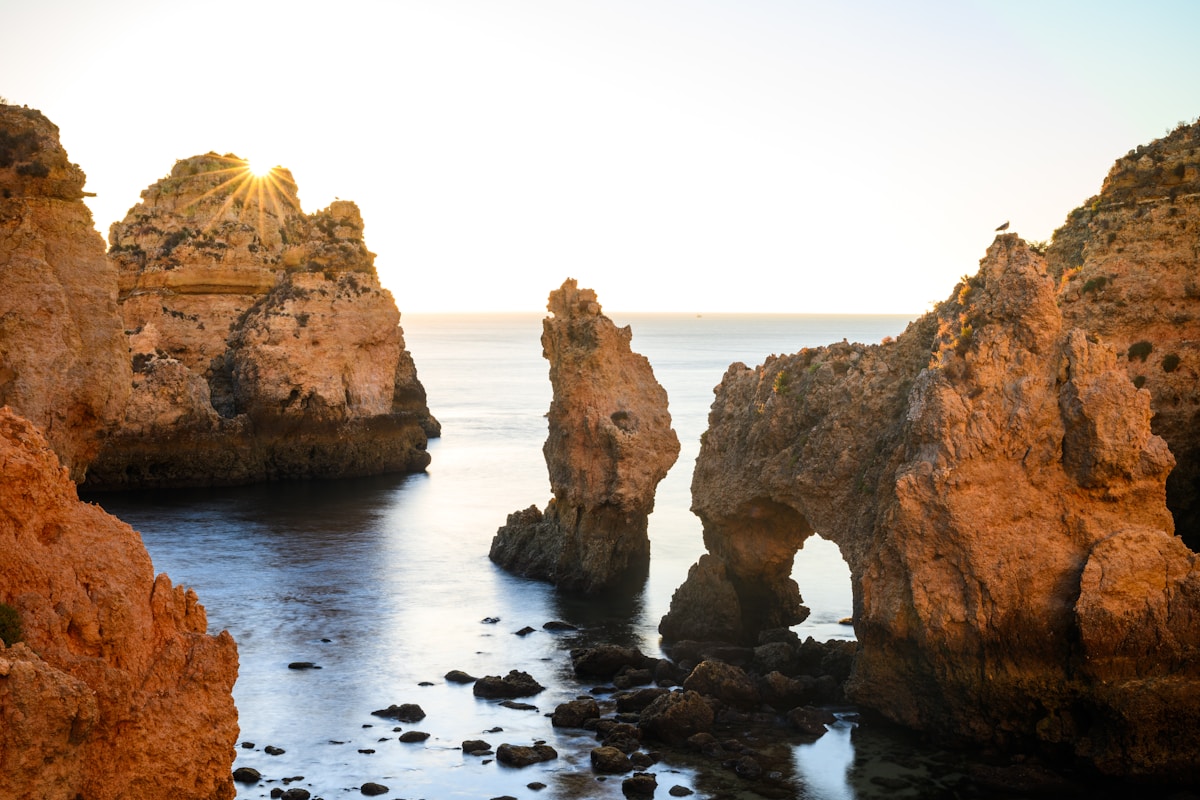
The Algarve is Portugal’s southern coast - roughly 150 km of Atlantic-facing beaches, limestone cliffs, whitewashed fishing towns, and golf resorts. Most visitors stay in the central strip between Lagos and Faro, but the region stretches from the wild western tip at Cape St. Vincent to the quieter sandbar lagoon coast around Tavira. Ponta da Piedade near Lagos - amber sea stacks and caves best seen by kayak at low tide - is the most striking coastal formation in the country. Almond blossoms cover the interior in February; beach season runs from June through October, with April to June offering full sunshine and low crowds.
What the Algarve Is
The Algarve is a region (not a city), divided informally into three zones:
- Western Algarve - Lagos, Sagres, Carrapateira. More rugged, popular with surfers and independent travellers.
- Central Algarve - Albufeira, Portimão, Silves. The busiest resort strip; large beach complexes, nightlife, easy transport.
- Eastern Algarve - Tavira, Olhão, Cacela Velha. The ria formosa lagoon coastline; quieter, flamingos, smaller crowds.
Faro is the regional capital and the hub for the international airport (FAO).
Getting Around the Algarve
A car is the most practical way to reach the smaller beaches and inland villages. Hire from Faro airport; rates are lowest booked in advance.
The CP Algarve train line connects Lagos to Vila Real de Santo António (near Tavira) with stops at Portimão, Silves, Albufeira, Faro, and Olhão. Trains run roughly hourly; a Lagos–Faro ticket costs approximately €7.
EVA and Rede Expressos buses serve towns not on the rail line, including Sagres, Carrapateira, and Loulé. Faro bus station is the regional interchange.
For full detail, see our getting around the Algarve guide.
Beaches
The Algarve’s beaches divide by character:
| Beach | Type | Best for |
|---|---|---|
| Praia Dona Ana (Lagos) | Limestone cove | Families, snorkelling |
| Meia Praia (Lagos) | Long sandy bar | Water sports, wind |
| Malhão (Portimão) | Wide open beach | Space, swimming |
| Praia da Marinha | Sea caves, rock pools | Photography, walks |
| Praia de Odeceixe | River mouth | Surfers, scenic setting |
| Ilha de Tavira | Barrier island | Undeveloped, flamingos |
Peak season runs July–August; water temperatures stay around 22–24°C. Shoulder season (May, June, September, October) is quieter and often cheaper for accommodation.
What to See
Sagres and Cape St. Vincent - the southwesternmost point of continental Europe. The Fortaleza de Sagres costs approximately €3; the lighthouse at Cape St. Vincent is free to walk to.
Silves - a medieval town inland from Portimão, with a Moorish castle (entry approximately €3) and a small Gothic cathedral.
Ria Formosa Natural Park - a 60 km lagoon system running from Faro to Cacela Velha. Boat tours from Faro run approximately €20–30 per person (see our Algarve boat trips guide).
Benagil Sea Cave - reached by kayak or boat tour from Praia de Benagil. Tours cost approximately €15–25 per person. The beach inside is small and fills quickly in summer; book a morning slot.
For boat tours, jeep safaris, dolphin watching, and day trips across the region, read our best tours in the Algarve roundup or browse tours and activities in the Algarve.
Where to Stay
Faro suits travellers using the airport or rail network as a hub. Lagos is the best base for the western Algarve. Tavira is the calmest town in the east.
Large resort complexes cluster around Albufeira (Montechoro district) and Vilamoura. These suit beach-holiday travellers who want pools, tennis courts, and direct beach access.
Budget guesthouses (around €60–90 per night in summer) operate in Faro, Lagos, and Tavira old towns. Mid-range hotels in central locations run approximately €120–200 per night in July–August.
For our full accommodation guide with hotel recommendations across the region, see Where to Stay in the Algarve.
Compare and book hotels across the Algarve - from Faro and Lagos to Albufeira and Tavira.
When to Go
- May–June: Warm and dry, fewer crowds, moderate prices
- July–August: Hottest and most expensive; book accommodation months ahead
- September–October: Water still warm, cooler air, noticeably quieter
- November–April: Off-peak pricing; some beach businesses closed; mild days (15–20°C) suit walking
The Algarve rarely gets frost. Winter rain falls mostly November–February; most days still have some sun.
Official sources we check: Visit Algarve and Visit Portugal.
The Algarve’s almond blossom peaks in February, and our Portugal in February guide covers dates, weather and where to see it.
How the Algarve Compares
Algarve vs Alentejo coast: The Alentejo’s Atlantic coast (Vila Nova de Milfontes, Comporta, Zambujeira do Mar) runs north of the Algarve along the same ocean but with a dramatically different character - wild beaches, no resort infrastructure, and almost no crowds in shoulder season. The Algarve wins on infrastructure, beach access, family facilities, and reliable sun. The Alentejo coast wins on solitude, lower cost, and an unhurried pace. Couples and independent travellers who prioritise atmosphere over convenience often prefer the Alentejo coast; families and those wanting resort amenities are better served by the Algarve.
Algarve vs Lisbon area: Lisbon’s nearest beaches (Cascais, Sesimbra, Caparica) are accessible on a day trip and suit those based in the capital. The Algarve is a different proposition: 2h45 by fast train to Lagos, or a direct flight to Faro. The western Algarve’s limestone sea stacks, the Ria Formosa’s barrier islands, and the surf coast around Sagres are all significantly better than anything near Lisbon. The Algarve warrants at least four to five days as a standalone destination. Best months for the Algarve: May–June and September for beach conditions without peak crowds. July–August are viable but busiest and most expensive.
Book an experience
Top experiences in Algarve
Explore the best tours and activities in Algarve, with instant confirmation and free cancellation on most bookings.
Where to stay in Algarve: Find hotels in Algarve →