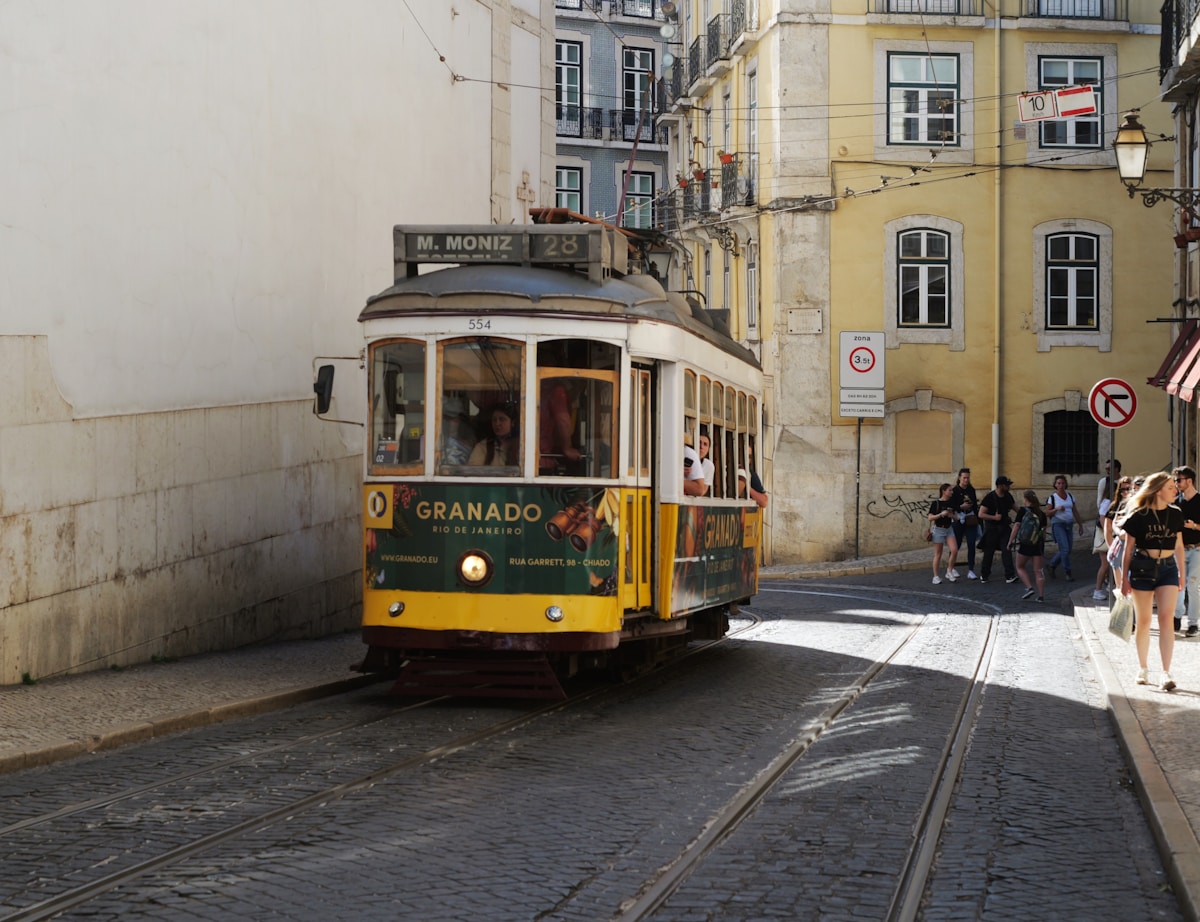
February is the least-visited month in Portugal and, by extension, the cheapest. For travellers who plan around Carnival or the almond blossom season, it offers genuine spectacle alongside prices and crowd levels that summer visitors never experience.
Weather in February
Lisbon sits at 10–16°C with around 11 rainy days. The city is damp but not cold by northern European standards. Porto is colder and gets more rain - expect 8–13°C and roughly 13 rainy days. The Algarve again leads the mainland: 13–18°C, 6–8 rainy days, and genuinely pleasant days for walking and sightseeing.
Madeira stays at its reliable 16–21°C and is particularly popular in February for Europeans escaping winter. Book accommodation earlier than you would for other low-season months, as Carnival draws visitors from Brazil and across Europe.
Carnival in Portugal
Carnival (Carnaval) takes place in the days before Ash Wednesday, typically in mid-February. The main celebration date is Shrove Tuesday, with parades the Saturday before.
Madeira Carnival
Funchal’s Carnival is the country’s largest. The Saturday night Allegorical Parade features enormous Brazilian-style floats, elaborate costumes, and thousands of participants. The Tuesday sees the Cortejo Trapalhão - a humorous, satirical parade. Both are free to watch from the streets. Book accommodation in Funchal at least three months ahead - the island fills up.
Torres Vedras
Known as the “Most Portuguese Carnival in Portugal,” Torres Vedras, 50km north of Lisbon, runs a satirical parade famous for political commentary and elaborate grotesque costumes. The Tuesday parade draws up to 200,000 spectators along a relatively small town - arrive early for a good position. Trains from Lisboa Santa Apolónia run regularly throughout the day.
Ovar
The oldest Carnival tradition in Portugal is in Ovar, on the coast between Porto and Aveiro. It dates to the 18th century and focuses on confetti battles and traditional costumes rather than floats.
Lisbon and Porto
Carnival is not a major street event in either city by default, but Bairro Alto and Intendente in Lisbon see informal parties, and bars run themed nights across the weekend.
Almond Blossom in the Algarve
The eastern Algarve’s interior hills are covered in almond trees, and from mid-January through mid-February they erupt in white and pale pink blossom. This is one of Portugal’s more photogenic seasonal events.
The best areas to see almond blossom:
- Serra do Caldeirão - the hills inland from Loulé and Tavira. Drive the N124 for continuous orchard views.
- Castro Marim - a small walled town near the Spanish border with almond groves on the surrounding slopes
- Alte - a traditional inland village with a walking trail through orchards
- Monchique - higher altitude, blossom appears slightly later (mid-February)
The blossom is weather-dependent - a warm spell in January pushes it earlier, a cold snap can delay it to late February. Check local conditions before travelling specifically for the blossom.
What to Do in Portugal in February
Lisbon
The city’s museums and cultural venues continue at full schedule. The Museu do Azulejo and Museu Nacional de Arte Antiga are rarely busy in February. The TimeOut Market in Mercado da Ribeira is less crowded than summer without losing any of its food hall quality.
A tip: Lisbon’s Alfama is at its most atmospheric in grey weather. The miradouros over the city are accessible with no queue, and the light on overcast days suits photography well.
Wine Regions
February is a quiet time in the Douro Valley and Alentejo wine regions. Quinta tastings typically require booking - visits are smaller, more personal, and unhurried compared to harvest season. Quinta do Crasto, Quinta da Romaneira, and Ramos Pinto all run winter visits. Our Porto wine tasting guide covers the Gaia lodges which are open year-round.
Surf
Atlantic surf in February is good to excellent along the western coast. Ericeira, Peniche, and Praia do Norte (Nazaré) all have active swell. Water temperature is around 14–16°C, so a 4/3mm wetsuit is standard. Surf schools in Ericeira and Peniche continue through winter, with smaller class sizes than summer.
Prices in February
February is the cheapest month to visit Portugal on nearly every metric:
- Ryanair and EasyJet fares from the UK to Faro, Lisbon, or Porto regularly drop below £40 return outside Carnival weekend
- Lisbon boutique hotels that cost €150/night in July can be found for €70–90 in February
- Algarve beach resorts cut rates by 40–50%
The one exception: Carnival weekend (typically the Friday–Tuesday) carries a surge in Madeira, Torres Vedras, and to a lesser extent Lisbon. Book around it if budget is the priority.
Browse tours across Portugal for guided experiences during your visit - from cultural walks to day trips, availability peaks in the summer months.
flights to Portugal helps you find the best fares for your travel window. travel insurance is worth comparing before departure, particularly for trips covering multiple regions.
What to Skip
The sea is cold (14–15°C), beaches are windswept, and any plans centred on swimming or sunbathing will disappoint. February is also not the time for the Douro Valley’s visual appeal - the vines are bare and grey.
For a full month-by-month comparison, see our best time to visit Portugal guide. For what to pack in February — waterproofs, mid-layers, and what to skip — see our Portugal packing list.
Plan Your Trip
February planning turns on Carnival: Madeira’s allegorical parade (Saturday night before Shrove Tuesday) fills the island — book accommodation at least three months ahead. Torres Vedras, 50 minutes from Lisbon by train, is the more accessible Carnival option and requires no advance booking for accommodation.
For almond blossom, aim for the first two weeks of February. Drive the N124 inland from Tavira through the Serra do Caldeirão hills, or visit Alte and Castro Marim. The blossom peaks and fades quickly — a warm spell in late January can push it earlier.
Flights from the UK to Faro, Lisbon, or Porto are at their annual cheapest this month — regularly below £40 return outside Carnival weekend.
- Search hotels in Portugal — Madeira needs 3 months’ notice for Carnival
- Book flights to Portugal — cheapest month of the year
- Rent a car — essential for the almond blossom routes
- Get travel insurance